

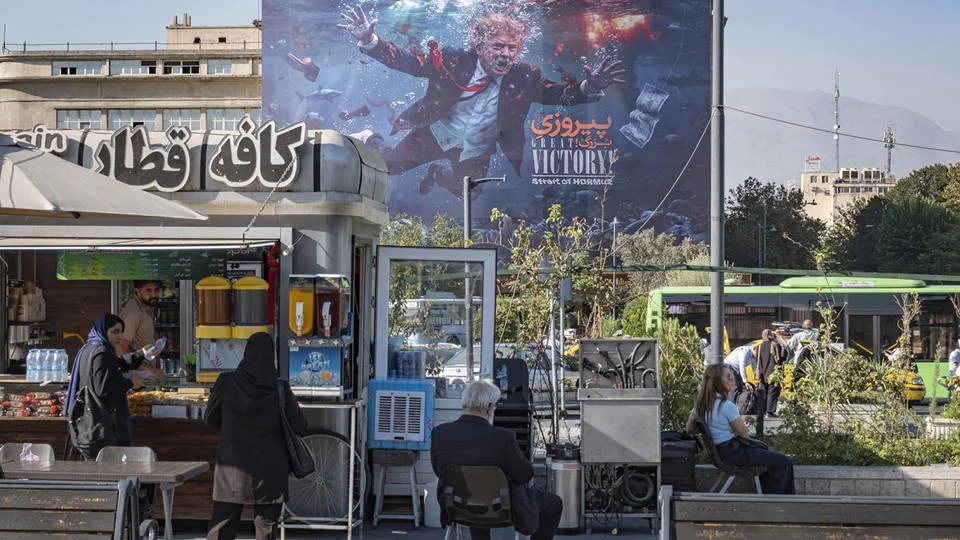
WASHINGTON, DC/BERKELEY – The United States’ ambitious "economic D-Day" initiative, designed to isolate Iran from the global financial system and cripple its economy, faces a critical hurdle: the indispensable role of China as Tehran’s largest trading partner. Analysts suggest that without Beijing’s cooperation, this intensified economic blockade is unlikely to achieve its stated objectives and may instead exacerbate the ongoing tensions in the region. The path to a stable resolution in the Persian Gulf, they argue, necessitates a more inclusive approach, one that actively engages China and fosters greater economic interdependence within the region.
Escalation Amidst Sanctions: The "Economic D-Day" Unveiled
On September 3, 2026, U.S. Treasury Secretary Scott Bessent announced the launch of a comprehensive program described as an "economic D-Day." The stated aim of this initiative is to sever all of Iran’s connections to international trade and finance, effectively strangling its access to resources and markets. This aggressive economic posture represents a significant escalation of existing sanctions, which have been in place for years, targeting Iran’s nuclear program, ballistic missile development, and support for regional proxies.
The immediate aftermath of the announcement, however, has not mirrored the strategic objective of de-escalation. Instead, reports indicate a further intensification of the U.S.-Iran conflict, characterized by increased rhetoric and heightened military posturing in the Gulf. Critics of the "economic D-Day" strategy argue that its punitive nature, without a clear diplomatic off-ramp or a consensus among key global players, risks pushing Iran further into isolation and potentially provoking more aggressive countermeasures.
A Geopolitical Chessboard: China’s Pivotal Position
The effectiveness of any U.S. sanctions regime against Iran is inextricably linked to the participation of its major trading partners. In recent years, China has emerged as Iran’s most significant economic lifeline. Despite U.S. pressure, Beijing has continued to import Iranian oil and engage in substantial trade, driven by its own energy needs and a strategic desire to maintain economic ties with a key regional player.
According to data from the International Energy Agency (IEA), China’s imports of Iranian crude oil, while subject to fluctuations due to sanctions, have consistently represented a substantial portion of Iran’s export revenue. In 2025, for example, Chinese purchases accounted for an estimated 40% of Iran’s total oil exports, providing a vital source of income for the Iranian government. Beyond oil, bilateral trade encompasses a range of goods, from manufactured products to agricultural commodities, underscoring the depth of the economic relationship.
The U.S. Treasury Department’s strategy, therefore, implicitly relies on either compelling China to cease its trade with Iran or significantly curtailing it. Historically, such broad-based U.S. sanctions have faced considerable resistance from nations with significant economic interests, particularly when those interests conflict with American foreign policy objectives. China has consistently voiced its opposition to unilateral sanctions and has emphasized the importance of diplomatic solutions to regional disputes.
Background: A History of Sanctions and Shifting Alliances
The current economic pressure on Iran is not a new phenomenon. Since the 1979 Islamic Revolution, the United States has implemented a series of increasingly stringent sanctions against Iran, aimed at curbing its nuclear ambitions, its alleged support for terrorism, and its regional destabilization activities. These sanctions have had a profound impact on Iran’s economy, contributing to high inflation, currency depreciation, and widespread economic hardship for its citizens.
The Joint Comprehensive Plan of Action (JCPOA), or Iran nuclear deal, signed in 2015, offered a temporary reprieve, with the lifting of some sanctions in exchange for limitations on Iran’s nuclear program. However, the U.S. withdrawal from the JCPOA in 2018 under the Trump administration, and the reimposition of "maximum pressure" sanctions, reignited a cycle of escalation and economic hardship.
The "economic D-Day" represents a continuation and intensification of this maximalist approach. However, the geopolitical landscape has evolved since the initial imposition of maximum pressure. China’s global economic influence has grown, and its strategic partnership with Iran has solidified, particularly as both nations face increasing pressure from the United States. This evolving dynamic makes the success of a unilateral U.S. strategy more challenging than in previous iterations.
Implications and Potential Ramifications
The implications of the "economic D-Day" are far-reaching and multifaceted.
- Regional Instability: If Iran, facing severe economic pressure and feeling cornered, perceives no diplomatic avenue, it could resort to more assertive actions. This could include further harassment of shipping in the Strait of Hormuz, increased support for regional proxies, or a more aggressive stance in its nuclear program. Such actions would inevitably heighten regional tensions and increase the risk of direct military confrontation.
- Economic Fallout: A complete severing of Iran’s economic ties, even if partially achieved, could disrupt global energy markets. While Iran’s production is not as significant as that of major oil producers, any disruption, coupled with heightened geopolitical risk, could lead to price volatility. Furthermore, the Chinese economy, heavily reliant on imported energy, could face challenges if its access to Iranian oil is significantly curtailed.
- Erosion of International Cooperation: The U.S. approach, if perceived as unilateral and dismissive of the concerns of key economic partners like China, could further strain international relations. It risks creating a precedent where major economic powers act independently, potentially undermining global economic governance and cooperative security frameworks.
- Humanitarian Concerns: Intensified sanctions often have a disproportionate impact on the civilian population, exacerbating existing economic difficulties and potentially leading to humanitarian crises. While the stated goal is to pressure the regime, the unintended consequences for ordinary Iranians can be severe.
A Call for a Multilateral Approach
Many foreign policy experts and analysts have long advocated for a more nuanced and multilateral approach to Iran. This would involve:
- Engaging China: Instead of attempting to isolate Iran unilaterally, the U.S. could explore avenues for dialogue and cooperation with China to find common ground on regional security and non-proliferation. This might involve coordinated diplomatic efforts or discussions on de-escalation mechanisms.
- Regional Dialogue: Fostering dialogue among the Gulf states themselves, with the aim of building regional security architectures and economic interdependence, could provide a more sustainable path to stability. This would require addressing the underlying security concerns of all regional actors.
- Clear Diplomatic Objectives: Any economic pressure campaign should be clearly linked to well-defined diplomatic objectives and accompanied by credible pathways for de-escalation and engagement. Without such clarity, sanctions can become an end in themselves, lacking a strategic purpose.
The "economic D-Day" strategy, while ambitious, appears to overlook a crucial element of the current geopolitical reality: the indispensable role of China. Without Beijing’s participation, the initiative is likely to fall short of its objectives and could, in fact, lead to further instability in a region already fraught with tension. The path to a lasting resolution in the Gulf demands a more inclusive, collaborative, and strategically coherent approach that recognizes the interconnectedness of global economics and politics. The current trajectory suggests a continued reliance on punitive measures, which, in the absence of broader international consensus and clear diplomatic objectives, may prove to be a strategy of diminishing returns.
