

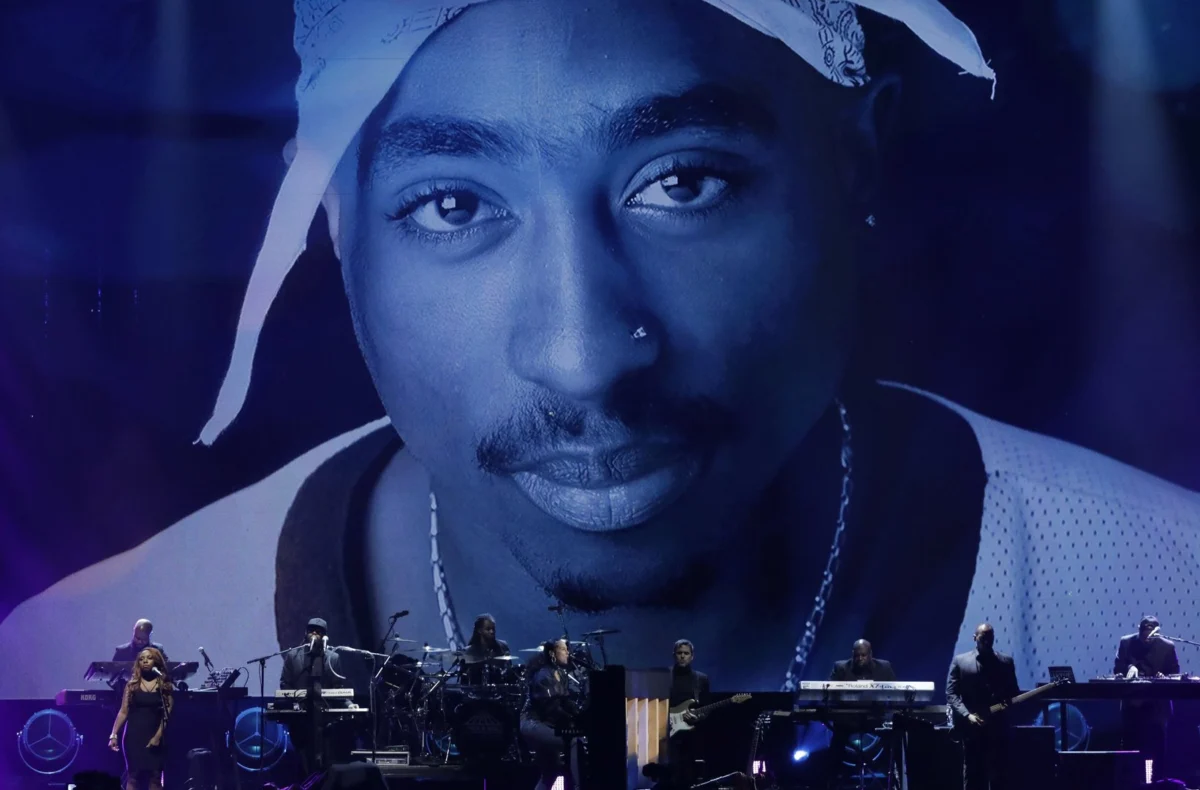
A Las Vegas jury has delivered a landmark verdict, finding former gang leader Duane "Keffe D" Davis guilty of the 1996 murder of iconic rapper Tupac Shakur. The conviction, handed down on September 1, 2026, culminates a nearly three-decade-long investigation into one of hip-hop’s most enduring mysteries. Prosecutors successfully argued that Davis orchestrated the revenge attack that led to Shakur’s death, providing the weapon to individuals in the car from which the fatal shots were fired. Davis’s own extensive public accounts of the killing, made over several years in interviews and a memoir, ultimately proved instrumental in reviving the cold case and securing the conviction.
The Tragic Night: A Catalyst for a Hip-Hop Legend’s Demise
Tupac Shakur, born Lesane Parish Crooks and later known as Tupac Amaru Shakur, was at the zenith of his career when he was gunned down. A prolific and critically acclaimed artist, he was renowned for his lyrical prowess, raw honesty, and often controversial public persona. His music frequently explored themes of racism, poverty, violence, and the struggles of inner-city life, resonating deeply with millions and solidifying his status as a cultural icon. At the time of his death, Shakur was signed to Death Row Records, a dominant force in West Coast hip-hop, and was deeply embroiled in the infamous East Coast-West Coast hip-hop rivalry, a period marked by intense artistic competition and escalating real-world violence between artists and their entourages.
The fatal incident occurred on the night of September 7, 1996, in Las Vegas, Nevada. Shakur had attended a Mike Tyson boxing match at the MGM Grand Garden Arena with Death Row Records CEO Marion "Suge" Knight. Following the fight, security footage captured an altercation in the hotel lobby involving Shakur, Knight, and Orlando Anderson, a member of the South Side Compton Crips gang. Shakur and his entourage reportedly assaulted Anderson in retaliation for an earlier incident where Anderson allegedly robbed a Death Row Records associate. This beating is widely believed to have been the direct catalyst for the subsequent shooting.
Later that evening, as Shakur and Knight were traveling in a black BMW sedan, part of a larger convoy of Death Row vehicles, they stopped at a red light at the intersection of Flamingo Road and Koval Lane, just east of the Las Vegas Strip. A white Cadillac pulled alongside Knight’s BMW, and multiple shots were fired into Shakur’s vehicle. Shakur was hit four times, including twice in the chest, once in the arm, and once in the thigh, with one bullet puncturing his right lung. Knight was grazed in the head by a bullet fragment but survived. Despite immediate medical attention and being placed on life support, Tupac Shakur succumbed to his injuries six days later, on September 13, 1996, at the University Medical Center of Southern Nevada. He was just 25 years old. His death sent shockwaves through the music world and left an indelible void in hip-hop.
A Decades-Long Cold Case and the Emergence of Key Evidence
For nearly three decades, Shakur’s murder remained officially unsolved, fueling countless conspiracy theories, documentaries, and fervent speculation among fans and media. The initial investigation by the Las Vegas Metropolitan Police Department (LVMPD) faced significant challenges, including a lack of cooperative witnesses and the complex, often secretive nature of gang-related activities. Orlando Anderson, identified early on as a prime suspect due to the earlier altercation, consistently denied involvement and was himself killed in an unrelated gang shooting in 1998, further complicating the case.
The breakthrough in the investigation, which ultimately led to Davis’s conviction, largely stemmed from his own voluntary disclosures. Duane Keith Davis, known as "Keffe D," was a self-proclaimed former leader of the South Side Compton Crips, the same gang to which Orlando Anderson belonged. Over the years, particularly starting in the late 2000s and accelerating in the 2010s, Davis began speaking openly about his involvement in the events surrounding Shakur’s murder. He published a memoir titled "Compton Street Legend" in 2019, where he detailed his presence in the white Cadillac from which the shots were fired. Crucially, he also participated in numerous interviews, including for the Netflix documentary series "Unsolved: The Murders of Tupac and The Notorious B.I.G." and various hip-hop news outlets like VladTV.
In these accounts, Davis consistently claimed he was in the front passenger seat of the Cadillac and that the shots came from the back seat. While he refrained from explicitly naming the shooter in some early accounts, he heavily implicated his nephew, Orlando Anderson, as the individual who pulled the trigger. Davis stated that he had acquired the firearm and passed it to the back of the vehicle, asserting that the shooting was direct retaliation for the earlier assault on Anderson by Shakur and his associates. These confessions, made without a grant of immunity, provided law enforcement with a treasure trove of information, corroborating previous intelligence and offering a detailed, first-person narrative of the events of that night.
The Arrest and Prosecution: Bringing a Mastermind to Justice
The detailed confessions by Davis, coupled with renewed investigative efforts by the LVMPD, culminated in a significant development in July 2023. Police executed a search warrant at Davis’s home in Henderson, Nevada, seizing various items related to the investigation. This action signaled an imminent legal move in the long-dormant case.
On September 29, 2023, nearly 27 years to the day after Shakur’s death, a grand jury in Clark County, Nevada, indicted Duane "Keffe D" Davis on a charge of murder with a deadly weapon. He was arrested shortly thereafter. Prosecutors built their case primarily on Davis’s own admissions, arguing that even if he did not personally pull the trigger, his role as the orchestrator and facilitator of the revenge plot made him legally culpable for the murder. Under Nevada law, an individual can be charged with murder if they aid, abet, or conspire in the commission of the crime, regardless of whether they fired the fatal shot. The prosecution presented Davis as the mastermind who obtained the weapon and directed the retaliatory attack, making him equally responsible for Shakur’s death.
The trial, which began earlier this year, saw prosecutors meticulously present Davis’s public statements as irrefutable evidence. They highlighted the consistency of his narrative across different platforms and the intimate details he provided, arguing that only someone directly involved could possess such knowledge. The defense, as is common in such cases, likely attempted to discredit Davis’s confessions, perhaps arguing they were made for financial gain (book deals, interviews) or under duress, and that the passage of time made a fair trial impossible due to faded memories and unavailable witnesses. However, the jury ultimately sided with the prosecution, finding Davis guilty after deliberating for an undisclosed period.
Timeline of Key Events:
- June 16, 1971: Tupac Amaru Shakur is born in New York City.
- September 7, 1996: Tupac Shakur is shot multiple times in Las Vegas after a Mike Tyson fight, following an altercation involving Orlando Anderson.
- September 13, 1996: Tupac Shakur dies from his injuries at age 25.
- May 29, 1998: Orlando Anderson, identified as a prime suspect, is killed in an unrelated gang shooting in Compton, California.
- Late 2000s – 2010s: Duane "Keffe D" Davis begins making public statements about his presence at the scene of the shooting and his role.
- 2018: Davis publicly admits to passing the gun that killed Shakur during the Netflix documentary "Unsolved."
- 2019: Davis publishes his memoir, "Compton Street Legend," detailing his accounts of the murder.
- July 17, 2023: Las Vegas police execute a search warrant at Davis’s home in Henderson, Nevada.
- September 29, 2023: A grand jury indicts Duane "Keffe D" Davis for murder with a deadly weapon. He is arrested.
- September 1, 2026: A Las Vegas jury finds Duane "Keffe D" Davis guilty of Tupac Shakur’s murder.
Reactions and Broader Implications
The conviction of Duane "Keffe D" Davis represents a monumental moment for the family of Tupac Shakur, for law enforcement, and for the millions of fans who have sought closure for decades. While Tupac’s mother, Afeni Shakur, passed away in 2016, a spokesperson for the Shakur Estate issued a statement expressing profound relief and gratitude. "Justice has been a long time coming," the statement read. "While nothing can bring Tupac back, this verdict offers a measure of peace and underscores the relentless pursuit of truth by dedicated individuals."
Law enforcement officials, particularly from the LVMPD, also reacted with a sense of vindication. "This case demonstrates our unwavering commitment to justice, no matter how much time has passed," stated a representative for the department. "Cold cases are never truly closed until every avenue is explored, and today’s verdict is a testament to the persistence of our detectives and the power of evidence, even when it comes from unexpected sources." Legal experts have highlighted the extraordinary nature of the case, particularly the reliance on the defendant’s own admissions made years after the fact. "It’s rare to see a cold case, especially one of this magnitude, solved through the defendant essentially confessing publicly," noted a prominent criminal defense attorney. "This will undoubtedly set a precedent and offer a glimmer of hope for other long-unsolved high-profile murders."
The impact of this conviction extends far beyond the courtroom. For the hip-hop community, it brings a definitive, if painful, resolution to one of its most tragic chapters. It may help to quell some of the myriad conspiracy theories that have surrounded Shakur’s death, offering a concrete legal answer to who was responsible. However, it also reopens old wounds and forces a re-examination of the culture of violence that plagued the genre in the 1990s.
Furthermore, this verdict inevitably raises questions about the murder of Christopher Wallace, famously known as The Notorious B.I.G., who was killed just six months after Shakur in March 1997. While Davis’s conviction is unrelated to Wallace’s death, the successful prosecution of a decades-old hip-hop murder may inspire renewed focus on that equally cold case, particularly given the historical connections and the shared narrative of the East Coast-West Coast rivalry. For many, the conviction of Davis represents not just the closing of one chapter, but a potential turning point in the pursuit of justice for another.
In conclusion, the conviction of Duane "Keffe D" Davis marks a profound moment in legal and cultural history. It underscores the principle that justice, though sometimes delayed for decades, can ultimately prevail. For Tupac Shakur’s family, friends, and legions of fans, this verdict brings a long-awaited measure of accountability and a definitive answer to a question that has haunted the music world for nearly thirty years.
