

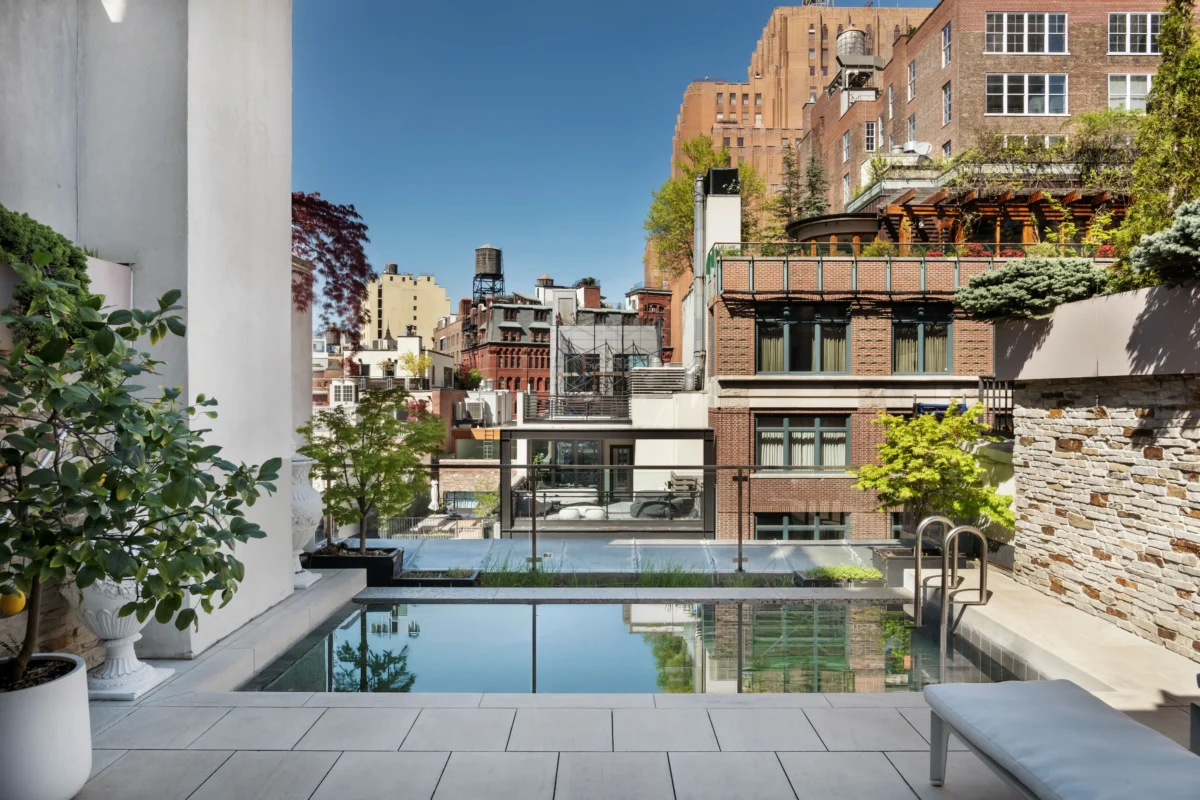
New York City’s prestigious borough of Manhattan is experiencing a dramatic and unprecedented surge in its luxury rental market, with rents shattering previous records as a new class of ultra-wealthy individuals opts for leasing over purchasing. This seismic shift is reshaping the real estate landscape, driven by a confluence of factors including a severe scarcity of high-end properties for sale, investor hesitancy amid fluctuating resale prices, and the looming impact of the state’s proposed pied-à-terre tax. The phenomenon has led to the emergence of a burgeoning "mega-rental" segment, where properties commanding upwards of $100,000 per month are becoming increasingly common, transacted discreetly within an exclusive network of high-end brokers.
Record-Breaking Rents Signal a Market in Flux
The latest market analyses paint a clear picture of an overheated rental sector. According to the Real Deal Report, meticulously compiled by Jonathan Miller, director of markets for Street Matrix, the median rent across Manhattan hit an all-time high of $5,000 a month in July. This milestone underscores the broader upward trajectory, with the average rent across all segments jumping a significant 15% compared with the same period a year ago, reaching an average of $6,306.
However, the true engine of this growth lies squarely within the luxury tier. The top 10% of the market, defined as luxury rentals, has witnessed an even more staggering escalation. Over the past year, the average price for these elite properties soared by an astounding 35%, settling at an average of $17,464 a month. This segment now commands an average of $121 per square foot, a figure that highlights the premium placed on prime Manhattan real estate, even for temporary occupancy. This rapid appreciation in the luxury rental sector significantly outpaces the general market, signaling a distinct and powerful demand from high-net-worth individuals.
Historically, the rental market has been a domain for those not yet ready or able to commit to homeownership. Yet, current trends indicate a reversal of this traditional paradigm among the city’s wealthiest. Many ultra-high-net-worth individuals, possessing ample liquidity to acquire multi-million-dollar properties, are consciously choosing the flexibility and convenience of renting. This strategic decision is driven by several key factors that have converged to redefine the contours of Manhattan’s exclusive property market.
The Confluence of Drivers: Scarcity, Strategy, and Taxation
The dramatic shift towards luxury renting can be attributed to a powerful combination of market dynamics and regulatory changes. Understanding these drivers is crucial to comprehending the current state and potential future trajectory of Manhattan real estate.
A Persistent Inventory Shortage:
One of the most significant forces at play is the historically low supply of high-end properties available for sale. For years, Manhattan’s prime real estate market has struggled with an imbalance, where demand, particularly for trophy assets, frequently outstrips the available inventory. The post-pandemic era exacerbated this issue, as homeowners, having adapted to new living arrangements or enjoying historically low mortgage rates, have shown less inclination to sell. Developers, meanwhile, face protracted timelines for new luxury constructions, navigating complex zoning laws, high material costs, and labor shortages. This scarcity means that even those with substantial purchasing power find themselves in a highly competitive environment, often unable to locate a property that meets their exacting standards.
As Laura Klein of Bespoke Real Estate, a prominent broker specializing in high-value transactions, observes, "These are people who can easily afford $20 million, $50 million trophy homes. There is so little inventory. And they don’t want to compromise." This sentiment perfectly encapsulates the dilemma faced by the discerning ultra-wealthy buyer: rather than settling for a less-than-perfect acquisition, they prefer to lease an exceptional property until their ideal home materializes on the market. This patience, underpinned by significant financial resources, allows them to navigate the sales market strategically without immediate pressure.
Investment Hesitancy Amidst Market Fluctuations:
Another contributing factor is a growing caution among wealthy investors regarding the for-sale market. While Manhattan real estate has long been considered a sound investment, recent years have seen periods of falling or flat prices for resale apartments, particularly in the wake of broader economic uncertainties. This has made ownership less appealing purely from an investment perspective for some, especially when compared to alternative asset classes that might offer more robust or predictable returns. The prospect of significant transaction costs, ongoing property taxes, and the potential for a stagnant or declining asset value has led many to pause. Renting, in this context, offers a de-risked approach, allowing them to maintain their presence in the city without tying up substantial capital in an asset whose immediate appreciation is uncertain.
The Shadow of the Pied-à-Terre Tax:
Perhaps the most direct and recent catalyst influencing this shift is the proposed New York pied-à-terre tax. This legislative initiative, which has been under discussion and gained momentum in recent years (with specific proposals and announcements around early 2026, as referenced in the source’s linked articles), aims to impose an annual tax on non-primary residences in New York City valued at $5 million or more. The tax is intended to generate revenue for public services and address wealth inequality, targeting affluent individuals who own luxury second homes but are not full-time residents.
The announcement and progression of this tax have sent ripples through the high-end real estate market. Pam Liebman, president and CEO of The Corcoran Group, one of New York’s leading real estate firms, succinctly articulated the impact: "The sharp increase in rentals following the pied-à-terre tax announcement suggests that some prospective purchasers may already be choosing flexibility over ownership." For many wealthy individuals considering a second home in Manhattan, the prospect of an additional annual tax, potentially amounting to hundreds of thousands of dollars for ultra-luxury properties, makes renting a significantly more attractive proposition. It allows them to enjoy the benefits of a Manhattan base without incurring the long-term tax liabilities and ownership costs associated with a high-value second home. This legislative change acts as a powerful deterrent to ownership for a specific segment of the market, diverting capital from sales to rentals.
The Rise of the "Mega-Rental": A New Exclusive Niche
The convergence of these factors has not merely pushed up general luxury rents; it has catalyzed the creation of a distinct market segment: the "mega-rental." These are properties leased at extraordinary rates, often exceeding $50,000, and increasingly, $100,000 per month. The growth in this niche is staggering. Data indicates that the number of apartments renting for more than $50,000 a month so far this year has more than doubled compared with 2025, while the number renting for more than $100,000 a month has surged by an astonishing sevenfold.
Laura Klein of Bespoke Real Estate is at the forefront of this ultra-exclusive market. She recently brokered a rental for a penthouse in Chelsea for an astounding $177,000 a month and currently has private listings for properties such as a Tribeca residence at $175,000 a month and an Upper East Side home for $95,000 a month. These figures, once considered unimaginable for a rental, are now becoming almost commonplace within this elite tier. "The $100,000-a-month number is almost normal now," Klein states, highlighting the rapid normalization of these exorbitant prices among her clientele.
Discretion and Demands of the Ultra-Wealthy:
What defines these mega-rentals, and who are their occupants? The clientele consists of ultra-high-net-worth individuals, often international figures, CEOs, celebrities, or those undergoing significant life transitions. Their demands are uncompromising: they seek "turnkey, unique, trophy properties." This means fully furnished, meticulously designed, often professionally staffed residences that offer immediate occupancy without the hassle of renovation, furnishing, or ongoing maintenance. The appeal is the seamless transition into a luxurious lifestyle, with all the amenities and services expected of a multi-million-dollar home, but without the burdens of ownership.
Crucially, these ultra-high-end rentals operate largely outside the public eye. Klein confirms that none of these properties are publicly listed. Instead, they are offered quietly, through a small, interconnected network of high-end brokers who specialize in serving this exclusive demographic. This discreet approach ensures privacy for both the owners and the renters, maintaining an air of exclusivity and facilitating bespoke matches between discerning tenants and exceptional properties.
Opportunistic Owners and Premium Value:
The owners of these mega-rentals are typically not reliant on the rental income for their financial stability. Instead, they are opportunistic, willing to lease out their valuable assets if the market offers a compelling return. As Klein explains, "They say to me, ‘If the number is right, I’ll rent.’" These are often properties that, if they were to enter the sales market, would command prices in the "tens of millions" of dollars. The substantial rental income they generate, combined with the flexibility of retaining ownership while benefiting from a strong demand, makes renting an attractive proposition for these property owners. It allows them to capitalize on current market conditions while potentially waiting for an optimal time to sell, or simply holding onto an asset they cherish while it generates significant passive income.
Broader Implications and Future Outlook
The current state of Manhattan’s luxury rental market carries significant implications for the city’s broader real estate landscape, its economic fabric, and even its social dynamics.
Impact on Manhattan’s Real Estate Landscape:
This shift fundamentally redefines the relationship between wealth and housing in New York City. The traditional aspiration of owning a trophy apartment may be giving way, for a segment of the population, to a preference for a more fluid, service-oriented residential experience. This could potentially influence future luxury development, encouraging a greater focus on ultra-high-end rental buildings designed to cater to this specific demand, perhaps with more expansive amenity packages and integrated service offerings.
Furthermore, the upward pressure on luxury rents has a ripple effect. While the ultra-wealthy occupy a distinct market segment, the overall scarcity and demand for housing in Manhattan mean that elevated prices at the top can exert pressure on mid-tier and even entry-level rental markets, exacerbating the city’s perennial affordability crisis for the majority of its residents. Policymakers and urban planners are keenly observing these trends, as they impact everything from workforce housing to infrastructure planning.
Economic and Social Considerations:
From an economic standpoint, the robust luxury rental market injects significant capital into the local economy through rent payments, maintenance services, and the associated spending patterns of high-net-worth individuals. However, the potential for reduced high-value property sales, influenced by factors like the pied-à-terre tax, could impact the city and state’s revenue streams derived from property transfer taxes, which are substantial. This creates a delicate balance for legislators, who must weigh the social equity goals of taxes on the wealthy against their potential impact on market behavior and overall tax receipts.
Socially, the increasing prevalence of mega-rentals reinforces Manhattan’s status as a global hub for the affluent, but it also highlights the growing chasm in housing accessibility. The existence of properties renting for more than what many New Yorkers earn in a year underscores the unique economic stratification within the city.
Future Projections:
Looking ahead, the sustainability of these unprecedented rental prices will depend on several factors. A significant increase in the supply of luxury properties for sale could ease pressure on the rental market, as could a major shift in economic conditions that makes purchasing more attractive or renting less feasible. Changes in tax policy, such as modifications or repeal of the pied-à-terre tax, would also undoubtedly influence the calculus for potential buyers.
However, for the foreseeable future, as long as inventory remains constrained, investment confidence in the sales market is tempered, and tax policies disincentivize ownership for a segment of the wealthy, Manhattan’s luxury rental market is poised to continue its extraordinary run. The city remains a beacon for global wealth, and for an increasing number of its most affluent inhabitants, the flexibility and curated luxury of renting at astonishing price points have become the preferred mode of urban living. The "Inside Wealth newsletter with Robert Frank," from which this analysis draws, continues to track these fascinating developments, offering a weekly guide to the evolving landscape of high-net-worth consumers and investors in an ever-dynamic market.
