

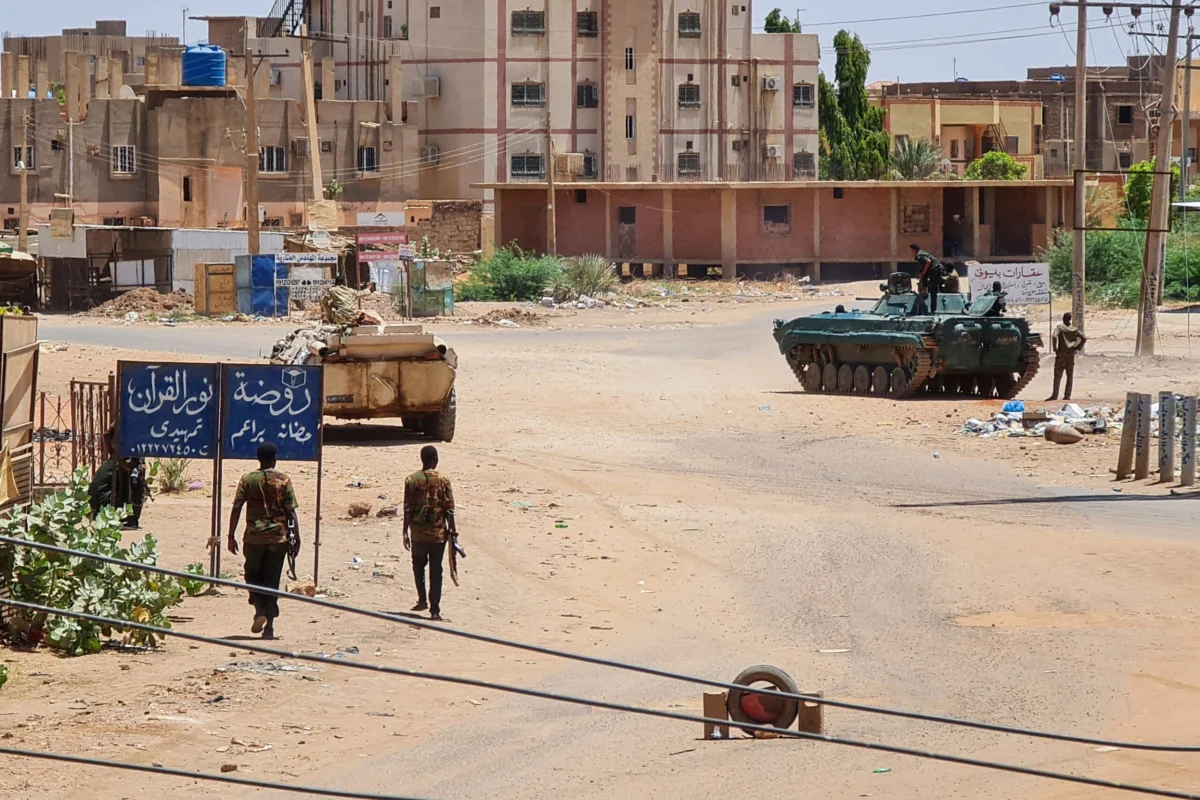
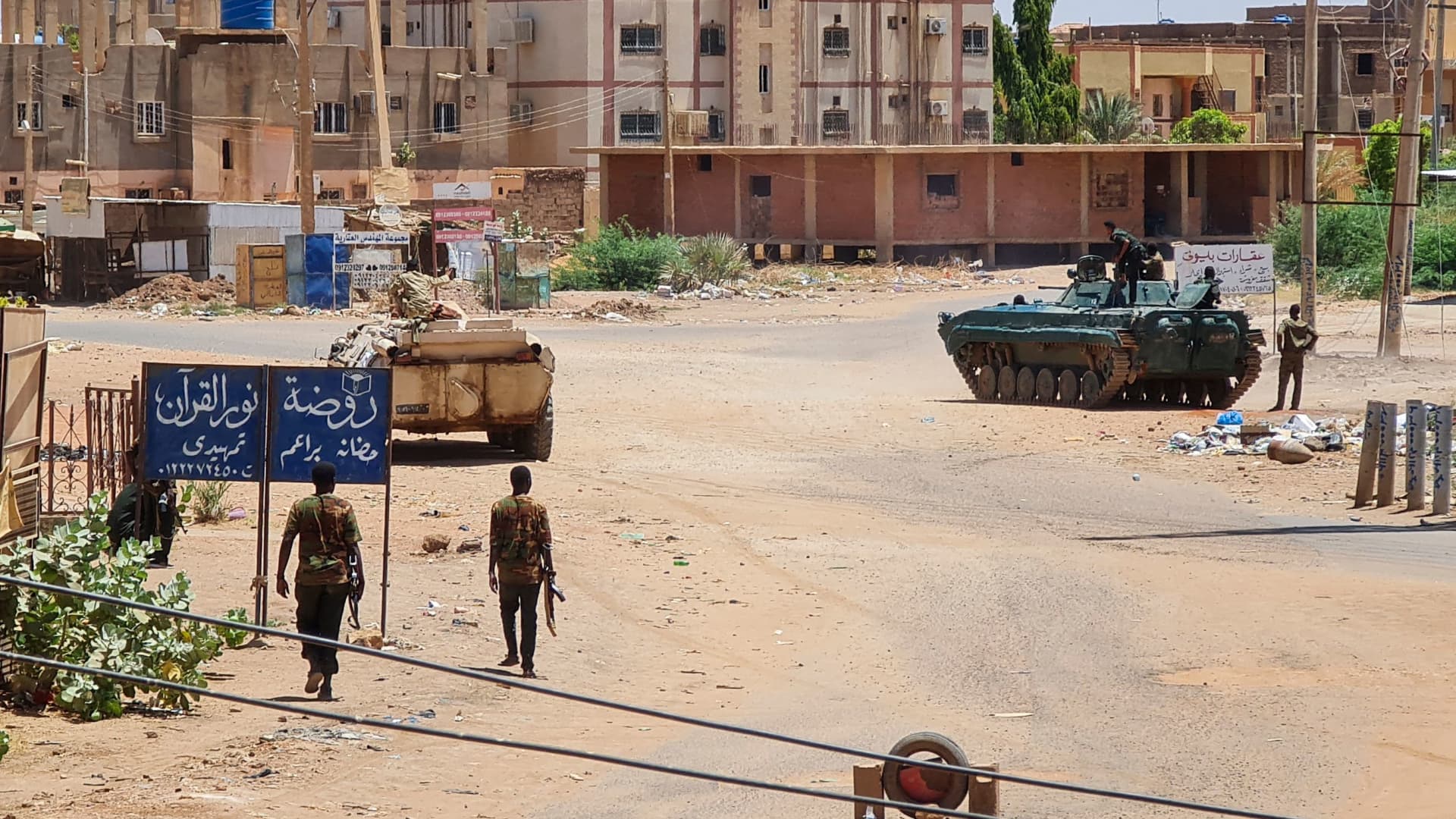
One month after the catastrophic outbreak of hostilities between Sudan’s primary military factions transformed the capital city of Khartoum into a theater of urban warfare, the international community remains deadlocked in its search for a viable resolution. What began as a localized power struggle on April 15, 2023, has rapidly metastasized into a nationwide humanitarian emergency, threatening the stability of the Horn of Africa and the broader Sahel region. Despite a series of high-level, internationally brokered peace talks in Jeddah, Saudi Arabia, the guns have not fallen silent, and the promises of humanitarian corridors remain largely unfulfilled.
As the conflict enters its second month, the Sudanese Armed Forces (SAF), led by General Abdel Fattah al-Burhan, and the paramilitary Rapid Support Forces (RSF), commanded by Mohamed Hamdan Dagalo, known as Hemedti, continue to vie for total control over the state’s apparatus, its vast natural resources, and its 46 million inhabitants. The violence, which initially centered on Khartoum and its sister cities of Omdurman and Bahri, has now reignited old grievances in the long-embattled Darfur region, raising fears of a return to the genocidal violence that plagued the area two decades ago.
The Escalating Human Cost and Displacement Crisis
The humanitarian data emerging from the conflict zones paints a grim picture of a nation in freefall. According to recent reports from the International Rescue Committee (IRC), the official death toll has surpassed 600 individuals, with more than 5,000 others sustaining injuries. However, these figures are widely considered to be significant undercounts, as many casualties remain unrecorded due to the collapse of the healthcare system and the inability of emergency services to reach the hardest-hit areas.
The displacement crisis is perhaps the most visible indicator of the conflict’s severity. Nearly one million people have been forced to flee their homes in just thirty days. Approximately 700,000 are internally displaced within Sudan’s borders, while over 200,000 have crossed into neighboring countries, including Chad, Egypt, Ethiopia, and South Sudan. Many of these neighboring states are already grappling with their own internal instabilities and food insecurity, leading to fears of a secondary humanitarian crisis that could destabilize the entire region.
For those who remain in Khartoum and other conflict zones, daily life has become a struggle for survival. Despite early commitments from both the SAF and RSF to restore essential services, access to food, water, and electricity remains sporadic at best. The price of basic commodities, including fuel and bread, has soared by several hundred percent in some areas. The banking system has largely collapsed, leaving citizens without access to cash, while the looting of markets and humanitarian warehouses has decimated local supply chains.
A Timeline of the Transition to Turmoil
To understand the current impasse, it is necessary to examine the fragile political landscape that preceded the April 15 eruption. The transition toward democracy in Sudan has been fraught with setbacks since the 2019 popular uprising that ended the 30-year dictatorship of Omar al-Bashir.
- August 2019: A power-sharing agreement between military leaders and civilian pro-democracy groups establishes a Transitional Sovereignty Council.
- October 2021: General Burhan and Hemedti, once allies, lead a military coup that ousts the civilian government of Prime Minister Abdalla Hamdok. This move prompts the World Bank and international donors to freeze billions of dollars in aid, crippling the economy.
- December 2022: Under immense domestic and international pressure, the military signs a "framework agreement" to return the country to civilian rule, but the timeline for the integration of the RSF into the national army becomes a major sticking point.
- Early April 2023: Tensions between the SAF and RSF reach a boiling point as both sides mobilize forces in Khartoum and the northern city of Merowe.
- April 15, 2023: Full-scale fighting breaks out in the capital, with both sides trading blame for the initial spark.
The core of the dispute lies in the divergent visions held by the two generals. General Burhan seeks a centralized military structure under his command, while Hemedti, who controls a vast economic empire built on gold mining and mercenary services, views the integration of the RSF as a threat to his autonomy and political future.
The Jeddah Talks and the "Cycle of Impunity"
Diplomatic efforts led by the United States and Saudi Arabia in the port city of Jeddah have sought to establish a lasting ceasefire and facilitate the delivery of aid. While the warring parties signed a "Declaration of Commitment to Protect the Civilians of Sudan" in early May, observers note that the agreement lacks an enforcement mechanism. Tentative truces have been violated within hours of their implementation, with airstrikes and heavy artillery fire continuing to pound residential neighborhoods.
Critics of the diplomatic process argue that the talks are inherently flawed because they lack a substantial voice from Sudanese civil society. Many activists believe that by negotiating exclusively with the generals, the international community is inadvertently legitimizing their "belligerence."
"Global leaders have essentially rewarded the military’s seizure of power by treating them as the only viable stakeholders," said Yassmin Abdel-Magied, a Sudanese-Australian writer and activist. She argues that the current framework ignores the millions of Sudanese who risked their lives in 2019 to demand a civilian-led government. Without the threat of harsh international sanctions against the personal assets of the generals and their inner circles, there is little incentive for them to stop fighting.
The role of foreign powers also complicates the path to peace. Various regional actors, including Egypt, the United Arab Emirates, and Saudi Arabia, have historical or strategic ties to the different factions. Experts suggest that these external interests create a "cycle of impunity," where the warring generals feel insulated from the consequences of their actions due to the political and financial support they receive from abroad.
The Role of Resistance Committees and Civil Society
Amidst the failure of formal diplomacy, the burden of governance and survival has fallen on the shoulders of Sudanese civilians. The "Resistance Committees"—informal, neighborhood-based networks that were instrumental in the 2019 revolution—have pivoted from political activism to humanitarian relief.
These grassroots organizations have been operating in the vacuum left by the state and international NGOs. They have organized "emergency rooms" to coordinate evacuations, provide first aid, and distribute food and clean water. They have also worked to repair damaged infrastructure and protect hospitals from being looted.
Civil society leaders argue that these committees should have a seat at the negotiating table. They believe that a sustainable solution must involve a complete restructuring of the military-political complex, rather than a mere return to the pre-April status quo. Accountability for past atrocities, including those committed during the 2021 coup and the current conflict, is seen as a non-negotiable prerequisite for long-term stability.
Analysis: The Risk of State Failure
The stakes for Sudan could not be higher. If the fighting continues unabated, analysts warn that the country faces the very real prospect of total state collapse. Sudan occupies a strategic position bordering seven countries and the Red Sea; its disintegration would likely trigger a massive refugee wave, empower extremist groups in the Sahel, and disrupt global trade routes.
"Sudan was not in a great place even before this started," noted Abdel-Magied. "What we are looking at is the potential for decades of dysfunction if the fall isn’t arrested now."
The international community is currently at a crossroads. There is a growing consensus among humanitarian organizations that a "business as usual" approach to diplomacy will not suffice. The IRC and other bodies have called for a shift in strategy that prioritizes civilian protection above all else and exerts direct pressure on the external sponsors of the conflict.
The coming weeks will be decisive. As the rainy season approaches, the risk of waterborne diseases and further food shortages increases. Without a breakthrough that moves beyond the "two generals" paradigm and includes the democratic aspirations of the Sudanese people, the nation risks becoming another "forever war" in a region that can ill afford more instability. The consensus among those on the ground is clear: the international community must act with intentional, diligent thought to prevent the worst-case scenario—the utter and complete failure of the Sudanese state.
