

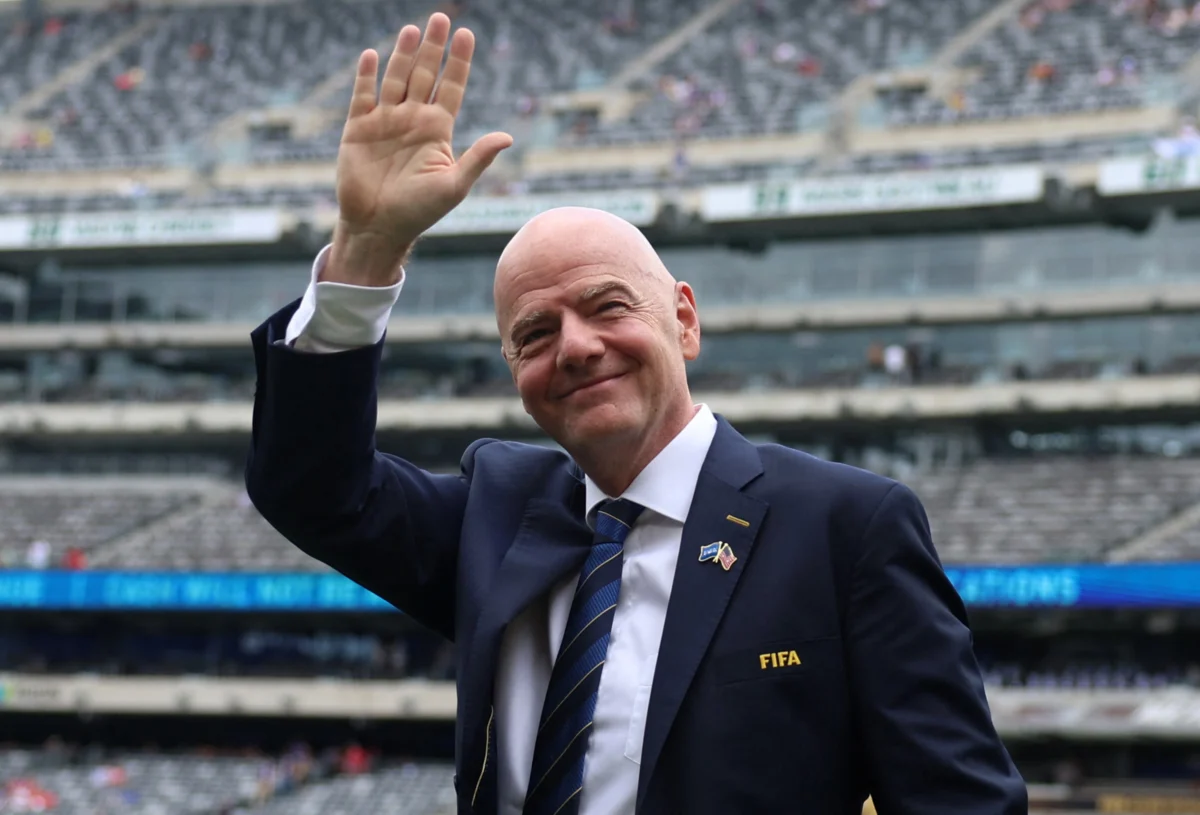
The Royal Dutch Football Association (KNVB) has issued a powerful call for a sweeping overhaul of FIFA, demanding that its current president, Gianni Infantino, be replaced by 2027 and that the global governing body for football undergoes fundamental structural reforms. In a scathing statement released on Sunday, the KNVB, a venerable founding member of FIFA dating back to 1904, declared a profound loss of confidence in Infantino’s leadership and articulated a vision for a revitalized FIFA built on principles of improved governance, transparency, and a renewed focus on football development and human rights. To spearhead this ambitious initiative, the Dutch federation has proposed hosting an international summit in Amsterdam, inviting football associations and confederations from across the globe to collectively chart a new course for the sport’s global governance.
A Crisis of Confidence and a Call for Change
The KNVB’s statement represents a significant challenge to FIFA’s current leadership, particularly as President Infantino prepares to run for re-election in March. The Dutch body’s discontent is rooted in what it perceives as an excessive concentration of power around the FIFA president and an insufficient separation between the presidency and the administrative functions of the organisation. This concern echoes broader sentiments among some regional football bodies, who have reportedly considered a vote of no confidence in Infantino following his controversial, albeit ultimately aborted, proposal to sell a stake in lucrative FIFA events, such as the World Cup, to private equity investors.
"The KNVB no longer has confidence in the leadership of FIFA President Gianni Infantino. We believe FIFA needs new leadership from 2027 onwards," the statement asserted, making its position unequivocally clear. However, the KNVB stressed that a mere change at the top would be insufficient to address the deep-seated issues it identifies. "But a new president alone is not enough. The way FIFA is governed must change as well." The association highlighted that its initial support for Infantino in the most recent presidential election was never "unconditional," indicating a growing disillusionment that has culminated in this public declaration.
The proposed "International Summit on the Future of FIFA" is envisioned as a critical forum where member associations can collectively determine "what kind of FIFA we want" before identifying new leadership. This sequencing underscores the KNVB’s belief that structural reform must precede, or at least run parallel to, any change in personnel at the helm. The explicit criticism of power dynamics within FIFA — "We see too much power concentrated around the FIFA president and insufficient separation between the President and the FIFA administration" — suggests a desire for a more distributed and accountable governance model. As of the time of reporting, FIFA had not responded to requests for comment regarding the KNVB’s statement and its proposed plans for a summit.
KNVB’s Blueprint for a Transformed FIFA
The Dutch football association has outlined a comprehensive set of reform priorities designed to fundamentally alter FIFA’s operational and ethical framework. These priorities extend beyond mere leadership changes to encompass a complete reimagining of decision-making processes, financial distribution, and core values.
Central to the KNVB’s demands is a significant revamp of the organisation’s decision-making structure. It advocates for the FIFA Congress, comprising all 211 member associations, to assume greater authority over key decisions, operating under the governance and supervision of the FIFA Council. This proposed shift aims to decentralize power and enhance democratic participation, moving away from a model perceived as overly reliant on the executive branch. Furthermore, the KNVB proposes a redefinition of roles within the top hierarchy, suggesting that the organisation’s secretary-general should take the lead in day-to-day operations and administration, allowing the president to primarily fulfil a global representational role. This separation of powers is intended to create stronger checks and balances and prevent the accumulation of undue influence by a single individual.
Beyond governance, the KNVB has articulated three overarching reform priorities:
- Better Governance with Stronger Checks and Balances: This directly addresses the concerns about concentrated power and seeks to implement robust mechanisms to ensure accountability and transparency across all levels of the organisation.
- Putting Human Rights and Sustainability at the Heart of Decision-Making: This priority reflects a growing global expectation for sports organisations to demonstrate ethical leadership and responsibility, particularly in light of recent controversies surrounding major tournaments hosted in countries with questionable human rights records. The integration of these principles into core decision-making processes would represent a significant shift from a purely commercial or sporting focus.
- Stronger International Cooperation: The KNVB emphasizes the need for a truly collaborative approach, ensuring that reforms are not dictated by a select few but developed collectively by FIFA’s diverse membership. This underpins the inclusive nature of the proposed Amsterdam summit.
Financially, the KNVB also seeks a substantial reorientation of FIFA’s revenue distribution model. It advocates for FIFA to work towards reinvesting up to 90 percent of its distributable revenue directly into football development worldwide. This proposal directly aligns with Infantino’s stated aim last week to close the financial gap between FIFA’s wealthy members and those with limited resources. However, the KNVB’s emphasis on a collective, inclusive approach ("This should not be a European plan for the ‘rest of the world.’ We want to develop this new direction together with FIFA’s 211 Member Associations and the confederations from all parts of the world") suggests a desire to ensure that such development initiatives are genuinely globally representative and not perceived as dictated by European interests.
A Troubled Past and the Path to Reform
The KNVB’s robust stance is not an isolated event but rather emerges from a tumultuous period in FIFA’s history, marked by high-profile corruption scandals and persistent questions about governance. The most significant crisis erupted in 2015 when U.S. and Swiss authorities launched investigations into widespread bribery, fraud, and money laundering schemes involving top FIFA officials. This scandal led to the indictment of numerous executives, shattered the organisation’s reputation, and ultimately resulted in the resignation of then-President Sepp Blatter after nearly two decades at the helm.
Gianni Infantino, then UEFA’s Secretary-General, was elected FIFA President in February 2016 on a platform promising radical reform, transparency, and a restoration of trust. He vowed to clean up the organisation and lead it into a new era. His early tenure saw some structural changes, including the disbanding of the executive committee and its replacement with a larger FIFA Council. However, several of his subsequent proposals and actions have drawn criticism and fuelled concerns about a return to centralized power.
Among the most controversial initiatives were the proposals for a biennial World Cup, which met with fierce opposition from UEFA and CONMEBOL, arguing it would dilute the prestige of the tournament, overburden players, and disrupt the international match calendar. Another significant point of contention was the plan to sell commercial rights to new club and national team competitions to a consortium of private investors for an estimated $25 billion, a deal that was eventually abandoned amidst widespread skepticism from member associations and confederations who felt sidelined from the decision-making process. The KNVB’s current statement explicitly references the discontent arising from such aborted proposals, signaling that these events have eroded confidence in Infantino’s judgment and leadership style.
UEFA, the European governing body of which the KNVB is a member, has often been a vocal critic and a significant counterweight to FIFA under Infantino’s presidency. This tension was further highlighted when UEFA asked a United States federal court for permission to obtain testimony and documents from FIFA entities in Florida. This action was reportedly in connection with a planned criminal complaint in Switzerland against Infantino, underscoring a deep-seated and ongoing conflict between the two most powerful footballing bodies. The KNVB’s move can therefore be seen as aligning with, and amplifying, a broader European sentiment regarding the need for greater accountability and reform within FIFA.
The Road Ahead: Challenges and Implications
The KNVB’s call for a summit and comprehensive reform presents both a significant challenge to Infantino’s re-election bid and a potential turning point for global football governance. While the KNVB is a respected and influential federation, gathering the necessary momentum and consensus among FIFA’s 211 diverse member associations will be a formidable task.
FIFA’s structure, with one vote per member association regardless of size or economic power, means that Infantino has historically cultivated strong support among smaller federations, particularly those in Africa, Asia, and CONCACAF. These federations often benefit significantly from FIFA’s development funds and increased World Cup participation opportunities. Infantino’s recent emphasis on closing the gap between wealthy and less affluent members resonates strongly with these constituencies. The KNVB’s explicit statement that their reform proposal "should not be a European plan" is a clear acknowledgement of the need to broaden appeal beyond Europe and address the concerns of a global membership.
The success of the proposed Amsterdam summit will depend heavily on the willingness of other major confederations – such as the Asian Football Confederation (AFC), the Confederation of African Football (CAF), CONMEBOL (South America), CONCACAF (North, Central America, and Caribbean), and the Oceania Football Confederation (OFC) – to participate and endorse the KNVB’s vision. Should a significant number of these bodies align with the KNVB, it could create substantial pressure on Infantino and force a serious reconsideration of FIFA’s governance model. However, many federations may be hesitant to openly challenge the incumbent president, particularly given the financial leverage FIFA holds and the potential for perceived retaliation.
The implications of the KNVB’s initiative are far-reaching. If successful, it could lead to a more democratic and transparent FIFA, with stronger institutional checks and balances, and a greater emphasis on ethical considerations and sustainable development. It could also herald a new era of leadership that prioritizes collaboration over centralization. Conversely, if the initiative fails to gain widespread traction, it could consolidate Infantino’s power and demonstrate the difficulty of enacting significant change within FIFA’s established political landscape.
Ultimately, the KNVB’s bold declaration marks a critical juncture for international football. It highlights a persistent desire among key stakeholders for a FIFA that is truly representative, accountable, and dedicated to the holistic development of the sport worldwide, rather than being perceived as driven by individual ambition or opaque financial dealings. The coming months, leading up to Infantino’s re-election bid and the potential Amsterdam summit, will be crucial in determining whether this call for reform can translate into tangible change for the future of global football.
