


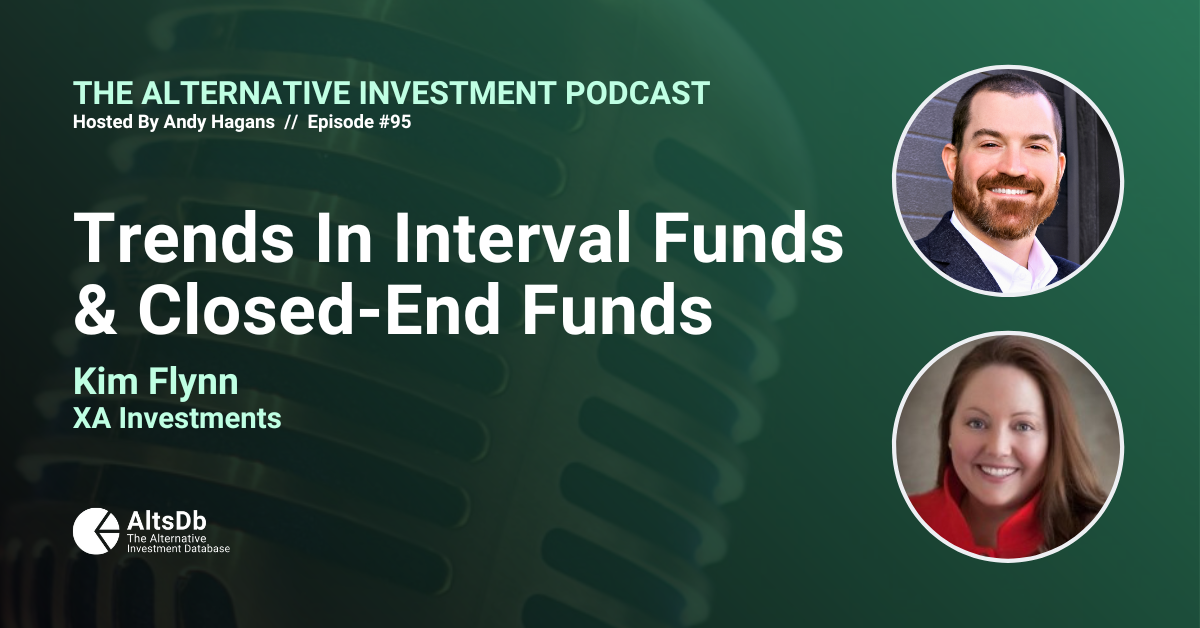
Interval funds have experienced an unprecedented surge in popularity over the past five years, mirroring the broader expansion of the alternatives industry. This dynamic growth has brought both opportunities and significant challenges for sponsors navigating this evolving landscape. Kim Flynn, managing director at XA Investments, shared her expert insights on the burgeoning success story of interval funds and the complexities sponsors are currently facing in a recent interview on The Alternative Investment Podcast.
The rise of interval funds is intrinsically linked to the growing investor appetite for diversified portfolios that extend beyond traditional stocks and bonds. As investors seek enhanced yields and uncorrelated returns, alternative investment vehicles have become increasingly attractive. Interval funds, in particular, offer a unique structure that bridges the gap between traditional mutual funds and less liquid private investments, making a broader spectrum of alternative assets accessible to a wider investor base.
The Evolution of Alternative Investment Vehicles
For years, the alternatives landscape was largely dominated by private equity, venture capital, and real estate funds, which typically came with high minimum investment requirements, long lock-up periods, and were accessible primarily to institutional investors and accredited individuals. This inherent illiquidity and exclusivity presented a barrier for many seeking to diversify their portfolios with alternative strategies.
The emergence and subsequent growth of listed closed-end funds (CEFs) offered an initial solution, providing exchange-traded access to various asset classes, including municipal bonds, equities, and credit strategies. However, CEFs often trade at significant discounts or premiums to their net asset value (NAV), creating valuation complexities for investors and sometimes posing liquidity challenges.
The past decade has witnessed a significant shift, with a growing number of asset managers exploring structures that can accommodate less liquid alternative assets while offering some level of liquidity. This is where interval funds and tender offer funds have gained considerable traction.
Understanding the Interval Fund Structure
Kim Flynn, with her extensive background in product development at Nuveen, where she was instrumental in launching over 40 closed-end funds, brings a wealth of experience to the discussion. Her tenure at Nuveen, a recognized leader in the listed closed-end fund market, provided her with a deep understanding of complex financial products, particularly those rooted in municipal bonds, an area where Nuveen has a long-standing heritage.
"The work that we did at Nuveen, one thing that surprises people is that it was often in partnership with outside portfolio managers," Flynn explained. "And when I left Nuveen in 2016, I launched an asset management platform as part of an investment bank here in Chicago, to do just that, to focus on alternatives, and to do it in partnership with sub-advisors." This experience has given her a unique perspective on the dialogue between asset managers, from small boutiques to large global wealth managers, and the evolving needs of the investment market.
Flynn highlighted that interval funds, while a type of closed-end fund, possess distinct characteristics that make them suitable for housing alternative investments. Unlike traditional daily-liquid mutual funds where investors can redeem shares at NAV on a daily basis, interval funds offer limited liquidity, typically allowing investors to redeem only a certain percentage of their holdings (e.g., 5% per quarter). This restricted liquidity is a crucial element that enables interval funds to invest in less liquid assets, such as real estate, private equity, venture capital, and complex credit instruments, which often require longer investment horizons to mature and generate attractive returns.
The Appeal and Mechanics of Closed-End Funds and Interval Funds
Historically, listed closed-end funds have been a popular choice for income-seeking investors. Their structure, where a fixed number of shares are issued and then traded on an exchange, differs significantly from exchange-traded funds (ETFs) which have creation and redemption mechanisms to keep their market price closely aligned with NAV.
"So, the interesting thing about listed closed-end funds is that the historical average discount is about 4.5%," Flynn noted. "And not surprising, closed-end funds used to be sold with loads that equaled 4.5%." This discount mechanism can present an opportunity for secondary market buyers, who may acquire shares at a price below their underlying asset value. However, Flynn also pointed out that current market dislocations have led to wider discounts, with some 2021 IPOs trading at discounts of 10% to 20%.
The use of leverage is another common feature in closed-end funds, particularly those focused on income generation. "One of the main differences between a closed-end fund and the mutual fund is the use of leverage," she stated. "And leverage is typical. It’s modest leverage, but it’s usually used with income enhancement in mind." This can allow for enhanced yields compared to similar open-end funds, a significant draw for investors navigating a prolonged period of low interest rates prior to recent rate hikes.
Interval funds, while sharing the "closed-end" designation, are continuously offered and can grow over time, unlike traditional CEFs that are closed to new capital after their initial offering. This continuous offering structure, combined with the quarterly redemption feature, allows them to hold a more diverse and potentially less liquid portfolio of assets.
Navigating the Challenges of Interval Funds
Despite their growing popularity and the unique opportunities they present, interval funds are not without their complexities and potential pitfalls. One of the primary concerns highlighted by Flynn revolves around liquidity management and investor expectations.
"I do find that as we observe industry participants, a lot of them gloss over, and they frankly oversell the liquidity of an interval fund," Flynn expressed. "These are not mutual funds, and they should not be sold in that fashion." She cautioned that the limited quarterly redemptions, subject to potential pro-rata limitations, can lead to investor frustration and concern, especially during periods of market stress.
The historical precedent of the 2008-2009 financial crisis serves as a stark reminder of the potential for liquidity crunches in such structures. During that period, funds with similar redemption features faced significant redemption requests, leading to prolonged pro-rata limitations and, in some cases, fund closures.
Flynn emphasized the critical importance of managing investor expectations regarding liquidity constraints and the appropriate investment horizon for interval funds. "The buyer base for these funds initially is largely RIAs, but it’s still fairly concentrated," she observed. "You know, it was the RIA that understood real estate, or that had been buying BDCs, and so they were much more comfortable with alternatives." This points to a significant need for enhanced investor education to broaden the appeal and understanding of interval funds among a wider range of financial professionals and their clients.
XA Investments: Facilitating Access to Alternatives
XA Investments, where Kim Flynn serves as managing director, plays a pivotal role in this evolving market. The firm operates on a model of partnering with external asset managers, either as sub-advisors for their own funds or through a consulting practice that assists asset managers in launching their proprietary fund offerings.
"We have been responsible for helping new fund sponsors enter the listed closed-end fund market," Flynn explained. "But I would say most of our clients are curious and most interested in the growing interval fund space. So that’s a lot of where we spend our time." XA Investments focuses on guiding managers through the intricacies of product development, capital raising, and market positioning, particularly within the interval fund sector.
The firm’s approach emphasizes a deep understanding of client needs, especially those of Registered Investment Advisors (RIAs), who form a crucial segment of the interval fund market. By focusing on client-centric product design and robust educational outreach, XA Investments aims to ensure that interval funds are appropriately utilized and that investors are well-informed about their characteristics.
Emerging Trends in the Alternatives Landscape
Looking ahead, Flynn identified several emerging trends that are likely to shape the alternatives industry in the coming years. One significant trend is the increasing number of RIAs considering launching their own proprietary interval funds. "The RIA, the wealth manager, who has become acquainted with interval funds and says, ‘Hey, I’m gonna launch my own. You know, I’m gonna build my own proprietary interval fund because I’m the one with the relationship with the client’," she noted. This move allows RIAs to capture more of the fee structure and leverage their existing client relationships.
A related trend is the growth of direct-to-consumer fintech platforms that are also launching interval funds, often targeting a broader investor base, including non-accredited investors. Platforms like Fundrise have demonstrated success in this space, indicating a growing demand for accessible alternative investments.
The third trend identified is the emergence of impact-oriented interval funds. Despite some ESG (Environmental, Social, and Governance) backlash in the U.S., there has been a notable launch of five impact funds. These funds, often investing in alternative or illiquid securities, offer a different approach to impact investing compared to traditional ESG ETFs, potentially appealing to investors seeking distinct return profiles and tangible social or environmental outcomes.
The Importance of Education and Due Diligence
The proliferation of interval funds and other alternative investment structures underscores the critical need for ongoing education for both financial professionals and investors. As Flynn aptly put it, "The education is really what’s important, so that, you know, the right investors are getting into the product, and they understand it, and the advisors understand it."
The success of these vehicles hinges on transparency, accurate valuation, and a clear understanding of their inherent liquidity characteristics. While the innovation in the interval fund space is driving accessibility to a broader range of alternative assets, a responsible approach to product development, marketing, and investor education is paramount to ensure the long-term sustainability and integrity of this rapidly growing segment of the financial markets.
XA Investments, through its expertise and commitment to facilitating informed investment decisions, is positioned to play a vital role in guiding asset managers and investors through the evolving landscape of interval funds and the broader alternatives industry.
