

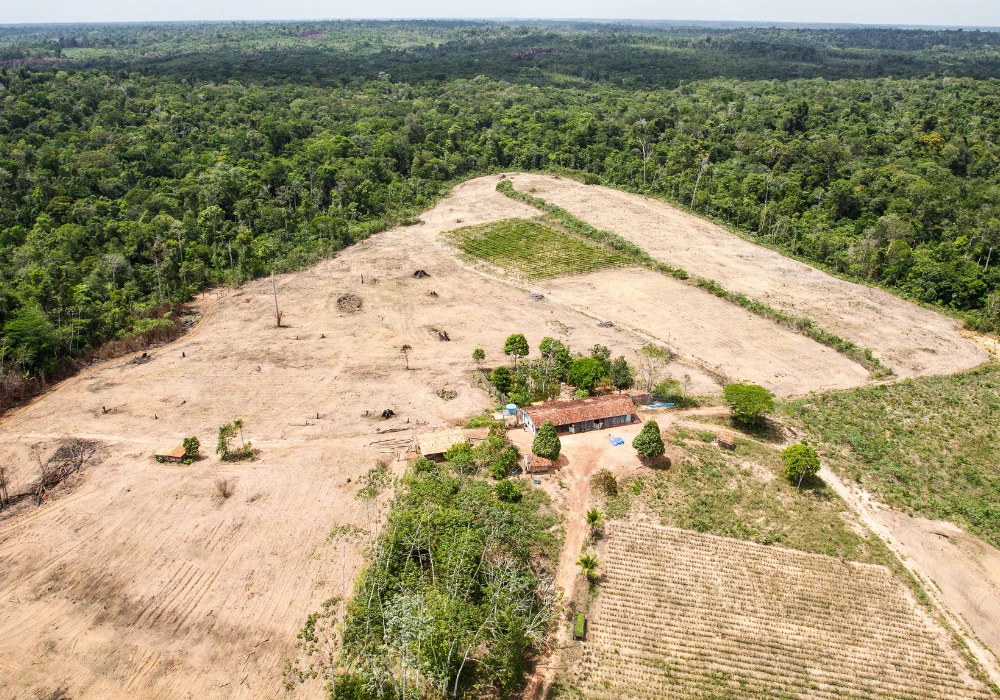
The global effort to mitigate climate change has largely relied on a bifurcated approach to carbon management. On one side, regulated "compliance" markets force industrial polluters to pay for their emissions, while on the other, a fragmented "voluntary" market allows corporations to fund nature-based solutions like reforestation. However, as global temperatures continue to rise and industrial decarbonization remains slow, a growing chorus of economists and environmental scientists is calling for a fundamental shift: the integration of nature into mandatory, government-regulated carbon markets.
According to Chris Costello, the chief economist at the Environmental Defense Fund (EDF), nature represents the single largest untapped opportunity in the fight against climate change. While industrial smokestacks are the traditional targets of regulation, Costello argues that mismanaged ecosystems—characterized by rampant deforestation and catastrophic wildfires—act as "natural smokestacks" that often dwarf industrial emissions. By bringing these natural systems into the rigorous architecture of compliance markets, governments could unlock a massive supply of high-integrity carbon credits, potentially lowering the cost of climate action and allowing for more ambitious national targets.
The Dual Architecture of Global Carbon Markets
To understand the proposed shift, it is necessary to distinguish between the two primary types of carbon markets currently in operation. Compliance markets, such as the European Union Emissions Trading System (EU ETS) or California’s Cap-and-Trade program, are mandatory systems established by governments. These markets set a "cap" on the total amount of carbon that specific sectors—usually power generation, heavy industry, and transportation—can emit. Companies within these sectors are issued or must buy allowances. If a company reduces its emissions below its allowance, it can sell the surplus to others, creating a financial incentive for the cheapest possible decarbonization.
In contrast, voluntary carbon markets (VCMs) operate outside of government mandates. They consist of individual contracts where entities buy "offsets" from specific projects, such as a wind farm in India or a tree-planting initiative in the Amazon. While well-intentioned, the VCM has faced significant criticism and scandals involving "non-additionality"—instances where credits were sold for protecting forests that were never actually under threat, or for projects that failed to deliver permanent carbon sequestration.
Currently, there are approximately 60 to 70 compliance markets operating worldwide. With the notable exception of New Zealand, these regulated systems almost exclusively exclude nature-based credits. This exclusion leaves the management of forests, wetlands, and agricultural soils to the less regulated, smaller-scale voluntary sector, which Costello argues is a missed opportunity of staggering proportions.
Quantifying the "Nature Opportunity"
The scale of the climate challenge is often measured in gigatons. Global net emissions currently hover around 53 billion tons (gigatons) per year. To reach the targets set by the Paris Agreement and achieve net-zero by 2050, this number must be brought to zero.
Presently, all the world’s compliance markets combined are responsible for reducing emissions by only one to two gigatons annually. In contrast, Costello’s research at the EDF suggests that if nature were properly integrated into these compliance architectures, it could provide between 8 and 14 gigatons of carbon reductions or removals per year at a relatively low cost. This would mean that nature-based solutions could potentially contribute more to global climate goals than the entire current industrial carbon-pricing infrastructure.
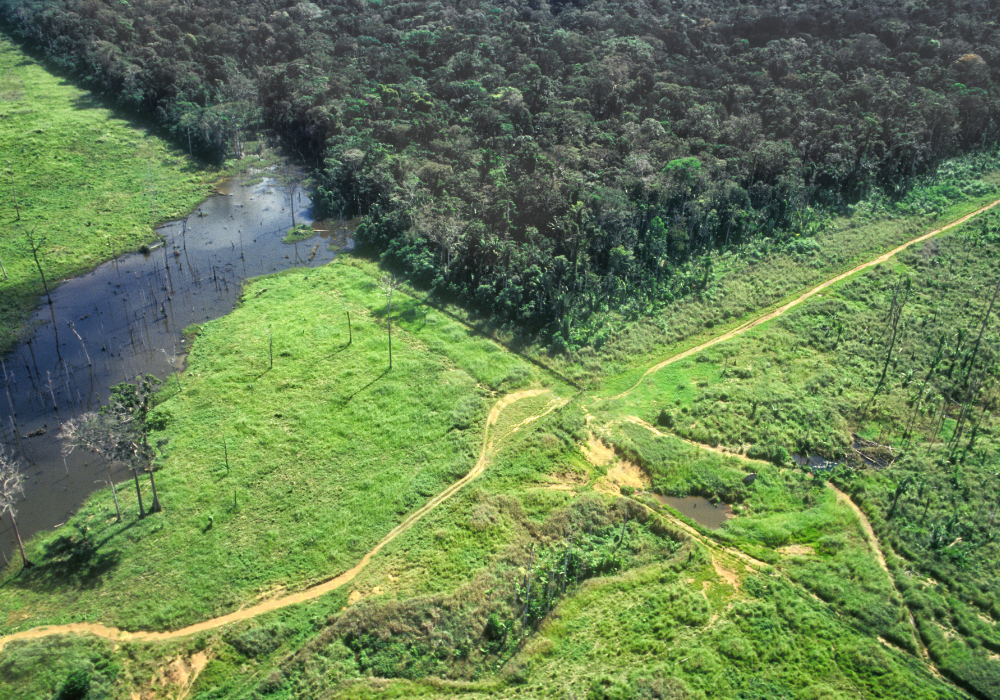
The economic logic is straightforward: if nature-based credits are proven to be real and durable, they can be produced at a lower cost than many industrial carbon-capture technologies. If the price of a carbon credit drops from $80 a ton (the cost of some industrial interventions) to $30 a ton (the cost of a high-quality forest restoration credit), governments can afford to set much lower emission caps, accelerating the overall pace of decarbonization without crippling the economy.
Nature as an Emission Source: The "Natural Smokestack"
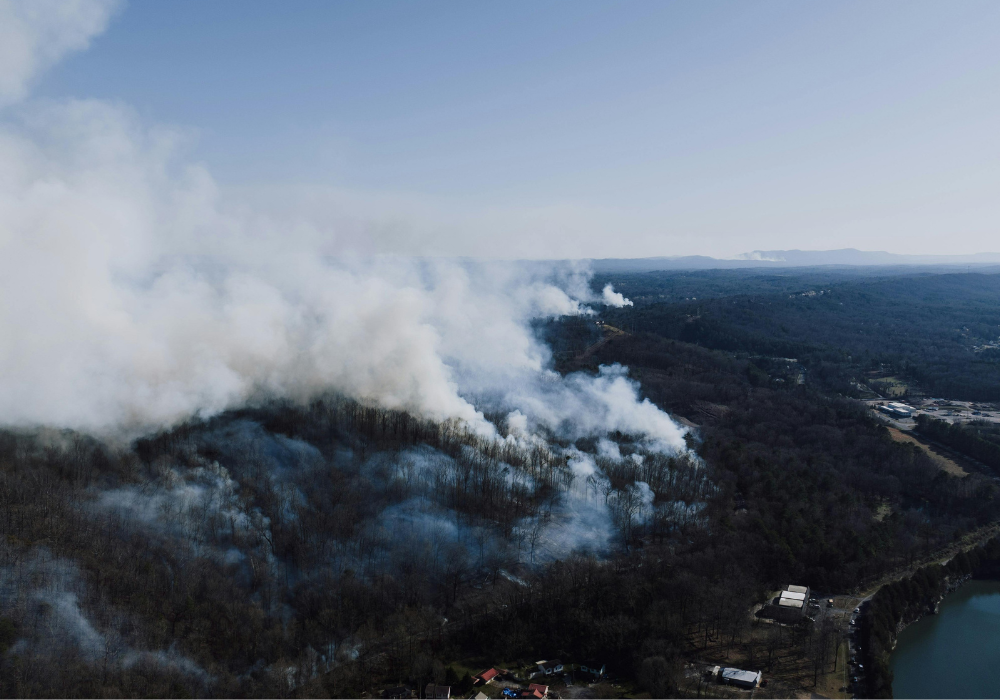
One of the most compelling arguments for bringing nature into regulated markets is the recognition of ecosystems as major sources of pollution when mismanaged. In 2023, Canada experienced its most devastating wildfire season on record. The emissions from these fires were estimated at roughly three billion tons of carbon dioxide—nearly triple the annual emissions from Canada’s entire industrial, transportation, and agricultural sectors combined.
When a forest burns or is cleared for agriculture, the carbon stored in the trunks, leaves, and soil is released into the atmosphere. In this context, a burning forest is functionally identical to a coal-fired power plant. However, because these "natural smokestacks" are not part of a compliance market, there is no direct financial penalty for the mismanagement that leads to megafires, nor is there a standardized financial reward for the preventative management that could avert them.
The goal of market integration is to flip this script. By assigning a value to the carbon stored in standing forests and the carbon sequestered by healthy soils, the market creates a "carrot" for conservation and restoration.
Solving the Integrity Crisis: The Jurisdictional Approach
The primary hurdle to integrating nature into compliance markets is the legacy of failure in the voluntary sector. Skeptics point to the "additionality problem"—the difficulty of proving that a specific project actually changed the outcome on the ground.
To address this, Costello and the EDF advocate for a "jurisdictional approach." Instead of measuring carbon fluxes at the level of a single 100-acre project, the compliance architecture measures the entire carbon balance of a jurisdiction—such as a province, a state, or a whole country.
By setting a baseline for an entire region and measuring total emissions and removals annually, the system eliminates many of the risks associated with project-based credits. If a forest is protected in one county but deforested in the next, the jurisdictional data will show no net gain, and no credits will be issued. This "macro" view ensures that the tons being traded are real, additional, and permanent.
The Challenge of Monitoring, Reporting, and Verification (MRV)
For a market to function, buyers must have absolute confidence in the product. In carbon markets, this requires rigorous Monitoring, Reporting, and Verification (MRV). While it is relatively easy to measure the carbon output of a smokestack using sensors or fuel consumption proxies, measuring the carbon flux of a forest or an ocean ecosystem is significantly more complex.
Current MRV technology for forests is advanced, utilizing satellite imagery, LiDAR (Light Detection and Ranging), and ground-based soil sampling to create accurate carbon maps. However, other sectors are still in their infancy:
- Agriculture: Measuring carbon sequestration in soil is difficult due to high variability across different land types and the impact of tilling practices.
- Blue Carbon: Ecosystems like mangroves, salt marshes, and kelp forests are incredibly efficient at sequestering carbon—mangroves can store up to four times more carbon than terrestrial forests per acre. However, measuring carbon "sinks" in the ocean is a technological frontier where precision is currently lacking.
Costello acknowledges that while we are ready to integrate forests into compliance markets today, the oceans and agricultural soils may require more time to develop the necessary data precision. "We know it’s happening because the physics and chemistry tell us it has to be," Costello noted, "but it’s very hard to say it was eight tons rather than seven."
Economic Implications and the "Price of Progress"
A common critique of nature-based credits is that if they are too cheap, they will allow industrial polluters to continue "business as usual" by simply buying inexpensive offsets rather than cleaning up their own operations.
However, economists argue that this view misses the point of a cap-and-trade system. If the integrity of the credit is high—meaning one ton of nature-based carbon removal is scientifically equivalent to one ton of industrial emission—then the atmosphere is indifferent to the source of the reduction. The primary goal is to lower the total amount of CO2 in the air as quickly and efficiently as possible.
Furthermore, a lower carbon price driven by high-quality nature credits can actually empower regulators. When the cost of compliance is lower, political resistance to tightening the "cap" diminishes. This allows governments to pursue more aggressive climate targets that would have been politically or economically impossible if the only options were expensive industrial overhauls.
Conclusion: A New Frontier for Climate Policy
The transition from voluntary to compliance-based nature markets represents a maturation of the global climate response. By moving away from isolated, "feel-good" projects and toward a systemic, jurisdictional approach, policymakers can turn nature into a core pillar of the global economy.
The integration of nature into regulated carbon markets is not a panacea, but it offers a path toward reconciling economic growth with ecological preservation. As countries like Canada grapple with the dual threat of industrial emissions and catastrophic wildfires, the argument for a unified carbon accounting system becomes harder to ignore. If the goal is a net-zero future, the world can no longer afford to leave its most powerful carbon-sequestration machine—nature itself—outside the regulatory tent.
