

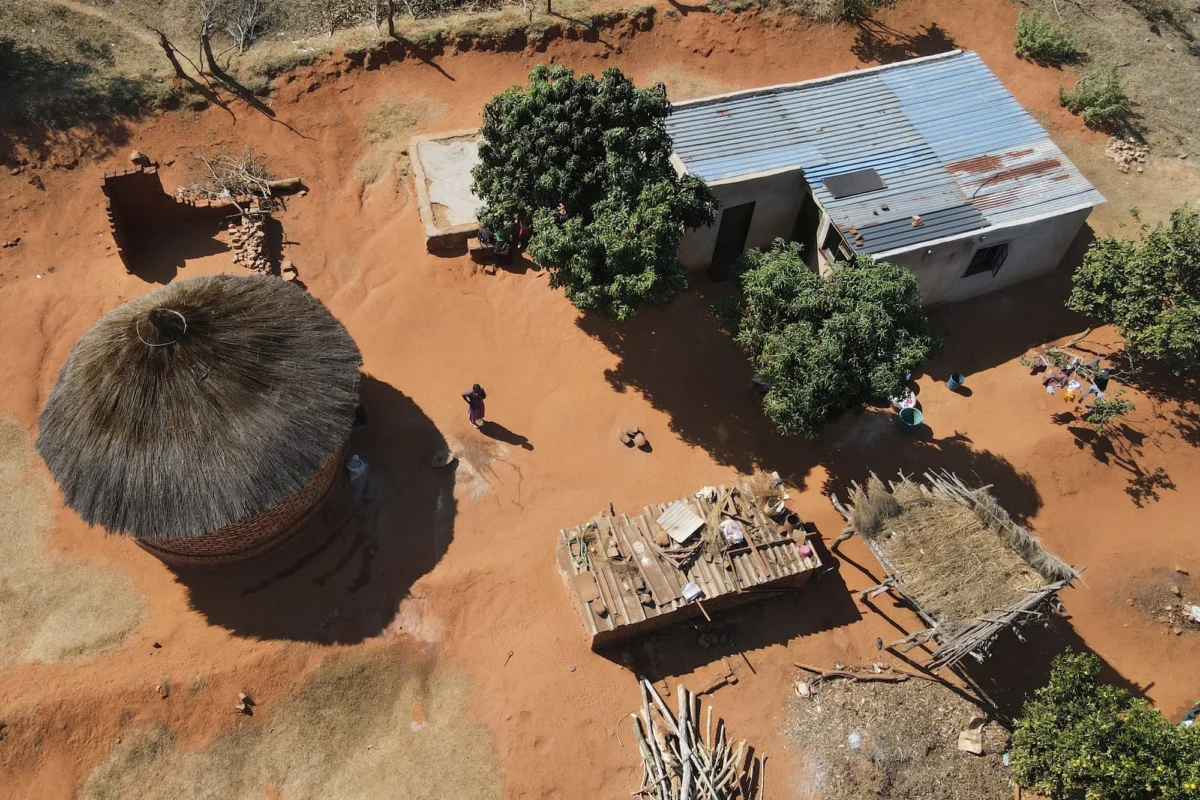
In the rolling landscapes of eastern Zimbabwe, near the city of Mutare, the architectural landscape is shifting. Amidst the traditional homesteads of Chitiyo village, modern brick houses with tiled roofs and solar panels are becoming increasingly common. For 38-year-old Esther Mwedzi, a mother of three, her four-bedroom home is more than just a shelter; it is a monument to a grassroots financial revolution. Standing on her front veranda, Mwedzi reflects on an achievement that once seemed impossible for a resident of a rural area where formal banking services are virtually non-existent.
Mwedzi’s path to homeownership did not involve a mortgage from a commercial bank or a government housing grant. Instead, she utilized the "mukando" system—an informal savings and lending model that has become the backbone of rural Zimbabwe’s economy. By joining the Mutekwatekwa savings group, Mwedzi was able to access low-interest loans to purchase bricks, cement, timber, and doors. Within eighteen months, she had completed a modern residence for her family, funded entirely through community-driven capital.
The Economic Necessity of Informal Finance
The rise of informal savings groups in Zimbabwe is a direct response to a fractured formal financial sector. For the majority of Zimbabweans, particularly those in rural provinces like Manicaland, the barriers to entry for commercial banking are insurmountable. In a country where the informal sector accounts for an estimated 80 to 90 percent of economic activity, the requirements of traditional banks—such as formal payslips, letters of employment, and registered proof of residence—exclude the vast majority of the population.

Furthermore, the cost of formal credit is prohibitive. Commercial bank interest rates in Zimbabwe can soar as high as 46 percent annually, a figure that makes long-term investment impossible for small-scale farmers and traders. In contrast, informal groups like Mutekwatekwa offer loans at a fixed interest rate of 10 percent per month, with no requirement for physical collateral.
Rashweat Mukundu, a prominent social commentator, notes that these groups are essential for survival and growth in a volatile economy. "The poor, urban, and rural communities mobilize whatever they have to support investment and to support food security," Mukundu explains. "Formal banking is limited to the few who hold formal jobs and businesses, so savings groups are a long-standing method community members can use to support each other."
Mechanics of the Mutekwatekwa Model
Established in early 2024, the Mutekwatekwa savings group exemplifies the Village Savings and Loan Association (VSLA) model. The group consists of 50 members, subdivided into four smaller clusters of 12 to 13 people to ensure manageable oversight. The financial cycle is built on a foundation of regular, disciplined contributions. Each member commits at least US$5 per month to a shared pool.
The operational logic is straightforward: the accumulated funds are lent out to members within the sub-group. Borrowers are expected to repay the principal plus 10 percent interest within a month. At the end of the calendar year, the accumulated interest is distributed among the members, often resulting in a doubling of their initial savings.

Jeremiah Chitiyo, the chairperson of the Mutekwatekwa group, highlights the transformative power of these small sums. "Small loans have enabled people in this community to build houses, buy cows and goats, pay school fees, and drill boreholes," Chitiyo says. The group also maintains a communal garden where members grow fruits and vegetables for both consumption and sale, ensuring they have the liquidity to meet their monthly $5 contribution even during lean seasons.
A Chronology of International Support and Sustainability
The success of the Mutekwatekwa group is partly attributed to a structured intervention by CARE Zimbabwe, an international humanitarian organization. Beginning in 2020, CARE Zimbabwe, with funding from the United States Agency for International Development (USAID), launched a program aimed at reducing poverty and enhancing climate resilience through financial inclusion.
The timeline of this intervention reveals a strategic shift from external aid to local self-sufficiency:
- 2020-2023: CARE Zimbabwe identifies vulnerable communities in Manicaland and provides training on financial literacy, group constitution drafting, and climate-smart agriculture.
- January 2024: The Mutekwatekwa savings group is officially established, incorporating lessons from the CARE training modules.
- Early 2025: A shift in U.S. foreign policy leads to significant USAID funding cuts. This disruption forced many NGOs to scale back operations.
- Present Day: Despite the withdrawal of external funding, the savings groups continue to thrive.
Delilah Takawira, Country Director for CARE Zimbabwe, emphasizes that sustainability was built into the program’s DNA. "Our role is facilitator, not financier," Takawira states. "We train groups, support them to develop their own constitutions, and step back. Members own and manage their money. Savings groups do not require external funding to operate; they belong to their members."

As of 2025, CARE Zimbabwe’s programs have supported over 47,777 members across 5,013 groups nationwide. Collectively, these individuals have saved more than $1.1 million and circulated nearly $2 million in internal loans.
Climate Resilience and Infrastructure Investment
The impact of these groups extends beyond individual consumer goods to critical community infrastructure. In the semi-arid regions of Mutare, water scarcity is a constant threat to agricultural productivity. Senior Chitiyo, a member of both Mutekwatekwa and a separate six-member specialized club for smallholder farmers, is using the "mukando" system to combat drought.
A single borehole in Zimbabwe costs approximately $2,000—a fortune for a farmer earning a few dollars a day. However, by pooling $25 per month within her smaller club, Senior and her neighbors are taking turns funding borehole drilling for each member. "So far, the group has drilled boreholes at three members’ homes, and I am next in line," she says. Her construction is scheduled for August 2027. This access to water allows for year-round irrigation, breaking the cycle of dependence on increasingly erratic rainfall.
Similarly, 23-year-old Tsitsi Mahari has used the system to modernize her lifestyle. Her three-bedroom home features tiled floors, sectional sofas, and a smart television—all powered by a solar energy system purchased through savings group loans. Mahari has taken loans as high as $300, a sum that exceeds the monthly salary of many government employees, such as teachers and nurses, in Zimbabwe’s current economy.

Risk Management in a Trust-Based Economy
The primary challenge of informal lending is the lack of legal recourse. Unlike a bank, a savings group cannot easily garnish wages or seize assets through the court system if a member defaults. The entire structure relies on "social collateral"—the reputational risk of failing one’s neighbors and family.
To mitigate these risks, groups like Mutekwatekwa have implemented rigorous protocols:
- Exclusive Membership: Loans are strictly forbidden for non-members, as outsiders lack the social ties that ensure repayment.
- Constitutional Governance: Every group operates under a written constitution that outlines penalties for late payments and rules for fund management.
- The Three-Key System: Physical cash is often kept in a reinforced lockbox. This box requires three different keys, held by three different members, to be opened. All transactions must occur in the presence of the full membership to ensure transparency.
- Collective Vetting: Before a loan is approved, the group assesses the borrower’s ability to repay based on their known income streams, such as livestock or crop cycles.
While defaults do occur, the localized nature of the groups means that peer pressure and community mediation usually resolve disputes more effectively than the formal legal system could in a rural context.
Analysis of Broader Implications
The proliferation of "mukando" groups represents a significant shift in the developmental paradigm for Southern Africa. It suggests that financial inclusion does not necessarily require the expansion of Western-style banking branches into rural areas. Instead, it can be achieved by formalizing and scaling traditional community practices.

For the Zimbabwean government and international observers, the success of these groups offers several key takeaways:
- Resilience Against Macroeconomic Volatility: Because these groups often operate in stable foreign currencies (like the US Dollar) or through the exchange of assets, they are partially insulated from the hyperinflation that has historically plagued the Zimbabwean national currency.
- Empowerment of Women: A vast majority of savings group members are women. By gaining access to capital, they are shifting household power dynamics and investing more heavily in their children’s education and health.
- Micro-Enterprise Growth: The transition from "saving to survive" to "saving to invest" is evident. Esther Mwedzi, having completed her home, is now targeting the poultry market. "I want to invest in a broiler project," she says. "I want to diversify my sources of income."
As Zimbabwe continues to navigate economic challenges, the Mutekwatekwa savings group stands as a blueprint for grassroots resilience. By bypassing the barriers of formal finance, rural communities are proving that they possess the agency and the discipline to build their own futures, one brick and one borehole at a time. The transition from aid-dependency to self-managed financial ecosystems marks a pivotal moment in the country’s journey toward sustainable rural development.
