

Board refreshment across S&P 500 companies has slowed significantly in 2026, with a notable shift towards appointing directors possessing CEO and extensive financial expertise. This trend, detailed in a recent Spencer Stuart memorandum authored by Partners George Anderson, Rebecca Thornton, and Ann Yerger, indicates a strategic recalibration by corporate boards in their director selection processes. The analysis reveals a decrease in the overall number of new independent director appointments, coupled with a prioritization of seasoned executive leadership.

Board Refreshment Slows Amid Shifting Priorities
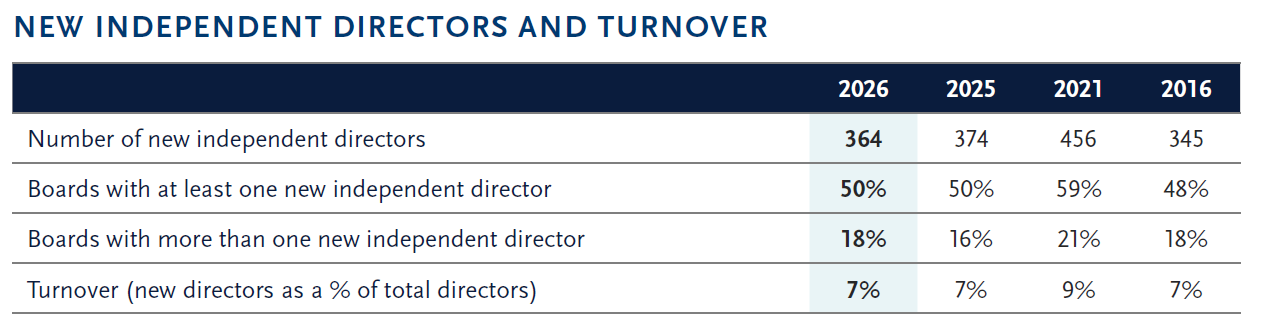
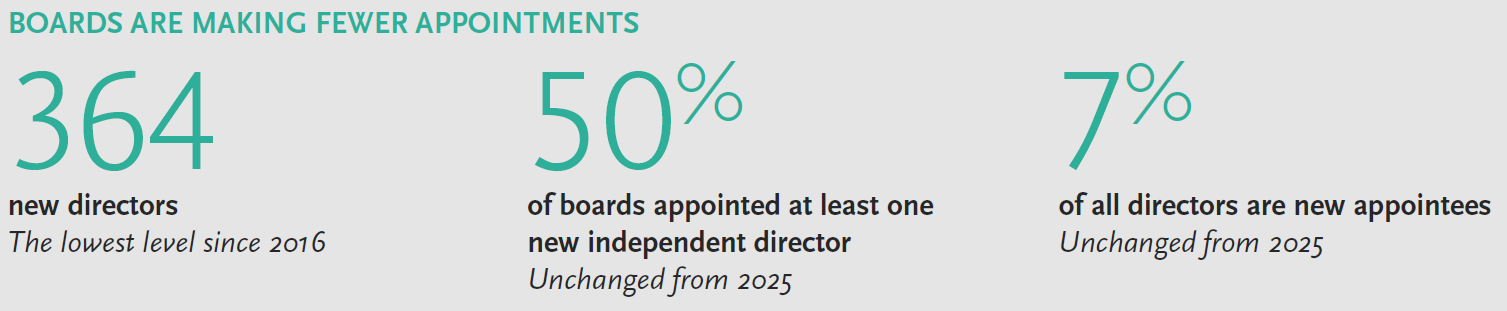
In 2026, S&P 500 boards welcomed 364 new independent directors, a figure representing the lowest number of new appointments since 2016. This overall decline in board turnover, from 0.8 new directors per board in the preceding year to 0.7 in 2026, suggests a more deliberate and perhaps cautious approach to board composition. Historically, fluctuations in director appointments have closely mirrored departure rates. For instance, in 2024, 374 directors left S&P 500 boards, a number that directly corresponded with the 374 new director appointments made in 2025. However, this correlation did not hold in 2026. A total of 418 directors departed S&P 500 boards during the year, representing a 15% increase over the number of new directors appointed. This divergence signals a potential tightening of board seats and a heightened selectivity among nominating and governance committees.
CEO Backgrounds Take Priority in Boardroom Appointments
Despite the overall slowdown in new director appointments, a distinct trend has emerged: an increasing emphasis on candidates with proven executive leadership experience, particularly CEOs. The data indicates that while fewer directors were appointed, a larger proportion of these new members bring significant operational and strategic oversight experience.
CEOs and Financial Professionals Dominate New Appointments
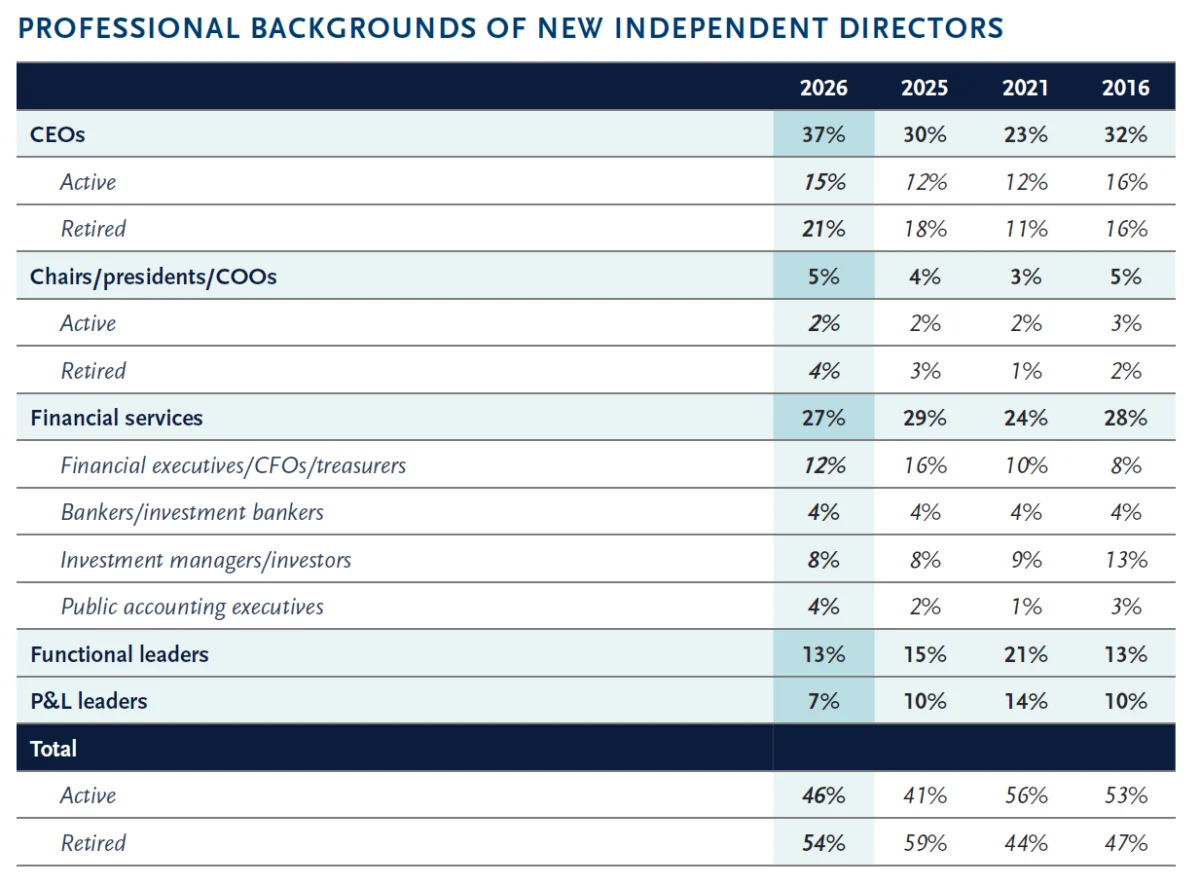
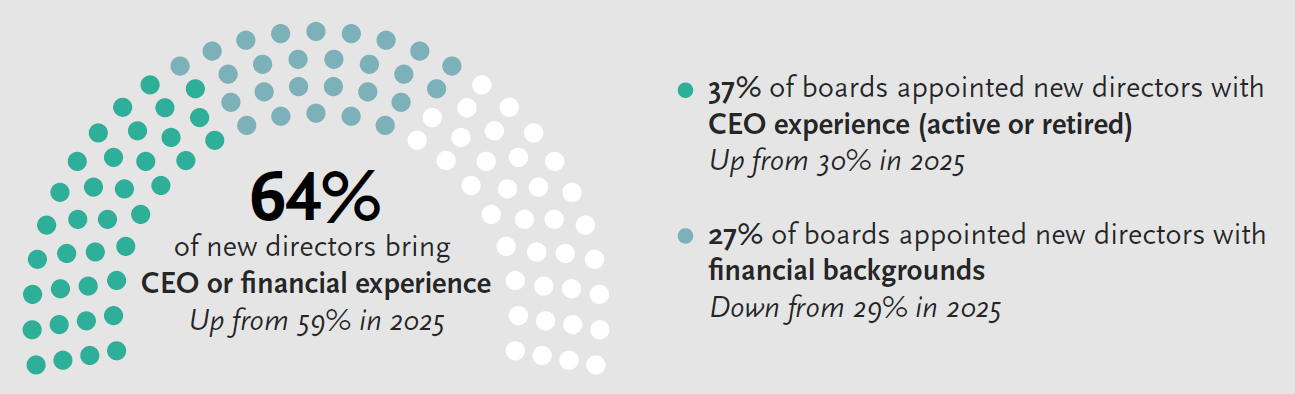
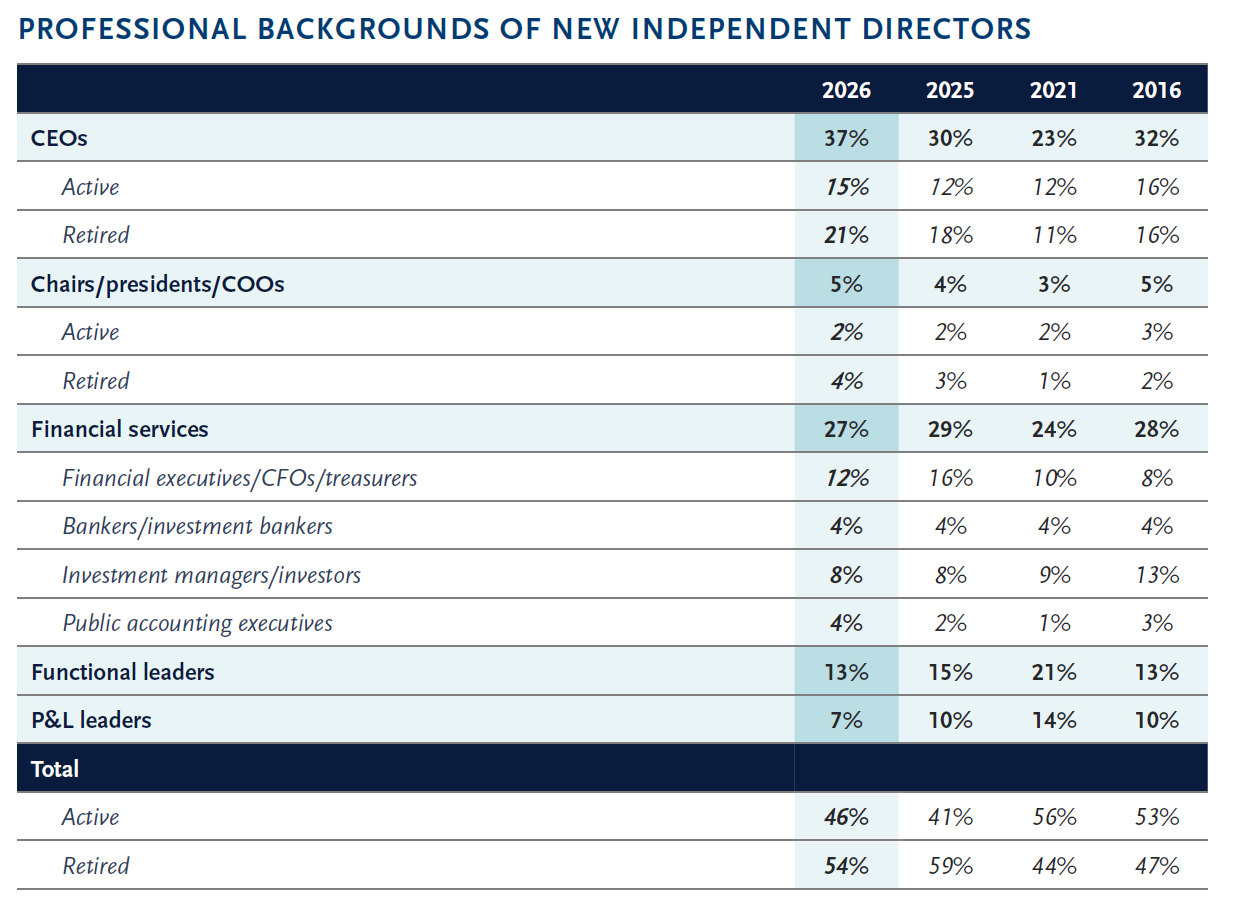
In 2026, 37% of all newly appointed directors were sitting or former CEOs, marking a substantial seven-percentage-point increase from the previous year. This figure represents the highest proportion of CEO appointments since a peak of 42% was recorded in 2012. Collectively, 64% of incoming directors now possess either CEO or substantial financial experience, an uptick from 59% in 2025. This growing preference for candidates with top-tier executive and financial acumen suggests a board’s desire for directors who can offer immediate, high-level strategic guidance and financial stewardship, especially in an increasingly complex global economic landscape. The focus on financial expertise is further underscored by the fact that financial executives, including CFOs, bankers, investors, and accounting professionals, constitute 34% of first-time director appointments.
Retired Executives Remain a Majority
Consistent with previous years, retired individuals continue to form the majority of new director appointments. This trend highlights the continued reliance of boards on the deep experience and established networks of seasoned executives who have concluded their primary leadership careers. Their availability and the perceived stability they offer likely contribute to their ongoing prominence in board recruitment.
Younger Director Appointments Continue to Decline
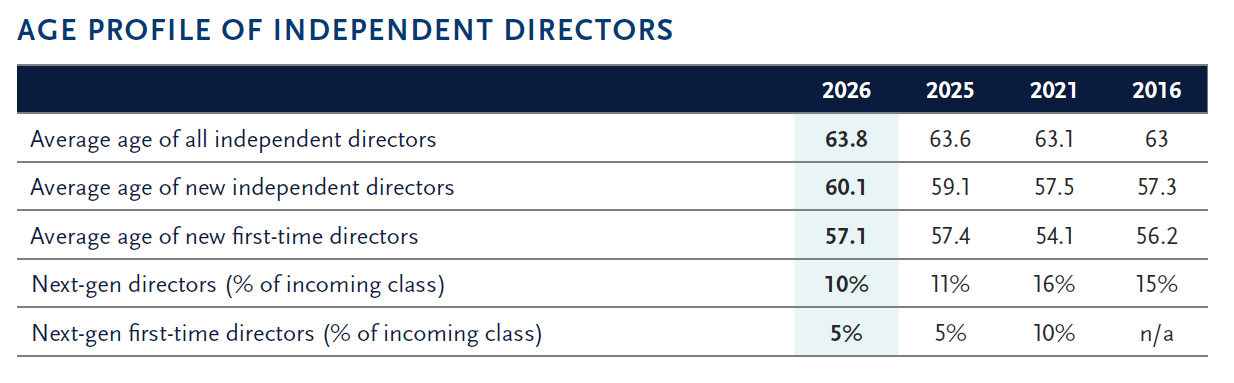
The average age of newly appointed directors in 2026 rose to 60.1 years, an increase from 59.1 years in 2025. This trend suggests a move away from younger candidates, with the average age of sitting independent directors now standing at 63.8 years. "Next-generation" (next-gen) directors, defined as those aged 50 or under, represented 10% of the incoming class, a decrease from 11% in 2025. Of these next-gen appointees, 86% are actively employed, indicating that while the pipeline of younger directors is narrowing, those who are appointed still tend to be actively engaged in their professional careers.
First-Time Director Appointments Also Decline
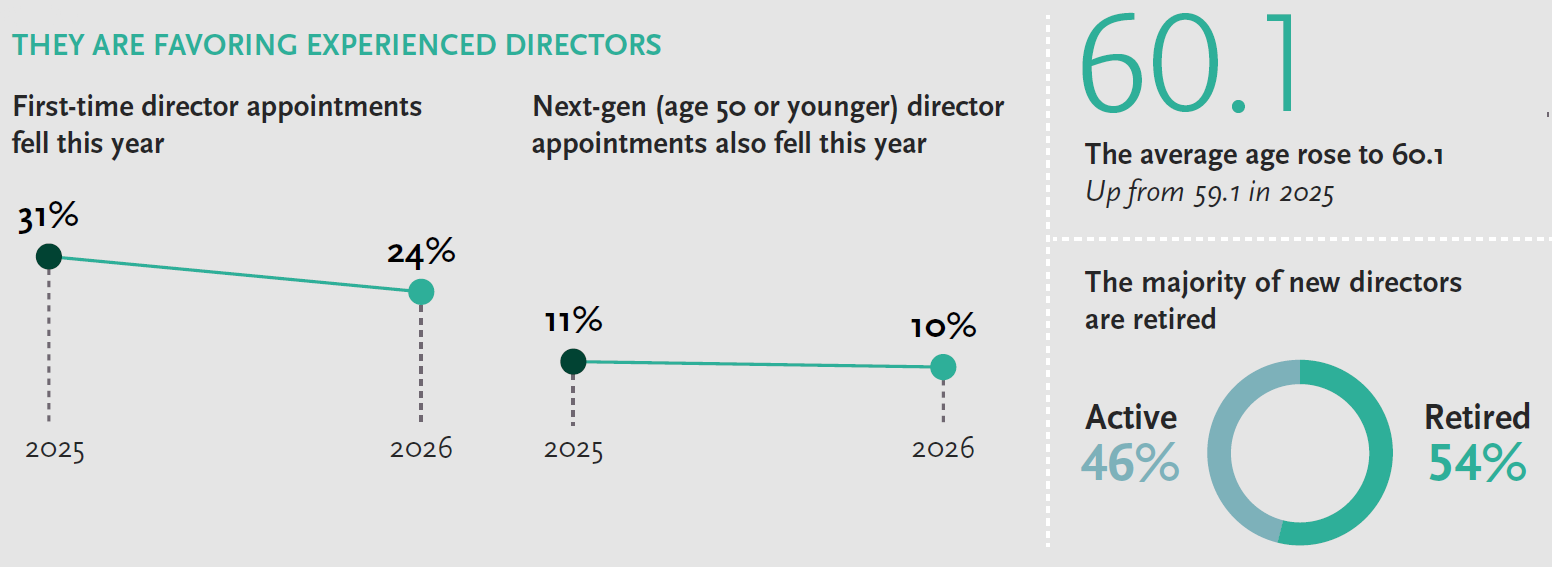
The trend of appointing less experienced directors also continued its downward trajectory. First-time public company directors accounted for 24% of the 2026 cohort, a significant drop from 31% in 2025 and 34% in 2024. Of these first-time appointees, 62% are actively employed, a higher percentage compared to directors with prior public board experience (40%). This suggests that while boards are appointing fewer individuals without prior public board experience, those who are appointed are often currently active in demanding executive roles, bringing fresh perspectives and current industry insights.
Fewer Independent Directors Retired from Boards
The year 2026 saw a 10% decrease in the number of independent directors leaving S&P 500 board service, with 377 directors stepping down. The average age of departing directors was 67.5 years, with an average tenure of 11.3 years. The majority of these departures occurred in the directors’ 70s (50%), followed by those in their 60s (37%).
A notable shift was observed in the adherence to mandatory retirement age policies. In 2026, 63% of departing directors were subject to such policies, a decline from 69% in 2025 and 73% in 2024. This suggests a potential softening or re-evaluation of strict retirement age mandates by some boards, allowing for longer tenures in certain cases. Among those subject to mandatory retirement, 32% retired on or after the designated age, an increase from 30% in 2025, while 55% left more than three years before reaching their mandatory retirement age. The average departure time for directors subject to these policies was 6.4 years before the mandatory age, compared to 6.2 years in 2025 and 5.6 years in 2022. Furthermore, the proportion of departing directors with at least 15 years of tenure saw a sharp decline, falling from 30% in 2025 to 17% in 2026, indicating a move towards shorter, more dynamic board tenures.
Gender Dynamics in Director Departures and Appointments
Women independent directors continue to join and leave boards earlier than their male counterparts. On average, new women directors are two years younger than men and are more likely to retire in their 60s, whereas men tend to retire in their 70s. This consistent pattern suggests different career trajectories and retirement planning considerations between genders within the corporate governance sphere.
Diverse Appointments Drop Amidst Shifting Disclosure Practices
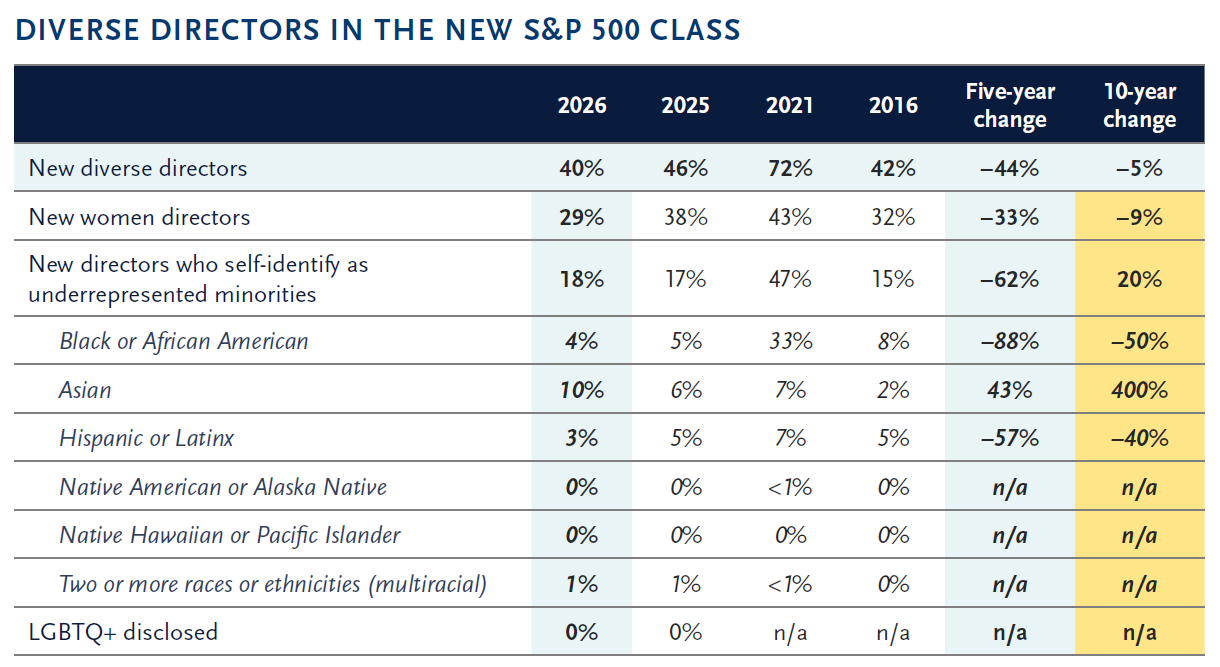
The overall share of director appointments filled by diverse executives saw a decline in 2026. While the representation of underrepresented minorities increased slightly, the percentage of appointments held by women decreased. The percentage of boards expanding their membership to include one or more women directors remained static at 10% year-over-year. Conversely, the share of new directors who self-identify as underrepresented minorities saw a slight uptick, with 6% of boards expanding to add such directors, compared to 5% in 2025. However, women constituted a smaller proportion of underrepresented minority appointments in 2026, accounting for 7% of these roles, down from 9% in the previous year.
Diverse Appointments Reflect Broad Professional Experiences
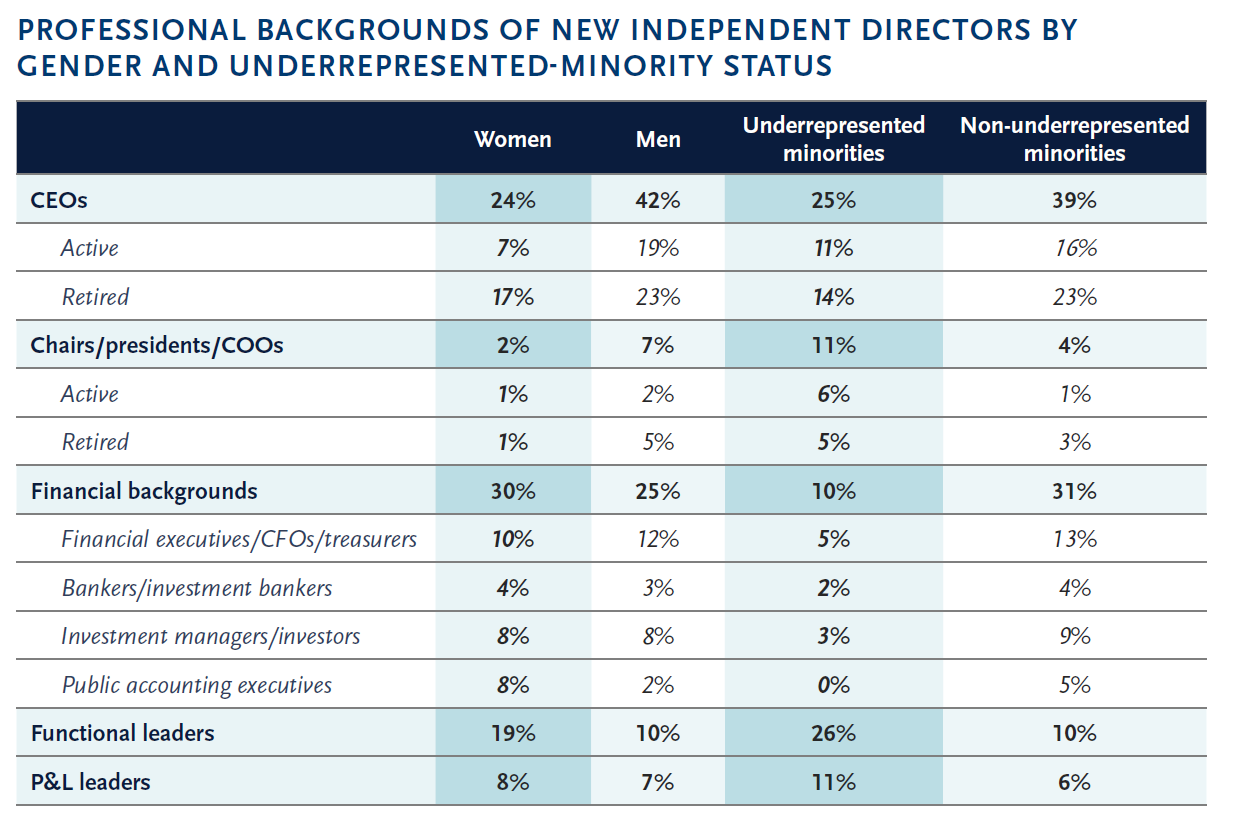
Diverse director appointments are increasingly originating from functional leadership roles, such as Chief Human Resources Officer (CHRO), Chief Marketing Officer (CMO), and Chief Technology Officer (CTO). Among new women independent directors, over half bring CEO or financial experience. Notably, there was a significant increase in CEO backgrounds among this group, driven by retired CEOs who comprised 17% of appointments, a substantial rise from 6% in the prior year. This trend aligns with a modest 4% increase in the number of women serving as S&P 500 CEOs, from 46 in 2025 to 48 in 2026.
For directors who self-identify as underrepresented minorities, half hold functional executive positions or bring CEO experience. CEO representation within this demographic grew from 22% to 24%, mirroring an overall rise in the number of underrepresented minorities serving as CEOs, from 67 in 2025 to 74 in 2026, marking a 10% increase.
Diverse Next-Gen and First-Time Director Appointments Fall
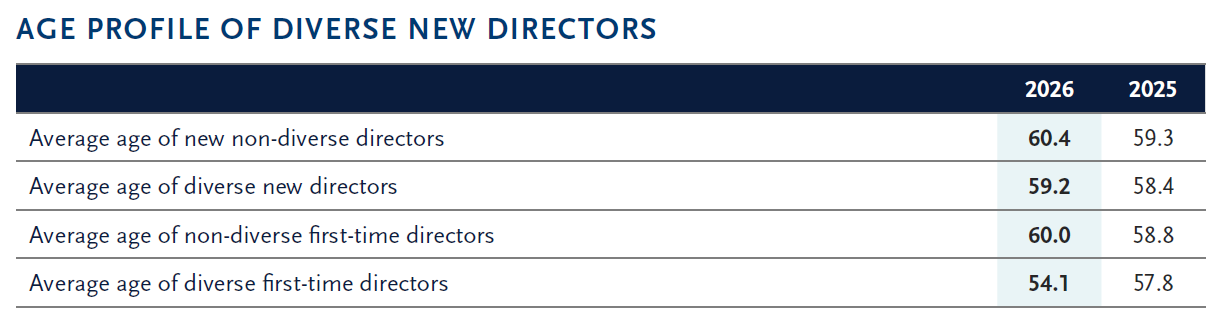
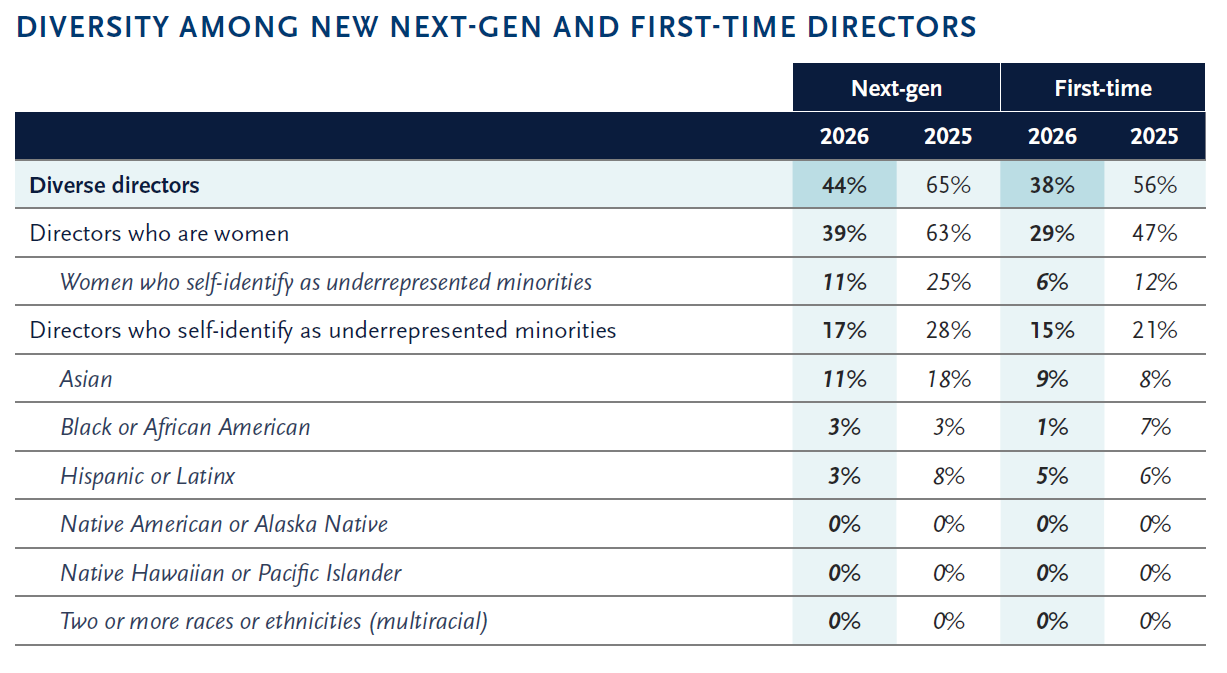
The average age of diverse new directors experienced a slight increase in 2026, though they remain younger on average than their non-diverse counterparts. The share of diverse next-gen appointments experienced a sharp decline, dropping to 44% in 2026 from 65% in 2025. While women continued to form the majority of this group, both their representation and the proportion of underrepresented minority next-gen directors saw significant declines.
Boards also appointed fewer first-time directors from diverse backgrounds. The representation of women in this category fell considerably to 29% from 47% in 2025. Furthermore, the proportion of first-time directors who self-identify as underrepresented minorities continued its downward trend from a 2021 peak, dropping to 15% in 2026.
Global Experience Declines, Technological and Manufacturing Backgrounds Rise
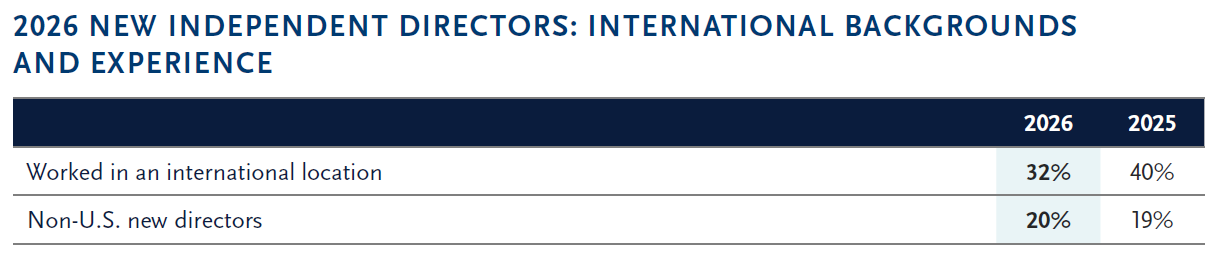
S&P 500 boards have significantly reduced their appointments of directors with international experience, continuing a downward trend observed in recent years. Concurrently, the proportion of new directors born outside the U.S. has increased by one percentage point to 20%, more than doubling from a decade ago.
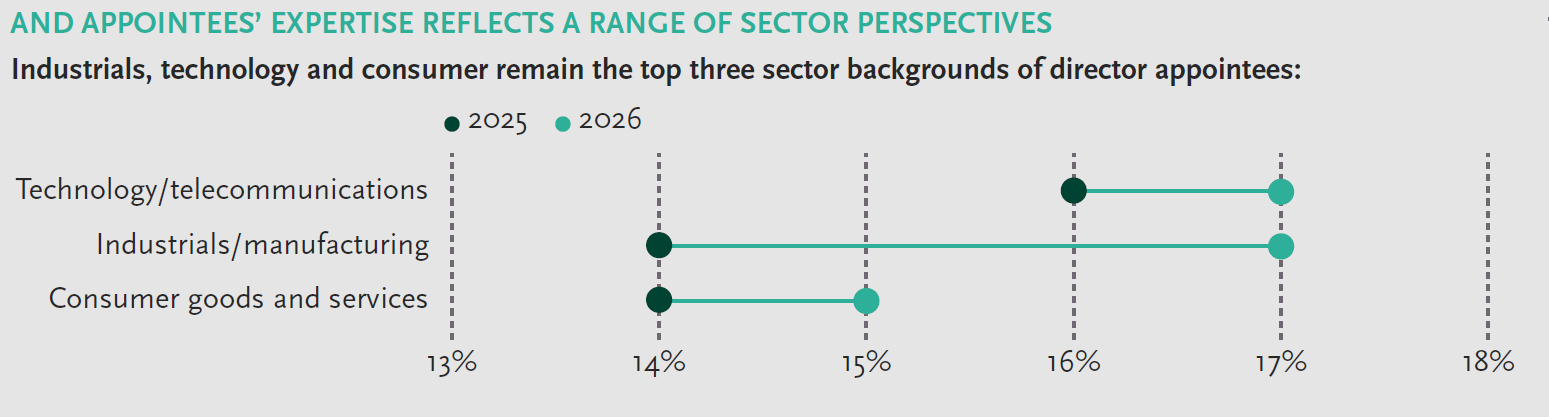
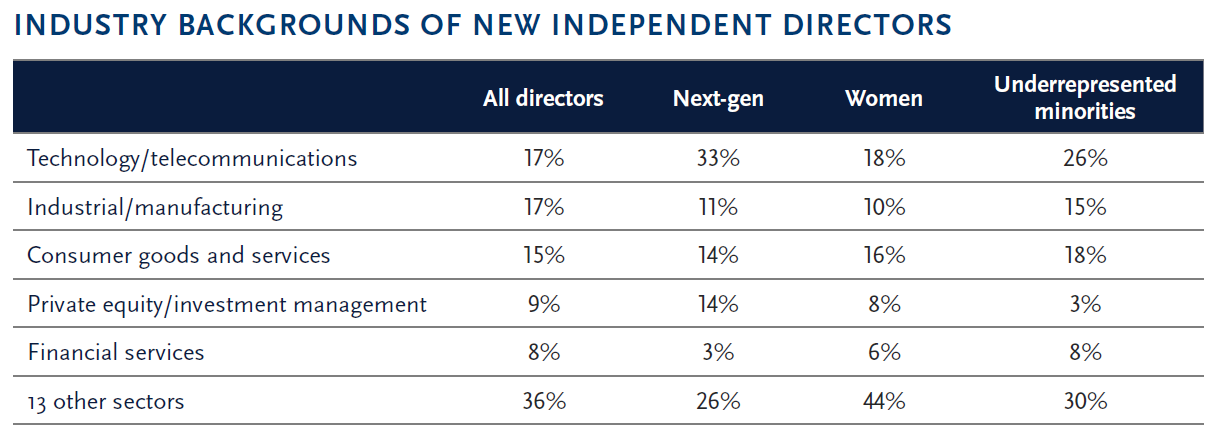
The industry backgrounds of the class of 2026 reveal a strong emphasis on technology/telecommunications and industrial/manufacturing sectors, each accounting for 17% of appointments. The industrial/manufacturing sector’s prominence as a leading background for new directors is notable, marking the first time since 2001 that this sector has held such a position. Technology/telecommunications emerged as the most common industry background for new next-gen directors, new women directors, and new directors identifying as underrepresented minorities, underscoring the increasing demand for expertise in these critical and rapidly evolving fields.
Board Diversity Holds Steady as Disclosure Practices Shift
While overall boardroom diversity in the S&P 500 has remained relatively stable, a more significant development is the decreasing tendency of boards to disclose diversity data and formal diversity policies. This shift suggests a potential move towards less transparency regarding diversity initiatives.
Diversity in the Boardroom Largely Unchanged
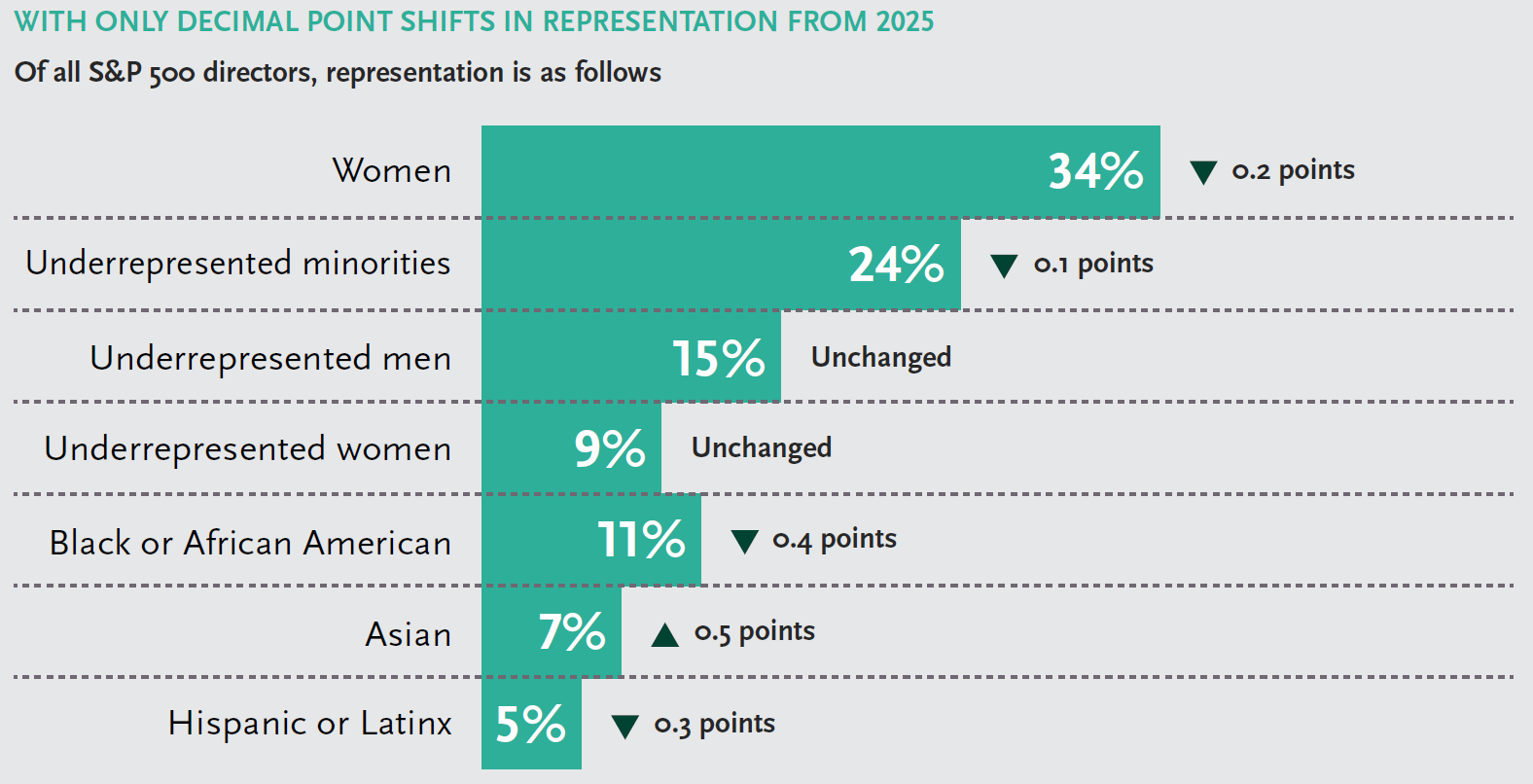
Diversity metrics within the S&P 500 have plateaued. The representation of underrepresented minorities remained constant at 24%, while the representation of women saw a marginal decline of 0.2 percentage points, from 34.6% to 34.4%. Overall diversity experienced a slight dip of 0.3 percentage points, from 49.6% to 49.3%.
Underrepresented Minority Representation Stable
For the second consecutive year, 24% of S&P 500 directors self-identify as underrepresented minorities, a figure that has grown from 21% in 2021 and 15% in 2016. The vast majority of S&P 500 boards (98%) now include at least one director who identifies as an underrepresented minority, a slight decrease from 99% in the previous year but a significant increase from 88% a decade ago. The gender distribution within this group remained unchanged. Notably, the proportion of women directors within the underrepresented minority demographic has more than doubled since 2016. Only two boards disclosed having an LGBTQ+ director.
Women Constitute Over a Third of S&P 500 Directors

Women continue to represent just over one-third of S&P 500 directors, with their share at 34% in 2026, compared to 35% in 2025. This represents a 16% increase over the past five years and a 62% increase over the last decade. The average number of women directors per S&P 500 board remains at four, consistent with the previous year. Nearly all boards (99%) now have two or more women directors, with only four boards reporting a single female director.
Diverse Representation in Board Leadership Presents a Mixed Picture
Women’s representation among independent board chairs saw an increase in 2026, although the share of women serving as lead directors experienced a slight decline. The representation of women on committee leadership roles continued to grow, particularly within audit, compensation, and nominating/governance committees. For directors identifying as underrepresented minorities, their representation in board leadership roles remained largely unchanged from 2025, though their participation in committee leadership roles generally increased year-over-year.
Boards Moving Away from Formal Diversity Policies
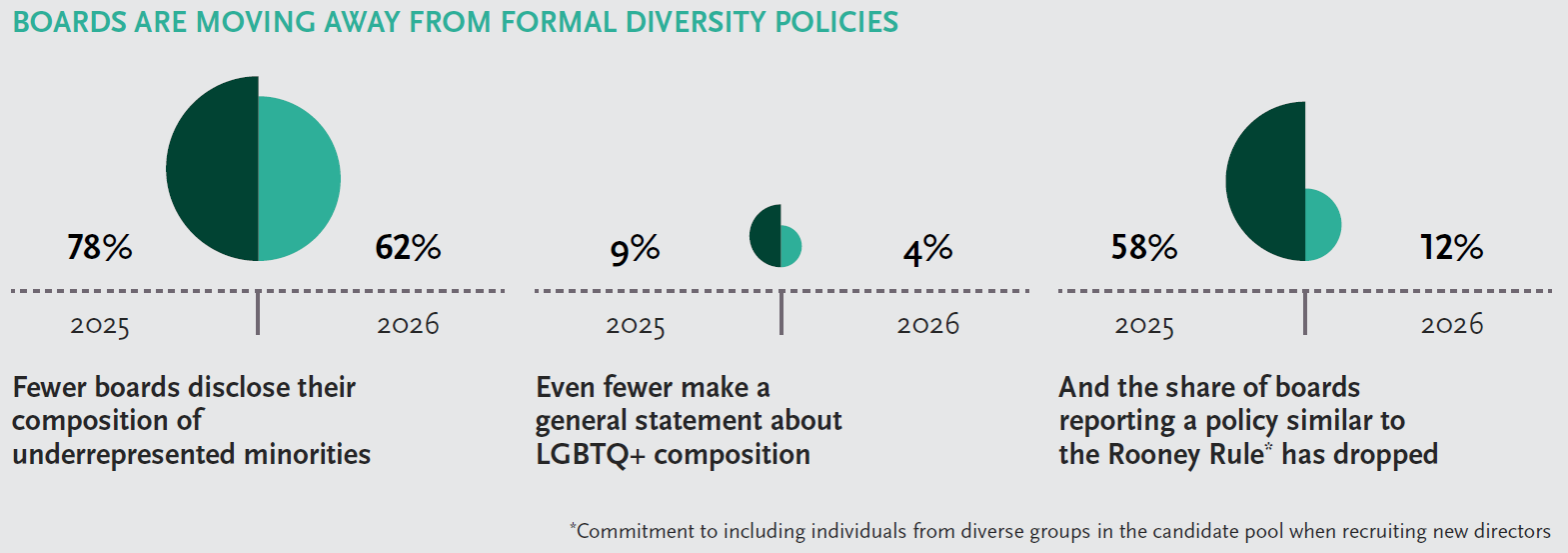
A discernible trend shows companies reducing their disclosure of aggregate diversity information for directors identifying as underrepresented minorities. A similar pattern is observed with LGBTQ+ disclosures. The adoption of policies like the Rooney Rule, which mandates the inclusion of diverse candidates in the recruitment process, has seen a dramatic decrease, falling from 58% in 2025 to just 12% in 2026. This represents a significant departure from 2021, when 39% of boards observed such policies. This shift away from explicit diversity recruitment mandates could signal a change in corporate strategy or a re-evaluation of the effectiveness and necessity of such formal requirements in the current corporate governance landscape.
The complete publication detailing these trends is available on the Spencer Stuart website.
