

Global financial markets recently found themselves in a precarious balance, contending with a confluence of challenging macroeconomic factors. Geopolitical uncertainties emanating from the Middle East continued to cast a long shadow, contributing to heightened risk aversion among investors. Concurrently, a sustained upward trajectory in bond yields globally exerted additional pressure on equity valuations, particularly impacting growth-oriented technology stocks. Amidst these headwinds, the fervent enthusiasm surrounding artificial intelligence (AI) has sparked a critical reassessment of AI-related stock valuations, with market participants closely scrutinizing the sustainability of the colossal investments being poured into AI infrastructure. Despite this complex backdrop, a select group of leading Wall Street analysts remain staunchly optimistic about several companies, identifying them as possessing robust long-term growth potential and strategic exposure to highly lucrative business segments, prominently including the burgeoning field of AI.
This detailed analysis delves into three such companies, each highlighted by top-tier analysts for their compelling prospects, leveraging data and performance metrics provided by TipRanks, a renowned platform that rigorously ranks analysts based on their historical accuracy and profitability. These insights offer a deeper understanding of the specific catalysts driving expert confidence in an otherwise turbulent market environment.
Navigating Global Headwinds: A Deeper Market Context
The past week underscored the persistent fragility of the global economic landscape. Geopolitical tensions, particularly those unfolding in the Middle East, have historically been a significant driver of market volatility. Concerns over potential disruptions to energy supplies, the broader implications for international trade routes, and the general increase in global instability often lead to a flight to safety, with investors moving away from riskier assets like equities. This phenomenon typically manifests as downward pressure on stock prices and an upward movement in commodity prices, notably oil.
Simultaneously, the steady ascent of global bond yields has been another critical factor weighing on equity markets. Bond yields, particularly those on government bonds, serve as a benchmark for risk-free returns. When these yields rise, they make equities comparatively less attractive, as the expected future earnings of companies are discounted at a higher rate, reducing their present value. This trend is largely driven by persistent inflationary pressures, central banks’ hawkish monetary policies aimed at taming inflation through interest rate hikes, and the ongoing process of quantitative tightening, where central banks reduce their bond holdings. Higher borrowing costs for corporations and consumers can also dampen economic activity, further impacting corporate earnings forecasts.
Within this challenging environment, the AI revolution continues to unfold at an astonishing pace, attracting unprecedented levels of investment. Companies are pouring billions into AI research, development, and, crucially, infrastructure – including specialized servers, high-performance computing components, and advanced storage solutions. While the long-term transformative potential of AI is widely acknowledged, the rapid surge in valuations for many AI-related stocks has inevitably sparked debates about potential market exuberance. Concerns about an "AI bubble" are gaining traction, prompting analysts and investors to meticulously evaluate whether current valuations are justified by sustainable growth trajectories and tangible returns on investment, or if they merely reflect speculative fervor. This scrutiny necessitates a deeper look into companies that demonstrate not only exposure to AI but also diversified revenue streams and robust fundamental underpinnings.
The Role of Expert Analysis: TipRanks Methodology
In times of market uncertainty, the insights of experienced financial analysts become even more critical. Platforms like TipRanks play a vital role in distilling and validating these expert opinions. By tracking and ranking analysts based on the historical performance of their recommendations – including the profitability and success rate of their stock picks – TipRanks provides a transparent measure of their expertise. This methodology lends significant credibility to the "top pros" mentioned in this article, ensuring that their bullish stances are rooted in a proven track record of accurate market predictions and successful investment calls. The analysts featured here boast impressive success rates and average returns, underscoring the weight of their current recommendations.
Spotlight on Cybersecurity: CrowdStrike Holdings (CRWD)
CrowdStrike Holdings (CRWD) stands as a formidable leader in the cybersecurity sector, renowned for its pioneering cloud-native endpoint protection platform, Falcon. The company’s innovative approach to security, which leverages artificial intelligence and machine learning to detect and prevent threats in real-time, has positioned it at the forefront of protecting digital assets for enterprises globally. Since its initial public offering (IPO) in 2019, CrowdStrike has demonstrated remarkable growth, consistently expanding its market share in a critical and ever-evolving industry. Its comprehensive platform extends beyond endpoint security to include areas like cloud security, identity protection, and threat intelligence, addressing the multifaceted challenges faced by modern organizations.
The cybersecurity market itself is experiencing explosive growth, driven by escalating cyber threats, the rapid acceleration of digital transformation initiatives, and the increasing complexity of IT environments, including hybrid cloud deployments. Businesses are compelled to invest heavily in robust security solutions to safeguard sensitive data, maintain operational continuity, and comply with stringent regulatory requirements. This backdrop provides a fertile ground for companies like CrowdStrike, which offer integrated, scalable, and highly effective security architectures. Projections indicate the global cybersecurity market will continue its double-digit compound annual growth rate for the foreseeable future, underscoring the long-term demand for CrowdStrike’s offerings.
Ahead of its fiscal second-quarter results, scheduled for August 26, Truist analyst Junaid Siddiqui reiterated a strong "buy" rating on CrowdStrike stock, significantly raising his price target to $245 from $187.50. Siddiqui, a highly-ranked 5-star analyst on TipRanks with an 80% success rate and an average return of 40%, grounds his optimism in CrowdStrike’s impressive fiscal first-quarter performance and subsequent guidance raise. He anticipates another robust quarter, driven by several key factors.
Central to Siddiqui’s bullish outlook is the continued strength in the adoption of CrowdStrike’s Falcon Flex platform. Falcon Flex represents a modular and highly integrated approach, allowing customers to easily expand their security capabilities as their needs evolve, fostering greater stickiness and larger contract values. Encouraging large deal activity further underpins this sentiment, indicating successful penetration into larger enterprise accounts, which typically involve more comprehensive deployments and longer-term commitments. The analyst also highlighted sustained momentum across CrowdStrike’s emerging products, signifying the company’s successful diversification and ability to capture new market segments beyond its core endpoint protection.
With the fiscal year 2027 outlook already assuming persistent strength in CrowdStrike’s net new annual recurring revenue (ARR) – a critical metric for SaaS companies indicating new subscription sales – Siddiqui is keenly focused on the longevity of key growth catalysts. These include the continued expansion of Falcon Flex adoption, the broader trend of platform consolidation in cybersecurity, and the increasing demand for security solutions spurred by AI-led initiatives. Platform consolidation is a significant industry trend where enterprises prefer to work with fewer, more integrated security vendors rather than managing a fragmented array of point solutions. CrowdStrike’s comprehensive Falcon platform is exceptionally well-positioned to capitalize on this, offering a unified security fabric that simplifies management and enhances threat visibility.
Discussions with CrowdStrike’s partners were reportedly encouraging, with healthy pipeline generation and sustained momentum in securing large deals during the fiscal second quarter, even when juxtaposed against tough year-over-year comparisons. Siddiqui emphasized, "We continue to view CrowdStrike as one of the primary beneficiaries of platform consolidation, though we expect investors to remain focused on competitive dynamics and whether current growth levels represent a new baseline or a period of demand acceleration." This statement underscores the importance of monitoring CrowdStrike’s ability to maintain its competitive edge against rivals such as Palo Alto Networks and SentinelOne, and to demonstrate that its current growth trajectory is a sustainable new normal, rather than a temporary surge. A strong Q2 FY27 earnings report would not only validate Siddiqui’s revised price target but also solidify CrowdStrike’s position as a dominant force in the rapidly expanding cybersecurity landscape.
Dell Technologies (DELL): Beyond AI Servers, The Storage Play
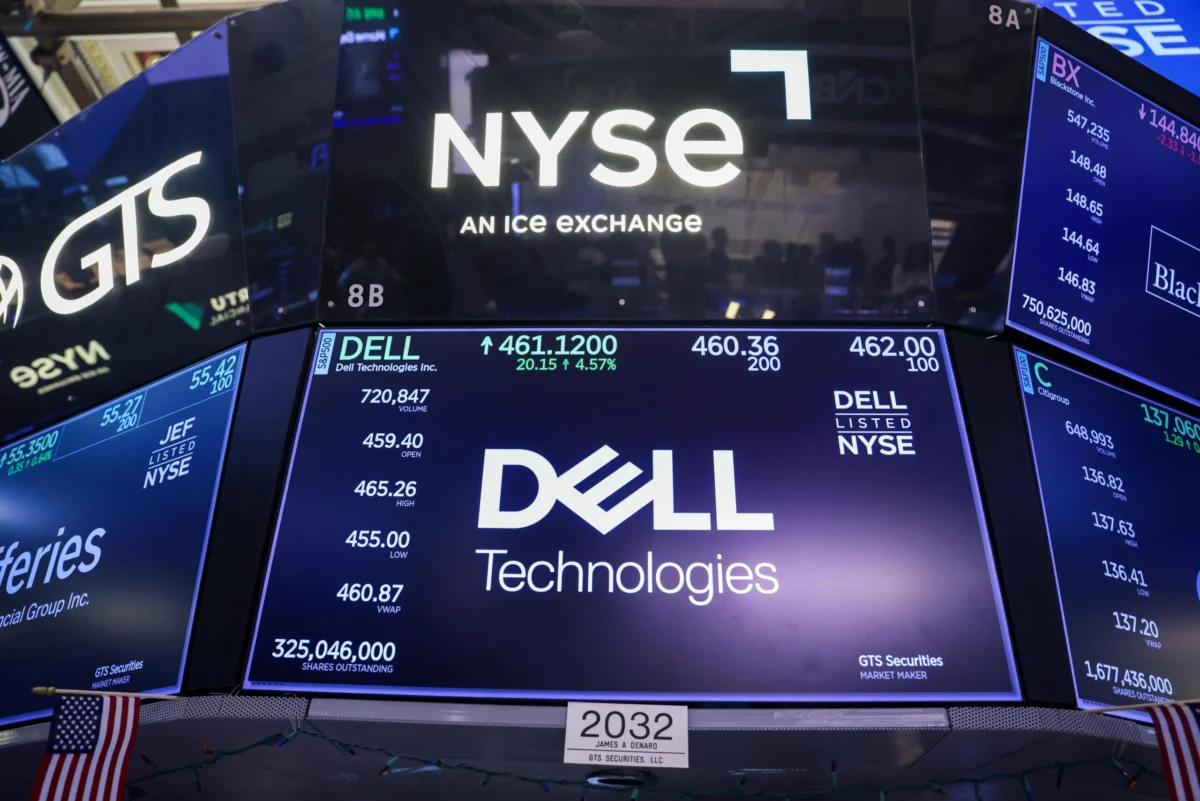
Dell Technologies (DELL), a stalwart in the personal computing and enterprise hardware space, has witnessed an extraordinary rally in its shares this year, surging 251%. This remarkable performance is largely attributable to the explosive demand for its AI servers, which are critical components in building the infrastructure required to train and deploy sophisticated AI models. Dell, with its long-standing expertise in enterprise hardware, has been quick to adapt and capitalize on this new wave of demand, providing high-performance servers equipped with powerful GPUs necessary for AI workloads. The company’s ability to deliver these specialized, high-density computing solutions to hyperscalers and large enterprises has positioned it as a key enabler of the AI revolution.
However, Evercore analyst Amit Daryanani argues that while Dell’s AI compute segment rightly garners significant investor attention, its Storage business remains largely underappreciated despite its immense potential to drive both revenue and profit acceleration. Daryanani, a highly-rated 5-star analyst ranking No. 19 on TipRanks with a 71% success rate and an average return of 38.70%, recently reiterated a "buy" rating on DELL and raised his price target to $550 from $500.
Daryanani’s core thesis revolves around the strategic importance of Dell’s Storage business, particularly as enterprises begin to repatriate certain workloads from public cloud environments back to on-premises data centers. This trend, often driven by factors such as cost optimization, stringent data governance requirements, and the need for specialized hardware configurations optimized for AI, naturally increases the demand for robust, scalable, and high-performance on-premises storage solutions. AI workloads, in particular, generate and consume vast amounts of data, necessitating advanced storage architectures that can keep pace with demanding processing requirements.
A crucial aspect highlighted by Daryanani is the significantly higher profitability of Dell’s Storage business compared to its AI servers. While AI servers are experiencing high demand, their margins can be somewhat compressed due to the intense competition and the high cost of components like GPUs. Dell’s Storage business, estimated to account for approximately 10% of fiscal year 2027 revenue, boasts an estimated operating margin in the low-20% range. This contrasts sharply with the mid-single-digit margins for AI servers and mid-teens margins for traditional server businesses. This margin differential means that an acceleration in the Storage segment’s growth can have a disproportionately positive impact on Dell’s overall profitability and earnings per share.
Daryanani identifies three primary reasons for viewing the Storage business as a vital catalyst for Dell. First, Dell possesses one of the broadest and most comprehensive storage portfolios in the industry, encompassing everything from traditional block and file storage to advanced object storage, software-defined storage solutions, and all-flash arrays. This extensive range allows Dell to cater to diverse enterprise needs, from core data centers to edge deployments. Second, as previously noted, Storage carries a significantly higher margin profile than AI servers, offering a powerful lever for enhancing Dell’s overall profitability. Finally, the shift toward proprietary, software-defined storage and AI-focused platforms positions Dell strategically. Software-defined storage offers greater flexibility, scalability, and efficiency, aligning perfectly with the dynamic requirements of AI workloads.
"We think DELL’s storage business is becoming increasingly strategic as AI infrastructure deployments move beyond GPU procurement and toward full stack + AI-ready architectures," Daryanani articulated. This perspective emphasizes that building effective AI infrastructure is not merely about acquiring powerful GPUs; it requires a holistic approach encompassing servers, storage, networking, and software, all seamlessly integrated and optimized for AI. Dell’s ability to provide these comprehensive, "AI-ready" architectures, with its high-margin storage solutions playing a critical role, underscores its long-term potential beyond the immediate AI server boom. A re-evaluation and greater appreciation of the Storage business by the market could unlock further upside for Dell’s valuation.
Memory and Storage: Western Digital (SanDisk Brand) Poised for AI Growth
The memory and storage industry, particularly the NAND flash sector, is notoriously cyclical, experiencing periods of boom and bust driven by supply-demand dynamics. However, the advent of artificial intelligence is fundamentally altering this landscape, creating unprecedented demand for high-performance memory and storage products. While the original article referenced "SanDisk (SNDK)" as a publicly traded entity, it is important to clarify that SanDisk Corporation was acquired by Western Digital (WDC) in 2016 and now operates as a prominent brand under Western Digital’s extensive portfolio. Therefore, the analyst’s insights and the growth prospects described logically pertain to Western Digital’s flash business, which includes the SanDisk brand and its substantial presence in the NAND market.
Western Digital, through its SanDisk brand and broader flash business, is a major player in the global NAND flash market, a technology critical for data storage in everything from consumer electronics to enterprise data centers. The current market environment for NAND is experiencing a significant structural inflection, largely driven by the surging demand from AI inference workloads. AI inference, the process of applying a trained AI model to new data to make predictions or decisions, requires rapid access to vast amounts of data and the models themselves. This necessitates high-performance, low-latency NAND flash storage solutions capable of handling massive data throughput.
Following Western Digital’s (encompassing the SanDisk brand’s operations) 2026 Investor Day event, J.P. Morgan analyst Harlan Sur resumed research coverage with a "buy" rating (previously "Not Rated") and an ambitious price target of $2,250. Sur, a top-ranked 5-star analyst (No. 15 on TipRanks) with a 71% success rate and an average return of 43.20%, is bullish on Western Digital’s position to capitalize on this AI-driven surge in NAND demand.
Sur’s optimism is anchored in three key factors. First, he believes that Western Digital’s New Business Model (NBM) framework, which involves long-term agreements (LTAs) with key customers, has significantly enhanced its margin profile and reduced the inherent cyclicality of the memory business. These eight signed NBMs represent a staggering total contract value of $94 billion, promising a gross margin of approximately 80% even at floor pricing. Such agreements provide stable, predictable revenue streams and insulate the company from some of the sharper price fluctuations characteristic of the spot market.
Second, Sur highlights the monumental growth expected in the NAND market. He projects the total addressable market to explode from roughly $70 billion in calendar year 2025 to over $300 billion in 2026, further expanding to an estimated $500 billion in 2027. Crucially, the analyst notes that data centers are emerging as the single largest driver of NAND growth, as hyperscalers and large enterprises increasingly deploy flash storage for their AI inference workloads. This shift from traditional hard disk drives (HDDs) to NAND flash in data centers for AI is a profound structural change.
Finally, Sur points to Western Digital’s technology dominance as a key differentiator. The company’s BiCS10 technology, a leading-edge 3D NAND architecture, is sampling ahead of schedule. This technology offers 65% more bits per wafer than its predecessor, BiCS8, which translates to significantly lower manufacturing costs per bit and higher capacity, providing a strong competitive advantage. Furthermore, Sur anticipates that Western Digital’s High Bandwidth Flash will become a differentiated memory platform specifically tailored for AI inference applications, addressing the unique performance requirements of these demanding workloads.
Layered on top of these operational and technological strengths is management’s commitment to returning 100% of excess cash flow to shareholders. This aggressive capital allocation strategy, primarily through share buybacks, is expected to drive a substantial reduction in the share count trajectory, thereby amplifying earnings per share (EPS) growth on a per-share basis. For investors, this commitment signals confidence in future cash generation and provides an additional mechanism for value creation beyond operational performance. Western Digital, via its SanDisk brand and broader flash business, appears exceptionally well-positioned to ride the AI-driven wave transforming the memory and storage industry.
Broader Market Implications and Investor Takeaways
The current market environment, characterized by geopolitical uncertainty and rising interest rates, underscores the importance of discerning investment opportunities with resilient growth drivers. The analyses of CrowdStrike, Dell Technologies, and Western Digital (SanDisk brand) collectively highlight the enduring appeal of sectors directly and indirectly fueling the artificial intelligence revolution. While the immediate focus often gravitates towards AI software and chipmakers, these expert opinions illuminate the critical roles played by foundational technologies such as cybersecurity, enterprise hardware, and high-performance memory and storage.
For investors, these insights offer several key takeaways. Firstly, the AI boom is not a monolithic phenomenon; it creates diverse opportunities across the entire technology stack. Companies that provide the essential infrastructure, security, and data management solutions for AI are equally, if not more, crucial than those developing the AI models themselves. Secondly, a diversified growth strategy, as seen with Dell’s underappreciated storage business, can provide stability and additional avenues for profitability, especially when a company’s primary growth engine faces potential margin pressures. Thirdly, technological leadership and innovative business models, like Western Digital’s NBM framework and advanced BiCS technology, are vital for sustaining competitive advantage and navigating cyclical industries.
Navigating market volatility requires a long-term vision and a focus on companies with strong fundamentals, clear growth catalysts, and sound management strategies. The consistent outperformance of these top Wall Street analysts, as tracked by TipRanks, provides a valuable lens through which to identify such opportunities. As the global economy continues to evolve and AI reshapes industries, strategic investments in companies underpinning this transformation, while also addressing critical needs like cybersecurity, are likely to yield significant returns for patient and informed investors.
