

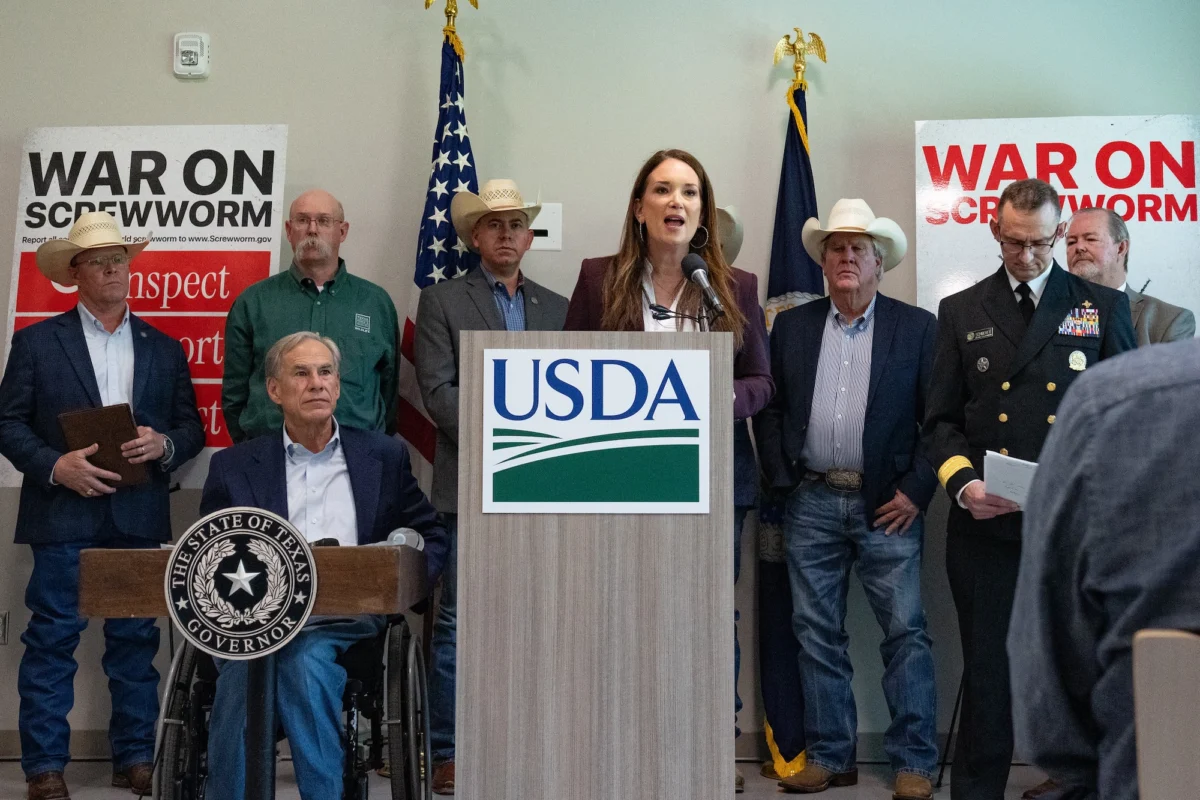
The United States Department of Agriculture is moving forward with a sweeping reorganization and the mandatory relocation of approximately 3,000 employees, a move that critics and agricultural advocates warn could cripple the nation’s food supply chain at a moment of unprecedented vulnerability. Agriculture Secretary Susan Rollins confirmed the decision in late July, signaling the administration’s intent to decentralize the agency despite vocal opposition from lawmakers, labor unions, and farming communities. The restructuring comes as American farmers grapple with a "Super El Niño" weather pattern, record-high debt, and the reemergence of devastating parasites and pathogens that have not been seen on U.S. soil in decades.
Under the Rollins plan, nearly half of the USDA’s Washington, D.C.-based workforce will be reassigned to newly designated "regional hubs" across North Carolina, Missouri, Indiana, Colorado, and Utah. The administration has framed the move as a cost-saving measure designed to reduce the "Beltway bureaucracy" and place federal experts closer to the rural populations they serve. However, internal surveys and historical data suggest that the policy may lead to a mass exodus of experienced scientists, researchers, and policy experts, many of whom are unable or unwilling to uproot their families on an accelerated timeline.
A History of Attrition and Institutional Memory Loss
The current restructuring effort is not without precedent, and for many observers, the previous attempt serves as a cautionary tale. During the first Trump administration, the USDA relocated two key research agencies—the Economic Research Service (ERS) and the National Institute of Food and Agriculture (NIFA)—from Washington, D.C., to Kansas City. The result was an immediate and catastrophic loss of personnel. Approximately 75 percent of the affected employees chose to resign rather than relocate, leading to a significant "brain drain" that experts say took years to recover from.
While the administration initially claimed the Kansas City move would save taxpayers $300 million over 20 years, a subsequent analysis by the Association of Agricultural and Applied Economics estimated a net loss of up to $182 million due to the cost of hiring and training new staff. More significantly, the loss of institutional knowledge resulted in a shortfall in guidance for Farm Bill expenditures, which some analysts estimate cost the agricultural sector upwards of $2.8 billion in lost efficiencies and delayed programs.
The current plan appears to be repeating this pattern on a larger scale. A survey conducted by the American Federation of Government Employees (AFGE) found that approximately three-quarters of the 3,000 workers tapped for relocation do not intend to move. This potential loss of 2,250 skilled professionals would impact everything from food safety inspections to the administration of multi-billion-dollar federal grant programs.
The Role of the Department of Government Efficiency
The reorganization is being heavily influenced by the recently established Department of Government Efficiency (DOGE), a budget-cutting initiative led by billionaire Elon Musk. Staffed largely by young technology workers with limited experience in federal policy or agricultural science, DOGE has spearheaded a "Deferred Resignation Program" aimed at drastically reducing the federal headcount.
Since the beginning of 2025, the USDA has already lost more than 24,000 workers—nearly 20 percent of its total workforce—through a combination of buyouts, summary firings, and voluntary departures. An analysis by the National Sustainable Agriculture Coalition (NSAC) highlights a glaring contradiction in the administration’s rhetoric: while the plan is marketed as a way to move the agency closer to farmers, 98 percent of the staff lost over the last 18 months were based in field offices outside of Washington, D.C. This suggests that the "efficiency" measures are hollowing out the very local support systems that rural communities depend on for day-to-day operations.
The Reemergence of the New World Screwworm
The timing of the USDA’s staffing crisis is particularly precarious given the return of the New World screwworm (Cochliomyia hominivorax). This parasite, which lays eggs in the open wounds of warm-blooded animals, was declared eradicated in the United States in the 1960s. Unlike most maggots, screwworm larvae feed on living tissue, causing excruciating pain, secondary infections, and often death in livestock such as cattle, pigs, and sheep.
For decades, the U.S. maintained a "biological barrier" in Central America through joint monitoring programs and the release of sterile flies to prevent the parasite from migrating north. However, the dismantling of the U.S. Agency for International Development (USAID) last year effectively ended these international containment efforts. By June 2026, the first U.S. case in over half a century was confirmed on a farm in Texas. Since then, the parasite has been detected in 45 animal infections across Texas and New Mexico.
Agricultural scientists warn that the USDA is falling behind in its response. Controlling a screwworm outbreak requires intensive field work, laboratory analysis, and rapid-response teams—all of which are currently understaffed due to the ongoing reorganization.
Public Health and the Cyclospora Outbreak
Beyond livestock, the reduction in USDA oversight is being linked to a massive spike in foodborne illnesses. Between May and July 2026, the Centers for Disease Control and Prevention (CDC) reported 6,707 laboratory-confirmed cases of domestic-sourced cyclosporiasis, a parasitic infection that causes severe gastrointestinal distress. The CDC is currently investigating an additional 11,000 cases across 15 states, with at least two confirmed fatalities.
This outbreak is the largest since 2019 and follows a controversial decision by the administration to halt mandatory tracking of the cyclospora parasite. For nearly 30 years, the CDC, USDA, and FDA had worked in tandem with state health departments to monitor cyclospora. The cessation of this surveillance has left health officials struggling to identify the source of the current outbreak, which is believed to be linked to contaminated fresh produce.
Secretary Rollins has defended the agency’s stance, characterizing the outbreak as an "FDA issue," but public health advocates argue that the USDA’s role in farm-level inspections is critical to preventing such parasites from entering the food supply in the first place.
Environmental and Economic Pressures
The administrative turmoil is occurring against a backdrop of severe environmental distress. Meteorologists have confirmed the arrival of a "Super El Niño," which is expected to bring extreme drought conditions to the American heartland. Some experts have drawn parallels to the 1930s Dust Bowl, predicting that crop failures could reach levels not seen in a century.
Farmers are ill-equipped to handle these losses. Farm debt has reached an all-time high, and the cost of essential inputs has skyrocketed. Diesel fuel costs for farmers have increased by 63 percent over the last year, while the price of fertilizer has spiked due to ongoing international conflicts and trade tariffs. A survey conducted this spring revealed that 70 percent of farmers could not afford the necessary amount of fertilizer for their planting season, a factor that will inevitably lead to lower yields and higher grocery prices for consumers.
Furthermore, the industry is battling other persistent biological threats, such as Citrus Greening (HLB). The disease has already decimated the Florida orange juice industry and is now spreading through California’s groves. The "glassy-winged sharpshooter," a pest that carries Pierce’s disease and threatens the multi-billion-dollar wine industry, has also been spotted in new territories, further straining the USDA’s dwindling inspection and research capabilities.
Legal Challenges and the Path Forward
The battle over the USDA’s future has now moved to the federal courts. The American Federation of State, County and Municipal Employees (AFSCME) and other union groups have filed for an injunction to halt the reorganization, arguing that the forced relocations are an unlawful attempt to bypass civil service protections and gut a vital federal agency.
"This administration is trying to gut the agency that helps farmers stay in business and puts food on working families’ tables," said AFSCME President Lee Saunders. The union argues that the "brain drain" resulting from the move will cause irreparable harm to the nation’s agricultural infrastructure. A federal judge in California is scheduled to hear the request for an injunction on September 1.
In the absence of a court-ordered stay or congressional intervention, the USDA will proceed with its relocation timeline. For the nearly 3,000 employees facing a move, and for the millions of farmers who rely on their expertise, the coming months will be a period of profound uncertainty. If the critics are correct, the hollowed-out agency may find itself unable to respond when the combined weight of economic debt, climate change, and biological outbreaks finally breaks the back of American agriculture.
