

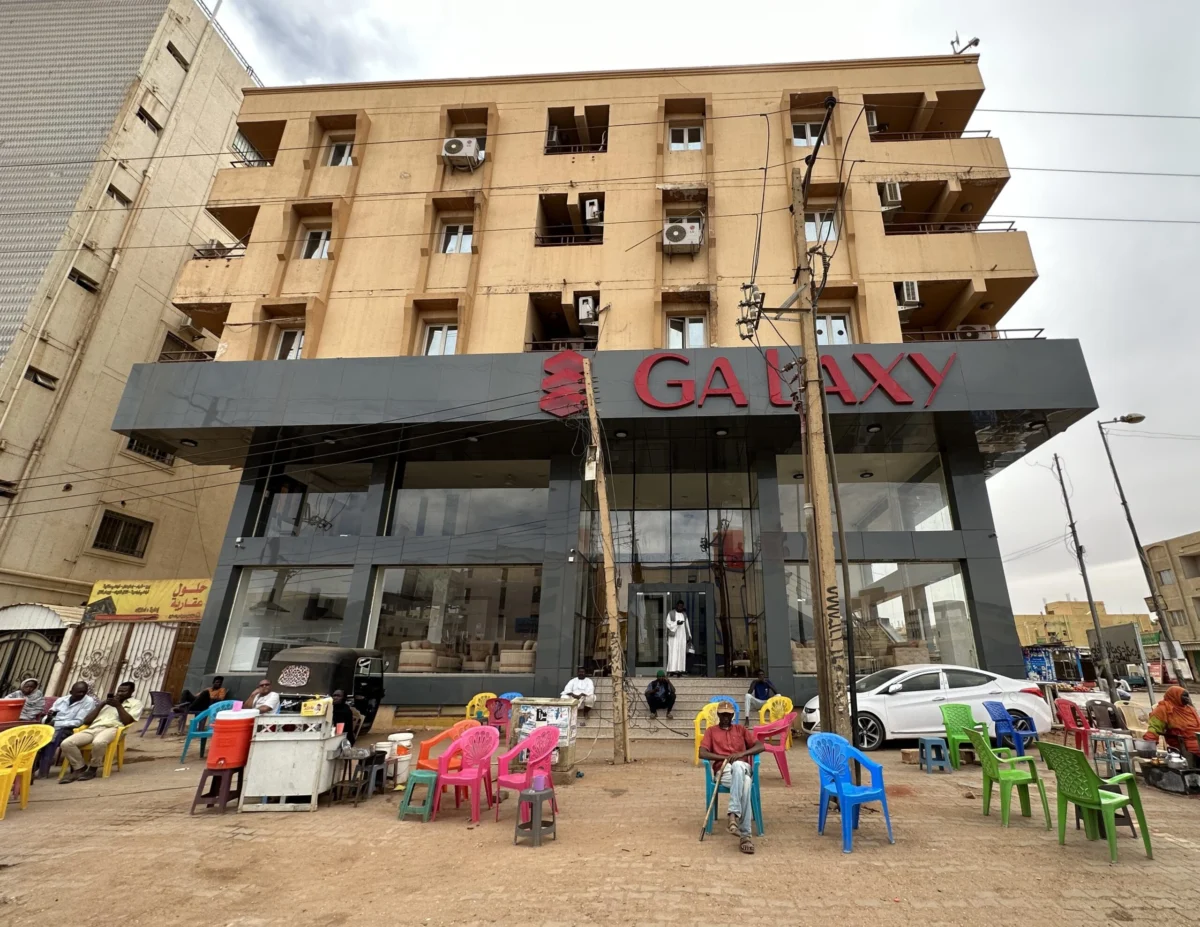
The United Nations has issued a stark warning that Sudan is reaching a humanitarian "breaking point" as the conflict between the Sudanese Armed Forces (SAF) and the paramilitary Rapid Support Forces (RSF) enters its third week with no sign of a permanent resolution. Despite the official extension of a 72-hour ceasefire agreement on April 30, 2023, heavy artillery, airstrikes, and anti-aircraft fire continue to echo through the capital city of Khartoum, signaling a total disregard for the truce by both warring factions. The international community, which has spent the last week conducting high-stakes evacuation operations for foreign nationals, is now winding down its presence, leaving millions of Sudanese citizens to navigate a rapidly deteriorating security and economic landscape.
The power struggle, which erupted into open warfare on April 15, has claimed the lives of at least 528 people and left more than 4,500 wounded, according to official figures from the Sudanese Health Ministry. However, United Nations officials and medical personnel on the ground suggest these numbers are likely a significant undercount, as many casualties remain unrecorded due to the inability of emergency services to reach the hardest-hit residential areas. As the fighting spreads from the administrative heart of Khartoum to the volatile Darfur region, the risk of a full-scale civil war drawing in regional powers has moved from a theoretical concern to a looming reality.
The Transformation of Khartoum: A City Under Siege
Khartoum, once a bustling African metropolis, has been transformed into a hollowed-out battleground. Residents who have attempted to venture out of their homes during brief lulls in the fighting describe scenes of utter devastation and lawlessness. The infrastructure of the city—once the pride of the nation—is being systematically dismantled by the conflict. An industrial area in the capital has been reported as completely looted, with witnesses describing people carrying heavy machinery and consumer electronics stolen from factories.
The nature of the combat has pitted the SAF’s superior air power against the RSF’s highly mobile ground units. The SAF, led by General Abdel Fattah al-Burhan, has utilized fighter jets and drones to strike RSF positions. In response, the RSF, commanded by General Mohamed Hamdan Dagalo (widely known as Hemedti), has fanned out into densely populated residential neighborhoods, using homes and hospitals as shields. This tactical deadlock has turned civilian areas into "kill zones," where stray bullets and misdirected shells are a constant threat.
For those remaining in the city, the struggle for survival has become an hourly challenge. Essential services, including electricity and water, are intermittent at best. Most hospitals are out of service, either due to damage from shelling, a lack of medical supplies, or the flight of medical personnel. The cost of basic goods has skyrocketed; bread and fuel are now luxury items, and the price of transport to safer regions has surged beyond the reach of the average citizen.
Chronology of the Conflict: From Political Rift to Military Collapse
The roots of the current violence can be traced back to the fragile power-sharing agreement that followed the 2021 military coup. General Burhan and General Hemedti were once allies who collaborated to oust a short-lived civilian-led transitional government. However, the alliance fractured over the specifics of a new transition back to civilian rule—specifically the timeline and command structure for integrating the RSF into the regular Sudanese army.
- Pre-April 15, 2023: Tensions escalated as the RSF began mobilizing troops toward the Merowe airbase and other strategic locations in Khartoum without the army’s consent. International mediators attempted to broker a last-minute deal, but trust between the two generals had evaporated.
- April 15, 2023: Full-scale fighting broke out simultaneously in Khartoum and several other cities. Both sides blamed the other for firing the first shot.
- April 20–25, 2023: Multiple "humanitarian pauses" were announced but failed to hold. Foreign nations began massive evacuation efforts by air, land, and sea, utilizing Port Sudan as a primary exit point.
- April 30, 2023: A 72-hour extension of the ceasefire was agreed upon, yet intense fighting persisted in Khartoum North and Omdurman.
- May 1, 2023: The United Nations warns of an impending humanitarian collapse as the World Food Programme (WFP) prepares to resume limited operations following the earlier deaths of its staff members.
Humanitarian Impact and Displacement Data
The scale of the displacement is staggering. The United Nations High Commissioner for Refugees (UNHCR) reports that over 50,000 people have already fled the country. These refugees are crossing borders into neighboring Chad, Egypt, South Sudan, and Ethiopia—countries that are themselves grappling with internal instability or economic crises.
Inside Sudan, the situation is even more dire. Before the war began, roughly one-third of the population—approximately 15 million people—was already dependent on some form of international aid. With the suspension of many NGO operations and the looting of aid warehouses, that number is expected to climb sharply. The WFP had previously reported that millions of dollars’ worth of food supplies were stolen in the first week of the conflict.
The healthcare sector is on the verge of total collapse. According to the Sudanese Doctors’ Union, more than 70% of hospitals in conflict zones are non-functional. Those that remain open are operating without anesthesia, clean water, or reliable power, forced to treat complex war wounds in primitive conditions. The Health Ministry’s tally of 528 dead is viewed as a conservative estimate, as many families are forced to bury their loved ones in backyards or street corners because it is too dangerous to reach a cemetery.
International Response and the End of Evacuations
As of May 1, the international community has largely shifted its focus from active evacuation to diplomatic containment. European nations, including Germany and France, have concluded their primary airlift operations. The United Kingdom’s final scheduled evacuation flight departed from the Wadi Seidna airfield on Monday, ending a complex operation that saw thousands of British nationals and their dependents flown to safety.
The departure of foreign diplomats and aid workers has created a vacuum that many fear will be filled by further violence. Martin Griffiths, the UN Under-Secretary-General for Humanitarian Affairs, emphasized that the "scale and speed" of the crisis are unprecedented in the region’s recent history. While the UN and the Red Cross are attempting to establish a humanitarian corridor through Port Sudan, the lack of security guarantees from the warring factions makes the delivery of medical supplies to Khartoum nearly impossible.
The United States and Saudi Arabia have been active in trying to facilitate direct talks between the SAF and RSF. While both sides have nominated representatives for potential negotiations in Jeddah, the rhetoric remains hostile. General Burhan has publicly stated that he will not sit down with "the rebel" Hemedti, while Hemedti has maintained that the army must cease its "indiscriminate" airstrikes before any meaningful dialogue can occur.
Analysis: Regional Implications and the Darfur Factor
The conflict in Sudan is not merely a domestic power struggle; it has the potential to destabilize the entire Horn of Africa and the Sahel. To the west, the Darfur region has seen a resurgence of the ethnic violence that decimated the area in the early 2000s. Reports from El Geneina and other Darfurian cities indicate that the SAF-RSF conflict has reignited long-standing feuds between Arab and non-Arab communities, with local militias taking sides in the broader power struggle.
Neighboring countries are viewing the situation with extreme caution. Egypt has traditionally supported the SAF, viewing General Burhan as a stabilizing force and a partner in regional security. Conversely, General Hemedti’s RSF has historical ties to regional actors who have utilized his forces in conflicts abroad, such as the war in Yemen. There are also concerns regarding the involvement of the Wagner Group, a Russian private military company that has allegedly provided support to the RSF in exchange for access to Sudan’s gold mines.
The economic fallout is equally concerning. Sudan is a major producer of gum arabic, a key ingredient in global food and beverage industries. A prolonged conflict would disrupt global supply chains, though this pales in comparison to the immediate threat of a famine within Sudan’s borders. If the agricultural season—which typically begins in May and June—is missed due to the fighting, the country could face a food shortage of catastrophic proportions by the end of the year.
The Path Forward: A Precarious Future
As the sound of anti-aircraft fire continues to punctuate the silence of Khartoum’s nights, the prospects for a civilian-led democracy appear more distant than ever. The two generals have shown a willingness to sacrifice the country’s infrastructure and the lives of its citizens to achieve total military dominance.
The immediate priority for the international community remains the establishment of a verifiable and permanent ceasefire. However, without a robust monitoring mechanism—something neither side has yet agreed to—the truces remain "ceasefires in name only." For the people of Sudan, the choice is between a dangerous and expensive journey across a border or remaining in a city where food is scarce, water is a luxury, and the sound of war is the only constant.
The warning from the United Nations is clear: the humanitarian "breaking point" is not a future possibility, but a current reality. Unless there is a dramatic shift in the willingness of the SAF and RSF to prioritize the survival of the state over their own political ambitions, the 16 days of battle may only be the opening chapter of a long and bloody national tragedy.
