

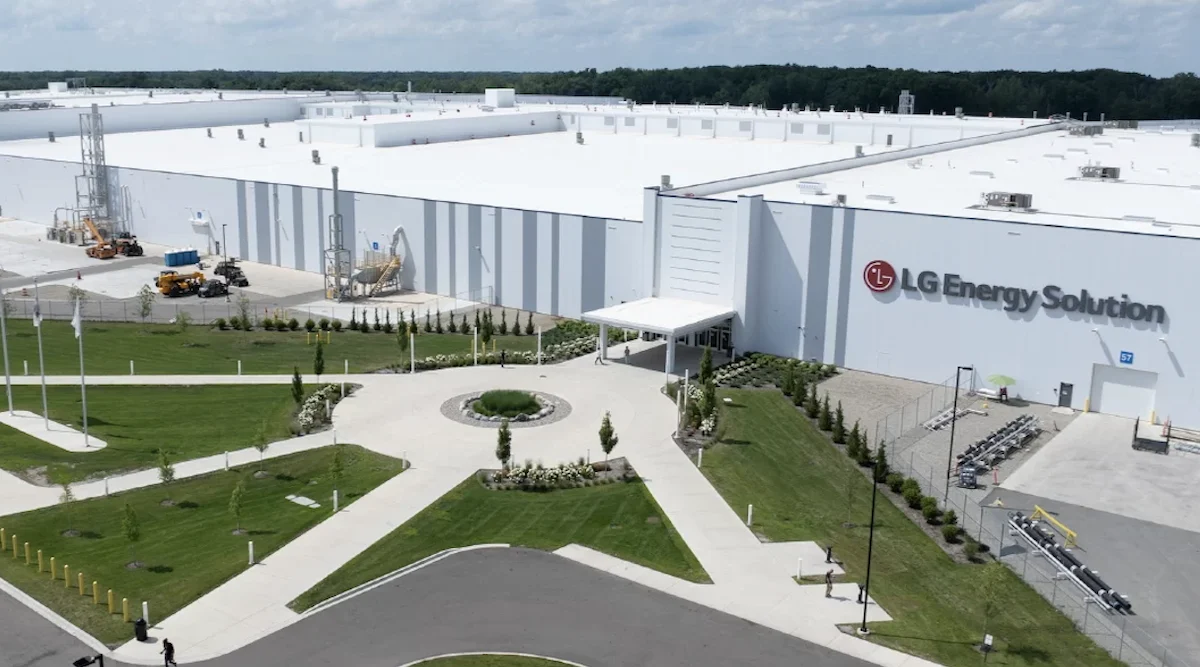
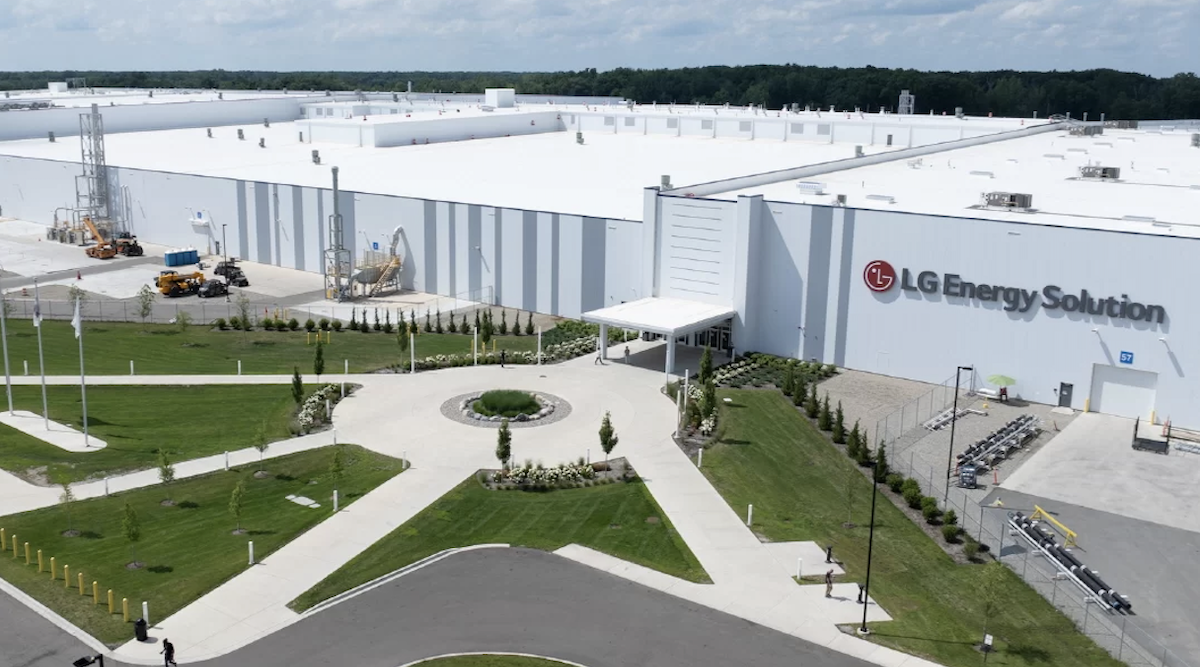
The landscape of American energy policy underwent a significant rhetorical and strategic shift this week as U.S. Interior Secretary Doug Burgum officially recognized energy storage as a "foundational" element of the nation’s infrastructure. This pivot, occurring during the formal inauguration of a major battery manufacturing facility in Lansing, Michigan, stands in stark contrast to the Secretary’s public skepticism regarding renewable energy reliability expressed only one year ago. The opening of the LG Energy Solution facility marks a critical milestone in the "American Energy Dominance Agenda," highlighting the increasing convergence of domestic manufacturing goals, clean energy technology, and the political necessities of an election year.
The Michigan Pivot: From Skepticism to "Foundational" Infrastructure
On August 18, 2026, Secretary Burgum joined executives from LG Energy Solution to celebrate the completion of a state-of-the-art battery cell manufacturing plant. The facility, located in the industrial heart of Michigan, is expected to generate approximately 1,700 high-skilled manufacturing jobs. During the event, Burgum emphasized the strategic importance of the site, noting that domestic battery production is essential for reducing U.S. dependence on foreign adversaries and securing the domestic supply chain.
"Domestic battery production is foundational to America’s energy future—reducing dependence on foreign adversaries, driving good-paying American jobs and advancing the American Energy Dominance Agenda," Burgum stated in an official release. He further elaborated that the Trump administration is committed to ensuring the "technologies of the future" are built within U.S. borders, specifically praising Michigan’s skilled workforce and industrial capacity.
This rhetoric represents a 180-degree turn from the Secretary’s stance in August 2025. During a televised appearance on Fox Business at that time, Burgum had dismissed the viability of solar and wind energy, famously referring to the sunset as a "catastrophic failure" that rendered solar power ineffective. In those previous remarks, the Secretary had omitted any mention of Battery Energy Storage Systems (BESS), which are designed specifically to mitigate the intermittency of renewable sources. His 2025 commentary also claimed that wind energy contributed a negligible percentage to the national grid, a statement that ran counter to contemporary data provided by the U.S. Energy Information Administration (EIA).
Chronology of Energy Rhetoric and Reality
To understand the significance of this shift, it is necessary to examine the timeline of the administration’s energy discourse alongside the actual growth of the sector.
In August 2025, Secretary Burgum criticized federal subsidies for renewable energy, characterizing them as investments in "unreliable and expensive" technologies. He claimed at the time that wind energy often accounted for as little as 1% to 2% of electricity generation. However, EIA data for 2025 tells a different story. In Burgum’s own home state of North Dakota, wind energy accounted for approximately 35% of in-state electricity generation. Nationally, the combined contribution of wind and utility-scale solar power has climbed to 17% of total generation, a massive increase from the less than 1% recorded in 2005.
By mid-2026, the economic reality of the "Battery Belt"—a corridor of battery manufacturing plants stretching through the Midwest and Southeast—became impossible to ignore. With Michigan serving as a pivotal swing state in the 2026 election cycle, the administration has moved to embrace the job-creation potential of the clean energy transition while framing it through the lens of national security and "energy dominance."
Technical Capabilities of the Lansing Facility
The new LG Energy Solution Michigan-Lansing plant is not merely a symbolic victory; it is a high-capacity industrial hub designed to serve two distinct but overlapping markets: stationary energy storage and electric vehicles (EVs).
The facility will manufacture Lithium-Iron-Phosphate (LFP) battery cells. LFP chemistry has gained favor in the industry for its safety profile, long cycle life, and lower cost compared to cobalt-based chemistries. These cells are intended for integration by LG Energy Solution Vertech, the company’s U.S.-based energy storage division. These systems will be deployed for utility-scale grid storage, commercial applications, and industrial backup, providing the very "reliability" that critics previously claimed was missing from the renewable energy sector.
Simultaneously, the plant will produce high-energy-density Nickel-Manganese-Cobalt (NMC) cells. These are specifically earmarked for the automotive sector, with Toyota named as a primary recipient. The NMC cells produced in Lansing will power the 2027 Toyota Highlander EV, which is slated for assembly at Toyota Motor Manufacturing Kentucky (TMMK) in Georgetown. This dual-track production strategy allows the facility to support both the stabilization of the electrical grid and the decarbonization of the transport sector, even as the administration maintains a formal policy preference for fossil fuel extraction.
Expansion in the "Battery Belt": The North Carolina Connection
The Michigan opening is part of a broader trend of South Korean investment in U.S. energy infrastructure. In North Carolina, the startup Forge Nano recently broke ground on a major expansion of its lithium-ion battery operations. This project is supported by a partnership with Samsung SDI, another South Korean giant, and focuses on heavy-duty trucking, military, and aerospace applications.
The Forge Nano project highlights the complex relationship between the current administration and programs established during the previous term. The expansion was facilitated by a $100 million grant from the U.S. Department of Energy (DOE), originally awarded in 2024. While the Trump administration initially targeted several clean energy grants for rescission, judicial interventions and the clear economic benefits of the projects—such as job creation in key districts—led to their preservation.
Audrey Robertson, the Energy Department’s Assistant Secretary for the Office of Critical Minerals and Energy Innovation, attended the North Carolina groundbreaking, signaling the administration’s willingness to claim these projects as successes of its current industrial policy.

Geopolitical Tensions and the South Korean Partnership
Despite the deepening economic ties between the U.S. energy sector and South Korean firms, the broader diplomatic relationship faces headwinds. South Korea’s LG Energy Solution and Samsung SDI are now "foundational" to the U.S. energy supply chain, yet recent actions by the President have introduced uncertainty into the alliance.
Last week, the administration abruptly truncated the "Ulchi Freedom Shield" joint military exercises with South Korea, cutting the 11-day drill short by six days. The decision was reportedly made without extensive prior consultation with Seoul, leading to friction. Dokyoung Koo, a nonresident fellow at the Atlantic Council and a veteran of the South Korean military, noted that the lack of communication "falls short of the respect allies should expect from one another."
This creates a paradoxical situation: the U.S. is increasingly reliant on South Korean technology and capital to achieve its "Energy Dominance" goals, even as it adopts a more transactional and sometimes antagonistic approach to the traditional military alliance. Analysts suggest that the administration’s focus on domestic optics—such as appearing to de-escalate foreign involvements while touting domestic factory openings—may be at odds with the long-term stability required for international industrial partnerships.
Implications for the 2026 Election and Beyond
The pivot by Secretary Burgum and the broader administration serves as a case study in the pragmatism of modern energy politics. By rebranding battery storage and EV manufacturing as components of "American Energy Dominance," the administration can support high-growth industries and job creation in swing states like Michigan and North Carolina without alienating a base traditionally aligned with fossil fuels.
However, the reliance on energy storage to balance the grid effectively validates the arguments long made by renewable energy advocates. As BESS technology becomes a standard feature of the American power grid, the distinction between "reliable" fossil fuels and "intermittent" renewables continues to blur.
The successful launch of the Lansing facility ensures that regardless of the rhetorical shifts in Washington, the physical infrastructure of the U.S. energy transition is becoming more entrenched. With 1,700 new jobs in Michigan and a supply chain stretching to Kentucky and North Carolina, the "Battery Belt" is becoming an economic engine that may prove resistant to future shifts in political winds.
As the 2026 midterm elections approach, the administration’s ability to balance its "fossil fuels first" messaging with the reality of a South Korean-backed, battery-powered industrial resurgence will be a key factor in its economic narrative. For now, the "catastrophic failure" of the sunset appears to have been solved by the very technology that Secretary Burgum previously suggested did not exist.
