

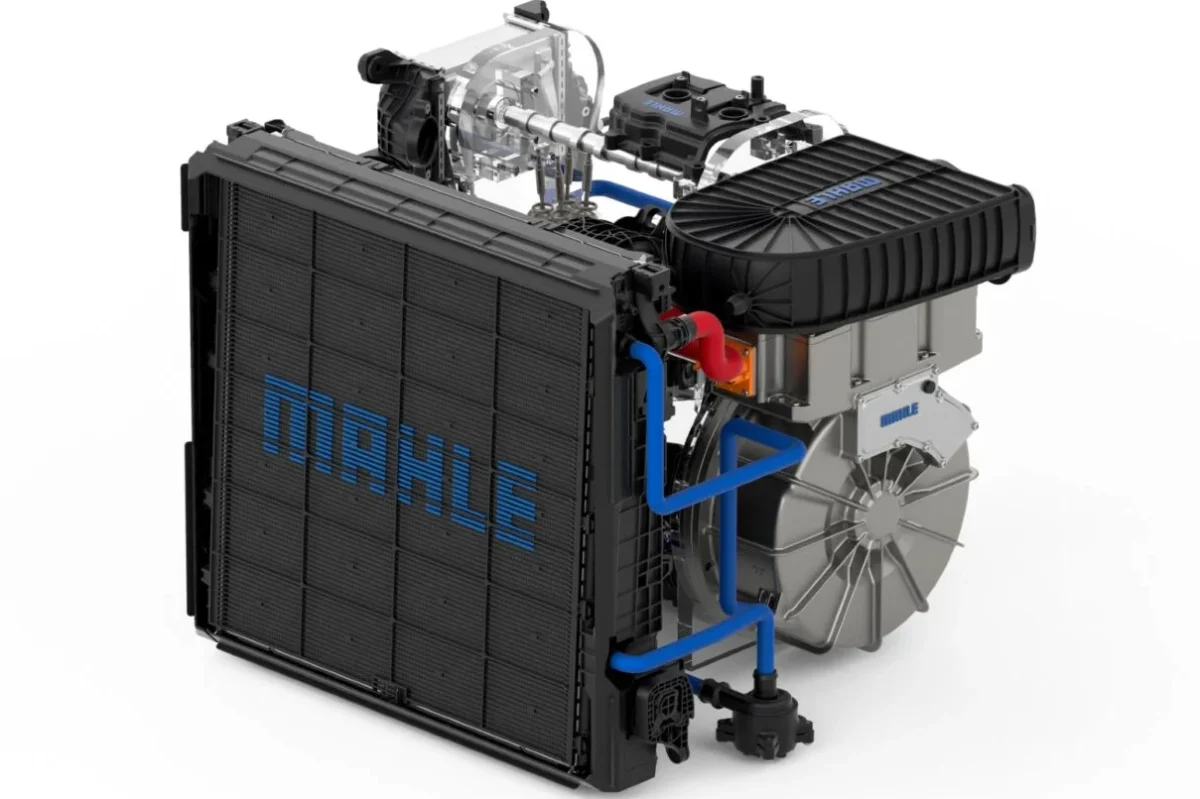
The global logistics industry is currently grappling with a fundamental paradox in its transition to sustainable energy: while the demand for zero-emission heavy-duty transport is at an all-time high, the physical limitations of current battery technology and charging infrastructure continue to hinder widespread adoption. At the upcoming IAA Transportation trade show in Hannover, Germany, this September, Mahle, a leading global tier-one automotive supplier, intends to address these hurdles directly. The company has announced a suite of new technologies, headlined by a high-efficiency range extender system and a magnet-free electric motor, designed to bridge the gap between internal combustion legacy systems and a fully electrified future.
The Challenge of Heavy-Duty Electrification
The transition to battery-electric vehicles (BEVs) has been relatively swift in the passenger car segment, but the heavy-duty trucking sector presents a unique set of engineering and economic obstacles. Traditional long-haul trucking relies on high energy density and rapid refueling to maintain profitability. Even the most advanced electric semi-trucks, such as the Tesla Semi, face significant performance degradation when subjected to heavy payloads and steep gradients, such as the climb to the Eisenhower Tunnel in the Rocky Mountains.
The primary barriers identified by Mahle and industry analysts include inadequate charging infrastructure for commercial vehicles and the limited energy density of current lithium-ion batteries. For fleet operators, flexibility and reliability are the cornerstones of business survival. A truck stranded due to a lack of charging availability or a depleted battery in extreme weather represents a significant financial loss. Arnd Franz, CEO of Mahle, emphasized that time and energy are the most valuable resources in the road transport business, noting that only operators who can work economically while reducing emissions will survive the coming decade of transition.
Technical Specifications of the Mahle Range Extender System
Mahle’s solution to the range anxiety and infrastructure deficit is a sophisticated range extender (REX) system designed specifically for heavy-duty applications. Unlike early passenger car range extenders, which were often seen as underpowered afterthoughts, the Mahle system is engineered as a robust "emergency power unit" capable of sustained high-output operation.
The heart of the system is a high-voltage generator with a continuous output of 110 kilowatts and a peak output of up to 130 kilowatts. This generator is driven by a compact, highly optimized internal combustion engine. To achieve the necessary power density, Mahle developed an advanced oil cooling system that allows the generator to produce more than 7 kilowatts per kilogram of weight. This high power-to-weight ratio is critical for maintaining vehicle payload capacity.
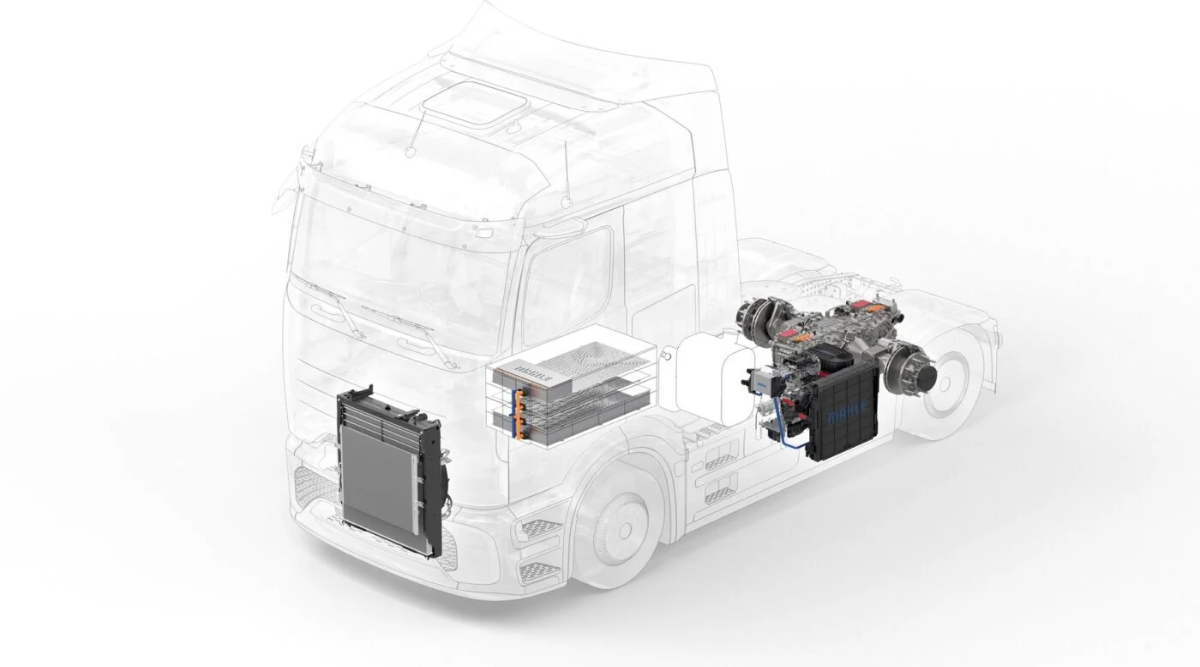
One of the most significant advantages of the Mahle REX system is its integration capability. The entire unit is designed to fit into the space typically reserved for battery modules in a standard BEV truck platform. By replacing approximately one-third of a truck’s standard battery capacity with the range extender, manufacturers can reduce the total vehicle weight by roughly 600 kilograms. Specifically, the load on the rear axle is reduced by about 400 kilograms, allowing for a higher legal payload.
In terms of performance, a truck equipped with this system can achieve a total range of more than 800 kilometers. The battery provides approximately 400 kilometers of pure electric range, while the range extender provides an additional 400 kilometers of "buffer" or "limp-home" capability. This ensures that even if a charging station is occupied or a route is diverted due to traffic or weather, the vehicle remains operational.

Environmental Impact and Renewable Fuel Compatibility
While the range extender utilizes an internal combustion engine, its environmental footprint is significantly lower than that of a traditional diesel powertrain. Under real-world operating conditions, Mahle reports that a truck utilizing the range extender emits 80 percent less carbon dioxide than a conventional diesel truck.
Furthermore, the system is designed to be future-proof through compatibility with renewable fuels. If powered by HVO100 (Hydrotreated Vegetable Oil) or other synthetic biofuels, the system can operate with virtually zero net carbon dioxide emissions. To maintain this efficiency under heavy loads, Mahle integrated a comprehensive thermal management system featuring 48 kilowatts of high-temperature cooling capacity and 15 kilowatts of low-temperature cooling capacity. This ensures that the engine and generator remain within their optimal temperature windows even during prolonged uphill climbs or in high-ambient-temperature environments.
The MCT Motor: Eliminating Rare Earth Dependencies
In addition to the range extender, Mahle is set to debut its Contactless Transmitter (MCT) electric motor in Hannover. This motor represents a significant shift in powertrain design, as it utilizes induction technology rather than permanent magnets.
The reliance on permanent magnets in electric motors has long been a point of contention in the EV industry due to the environmental and geopolitical risks associated with rare earth elements like neodymium and dysprosium. By eliminating these materials, the MCT motor reduces the environmental footprint of the vehicle’s production phase. Mahle estimates that the MCT motor saves approximately 3 kilograms of rare earth magnets per vehicle compared to traditional permanent magnet synchronous motors (PMSM).

Beyond the environmental benefits, the MCT motor offers performance advantages. It is approximately 10 percent lighter than its magnet-equipped counterparts and demonstrates higher efficiency across a broader range of operating conditions. The motor delivers a peak output of 370 kilowatts and over 900 Nm of torque at 3,900 rpm. In the VECTO cycle—the European Union’s standardized simulation tool for determining the fuel efficiency and CO2 emissions of heavy-duty vehicles—the MCT motor achieves an efficiency rating of approximately 95 percent.
Historical Context and Industry Evolution
The concept of the range-extended electric vehicle is not new, but its application in the heavy-duty sector marks a new chapter in the technology’s evolution. Historically, vehicles like the BMW i3 and the Chevrolet Volt pioneered the use of small internal combustion engines to supplement battery power. While the Chevrolet Volt was widely praised for its seamless integration, the BMW i3’s range extender was often criticized for its limited power, particularly in the United States, where regulatory constraints prevented the engine from engaging until the battery was nearly depleted.
In the commercial sector, early innovators like Ian Wright, a co-founder of Tesla, attempted to bring range-extended powertrains to market through his company, Wrightspeed. Wrightspeed utilized high-efficiency gas turbines to charge batteries in delivery trucks and garbage trucks. While the engineering was sound, the high cost of components and the slow pace of market adoption led to limited commercial success.
Today, the landscape is shifting. The joint venture between Renault and Geely, known as Horse Powertrain, recently unveiled the C15 compact engine, a similar range-extending unit designed for easy integration into existing BEV platforms. The emergence of Mahle’s system suggests a growing industry consensus that a "pure" BEV approach may not be feasible for all long-haul applications in the immediate future.

Broader Implications for the Logistics Sector
The introduction of these technologies by a tier-one supplier like Mahle has broad implications for original equipment manufacturers (OEMs) and fleet operators. For OEMs, the ability to offer a modular "REX" option on an existing BEV platform allows them to cater to diverse regional markets without the need for entirely different vehicle architectures. In regions with robust megawatt charging networks, pure BEVs will remain the preference. However, in regions where infrastructure is lagging, the range extender provides a viable path to fleet decarbonization.
For fleet operators, the economic argument is centered on "uptime." In the logistics industry, a truck that is not moving is a truck that is losing money. The Mahle system provides a safety net that protects against the unpredictability of the current charging landscape. By decoupling the market ramp-up of electric trucks from the slow pace of infrastructure development, Mahle aims to accelerate the retirement of traditional diesel engines.
Conclusion and Market Outlook
As the industry gathers in Hannover for the IAA Transportation show, the focus will likely remain on how to balance the urgent need for decarbonization with the harsh realities of global logistics. Mahle’s dual approach—improving motor efficiency through the magnet-free MCT motor and providing operational security through the range extender—reflects a pragmatic understanding of the current technological landscape.
While some purists argue that any use of internal combustion engines is a step backward, the data provided by Mahle suggests that these "bridge technologies" may be the most effective way to achieve immediate and massive reductions in carbon emissions. By reducing the weight of the vehicle, lowering the cost of the initial battery pack, and ensuring 800 kilometers of reliable range, Mahle is positioning itself as a key enabler of the electric transition. These innovations may eventually become obsolete as battery energy density doubles and charging stations become as ubiquitous as diesel pumps, but for the next two decades, they represent a vital component of the global effort to clean up the heavy-duty transport sector.
