

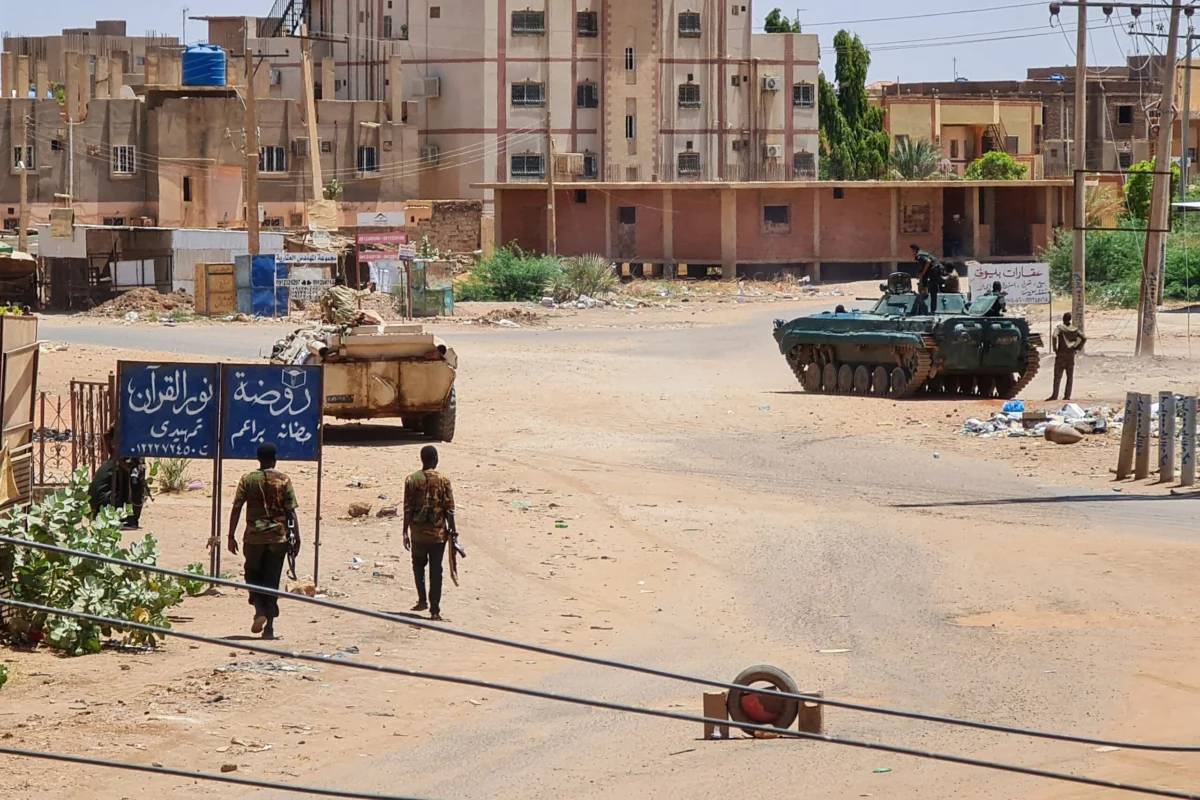
One month after the eruption of intense hostilities between Sudan’s primary military factions, the nation remains gripped by a devastating power struggle that has effectively paralyzed the capital and ignited a burgeoning humanitarian disaster. Despite high-level international mediation efforts led by the United States and Saudi Arabia, the conflict between the Sudanese Armed Forces (SAF) and the paramilitary Rapid Support Forces (RSF) shows no signs of abating. The violence, which initially centered on the urban sprawl of Khartoum, has increasingly spread to the historically volatile Darfur region, raising fears of a protracted civil war that could destabilize the entire Horn of Africa.
As of early May 2023, the human cost of the conflict has reached staggering proportions. According to data released by the International Rescue Committee (IRC), more than 600 individuals have been confirmed killed, with over 5,000 others sustained injuries. However, medical professionals on the ground and international observers warn that the actual death toll is likely significantly higher, as many bodies remain uncollected in the streets of Khartoum or buried in haste without official documentation. The displacement crisis is equally dire; nearly one million people have been forced from their homes. Approximately 700,000 are internally displaced within Sudan’s borders, while over 200,000 have sought refuge in neighboring countries such as Egypt, Chad, Ethiopia, and South Sudan, many of which are already grappling with their own internal instabilities and resource scarcities.
A Chronology of Instability: From Revolution to Civil War
The current conflict is the culmination of years of political volatility following the 2019 ousting of long-time dictator Omar al-Bashir. Bashir’s fall, prompted by a massive grassroots pro-democracy movement, led to a fragile power-sharing agreement between civilian leaders and the military. However, this transition was derailed in October 2021 when General Abdel Fattah al-Burhan, head of the SAF, and General Mohamed Hamdan Dagalo, better known as Hemedti, leader of the RSF, joined forces to orchestrate a military coup. The coup ousted the civilian government led by Prime Minister Abdalla Hamdok and drew immediate international condemnation, leading to the freezing of billions of dollars in foreign aid and debt relief.
The partnership between Burhan and Hemedti was always a marriage of convenience. Tensions began to simmer in early 2023 over the proposed integration of the RSF into the regular army—a key requirement for returning to a civilian-led government. Disagreements over the timeline of this integration and who would hold ultimate command authority reached a breaking point on April 15, 2023. On that morning, heavy gunfire and explosions erupted across Khartoum as both sides vied for control of strategic assets, including the presidential palace, the state broadcaster, and the international airport.
By early May, the "Jeddah talks" in Saudi Arabia emerged as the primary diplomatic track. While the warring generals sent representatives to negotiate, the discussions have focused almost exclusively on humanitarian corridors rather than a permanent ceasefire. A "Declaration of Commitment to Protect the Civilians of Sudan" was signed, yet reports from the ground indicate that airstrikes and artillery fire have continued unabated in residential neighborhoods, rendering such diplomatic gestures largely symbolic.
The Humanitarian Crisis and the Collapse of Essential Services
The collapse of the Sudanese state’s ability to provide basic services has left millions in a state of extreme vulnerability. In Khartoum, Omdurman, and Bahri, the infrastructure for water and electricity has been severely damaged. Residents who have chosen to stay—or who lack the means to flee—are facing a desperate shortage of food, medicine, and fuel. The IRC has warned of a "secondary humanitarian crisis" as the lack of clean water and the breakdown of sanitation systems increase the risk of waterborne diseases such as cholera.
The economic impact has been immediate and catastrophic. Prices for basic commodities have surged by as much as 300% in some areas. Markets have been looted, and the banking system has largely ceased to function, leaving citizens without access to their savings. For a country where a third of the population already relied on humanitarian aid before the conflict, the current situation represents a total systemic failure.
"The needs are immense, immediate and will be for a long time," stated Kurt Tjossem, IRC Vice President for East Africa. He emphasized that the longer the fighting continues, the more vulnerable the population becomes to malnutrition and disease. The IRC and other NGOs have called for the immediate protection of civilian infrastructure and the removal of bureaucratic hurdles that prevent aid from reaching those in need.
The Role of International Actors and the Geopolitical Chessboard
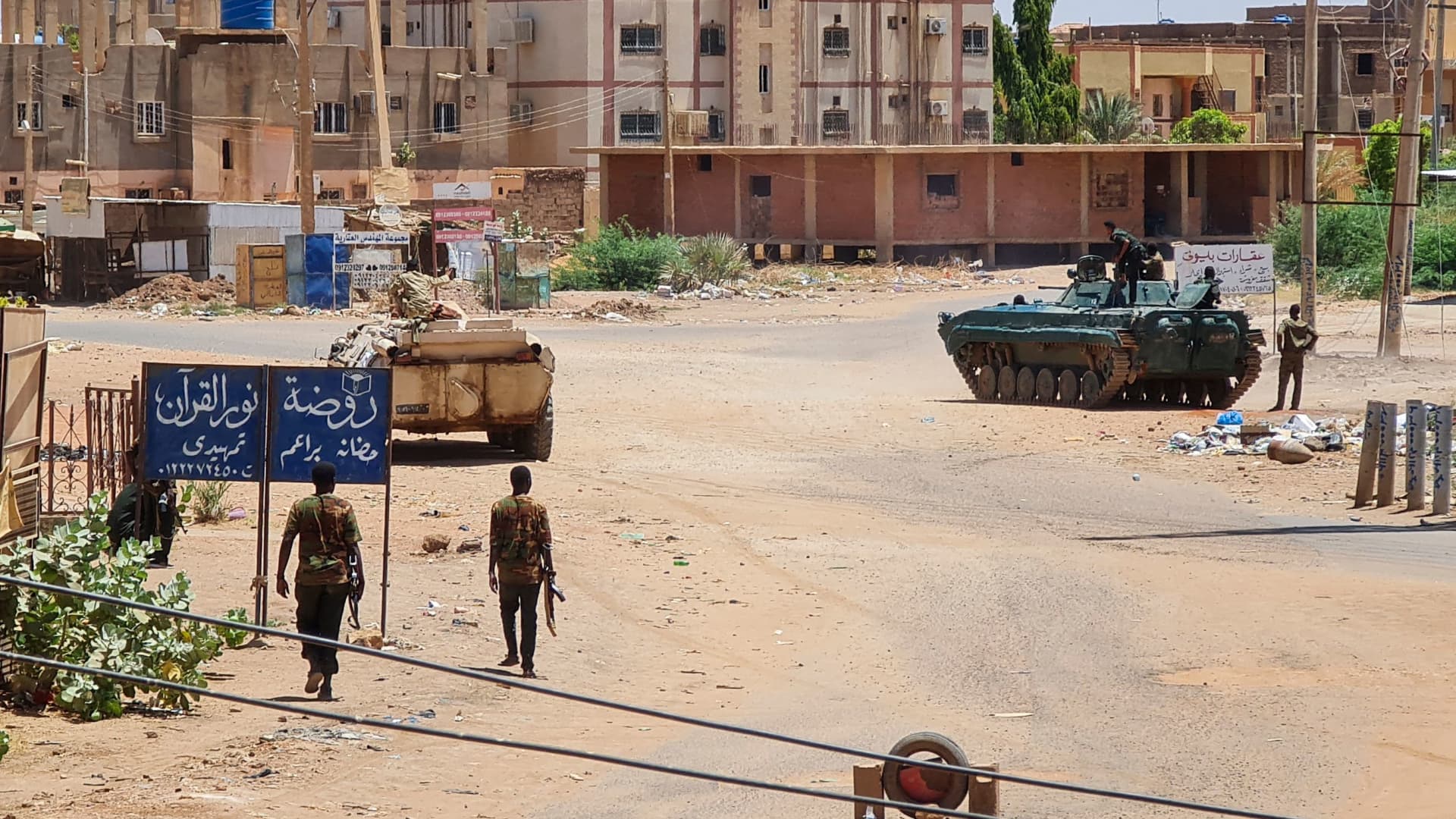
The conflict in Sudan is not merely a domestic affair; it is deeply entangled with the interests of regional and global powers. The SAF, led by Burhan, has historically enjoyed strong ties with Egypt, which views a stable, military-led Sudan as essential for its own national security and interests regarding the Nile River waters. Conversely, Hemedti and the RSF have cultivated deep financial and military relationships with the United Arab Emirates and have been linked to the Russian mercenary group, Wagner, particularly through the control of Sudan’s lucrative gold mines.
Saudi Arabia and the United States have attempted to play the role of neutral brokers, but critics argue that the international community’s approach has been flawed from the start. By engaging primarily with the two generals, critics say, foreign powers have inadvertently legitimized the military’s hold on power at the expense of the civilian pro-democracy movement.
Andrew Mitchell, the United Kingdom’s Minister for International Development and Africa, recently addressed the UN Human Rights Council, stressing the need for a "united message of horror" from the international community. He argued that the cycle of impunity in Sudan must be broken if the country is to ever return to a political track. However, many Sudanese activists, such as writer and broadcaster Yassmin Abdel-Magied, argue that as long as the generals’ financial resources remain untouched, they have little incentive to stop fighting. Abdel-Magied suggested that targeted sanctions against the business empires of both the SAF and RSF are necessary to "throttle" their ability to wage war.
The Grassroots Resistance: A Beacon of Hope Amidst Chaos
One of the most remarkable developments during the month of fighting has been the resilience of Sudan’s "Resistance Committees." These informal, neighborhood-based networks were the backbone of the 2019 revolution and have now pivoted to providing essential mutual aid. While the state has failed, these committees have organized the distribution of food, managed makeshift clinics, and facilitated the evacuation of the elderly and wounded.
Civil society advocates argue that these committees must have a seat at the negotiating table in Jeddah. They represent the "civilian voice" that is currently missing from the high-level talks. Abdel-Magied pointed out that history is "littered with the results of unintended consequences" because foreign states often prioritize short-term stability over the long-term democratic aspirations of the people. Including these grassroots leaders could provide the framework for a political solution that goes beyond a mere truce between two warlords.
Future Implications: The Threat of State Failure
The stakes for Sudan could not be higher. If the fighting continues to escalate, particularly in Darfur where ethnic tensions are being re-ignited, Sudan risks becoming a "failed state" similar to Libya or Somalia. Such a scenario would have dire consequences for the region, potentially triggering a massive refugee crisis in Europe and providing a vacuum for extremist groups to exploit.
The international community faces a difficult choice: continue with the current model of high-level military diplomacy or shift toward a more aggressive strategy of financial pressure and the empowerment of civilian networks. As the conflict enters its second month, the window for a peaceful resolution is rapidly closing. The fear among the Sudanese people is that without "intentional, diligent, and thought-through action," the country may face decades of dysfunction and violence.
In the words of many Sudanese civilians, the current war is not just a fight for power between two men; it is a war against the future of the Sudanese people. Preventing the "worst-case scenario" will require more than just signatures on a page in Jeddah; it will require a fundamental restructuring of the Sudanese state, moving away from a military-industrial complex and toward the civilian rule that millions of Sudanese have risked their lives to achieve since 2019.
