

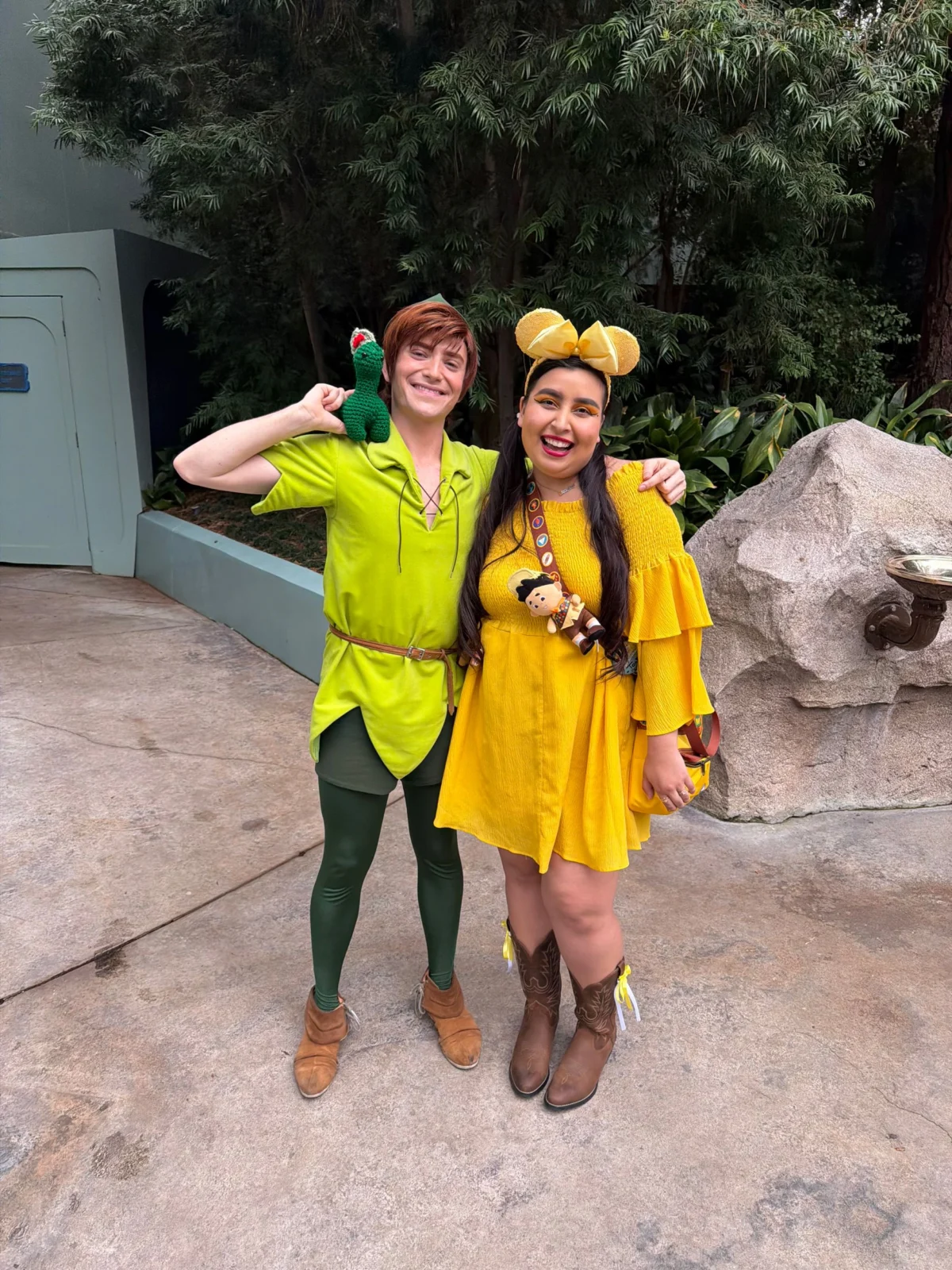
The intersection of theme park fandom and social media visibility reached a volatile flashpoint this August as Toni Kulusich, a 27-year-old Los Angeles-based content creator, became the center of a global internet controversy. Known to her followers as a dedicated Disneyland enthusiast, Kulusich found herself rebranded by the digital masses as "Peter Pan Girl," a label that carried with it accusations of stalking, harassment, and psychological instability. What began as a routine five-second video of a character interaction escalated into a complex debate regarding the boundaries of "Disney Adults," the safety of theme park performers, and the speed at which social media misinformation can result in real-world consequences.
The Catalyst of a Viral Controversy
On August 2, Kulusich uploaded a video to her social media platforms documenting an interaction with the Peter Pan character at Disneyland. In the footage, she presented the performer with a small, crocheted duck keychain. While such "magical moments"—the internal Disney term for guest-performer interactions—are common within the park, the digital reception was unprecedented. As the video surpassed one million views, the tone of the comments shifted from amusement to hostility.
Observers on TikTok and Instagram began to scrutinize the interaction through the lens of "armchair psychology." Commenters claimed to detect discomfort in the performer’s body language, despite the strict "character integrity" guidelines that require Disney actors to remain in character regardless of their personal feelings. The backlash intensified as users began to "dig" into Kulusich’s digital history, unearthing videos from a decade prior. This archival footage, showing a teenage Kulusich meeting the same character, was presented by critics as evidence of a ten-year stalking campaign, despite the fact that different actors play the role of Peter Pan over such a duration.
A Chronology of Escalation
The transition from online criticism to real-world harassment occurred with remarkable speed. Following the initial viral surge of the "duck keychain" video, the following timeline illustrates the escalation of the "Peter Pan Girl" narrative:
- Early August: The video reaches one million views. Initial accusations of "cringe" behavior evolve into allegations of stalking.
- Mid-August: A Change.org petition is launched, titled "Ban Christina Toni Carrillo [Kulusich] from Disneyland." The petition gains thousands of signatures, citing the need to protect park staff.
- Late August: Reddit communities dedicated to Disneyland begin "analyzing" Kulusich’s personal life. Her wedding video is scrutinized, and her husband, a member of the U.S. Marines, becomes a subject of public "sympathy" from strangers who claim Kulusich is secretly in love with the fictional Peter Pan.
- The Doxxing Incident: The situation turned dangerous when an anonymous user identified Kulusich’s place of employment. Her workplace, a major big-box retail store, was publicized, forcing her management to alter her shifts and implement security measures for her protection.
- The "Baby Reindeer" Comparison: By the end of the month, Kulusich was being frequently compared to the character of Martha from the Netflix series Baby Reindeer, a dramatized account of a real-life stalker.
The "Disney Adult" Stigma and the Influencer Ecosystem
The vitriol directed at Kulusich does not exist in a vacuum. It is deeply rooted in the broader internet culture’s antipathy toward "Disney Adults"—a demographic of childless adults who maintain a passionate, often expensive, obsession with Disney intellectual property and theme parks. Critics often characterize this group as self-indulgent or emotionally stunted, accusing them of "taking up space" meant for children.
Kulusich, however, maintains that her hobby is a controlled release of her "inner child," separate from her professional and marital responsibilities. As a manager of a retail store and a wife of four years, she argues that her weekly visits to Disneyland are no different from any other enthusiast’s commitment to a hobby. Yet, in the influencer ecosystem, the line between hobby and profession is blurred. While Kulusich has no formal affiliation with the Walt Disney Company, her follower count jumped from 50,000 to over 125,000 during the height of the controversy, illustrating the "hate-following" phenomenon where users track a creator specifically to criticize them.
The Mechanics of "Face Character" Interactions
To understand the controversy, one must understand the specific rules governing "face characters." Unlike "fur characters" (such as Mickey Mouse or Goofy, who wear full-body suits and masks), face characters are actors whose actual faces are visible. They are trained to "spiel"—to engage in witty, improvised dialogue that aligns with their character’s personality.
Peter Pan is notoriously one of the most difficult roles to play because the character is canonically "bratty," spontaneous, and sharp-tongued. This creates a unique challenge for park guests and performers alike. The playful, sometimes confrontational nature of the character can be easily misinterpreted by third-party observers on social media who lack the context of the full interaction.
Kulusich is well-versed in the industry’s vernacular, often referring to performers as "friends of Peter Pan" to maintain the "magic" for younger audiences. She has defended her actions by releasing data she calls "Disney Unwrapped," which showed that she only met Peter Pan in seven out of her last 30 visits. This data was intended to refute the "stalker" narrative by demonstrating that the character is not the sole focus of her attendance.
Historical Precedents and Performer Safety
Kulusich is not the first person to be targeted by a digital mob regarding character interactions. In the mid-2010s, a similar fandom emerged on Tumblr surrounding a specific performer known as "Spieling Peter." Fans would document his every move, leading to internal concerns at Disney regarding the "celebrity" status of individual actors.
In recent years, the rise of TikTok has led to an increase in "inappropriate" guest behavior, where influencers attempt to trick actors into breaking character for viral content. This has created a heightened state of sensitivity among the Disney community. When Kulusich’s video went viral, it tapped into a pre-existing anxiety about the safety and dignity of theme park workers. However, the distinction between a guest having a "special friendship" with a character (a common occurrence for frequent passholders) and a guest posing a legitimate threat is often lost in the "dogpiling" nature of social media.
Mental Health and the Aftermath of Digital Dogpiling
The psychological toll on Kulusich has been significant. "Imagine waking up to thousands of comments saying you’re a crazy stalker lady every single day," she stated, noting that the experience severely impacted her mental health. For several weeks, she avoided the parks entirely, fearing both for her safety and for the potential of creating more "content" for her detractors.
Her eventual return to the park was marked by a mix of anxiety and a desire to reclaim her hobby. Despite being surreptitiously photographed by other guests—a common hazard for those who become "internet famous" for negative reasons—she reported a positive interaction with the Peter Pan character. According to Kulusich, the performer recognized her and encouraged her to "never stop visiting Neverland," a gesture that she interpreted as a validation of her presence in the park.
Fact-Based Analysis of Implications
The "Peter Pan Girl" saga offers a cautionary tale about the power of armchair analysis. The internet’s ability to take a five-second clip, apply a narrative of "discomfort" through biased observation, and then mobilize a petition to destroy a person’s livelihood is a growing concern for digital ethicists.
Key implications include:
- The Erosion of Privacy for Non-Public Figures: Kulusich, while a content creator, is not a traditional celebrity, yet she was subjected to a level of scrutiny usually reserved for public officials.
- The Danger of Doxxing: The leap from "disliking a video" to "contacting an employer" represents a dangerous escalation in how digital disagreements are settled.
- Corporate Silence: The Walt Disney Company typically remains silent during such controversies to avoid giving them more oxygen. However, this leaves both the performer and the guest in a vacuum of "unofficial" narratives.
As of late 2024, Kulusich continues to create Disney content, though with a newfound awareness of the digital lens. The "Peter Pan Girl" incident remains a landmark case study in the volatility of modern fandom, where the boundary between a "magical moment" and a "viral nightmare" is as thin as a smartphone screen. While the internet may move on to the next controversy, the real-world scars of doxxing and character assassination remain a permanent fixture of Kulusich’s digital legacy.
