

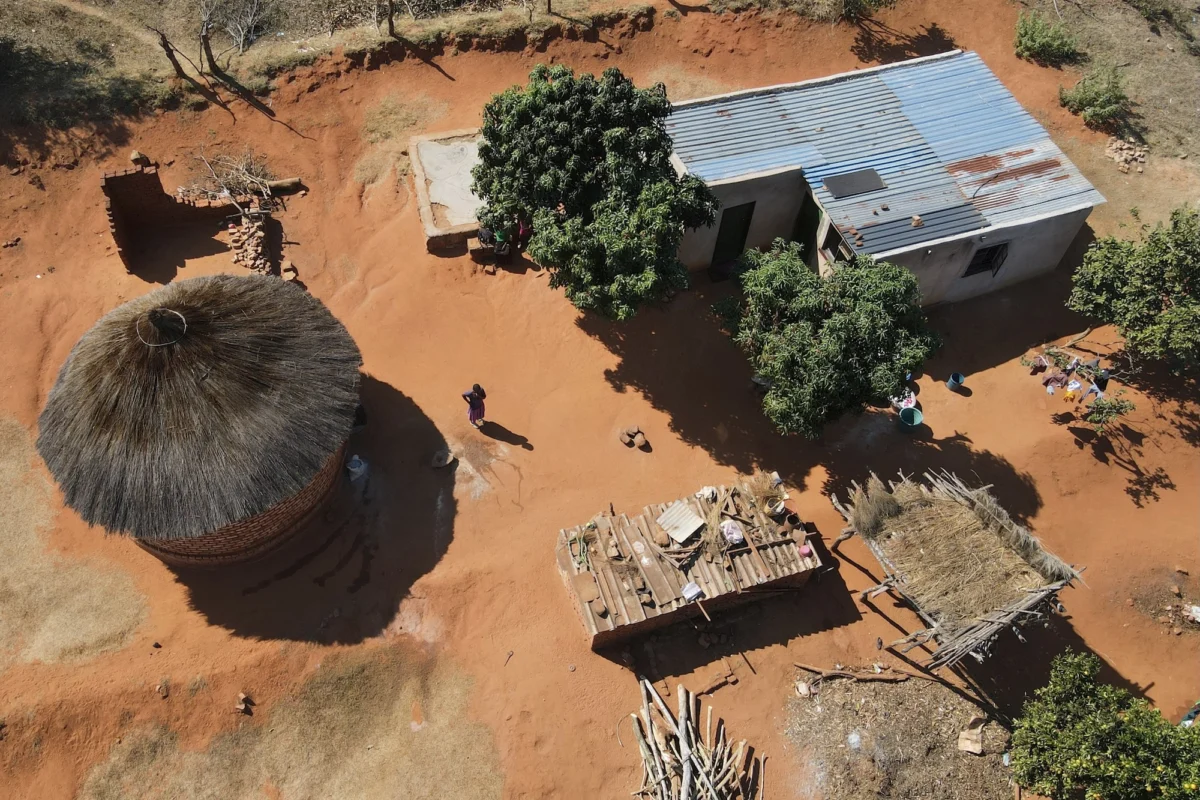
Esther Mwedzi sits on the front veranda of her home in eastern Zimbabwe, methodically separating her laundry as the afternoon sun catches the modern brickwork of her residence. The structure, a four-bedroom house that stands in sharp contrast to the dusty, sun-baked yard surrounding it, serves as a tangible monument to a quiet financial revolution taking place across the Manicaland province. For Mwedzi, a 38-year-old mother of three, the house is not merely a shelter but a testament to "mukando"—a traditional yet evolving system of informal savings groups that is providing a lifeline to millions of Zimbabweans excluded from the formal banking sector.
In Chitiyo village, located near the provincial capital of Mutare, Mwedzi is a prominent member of the Mutekwatekwa savings group. Her journey from living in precarious housing to owning a modern home was facilitated not by a commercial mortgage, but by low-interest loans sourced directly from her neighbors. With Zimbabwe’s formal financial institutions remaining largely inaccessible to those without formal employment, these community-led initiatives have become the primary engine for rural development, asset acquisition, and poverty alleviation.
The Economic Divide: Informal Trust vs. Formal Barriers
The rise of groups like Mutekwatekwa is a direct response to the systemic barriers present in Zimbabwe’s commercial banking sector. Currently, interest rates at commercial banks can reach as high as 46 percent annually, a figure that is prohibitive for small-scale farmers and informal traders. Furthermore, the requirements for opening a bank account or securing a loan—including payslips, formal letters of employment, and verified proof of residence—effectively disenfranchise a significant portion of the population. According to World Bank data, Zimbabwe maintains a high unemployment rate in the formal sector, with the vast majority of the population surviving through informal trade and subsistence agriculture.

Social commentator Rashweat Mukundu notes that the financial sector in Zimbabwe is structured in a way that prioritizes the few who hold formal jobs. "The poor, urban, and rural communities have been forced to mobilize whatever resources they have to support investment and ensure food security," Mukundu explained. "Savings groups are a long-standing method that allows community members to bypass these barriers by relying on social capital rather than traditional collateral."
In contrast to the 46 percent interest rates of banks, informal savings groups—popularly known as "mukando" in the Shona language—typically offer loans at a flat 10 percent interest rate. Because these groups operate on the basis of mutual trust and communal oversight, they do not require the extensive documentation that often serves as a gatekeeper in the formal financial world.
The Mechanics of Mutekwatekwa: A Model of Communal Finance
Established in January 2024, the Mutekwatekwa savings group provides a blueprint for how these informal structures operate with professional-grade discipline. The group consists of 50 members, further divided into four smaller subgroups of 12 to 13 people to ensure manageable oversight. Each member contributes a minimum of US$5 monthly to a shared pool. This pool is then used to provide short-term loans to members, which are expected to be repaid within a month with a 10 percent interest addition.
At the end of the calendar year, the accumulated interest is shared among the members, often resulting in a doubling of their initial savings. Jeremiah Chitiyo, the chair of the Mutekwatekwa savings group, emphasizes that the initiative is about more than just money; it is about fostering a culture of disciplined labor. "The clubs encourage people to work hard so they can meet their monthly contributions," Chitiyo said. "Small loans have enabled people in this community to build houses, buy livestock, pay school fees, and even drill boreholes."

To ensure the sustainability of their contributions, the Mutekwatekwa group also manages a community garden. Here, members grow a variety of fruits and vegetables, which serve the dual purpose of improving household nutrition and providing a consistent source of income to fund their monthly savings requirements.
Infrastructure and Resilience: Beyond Simple Savings
The impact of these groups extends into vital infrastructure. In a region where water scarcity is a persistent threat to agriculture, informal savings groups are being used to fund large-scale projects that would otherwise be impossible. Senior Chitiyo, a relative of Jeremiah and a member of both Mutekwatekwa and a smaller six-member farmers’ club, is currently using the system to secure reliable water.
In her smaller group, members take turns receiving a lump sum to drill boreholes for irrigation. A single borehole costs approximately $2,000—a staggering amount for a smallholder farmer in rural Zimbabwe. By contributing $25 a month, Senior and her peers are systematically drought-proofing their farms. Three boreholes have already been completed for other members; Senior is scheduled for her own in August 2027.
"I have participated in different clubs for more than a decade," Senior said, reflecting on a history of financial self-reliance that has allowed her to clothe and educate her four children while building her own home.

Similarly, 23-year-old Tsitsi Mahari has utilized the Mutekwatekwa model to achieve a level of domestic comfort rarely seen in rural areas. Her three-bedroom home features tiled floors, sectional couches, and a smart television powered by a solar energy system—all funded through loans as high as $300. In the context of the local economy, such a loan represents more than the monthly salary of many government employees, including teachers and nurses.
The Role of International Aid and the 2025 Funding Shift
While these groups are self-managed, their recent proliferation was catalyzed by international development efforts. CARE Zimbabwe, an international humanitarian organization, played a pivotal role in establishing the Mutekwatekwa garden and training the groups in financial literacy and constitutional development. This work was initially supported by the United States Agency for International Development (USAID) under a program designed to run from 2020 to 2027.
However, the landscape of international aid shifted significantly in early 2025 when the administration of U.S. President Donald Trump implemented substantial funding cuts to USAID programs. This disruption forced organizations like CARE Zimbabwe to accelerate their transition to local ownership.
Delilah Takawira, Country Director for CARE Zimbabwe, explains that the sustainability of the "mukando" model was a design feature from the outset. "Our role is facilitator, not financier," Takawira stated. "We train groups and support them to develop their own constitutions, then we step back. Because these groups do not require external funding to operate, they continue to thrive even when international aid budgets are slashed."

As of mid-2025, CARE Zimbabwe’s programs have supported over 47,000 village savings members across 5,013 groups nationwide. These groups have collectively saved over $1.1 million and circulated nearly $2 million in internal loans, demonstrating the massive scale of this "shadow" financial system.
Risk Management and the "Lockbox" Philosophy
Despite their success, informal savings groups are not without significant risks. The absence of legally binding contracts and the lack of traditional collateral make these groups vulnerable to default and internal theft. "This is a system entirely based on trust and promoting the common good," Mukundu noted, acknowledging that some individuals occasionally target these groups for exploitation.
To mitigate these risks, the Mutekwatekwa group has implemented rigorous internal controls. Loans are strictly limited to members to ensure accountability, and all financial transactions are conducted in the presence of the entire membership during monthly meetings.
"The funds sit in a lockbox with three separate keys, held by three different members," Takawira explained. This "three-key" system ensures that the cash box cannot be opened without communal consent, a simple but effective security measure that has kept theft rates in these groups significantly lower than in groups that attempt to lend to outsiders.

Future Outlook: From Subsistence to Entrepreneurship
The long-term implication of the "mukando" movement is a shift from subsistence living to proactive entrepreneurship. For women like Esther Mwedzi, the completion of a home is just the beginning. With the stability of a permanent residence secured, she is now looking toward market expansion.
"Now that I am done building, I want to invest in a broiler project," Mwedzi said, outlining plans to start a chicken farming business that will supply the larger markets in Mutare. Her ambition reflects a broader trend among savings group members who are using their improved financial literacy to budget, save, and diversify their income streams.
By fostering climate resilience through borehole drilling and providing the capital necessary for small-scale industrialization—such as tailoring shops and grocery stores—informal savings groups are doing what formal banks have failed to do: providing a path to the middle class for rural Zimbabweans. As the country continues to navigate economic volatility, these trust-based networks remain the most reliable engine for grassroots growth, proving that in the absence of institutional support, community-led innovation can fill the void.
