

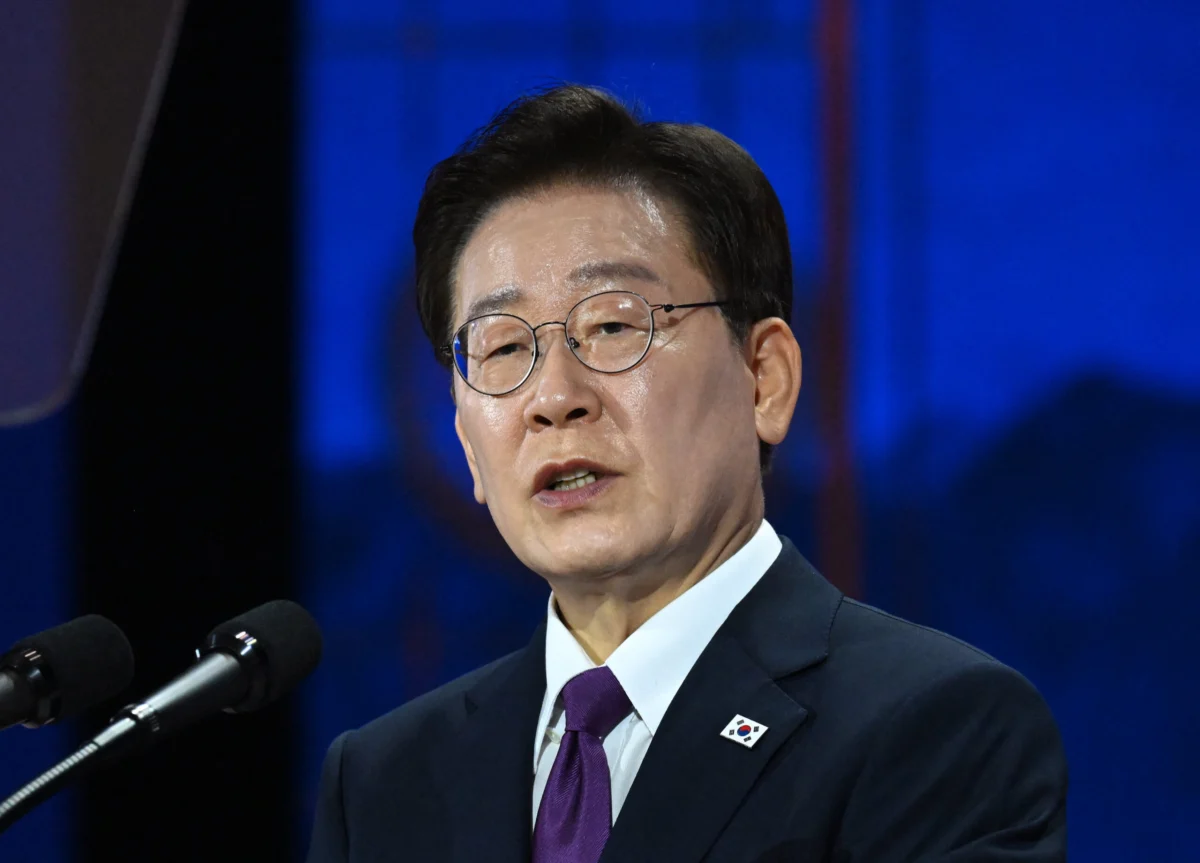
South Korean President Lee Jae Myung has issued a stark warning regarding the nation’s real estate sector, drawing parallels to Japan’s "lost decades" following its property crash in the early 1990s. The President’s comments, delivered during a public discussion on real estate policy on Thursday, come as his administration prepares to revise taxes aimed at stabilizing the housing market, a move he hopes will avert a similar economic stagnation. Lee’s cautionary remarks have ignited a fervent debate among economists, policymakers, and the public about the immediate dangers facing Seoul’s red-hot property market.
Echoes of Japan’s Economic Labyrinth: The ‘Lost Decades’ Context
President Lee referenced "quite a few people" who express concern that South Korea could face Japan’s "lost" 20 or 30 years. This refers to Japan’s "lost decades," a protracted period of economic stagnation, deflation, and low growth that followed the bursting of its asset price bubble in the early 1990s. During the latter half of the 1980s, Japan experienced an unprecedented economic boom, characterized by soaring land and stock prices, fueled by loose monetary policy and speculative lending. Tokyo’s housing market, in particular, saw property values skyrocket to unsustainable levels, creating a massive speculative bubble.
The bubble burst dramatically when the Bank of Japan, fearing inflation and asset overvaluation, began raising interest rates in December 1989. This policy shift, coupled with tighter lending regulations, triggered a sharp decline in asset prices. The Nikkei 225 stock index peaked at nearly 39,000 points at the end of 1989 before plummeting, while property values across major cities collapsed by as much as 80% over the subsequent decade. This contraction led to widespread bankruptcies, a banking crisis, and a prolonged period of economic malaise, characterized by deflationary pressures, weak consumer demand, and a reluctance by businesses to invest. Japan’s experience serves as a cautionary tale for economies with highly leveraged real estate sectors and significant household wealth tied to physical assets.
South Korea’s Property Predicament: A Deep Dive into Market Dynamics
President Lee highlighted that real estate accounts for the largest share of South Korean household wealth, a fact underscored by data indicating that the country is among those with the highest proportion of household wealth concentrated in real estate globally. As of end-March 2025, real assets constituted a dominant 75.8% of Korean household assets, significantly outweighing financial assets, which made up only 24.2%. This heavy concentration implies that a significant downturn in property values could have widespread ramifications for household balance sheets, consumer spending, and overall financial stability.
The South Korean property market, particularly in Seoul and its metropolitan area, has experienced periods of intense price appreciation over the past decade. This surge has been driven by a confluence of factors: historically low interest rates, limited housing supply in highly desirable urban areas, a cultural preference for real estate as a primary investment and store of wealth, and speculative demand. The rapid increase in housing costs has become a significant social issue, exacerbating wealth inequality and placing immense financial burdens on young families and first-time homebuyers. Successive governments have attempted various measures to cool the market, including stricter lending rules, increased property taxes, and efforts to boost housing supply, but with varying degrees of success.
President Lee’s Track Record: Bold Predictions and Economic Maneuvers
President Lee Jae Myung is no stranger to making bold economic pronouncements. Ahead of the 2025 presidential election, when the benchmark Kospi index hovered near 2,500 points, Lee, then a candidate, reportedly set an ambitious target of 5,000 for the Kospi during his term. He pledged to resolve the long-standing "Korea discount," a phenomenon where South Korean companies are valued lower than their global peers due to factors such as corporate governance issues, complex ownership structures, and geopolitical risks. Remarkably, the Kospi briefly crossed the 5,000-point mark in January 2026, just over six months after he took office, riding the wave of an AI-powered global chip boom that significantly boosted the valuations of South Korean tech giants like Samsung Electronics and SK Hynix.
This successful prediction has lent a certain gravitas to his current warnings about the real estate market. His administration has consistently attempted to reorient household wealth away from the overheated housing sector and towards financial markets, a strategy that has yielded partial results. While the Kospi did surge, it has also experienced volatile swings, now hovering around 6,700, reflecting its heavy dependence on a few large-cap technology companies. The government’s broader objective has been to foster a more balanced and resilient economy, less susceptible to the boom-and-bust cycles of a single asset class.
Diverging Expert Opinions: Are Concerns Overblown?

Despite President Lee’s strong admonition, some economists believe that the comparison with Japan might overstate the immediate danger to South Korea’s real estate market. Kang Min Joo, senior economist for South Korea and Japan at ING, suggests that "the probability of a real asset bubble burst in Korea is limited." She points to several mitigating factors, including the relatively tight mortgage lending conditions that have been in place for several years. Authorities have maintained strict controls on loan-to-valuation (LTV) and debt-to-income (DTI) ratios. Kang notes that while the LTV ratio was previously as high as 80% in some periods, it has since fallen to below 40% and is even lower in the highly sought-after Seoul area. These prudential measures are designed to limit speculative borrowing and protect the financial system from excessive risk exposure.
The household debt-to-GDP ratio in South Korea, though high, has shown some signs of stabilization. It stood at 90.14% as of 2024. While this figure represents the second-highest in Asia, only behind Australia, it has decreased from its record high of 98.67% in 2021. This reduction, partly due to tighter credit conditions and rising interest rates, indicates a degree of deleveraging, even if slow. Kang interprets President Lee’s comments as reflecting concerns about the recent rise in housing prices and the inherent risks of wealth concentration, rather than an imminent asset bubble burst on the scale of Japan’s experience.
Gareth Leather, senior economist for Asia at Capital Economics, shares a similar perspective, stating that "fears of a bubble appear exaggerated." Leather highlights the nuanced regional dynamics within South Korea’s property market. He points out that only property prices in Seoul are rising rapidly, and even within the capital, they are only about 10% above their January 2022 levels. In contrast, cities like Busan have seen prices fall to almost 80% of their January 2022 levels, indicating a more localized rather than nationwide overheating. Furthermore, Leather underscores that risks to financial stability are limited by the substantial down payments required from house buyers. This requirement means that homeowners typically have significant equity in their properties, reducing the likelihood of negative equity and mitigating potential difficulties for banks in the event of a market correction.
Policy Pathways: Tax Revisions and Structural Reforms
The impending tax revisions are a critical component of the government’s strategy to stabilize the housing sector. While specific details of the revisions are still emerging, they are expected to target various aspects of property ownership, including acquisition taxes, holding taxes (property taxes), and capital gains taxes on sales. The aim is to disincentivize speculative buying, encourage the release of unoccupied properties, and ensure that real estate serves primarily as a dwelling rather than a speculative investment tool. These tax adjustments are likely to be debated vigorously, as they can have significant impacts on different segments of the population and the broader economy. Balancing the need to cool the market with the potential for adverse effects on legitimate homeowners and construction activity will be a delicate act.
Beyond tax measures, the South Korean government has also explored other structural reforms, such as increasing housing supply in key urban areas, particularly through redevelopment projects and new town initiatives. Efforts to streamline regulations and expedite construction processes are also under consideration to address the fundamental supply-demand imbalance that often drives price inflation. The government is also keen on promoting alternative investment avenues and financial literacy to encourage diversification of household wealth away from real estate.
Broader Implications: Lessons from Japan and South Korea’s Unique Path
While economists largely agree that a direct replication of Japan’s 1990s implosion is unlikely for South Korea, the country does share several financial and demographic characteristics with Japan that warrant caution. Ma Tieying, senior economist at DBS Group Research, notes that South Korea has a high credit-to-GDP ratio and a significant stock market capitalization, similar to Japan before its crash. This structure leaves the economy potentially exposed to higher interest rates, tighter credit conditions, and global economic shocks.
However, crucial differences exist. Korea is not currently experiencing the large capital inflows or persistent currency appreciation that characterized Japan a few years before its bubble burst. This distinction provides the Bank of Korea with greater flexibility to calibrate its monetary policy responses without being unduly constrained by external pressures. Furthermore, Ma highlights that the central bank in South Korea has generally responded more pre-emptively to inflation and financial imbalances than the Bank of Japan did prior to its bubble’s collapse. This proactive stance in monitoring and addressing potential risks could prove vital in averting a full-blown crisis.
Demographically, South Korea faces similar challenges to Japan, including a rapidly aging population and declining birth rates. These trends have long-term implications for economic growth, labor supply, and demand for housing. A shrinking and aging population could eventually dampen housing demand, particularly in less desirable areas, even if major urban centers remain attractive.
In conclusion, President Lee Jae Myung’s invocation of Japan’s "lost decades" serves as a powerful reminder of the risks associated with an overheated real estate market and concentrated household wealth. While experts largely believe a full-scale asset bubble burst is not imminent due to tighter regulations and proactive policy, the warning underscores the need for continued vigilance and structural reforms. The impending tax revisions represent a critical test of the government’s ability to navigate these complex economic challenges, aiming to foster a more stable, equitable, and resilient South Korean economy. The ultimate success will depend on a delicate balance of policy interventions, market dynamics, and the ability to learn from historical precedents while charting a unique course for the nation.
