

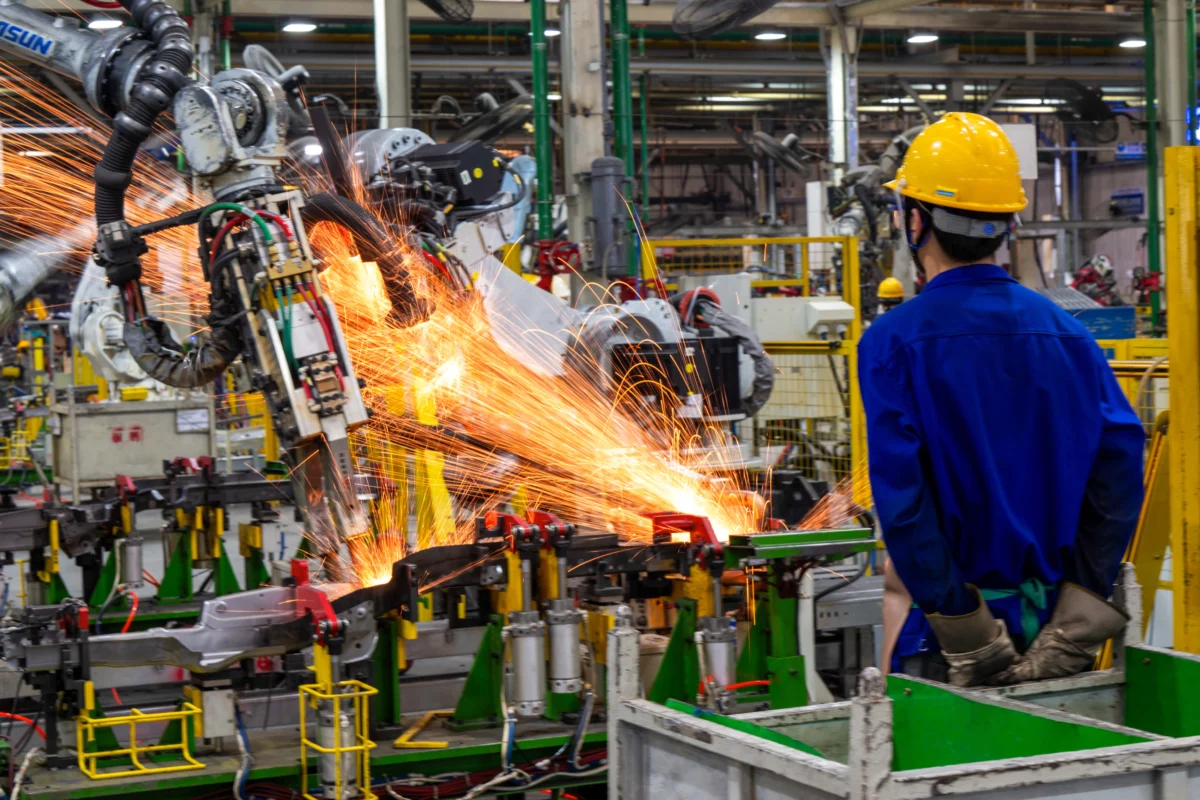
China’s factory activity unexpectedly contracted in July for the first time since February, marking a significant downturn that ended a four-month expansionary streak and raising concerns about the nation’s economic momentum. The official manufacturing Purchasing Managers’ Index (PMI) dropped to 49.2 in July, falling below the 50-point threshold that delineates expansion from contraction. This decline from June’s 50.3 was steeper than anticipated, with economists’ median forecast predicting a stable 50. The latest figures suggest that the earlier surge in export orders, driven by businesses rushing to beat anticipated U.S. tariff increases, has begun to unwind, placing renewed pressure on Beijing to stimulate domestic consumption.
The downturn was primarily fueled by a sharp contraction in new orders, with the sub-index plummeting to 48.5, its lowest point in 38 months according to data accessed via Wind. This indicates a significant weakening in demand from within China, a critical component of the country’s economic engine. While the export orders index also softened slightly, the domestic market’s weakness appears to be the more significant drag. Julian Evans-Pritchard, head of China economics at Capital Economics, noted that "Domestic weakness appears largely to blame – while the export orders index softened a bit," and expressed an expectation that local governments would implement Beijing’s pledged policy support to bolster domestic demand.
Further exacerbating the manufacturing slowdown, the sub-index for factory-gate prices continued its decline. This trend follows a brief period of elevated prices earlier in the year, likely influenced by a war-driven energy spike, and signals persistent weakness in producer prices, indicating subdued pricing power for manufacturers.
The manufacturing sector’s contraction was not an isolated incident; weakness permeated across other key sectors of the Chinese economy. The construction PMI experienced a substantial slump, reaching a record low of 47.0. The services sector gauge also retreated to its weakest level since the initial COVID-19 lockdowns, and the composite PMI, which encompasses manufacturing, services, and construction, fell to 49.3, the lowest reading since the pandemic officially ended in 2022, according to Wind data.
A spokesperson for the National Bureau of Statistics attributed a portion of the broad-based PMI weakness to a recent series of typhoons that disrupted operations and halted work on numerous projects across the country. These natural disasters compounded existing economic headwinds, further impacting production schedules and supply chains.
Despite the downbeat July readings, a glimmer of optimism emerged from forward-looking indicators. Indices tracking firms’ expectations for future output remained resilient across all official PMI surveys in July, with even the construction sector witnessing an improvement in its outlook. Evans-Pritchard suggested that this optimism might stem from an anticipation of stronger support from fiscal policy in the latter half of the year. "Firms believe the latest deterioration in activity will prove short-lived, perhaps because they anticipate a stronger tailwind from fiscal policy over the rest of the year," he stated.
Economic Context and Policy Landscape
The release of the July PMI data comes just a day after China’s top policymakers convened for a mid-year meeting. During this summit, they openly acknowledged the "difficulties and challenges facing the economy," a significant admission that underscores the prevailing economic headwinds. The leadership pledged to accelerate fiscal spending and introduce "incremental policies" aimed at shoring up growth in the second half of the year. This commitment to proactive economic management signals a potential shift towards more aggressive stimulus measures.
The broader economic picture has been one of slowing growth. China’s economy expanded by 4.3% in the second quarter compared to the previous year, marking the slowest pace in over three years and falling short of the lower end of the government’s full-year target range of 4.5% to 5%. This deceleration highlights the ongoing struggle to maintain robust growth momentum.
Shifting Export Dynamics and Domestic Consumption Woes
For much of the year, exports have served as one of the economy’s few dependable growth engines. However, recent data suggests this engine is now sputtering. A survey conducted by the China Beige Book revealed that U.S.-bound shipments experienced an outright decline for the first time in several months. The research firm also found a general deceleration in factory activity in July, with manufacturing reporting its worst performance in terms of employment, as job growth deteriorated across all surveyed sectors when compared to the previous year.
This downturn in exports represents a stark reversal from June, when shipments to the U.S. surged by 14%, contributing to an overall export increase of 27% – the fastest pace in nearly five years. This surge was largely attributed to businesses frontloading orders in anticipation of higher American tariffs, which were expected to be implemented later in the summer. Manufacturers had been bracing for additional levies from President Donald Trump’s Section 301 investigations, particularly after the expiration of a 10% broad-based duty on July 24. The subsequent decline indicates that this pre-tariff rush has now subsided, and the impact of increased trade friction is beginning to be felt.
The challenges extend beyond manufacturing and exports, impacting domestic consumption as well. The China Beige Book survey indicated a decline in retail sales in July compared to both the preceding month and the same period last year. Notably, sectors like travel and restaurants experienced a sharp year-on-year downturn, suggesting a contraction in consumer spending on discretionary services.
Implications and Future Outlook
The disappointing economic data released in late July is likely to intensify expectations for further monetary and fiscal easing measures from Beijing. While the Politburo’s readout from its mid-year meeting signaled an intent to bolster growth, it stopped short of detailing concrete policy steps. This has led to speculation about the pace and efficacy of future interventions.
Analysts at Eurasia Group observed that Chinese leaders are prioritizing risk containment over near-term growth. They identified structural risks such as the property sector, local government debt, and smaller financial institutions that require careful management over time rather than immediate, rapid resolution. This approach suggests a cautious stance, potentially tempering the scale of stimulus aimed solely at boosting short-term growth figures.
The confluence of weakening domestic demand, the unwinding of export front-loading, and the impact of external factors like typhoons creates a complex economic environment for China. The nation’s ability to navigate these challenges will hinge on the effectiveness of its policy responses and its capacity to re-ignite domestic consumption, which remains a critical driver for sustainable economic expansion. The coming months will be crucial in determining whether the current contraction is a temporary blip or the beginning of a more sustained slowdown, and whether the government’s pledged support measures can effectively counteract the headwinds. The global economic landscape, heavily influenced by China’s economic performance, will be closely watching these developments.
