

The deployment of advanced autonomous driving systems has entered a pivotal new phase in Europe as Tesla’s Full Self-Driving (FSD) suite has officially received authorization for activation in the Netherlands. This development establishes the Netherlands as the inaugural European jurisdiction to permit the public use of Tesla’s most sophisticated driver-assistance software, marking a significant departure from the more restrictive regulatory environment that has historically characterized the European Union’s approach to Level 2 and Level 3 autonomous systems. As the automotive industry monitors this expansion, early real-world testing conducted by independent observers is shedding light on the technical challenges of adapting American-centric artificial intelligence to the idiosyncratic road infrastructures of Western Europe.
The Arnhem Trials: Real-World Testing and Initial Observations
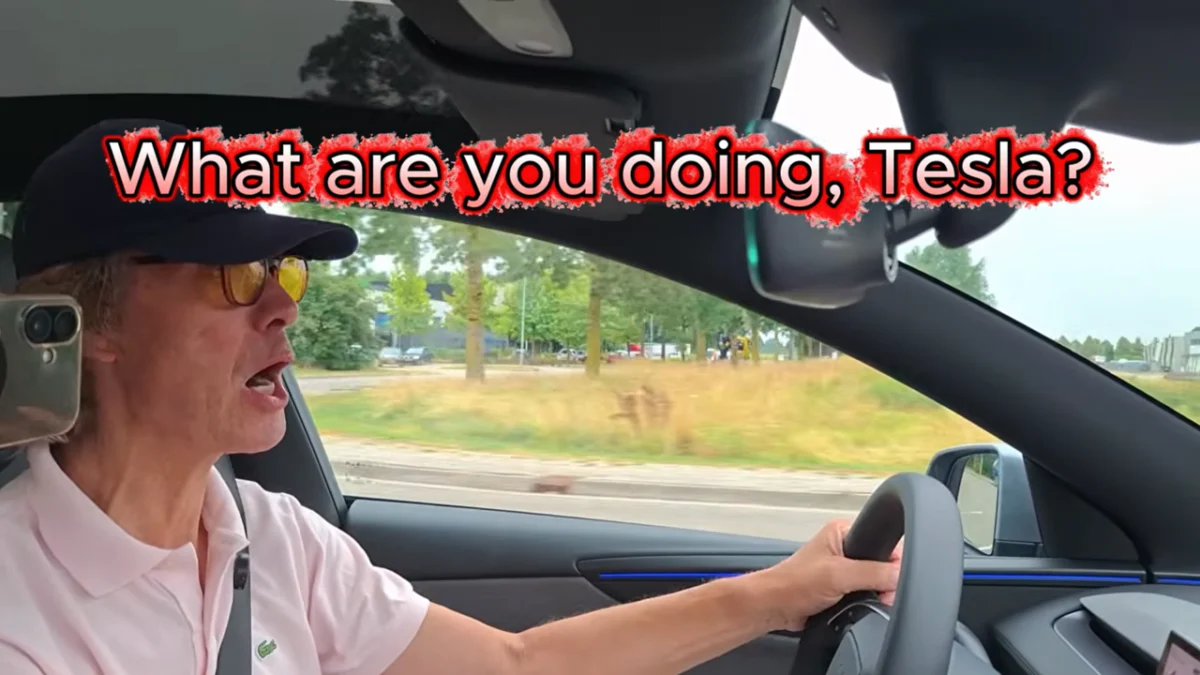
The first comprehensive public evaluations of Tesla FSD on Dutch soil were recently conducted by Dick Helders, a prominent figure in the electric vehicle (EV) community and a contributor to specialized automotive outlets. Helders, who maintains a unique vantage point due to his extensive experience with XPENG’s Vision-Language-Action (VLA) 2.0 system in China, utilized the town of Arnhem and its surrounding suburban districts as a proving ground for the Tesla software. The testing was divided into two distinct phases: a semi-urban navigation test focusing on complex intersections and high-density traffic, followed by a suburban road assessment involving non-standard lane markings and high-speed transitions.
The results of these trials highlighted several areas where the software struggled to reconcile its training data with Dutch road geometry. A primary point of friction occurred on narrow rural and suburban roads that lack a traditional center line. In the Netherlands, these roads often feature dotted lines on both shoulders to demarcate bicycle lanes or pedestrian space. Standard driving protocol in these regions requires vehicles to occupy the center of the road and only move toward the shoulder when an oncoming vehicle approaches. Tesla’s FSD system, however, displayed a tendency to hug the left side of the dotted line rather than the true center of the asphalt. This behavior frequently forced oncoming motorists to veer sharply toward the edge of the road to avoid a collision. In one notable instance involving a large bus, the Tesla vehicle engaged in a high-stakes "game of chicken" before eventually yielding, a maneuver that testers noted caused significant driver anxiety and potential agitation for other road users.
Technical Discrepancies: Tesla FSD vs. XPENG VLA 2.0
The introduction of FSD to the European market invites direct comparison with competing systems, most notably XPENG’s VLA 2.0. While both systems represent the cutting edge of neural-network-based driving, their underlying architectures and learning methodologies differ fundamentally. Tesla utilizes a centralized data-processing model. The company harvests vast quantities of driving data from its global fleet, which is then sent to central servers where human labelers and automated systems categorize scenarios to train the neural network. This "end-to-end" approach is highly effective in environments like North America, where road layouts are relatively uniform.
In contrast, XPENG’s VLA 2.0 system is designed to learn actively from the driver in real-time, utilizing significantly higher onboard computational power to process information locally. This allows the system to adapt to "unwritten rules" of the road—local driving customs that may not be explicitly codified in traffic laws but are essential for smooth traffic flow. During the Dutch trials, Helders noted that the Tesla FSD’s steering inputs lacked the fluid, continuous motion observed in the XPENG system. The Tesla vehicle often required micro-corrections to its trajectory, suggesting that the software was struggling to predict the optimal path in an environment that differed significantly from its primary training set in the United States.
Furthermore, the XPENG system allows for a "co-driving" experience, where a driver can provide slight steering or speed inputs to guide the AI without deactivating the system entirely. Tesla’s FSD remains a binary "on/off" experience; any significant manual intervention results in an immediate disengagement of the autonomous suite. This lack of collaborative control was cited as a drawback when navigating the complex, multi-layered traffic signals common in Dutch urban planning.
Infrastructure Friction and Environmental Challenges
The Netherlands possesses one of the highest densities of traffic signals and cycling infrastructure in the world. This complexity appeared to overwhelm the Tesla FSD’s visual processing during several segments of the test. The system repeatedly failed to recognize changing stoplights, particularly in areas where multiple signals for different lanes (bus lanes, bike lanes, and turn lanes) were clustered together. The AI appeared unable to determine which specific signal governed its current path, leading to missed cues and potential safety violations.

Speed limit recognition also proved problematic. The software frequently defaulted to incorrect speeds, failing to account for the dynamic speed limit changes that are common on Dutch motorways and in residential zones. Additionally, the system’s navigation logic struggled with lane selection. In dense traffic, the FSD would occasionally attempt to merge across multiple lanes of traffic at the last possible second to make a turn, a behavior that is not only aggressive but potentially dangerous in high-density European cities where merging opportunities are limited.
Perhaps the most concerning event during the suburban trials was a software "crash" or lockout. While the vehicle did not experience a physical collision, the FSD software abruptly ceased functioning and prevented the driver from re-engaging the system for the remainder of the trip. The system provided sufficient warning for a manual takeover, ensuring the driver was not placed in immediate physical danger, but the cause of the lockout—occurring in clear weather and standard road conditions—remains unexplained. Industry analysts suggest such failures may be linked to "edge cases" where the visual input contradicts the system’s internal world model, leading to a computational deadlock.
Regulatory Landscape and Data Privacy Hurdles
The Dutch approval of FSD is a landmark event, but it does not guarantee a swift rollout across the rest of the European Union. The EU maintains some of the world’s most stringent data privacy laws under the General Data Protection Regulation (GDPR). Tesla’s centralized data-collection model, which involves transferring vehicle camera footage and telemetry to servers outside the EU, faces ongoing scrutiny from European data protection authorities.
Furthermore, the United Nations Economic Commission for Europe (UNECE) is currently developing new regulations for Driver Control Assistance Systems (DCAS). These regulations aim to standardize how autonomous systems interact with human drivers and how they handle cross-border transitions. Tesla’s preference for secrecy regarding its system’s performance data in Europe has drawn criticism from regulators who demand greater transparency before granting EU-wide Type Approval.
While the Netherlands has acted as a pioneer, other member states may wait for the finalized UNECE framework before allowing FSD activation. This regulatory fragmentation provides a window of opportunity for competitors like XPENG, NIO, and traditional European manufacturers like Mercedes-Benz and BMW, who are tailoring their autonomous systems specifically to comply with EU standards from the outset.
Broader Impact and Industry Implications
The entry of Tesla FSD into the European market represents a "stress test" for the company’s global scalability. The challenges observed in the Netherlands—ranging from lane positioning on narrow roads to traffic light confusion—underscore the difficulty of creating a truly universal self-driving AI. If Tesla can successfully iterate its software to handle the complexities of European infrastructure, it will solidify its lead in the autonomous vehicle sector. However, if the system continues to struggle with local nuances, it may lose ground to domestic and Chinese rivals who are adopting more localized, hardware-heavy approaches involving LiDAR and high-definition mapping.
The comparison with XPENG is particularly telling. Having tested a VLA 2.0 prototype in Munich, Germany, observers have noted that the Chinese system already appears more "at home" on European streets than Tesla’s FSD. XPENG’s ability to integrate local driving behaviors through its Vision-Language-Action model suggests that the future of autonomy may rely more on local adaptability than on massive, centralized data sets.
In conclusion, the activation of Tesla FSD in the Netherlands is a significant step forward for automotive technology in Europe, yet it serves as a reminder that the "Full Self-Driving" moniker remains aspirational rather than descriptive in a European context. The system provides undeniable convenience and a glimpse into the future of mobility, but it currently lacks the refinement and reliability required for unmonitored operation. As Tesla works to address the feedback from these early Dutch trials, the race for autonomous supremacy in Europe is only beginning, with regulatory hurdles and local infrastructure serving as the ultimate arbiters of success.
