

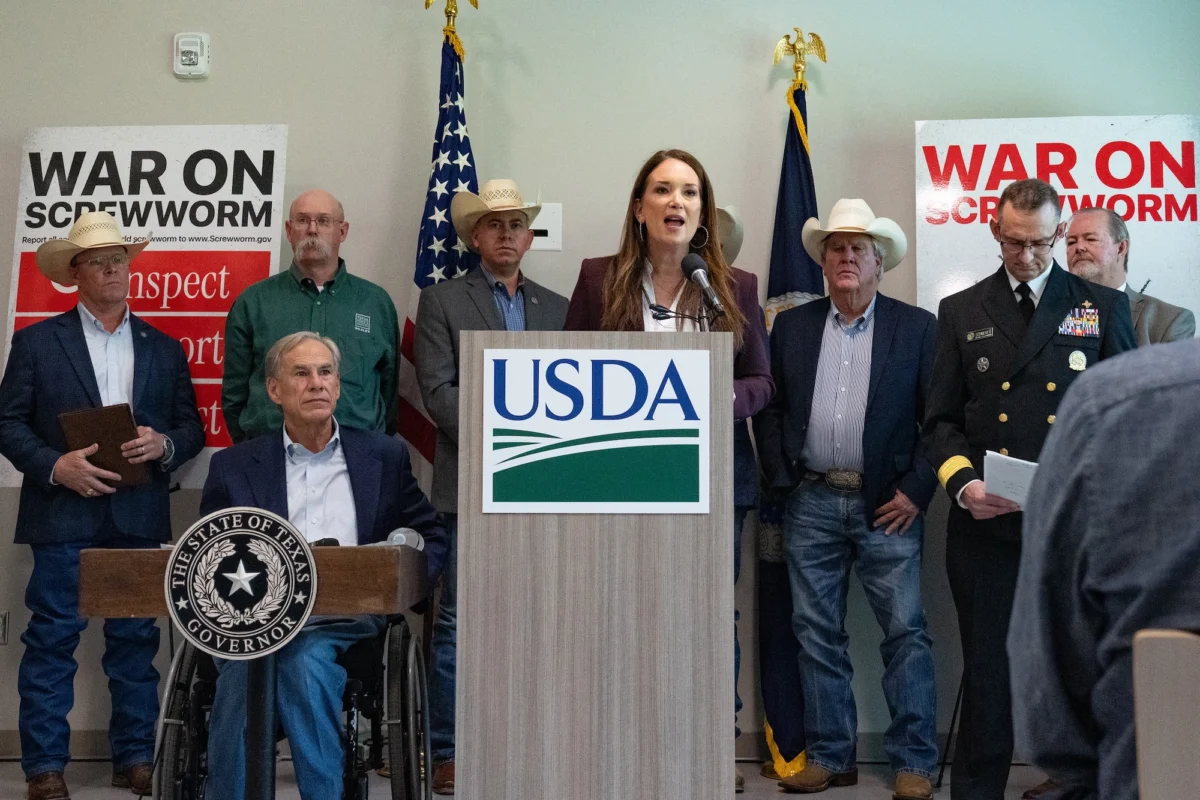
The United States Department of Agriculture is moving forward with a sweeping reorganization plan that includes the forced relocation of nearly 3,000 federal employees, a move that critics warn could dismantle decades of institutional knowledge at a time when the American farming sector faces its most significant challenges in nearly a century. Agriculture Secretary Susan Rollins confirmed the agency will proceed with the restructuring despite overwhelming opposition from stakeholders, labor unions, and agricultural scientists. The plan, which involves moving approximately half of the agency’s Washington, D.C.-based workforce to regional hubs in North Carolina, Missouri, Indiana, Colorado, and Utah, is being framed by the administration as an efficiency measure designed to bring the department closer to the rural communities it serves. However, advocacy groups and internal surveys suggest the move may result in a catastrophic "brain drain" that could leave the nation’s food supply and agricultural economy vulnerable to emerging biological and environmental threats.
The Architecture of the USDA Restructuring Plan
The current reorganization strategy, first unveiled by Secretary Rollins last summer, mirrors previous attempts to decentralize federal agencies. The administration’s primary justification for the move is fiscal conservatism; by relocating staff to areas with a lower cost of living, the Department of Government Efficiency (DOGE) estimates a significant reduction in taxpayer expenditures. Furthermore, proponents argue that moving researchers and policy experts out of the "Beltway" and into states like Missouri and Indiana will foster a more grounded understanding of the day-to-day realities of American farming.
Despite these stated goals, the plan has been met with a wall of resistance. According to an analysis of more than 46,000 public comments submitted regarding the proposal, 82 percent of respondents expressed serious concerns over the loss of experienced personnel and the potential for reduced oversight. The American Federation of Government Employees (AFGE) conducted a survey of its members currently slated for relocation, finding that approximately 75 percent of the affected workforce would choose to resign or retire rather than uproot their families for a move that often comes with no promise of financial assistance or long-term job security.
This pattern of attrition is not without precedent. During the first Trump administration, a similar relocation of the Economic Research Service (ERS) and the National Institute of Food and Agriculture (NIFA) to Kansas City resulted in the loss of 75 percent of the staff. While the move was touted as a way to save $300 million, subsequent reports from the Government Accountability Office (GAO) and agricultural economists estimated a net loss of up to $182 million due to the cost of hiring and training new staff, combined with a $2.8 billion shortfall in guidance for Farm Bill expenditures.

A Chronology of Staffing Attrition and Agency Erosion
The current relocation effort is the latest in a series of maneuvers that have significantly thinned the USDA’s ranks. Since the beginning of last year, the agency has lost more than 24,000 workers. A large portion of these departures resulted from the Deferred Resignation Program, a budget-cutting initiative led by DOGE. Under the leadership of Elon Musk, the newly formed department offered buyouts to roughly 15,000 employees and summarily dismissed thousands of others, many of whom were veteran inspectors and researchers.
A critical point of contention is the geographical distribution of these losses. While the administration has focused its rhetoric on reducing "D.C. bureaucracy," a National Sustainable Agriculture Coalition analysis revealed that 98 percent of the USDA staff lost over the past year were actually based outside of Washington, D.C. These field workers, inspectors, and regional advisors are the primary point of contact for farmers, and their absence is already being felt in the form of delayed program deliveries and slower response times for technical assistance.
Agricultural Economy in Crisis: Debt and Rising Costs
The timing of the reorganization coincides with a period of intense financial pressure for American producers. Farm debt has reached an all-time high, driven by a combination of high interest rates and volatile commodity prices. In a recent survey, 70 percent of farmers reported that they could no longer afford the fertilizer necessary for the spring planting season. This crisis is exacerbated by a 63 percent increase in the cost of diesel fuel and a spike in fertilizer prices linked to ongoing international conflicts.
Furthermore, the reintroduction of aggressive tariff policies has created a climate of uncertainty for exporters. Many farmers, already operating on razor-thin margins, are finding themselves caught in the crossfire of international trade disputes that limit their access to global markets. The loss of USDA personnel who specialize in navigating these trade agreements and providing economic forecasting further complicates the ability of family farms to plan for the future.
Biological Threats and the Reemergence of the Screwworm
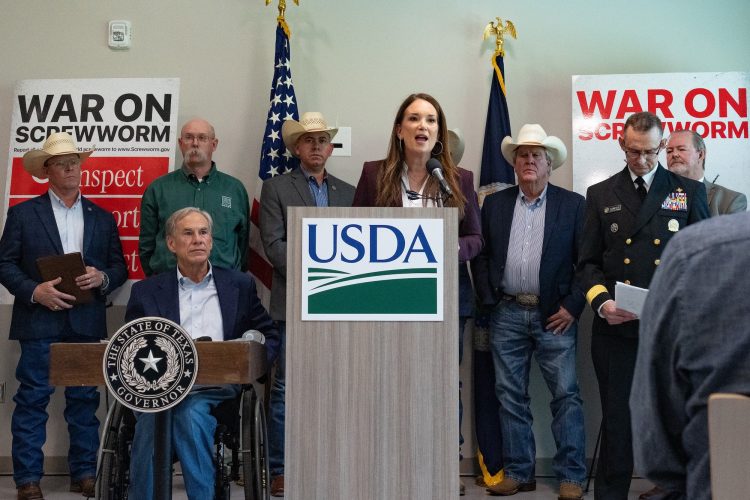
Perhaps the most alarming consequence of the USDA’s staffing shortage is the diminished capacity for biosecurity and disease surveillance. For the first time in over 60 years, the New World screwworm has been detected on U.S. soil. The screwworm, a parasitic fly that lays eggs in the open wounds of mammals, is a devastating threat to livestock. If left unchecked, it can decimate herds of cattle, sheep, and pigs.
The parasite was eradicated in the U.S. in the 1960s through a rigorous program of monitoring and the release of sterile insects. However, the recent dismantling of the U.S. Agency for International Development (USAID) led to the termination of joint monitoring efforts in Central America, which served as a critical buffer zone. In June 2026, the first domestic case was confirmed on a farm in Texas. Since then, the parasite has been detected in 45 cases across Texas and New Mexico. Critics argue that the USDA is currently "behind the curve" in its response, as the agency lacks the specialized personnel required to manage a large-scale containment effort.
Public Health Implications: The Cyclospora Outbreak
The erosion of oversight has also manifested in public health crises. Between May and July of this year, the Centers for Disease Control and Prevention (CDC) reported 6,707 laboratory-confirmed cases of domestically sourced cyclosporiasis, a parasitic infection that causes severe gastrointestinal distress. This outbreak far exceeds the numbers recorded during the last major event in 2019. To date, two deaths have been reported, and over 11,000 additional cases are under investigation across 15 states.
This surge in infections follows the administration’s decision a year ago to stop mandatory tracking of cyclospora through the CDC, FDA, and USDA—a practice that had been standard since 1997. Agriculture Secretary Rollins has publicly stated that the outbreak is an "FDA issue," but food safety advocates point out that the USDA shares responsibility for the inspection of the agricultural environments where such parasites originate.
Environmental Extremes: The Return of the Dust Bowl?
Compounding the biological and economic threats is the emergence of a "Super El Niño" weather pattern. Meteorologists and climatologists have warned that the current atmospheric conditions mirror those of the 1930s, raising the specter of a return to "Dust Bowl" conditions in the Great Plains. The USDA’s Natural Resources Conservation Service (NRCS) is the primary agency tasked with helping farmers implement soil conservation practices to prevent such disasters. However, with the NRCS facing significant staffing cuts and relocations, the ability to provide on-the-ground guidance to farmers in high-risk zones is severely compromised.
Legal Challenges and the Path Forward
The future of the USDA’s reorganization now rests largely with the federal judiciary. The American Federation of State, County and Municipal Employees (AFSCME) has joined other labor groups in filing for a court injunction to halt the forced relocations. AFSCME President Lee Saunders has characterized the plan as an attempt to "gut the agency" under the guise of efficiency. A federal court in California is scheduled to hear the request for an injunction on September 1.
While the legal battle unfolds, the agricultural sector remains in a state of high alert. The convergence of a "brain drain" at the federal level, record-breaking farm debt, reemerging parasites, and the threat of extreme weather creates a "perfect storm" for American food security. Advocates argue that without a fully staffed and experienced USDA, the nation lacks the necessary infrastructure to protect its most vital industry.
The long-term implications of the reorganization extend beyond the immediate loss of personnel. Research trials at land-grant universities, which rely on USDA funding and collaboration, are at risk of being interrupted. These trials often span decades and are essential for developing pest-resistant crops and sustainable farming techniques. If the institutional memory of the USDA is lost, the progress of American agricultural science could be set back by a generation, leaving future farmers with fewer tools to combat the evolving challenges of the 21st century.
