

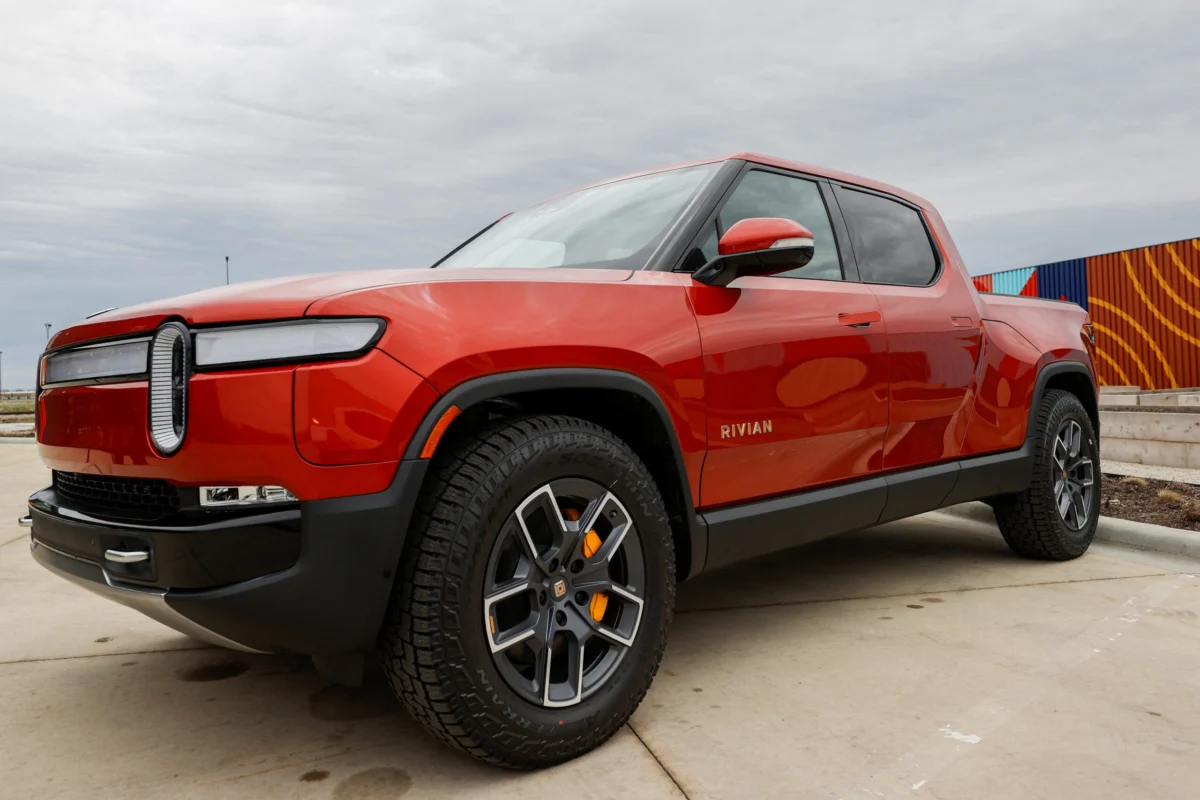
Rivian Automotive has officially entered a new phase of its technological evolution with the mid-May 2026 launch of its sophisticated in-vehicle artificial intelligence assistant, marking a significant milestone in the company’s quest to unseat Tesla as the leader in advanced driver-assistance systems (ADAS). The debut of this AI-driven interface, integrated into the R1T and R1S platforms, represents more than just a voice-controlled convenience; it serves as the communicative heart of Rivian’s Autonomy+ suite. As the electric vehicle (EV) market transitions from a focus on battery range to a competition over software-defined capabilities, Rivian is positioning itself as the primary challenger to Tesla’s long-standing dominance in semi-autonomous driving, leveraging a philosophy that blends high-tech sensor fusion with rigorous safety guardrails.
The current landscape of ADAS has become a battlefield for silicon and software. While Tesla’s Full Self-Driving (FSD) Supervised system has long been considered the industry benchmark for urban and point-to-point navigation, Rivian’s recent software overhaul suggests the gap is closing rapidly, particularly in highway environments. During extensive field testing across hundreds of miles of Midwestern transit corridors, Rivian’s Autonomy+ demonstrated a level of highway proficiency that many analysts suggest has surpassed legacy offerings such as General Motors’ Super Cruise and Ford’s BlueCruise. However, the distinction between highway cruising and "point-to-point" autonomy remains the primary frontier where Rivian is still playing catch-up.
The Technological Divide: Point-to-Point vs. Highway Autonomy
The primary differentiator between Rivian’s current system and Tesla’s FSD v14 is the ability to navigate complex urban environments. Tesla’s system is designed to handle the entire "driving task" from a driveway to a destination parking spot, including navigating traffic lights, stop signs, and intricate intersections. In contrast, Rivian’s current iteration of Autonomy+ is optimized for highway use. While the system can detect and display roadway signals like traffic lights, it does not yet take autonomous action based on those signals, requiring the driver to manage intersections manually.
James Philbin, Rivian’s Senior Vice President of Autonomy and AI, has acknowledged this gap, stating that the move toward point-to-point interaction is the "next big leap" for the California-based automaker. The company expects to roll out these capabilities via over-the-air (OTA) updates later this year. This phased approach reflects Rivian’s broader strategy of vertical integration. By developing its own electric architecture and software stack in-house, Rivian can refine its machine learning models using real-world data from its fleet, much like Tesla has done for over a decade.
The competition is not merely between two startups. Legacy automakers like General Motors (GM) and Ford were early pioneers in hands-free highway driving. GM’s Super Cruise, which debuted in 2017, was once the gold standard for highway reliability. However, industry observers note that the pace of innovation at these larger firms has struggled to keep up with the rapid AI advancements seen in the EV-only sector. While GM and Ford are working on "eyes-off" capabilities—where a driver might not even need to monitor the road—those features are not widely expected to reach consumers until 2028.
A Comparative Analysis of Sensor Philosophy
One of the most significant points of contention in the autonomous driving world is the hardware used to "see" the road. Tesla, under the direction of Elon Musk, has famously pivoted to a "Vision-only" approach, removing radar and ultrasonic sensors in favor of a system that relies entirely on cameras and neural networks. Musk has argued that since humans drive using vision, cars should do the same.
Rivian, however, is championing a "multimodal" approach. The current Rivian sensor stack includes at least ten high-dynamic-range (HDR) cameras and five radar units. Furthermore, the company has announced that its upcoming R2 platform, slated for release in early 2027, will incorporate LiDAR (Light Detection and Ranging). LiDAR uses laser pulses to create a precise 3D map of the vehicle’s surroundings, providing a layer of redundancy that cameras alone may lack, particularly in low-visibility conditions like heavy fog or blinding sun glare.
This technical divergence is more than just a matter of engineering preference; it is a matter of regulatory and safety strategy. Tesla’s Vision-only system has faced intense scrutiny from the National Highway Traffic Safety Administration (NHTSA). In early 2026, the agency escalated an investigation into FSD Supervised following reports of crashes in conditions where camera visibility was compromised. Rivian’s Philbin believes that a robust sensor stack—combining cameras, radar, and eventually LiDAR—will allow Rivian to eventually exceed Tesla’s performance by providing the AI with a more reliable data set in "edge case" scenarios.
The Rise of the In-Vehicle AI Assistant
The integration of AI chatbots into the driving experience is the newest front in the EV wars. Rivian’s new AI assistant and Tesla’s Grok AI (developed by xAI and recently integrated into the Tesla ecosystem following xAI’s merger with SpaceX) represent a shift toward "conversational" vehicles. These assistants do more than adjust the climate control; they act as real-time analysts of the vehicle’s performance.

In testing, Rivian’s AI displayed a high degree of "brand confidence," describing its own ADAS as an "unmatched blend of safety and technology." Conversely, Tesla’s Grok AI cited third-party accolades, such as Motor Trend rankings, to assert its dominance. While these interactions can seem like marketing fluff, they indicate a deeper integration of large language models (LLMs) with vehicle telematics. These AI systems are beginning to explain why a vehicle is making a certain maneuver, which could be crucial for building consumer trust in autonomous systems.
Economic Implications and Subscription Models
The shift toward software-defined vehicles is fundamentally changing the financial models of the automotive industry. Investors are no longer looking just at "metal on the ground" or quarterly delivery numbers; they are looking at recurring software revenue. Piper Sandler analyst Alexander Potter recently upgraded Rivian’s stock, citing the company’s ability to monetize software and services through its vertically integrated architecture.
The pricing structures for these systems vary significantly across the market:
- Tesla FSD (Supervised): Currently priced at $99 per month.
- Rivian Autonomy+: Priced at $49.99 per month, or a $2,500 one-time lifetime purchase.
- GM Super Cruise: Priced at $39.99 per month or $399 annually.
Rivian’s pricing strategy appears designed to undercut Tesla while remaining higher than legacy offerings, positioning it as a "premium-value" choice. As the volume of Rivian vehicles on the road increases, these subscription fees represent a high-margin revenue stream that could be the key to the company’s long-term profitability.
Safety Concerns and the "Handover" Problem
Despite the rapid technological progress, the industry remains at "Level 2" or "Level 2+" autonomy, meaning the driver is still legally responsible for the vehicle at all times. The only exception is a limited Level 3 system from Mercedes-Benz, which allows for hands-off, eyes-off driving in specific traffic conditions on designated highways.
The "handover" problem remains a significant safety hurdle. This refers to the moment the AI encounters a situation it cannot handle—such as a complex construction zone or a faded lane marking—and abruptly returns control to the human driver. If the driver has become inattentive due to the system’s general competence, the results can be catastrophic.
To combat this, both Rivian and Tesla utilize driver-facing cameras to monitor eye movement and attentiveness. However, the efficacy of these monitors is frequently debated. Social media platforms are replete with videos of drivers attempting to "cheat" these safety systems, highlighting a cultural gap in how these technologies are understood and utilized.
Future Outlook: The Road to 2028
The next two years will be critical for Rivian as it attempts to transition from a highway-focused system to a true point-to-point autonomous competitor. The launch of the R2 platform in 2027, with its integrated LiDAR and more powerful compute architecture, is expected to be the catalyst that finally puts Rivian on equal footing with Tesla’s hardware-software synergy.
Meanwhile, the broader industry is watching closely. If Rivian can successfully deploy point-to-point driving by the end of 2026 without the safety controversies that have dogged Tesla, it may set a new standard for the industry. The goal for all players remains "eyes-off" autonomy, a milestone that would fundamentally transform the car from a tool of transit into a mobile living space. For now, the battle between Rivian’s Autonomy+ and Tesla’s FSD serves as a high-stakes preview of a future where the driver is the most optional component of the machine.
