

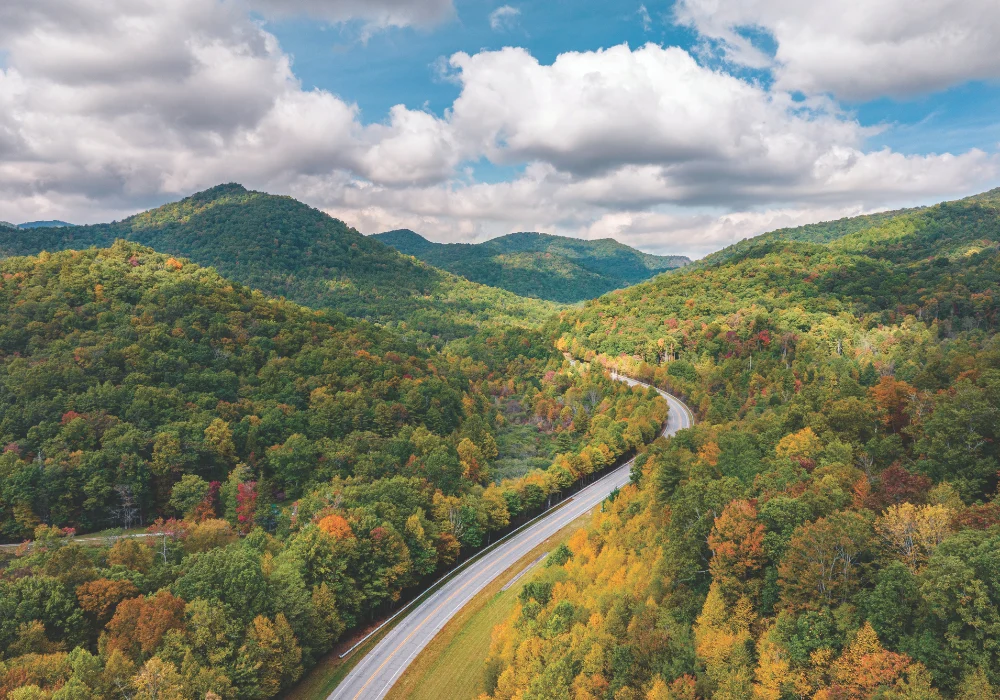
The global landscape is undergoing a quiet but profound transformation as forest ecosystems, traditionally viewed as static fixtures of the natural world, have begun to migrate. This phenomenon, known to ecologists as range migration, involves the gradual shift of tree species toward higher latitudes and altitudes in a direct response to the warming of the planet. Unlike the rapid movements of animals or the seasonal travels of humans, the migration of forests occurs over decades and centuries, driven by the subtle mechanisms of seed dispersal through wind, water, and animal activity. However, as the pace of anthropogenic climate change accelerates, the natural movement of trees is struggling to keep pace with the shifting climatic envelopes they require for survival, prompting a high-stakes debate over the necessity of human intervention.
For millennia, trees have been on the move, reclaiming land following the retreat of glaciers or shifting their boundaries in response to long-term geological cycles. Scientists have historically viewed these movements as a testament to the resilience and adaptability of the plant kingdom. Yet, contemporary data suggests that the current rate of change is unprecedented in the post-Ice Age era. As global temperatures rise, the "comfort zones" for specific species—defined by precise combinations of temperature, precipitation, and soil conditions—are moving toward the poles and up mountain slopes.
The Nuanced Dynamics of Treeline Shifts
A comprehensive study recently published in the International Journal of Applied Earth Observation and Geoinformation has provided one of the most detailed mappings of this phenomenon to date. Analyzing data collected between the years 2000 and 2020, researchers found that the movement of trees is far more complex than a simple northward march. According to the study, approximately 42% of global treelines shifted upslope during this 20-year period, seeking the cooler temperatures of higher elevations. Conversely, 25% of treelines were observed shifting downslope, a movement often driven by the search for moisture in regions where higher altitudes are becoming increasingly arid.
The study emphasizes that climate change is not the sole driver of these shifts. Anthropogenic factors, particularly land-use changes and human-caused disturbances, play a critical role in dictating the speed and direction of forest movement. Wildfires, which are increasing in frequency and intensity due to a warming atmosphere, act as a primary catalyst. When a fire razes a forest, it clears the "biological legacy" of the old ecosystem, providing an opening for new species better suited to the current climate to take root. In many cases, the species that return after a fire are not the ones that were there for centuries, but rather those that have migrated from warmer, lower-elevation regions.
The Biological Speed Limit of Forests
The central crisis facing global forests is a mismatch in velocity. While climate zones are shifting at a rate of several kilometers per year in some regions, the natural migration of trees is significantly slower. Most tree species can only disperse their seeds over relatively short distances, and it can take decades for a new sapling to reach reproductive maturity and produce seeds of its own. This "migration lag" means that many forests are becoming "climatically mismatched"—standing in locations that are no longer optimal for their health, making them more susceptible to pests, diseases, and drought-induced mortality.
In the boreal forests of the Northern Hemisphere, this lag is particularly evident. Species like the black spruce and balsam fir are facing heat stress at the southern edges of their ranges, but the northern edges of the forest are not expanding into the tundra quickly enough to compensate for the loss. This creates a "contraction" of the forest range, which has dire implications for global carbon sequestration and biodiversity.
Assisted Migration: A Controversial Solution
As the gap between climate change and natural migration widens, some governments and forestry experts are turning to a strategy known as "assisted migration." This involves the intentional movement of seeds or plants to locations where the future climate is predicted to be suitable for them, even if those locations are outside the species’ historical range.
Canada has emerged as a global leader in testing these interventions. In the provinces of British Columbia and Alberta, forestry policies have already been updated to reflect the realities of a warming world. These provinces have extended their "seed transfer zones" by 200 meters in elevation for most commercial species. This allows foresters to plant seeds collected from lower, warmer elevations at higher, cooler altitudes, effectively "pre-adapting" the future forest to anticipated warming.
One of the most significant examples of this policy in action is the western larch. In British Columbia, the government has permitted the planting of this species well outside its previous historical range. This decision was based on climate modeling suggesting that the new regions will soon provide the ideal habitat for the larch, which is valued for its resilience and economic utility.
Official Responses and Ethical Debates
The move toward assisted migration is not without significant scientific and ethical controversy. Critics of the practice argue that it represents another form of human "meddling" in complex ecosystems that we do not fully understand. There are concerns that introduced species could become invasive, outcompeting local vegetation and disrupting established food webs. Furthermore, there is the risk that species moved by humans may fail to thrive due to differences in soil microbes, day length (photoperiod), or exposure to local pests for which they have no natural defenses.
In a 2025 briefing note, Canada’s Ministry of Natural Resources acknowledged these complexities, stating, "The idea that humans can help fill the gap between the ability of species to migrate and the rate of change in climate conditions is increasingly being considered and debated as a possible management option." The ministry noted that while the risks are real, the risk of doing nothing—and allowing entire forest ecosystems to collapse because they cannot move fast enough—may be even greater.
Chronology of Forest Adaptation Policy
The shift toward active forest management in the face of climate change has evolved rapidly over the last few decades:
- 1990s: Scientists begin documenting "range shifts" in alpine plants, noting that species are appearing at higher altitudes than previously recorded.
- 2005-2010: Initial debates over "assisted colonization" emerge in academic journals, primarily focused on endangered species with limited ranges.
- 2012: British Columbia becomes one of the first jurisdictions to officially incorporate climate change projections into its seed transfer guidelines.
- 2018-2022: Massive wildfire seasons in North America and Siberia accelerate the conversation, as foresters realize that "replanting what was there before" is no longer a viable strategy for long-term survival.
- 2024-2025: Large-scale implementation of assisted migration begins in managed timber forests across the Pacific Northwest and parts of Scandinavia.
Broader Economic and Environmental Implications
The migration of trees is not merely a botanical curiosity; it has profound economic and environmental consequences. The global forestry industry, worth hundreds of billions of dollars, relies on predictable growth cycles and species stability. As ranges shift, the "wood baskets" of nations are moving, potentially rendering existing sawmills and infrastructure obsolete if they are located too far from the shifting resource.
Environmentally, the movement of forests alters the planet’s albedo (reflectivity) and its carbon cycle. Boreal forests are some of the world’s largest terrestrial carbon sinks. If these forests fail to migrate successfully or are replaced by grasslands and shrubs, billions of tons of stored carbon could be released into the atmosphere, creating a dangerous feedback loop that further accelerates global warming.
Furthermore, the migration of trees affects the entire ecosystem. Birds, insects, and fungi that have co-evolved with specific tree species are forced to either move with the forest or face extinction. This "ecological decoupling"—where the trees move but their associated species do not—could lead to the collapse of complex biological networks.
Conclusion: The Future of the Global Canopy
As we look toward the middle of the 21st century, the image of the forest as a permanent, unchanging backdrop to human life is fading. The forests of tomorrow will likely look very different from those of today, consisting of "novel ecosystems" where species from different latitudes and altitudes mingle in new configurations.
The success of these forests will depend on a delicate balance between the natural resilience of the trees themselves and the wisdom of human management. While assisted migration offers a potential lifeline for many species, it remains a gamble—a calculated attempt to stay one step ahead of a changing climate. As the 42% of treelines already moving upslope suggest, the silent migration is well underway, and the landscape of our planet is being redrawn, one seed at a time.
