

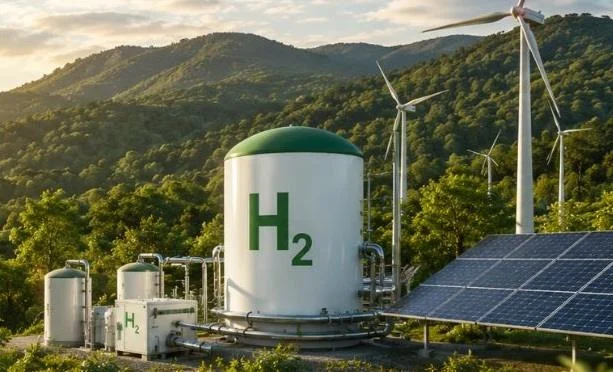
Climate Fund Managers (CFM), a leading blended finance investment firm focused on climate-related infrastructure in emerging markets, has successfully secured ZAR 3 billion (approximately USD $182 million) at the first close of its innovative SA-H2 fund. This capital injection marks a significant milestone in the development of a green hydrogen economy in Southern Africa, a region increasingly recognized for its vast potential to lead the global energy transition. The firm, which specializes in mobilizing private sector capital through strategic public-sector de-risking, has set an ambitious target to reach a final close of ZAR 12 billion ($728 million) by mid-2028. This fund is specifically designed to finance the entire green hydrogen value chain, ranging from initial production to the decarbonization of heavy industries and the creation of downstream derivatives such as green ammonia and green methanol.
The launch of the SA-H2 fund comes at a critical juncture for South Africa, a nation currently grappling with an energy crisis while simultaneously committing to international decarbonization targets. By focusing on green hydrogen—produced via electrolysis powered by renewable energy—the fund aims to provide a scalable solution for "hard-to-abate" sectors where traditional electrification is either technically impossible or economically unviable. These sectors include heavy-duty shipping, aviation, steel manufacturing, and the production of chemical fertilizers.
The Architecture of Blended Finance in Emerging Markets
At the heart of the SA-H2 fund’s strategy is the concept of blended finance. Established in 2015 as a joint venture between the Dutch development bank FMO and South African Sanlam InfraWorks, Climate Fund Managers has pioneered this model to bridge the "investment gap" in emerging economies. In these regions, high perceived risks often deter institutional investors—such as pension funds and insurance companies—from committing the large-scale capital required for infrastructure projects.
The SA-H2 fund addresses this by structuring its capital into two distinct tranches. The first is the Development Tranche, which utilizes public and development finance to provide early-stage "risk capital." This funding is used for technical assistance, environmental impact assessments, and engineering studies necessary to bring a project to a Final Investment Decision (FID). Once a project is deemed "bankable," the Equity Tranche takes over, blending public and private funds to finance the actual construction and operational phases. This structure ensures that private investors only enter the fray once the most volatile early-stage risks have been mitigated by development capital.
The first close of $182 million was made possible through a diverse group of anchor investors. The Development Tranche received commitments from Invest International and the European Commission through its Global Gateway strategy, alongside the Industrial Development Corporation (IDC) of South Africa. The Equity Tranche saw participation from the Public Investment Corporation (PIC), acting on behalf of the Government Employees Pension Fund (GEPF), as well as Sanlam Life Insurance Limited. The Development Bank of Southern Africa (DBSA) also provided critical support, underscoring the collaborative nature of the initiative.
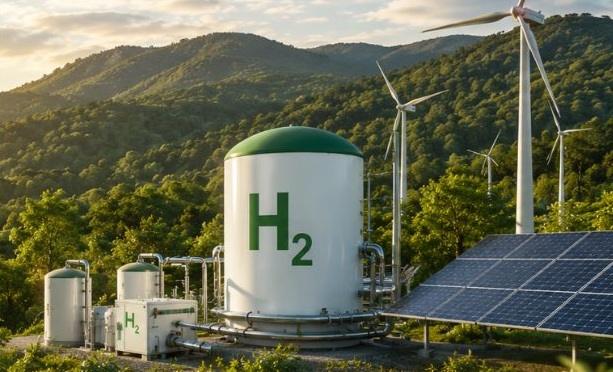
Strategic Projects: Paving the Way for Industrial Decarbonization
The SA-H2 fund has already begun deploying capital into pioneering projects that showcase the versatility of green hydrogen technologies. Among the first to receive development funding are the Green Efuels Producers plant and the Hive Hydrogen Coega Green Ammonia Project.
The Green Efuels Producers project, located in South Africa’s Gauteng Province, represents a breakthrough in circular economy engineering. It is designed as a first-of-its-kind facility that converts wastewater into green methanol. By utilizing the carbon and hydrogen found in waste streams, the plant creates a low-carbon fuel that can be used in the maritime industry or as a chemical feedstock, effectively turning a waste problem into an energy solution.
The Hive Hydrogen Coega Green Ammonia Project is even more ambitious in scale. Situated in the Eastern Cape, this project aims to become South Africa’s first large-scale green ammonia production plant. Ammonia is a vital component of global fertilizer production; currently, most ammonia is "grey," produced from natural gas through a carbon-intensive process. By switching to "green" ammonia—made using hydrogen from renewable-powered electrolysis—the project can significantly reduce the carbon footprint of global agriculture. Furthermore, ammonia is increasingly viewed as a viable "carrier" for hydrogen, allowing the energy to be transported more easily across oceans to markets in Europe and Asia.
South Africa’s Competitive Advantage in the Green Hydrogen Race
The decision to focus the SA-H2 fund on Southern Africa is backed by robust geographical and economic data. South Africa possesses some of the highest solar radiation levels in the world and consistent wind patterns, particularly along its extensive coastline. When combined, these factors allow for a high capacity factor for renewable energy plants, which is essential for keeping the cost of green hydrogen production competitive with fossil-fuel-based alternatives.
Moreover, South Africa already possesses a sophisticated industrial base and a history of synthetic fuel production, largely through the work of companies like Sasol. This existing expertise in chemical engineering and gas-to-liquids technology provides a ready-made workforce and infrastructure that can be pivoted toward green hydrogen. The country’s National Green Hydrogen Strategy envisions South Africa capturing a significant share of the global hydrogen market, which the International Renewable Energy Agency (IRENA) predicts could meet up to 12% of global energy demand by 2050.
Andrew Johnstone, CEO of Climate Fund Managers, highlighted the necessity of moving beyond simple electrification. "As the energy transition progresses, industrial decarbonization requires solutions beyond electrification, and green hydrogen has a critical role to play," Johnstone stated. He emphasized that the first close of the fund is a vote of confidence in CFM’s ability to turn complex infrastructure projects in emerging markets into institutional-grade assets.

Broader Economic and Geopolitical Implications
The involvement of the European Commission through the Global Gateway strategy adds a geopolitical layer to the SA-H2 fund. As the European Union seeks to diversify its energy sources and meet its "Fit for 55" climate goals, it is looking toward Africa as a strategic partner for clean energy imports. By investing in Southern African green hydrogen infrastructure, the EU is securing a future supply of green fuels while simultaneously promoting economic development in the Global South.
For South Africa, the fund represents a cornerstone of the "Just Energy Transition" (JET). The country is currently the most carbon-intensive economy in Africa due to its heavy reliance on coal-fired power stations. The shift to a green hydrogen economy offers a pathway to create new, high-skilled jobs in regions that may be negatively impacted by the decommissioning of coal mines and plants. Mphokolo Makara, CEO of SA-H2 Fund Managers, noted that the fund’s pipeline of commercially viable projects will "help decarbonize industry, drive long-term economic growth, and support a Just Energy Transition."
Chronology of Development and Future Outlook
The journey toward the SA-H2 fund began years ago with the formation of Climate Fund Managers in 2015. Over the past decade, the firm has refined its blended finance model through its "Climate Investor" series of funds. The launch of SA-H2 is a culmination of several years of feasibility studies and negotiations between the South African government, the EU, and private financial institutions.
Looking ahead, the timeline for the fund is clear:
- 2024–2025: Deployment of development capital into the initial pipeline of projects, including the Coega and Gauteng facilities, to reach Final Investment Decisions.
- 2026–2027: Escalation of construction activities and the onboarding of more institutional private investors as the risk profile of the projects stabilizes.
- 2028: Target for the final close of ZAR 12 billion ($728 million), aiming to have a fully operational portfolio of green hydrogen assets across the Southern African region.
The success of the SA-H2 fund will likely serve as a blueprint for similar initiatives in other emerging markets. By proving that blended finance can successfully scale complex, new technologies like green hydrogen in developing economies, Climate Fund Managers is setting a precedent for how the global financial community can address the climate crisis. As the world moves closer to the 2030 deadline for the United Nations Sustainable Development Goals, the mobilization of capital toward high-impact infrastructure in the Global South remains one of the most vital challenges of the century. The first close of SA-H2 is a definitive step toward meeting that challenge, signaling that the green hydrogen revolution is no longer a distant prospect, but a rapidly maturing reality.
