

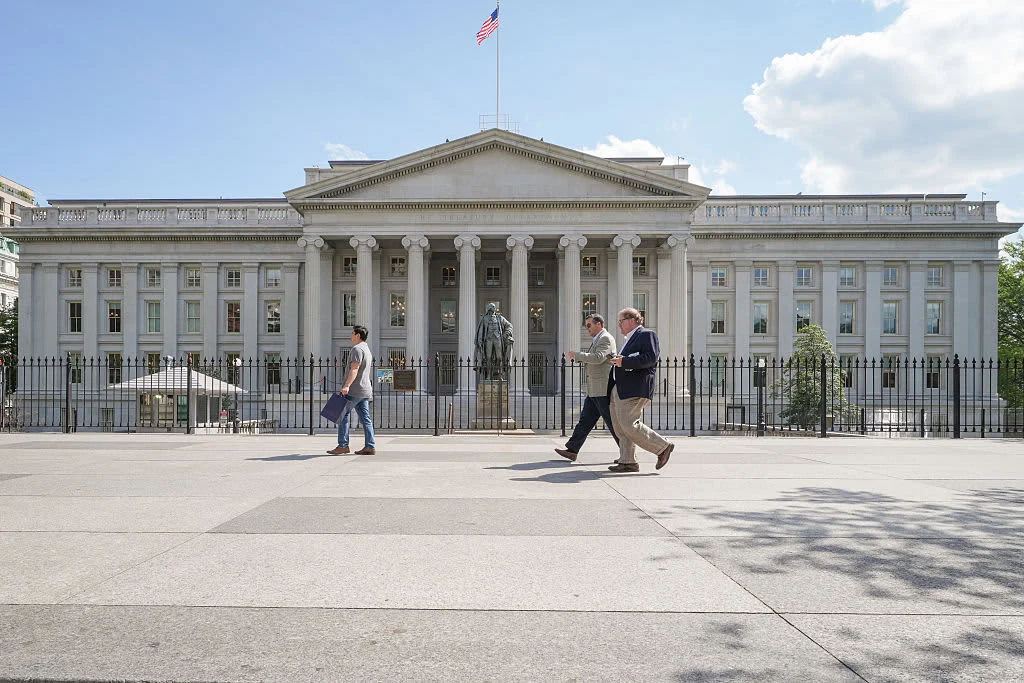
The United States Treasury Department reported on Wednesday that the nation’s budget deficit experienced a significant surge in July, reaching its highest monthly level in more than five years. This fiscal pressure is attributed to a substantial increase in Medicare expenditures and the persistent drag of interest payments on the burgeoning federal debt. The alarming figures underscore a worsening fiscal picture for the nation, with the cumulative deficit for the first ten months of the government’s fiscal year now approaching $1.8 trillion, surpassing the same period in the previous year.
July Deficit Skyrockets, Exceeding Expectations
The shortfall for July alone amounted to a staggering $432.3 billion, representing a stark 48% increase compared to the same month in the prior year. This figure marks the largest monthly deficit recorded since March 2021, signaling a concerning acceleration in government spending relative to revenue. The U.S. government operates on a fiscal year that runs from October 1st to September 30th. The data released by the Treasury Department paints a picture of escalating fiscal challenges as the current fiscal year progresses towards its conclusion.
Key Drivers of the July Deficit
Several factors converged to drive the dramatic increase in the July deficit. The most significant contributor was a substantial rise in Medicare costs, which totaled $174 billion for the month. This represents a considerable leap from the $103 billion spent in June, bringing the year-to-date Medicare expenditure to an eye-watering $955 billion. This single expenditure category dwarfed other major outlays in July, significantly exceeding the $141 billion allocated to Social Security and the $104 billion in net interest paid on the national debt.
Beyond the escalating healthcare costs, the budget was also impacted by tariff refunds, which cost the government $33 billion. These rebates are being issued as the administration continues to comply with a Supreme Court ruling that declared certain tariffs illegal. Furthermore, the budget experienced an accelerated disbursement of benefits due to the calendar. As the first day of July fell on a weekend, various benefit payments, including those for Supplemental Security Income and Medicare, were processed earlier in the month, contributing an additional $99 billion to the outlays for July. This timing anomaly, while not indicative of increased overall spending, artificially inflated the monthly deficit figure.
The Growing Burden of National Debt Interest
The persistent increase in interest payments on the national debt is emerging as a critical and growing component of the federal budget. For the full fiscal year, debt financing is now the third-largest expenditure category, trailing only Social Security and Medicare. As of the reporting period, the U.S. has paid a colossal $1.17 trillion on its $39.9 trillion national debt. Of this total debt, $32.1 trillion is held by the public, meaning it is owed to individuals, corporations, and foreign governments. This figure represents an increase of approximately $157 billion compared to the same period in the previous fiscal year, highlighting the compounding nature of the debt burden. The net interest paid on this debt has reached a substantial $931 billion year-to-date.
Historical Context of Debt and Interest Costs
The current levels of national debt and the associated interest payments are unprecedented in modern U.S. history. The debt has grown significantly over the past two decades, fueled by a combination of factors including tax cuts, increased government spending on social programs and defense, and responses to economic crises such as the 2008 financial crisis and the COVID-19 pandemic. As interest rates have fluctuated, the cost of servicing this debt has become a more significant fiscal challenge. Historically, lower interest rates have helped to mitigate the impact of a large debt. However, even with periods of historically low rates, the sheer size of the debt has meant that interest payments have remained a substantial outlay. The recent period of rising interest rates, aimed at curbing inflation, has further exacerbated this challenge, making borrowing more expensive for the government.
Analyzing the Fiscal Landscape: A Chronology of Concern
The trajectory of the U.S. budget deficit has been a source of concern for economists and policymakers for years. Following a significant deficit in fiscal year 2020, largely due to the economic impact and stimulus measures related to the COVID-19 pandemic, the deficit saw a notable reduction in fiscal year 2021. However, this trend reversed in fiscal year 2022 and has continued to worsen in fiscal year 2023, with the current fiscal year projected to see an even larger deficit.
- Fiscal Year 2020: The deficit surged to approximately $3.1 trillion, driven by pandemic-related spending and a contraction in economic activity.
- Fiscal Year 2021: The deficit decreased to around $2.8 trillion as the economy began to recover and some pandemic-related spending wound down.
- Fiscal Year 2022: The deficit widened again to approximately $3.1 trillion, with increased spending and rising inflation contributing to higher costs.
- Fiscal Year 2023 (Year-to-Date): The cumulative deficit has already surpassed $1.8 trillion, indicating a likely trajectory to exceed the previous year’s figures. The current July deficit of $432.3 billion is a significant indicator of this trend.
The current data suggests that the nation is on a path to potentially exceed the deficit levels seen in recent years, further contributing to the growth of the national debt.
Federal Reserve Policy and Debt Costs
The cost of servicing the national debt is intrinsically linked to prevailing interest rates. Historically, there have been instances where political figures have voiced opinions on Federal Reserve monetary policy. For instance, former President Donald Trump had frequently advocated for the Federal Reserve to lower benchmark interest rates as a means to reduce the government’s debt servicing costs. He had reportedly refrained from criticizing the central bank since his nominee, Kevin Warsh, assumed the chairmanship of the Federal Reserve in May.
Market Expectations and Inflationary Pressures
Until recently, financial markets had largely anticipated the Federal Reserve to maintain or even increase interest rates in an effort to control inflation, which had been running above the central bank’s 2% target for an extended period. However, recent economic data, including more benign inflation readings and a softer-than-expected payroll report, have tempered these expectations. Despite these shifts, futures traders have not factored in any likelihood of an interest rate cut by the Federal Reserve for the next five years, suggesting a prevailing sentiment that interest rates will remain elevated for the foreseeable future. This outlook implies that the cost of borrowing for the U.S. government is likely to remain a significant factor in the fiscal landscape.
Broader Implications for the U.S. Economy
The escalating budget deficit and the growing burden of national debt have several significant implications for the U.S. economy.
Fiscal Sustainability and Future Generations
A sustained pattern of large budget deficits contributes directly to the accumulation of national debt. A larger debt load necessitates higher interest payments, which divert resources that could otherwise be used for public investments in infrastructure, education, or research and development. This can also place a greater fiscal burden on future generations, who will be responsible for servicing this debt.
Inflationary Pressures and Economic Growth
While the current drivers of the deficit are primarily spending-related, persistent large deficits can, in some economic theories, contribute to inflationary pressures if they are financed through excessive money creation. Furthermore, a high level of debt can potentially crowd out private investment by increasing demand for loanable funds, thereby driving up interest rates for businesses and consumers. This can have a dampening effect on long-term economic growth.
Credibility and Financial Markets
Sustained fiscal imbalances can also impact the perceived creditworthiness of the United States. While the U.S. Treasury market is considered one of the safest in the world, significant and persistent fiscal deterioration could, over time, lead to concerns among investors, potentially increasing borrowing costs and impacting the stability of financial markets.
Policy Responses and Political Debate
The widening deficit is likely to intensify debates surrounding fiscal policy. Discussions will inevitably revolve around the need for either increased government revenue through tax adjustments or reduced government spending across various programs. The specific composition of these policy responses will have significant economic and social consequences and will undoubtedly be a focal point of political discourse. The current figures from the Treasury Department provide concrete data points that will fuel these ongoing policy discussions and underscore the urgency of addressing the nation’s fiscal health.
