

The landscape of foreign investment in U.S. residential real estate is undergoing a significant transformation, marked by a sharp decline in purchases of existing homes while a robust, albeit specialized, demand persists within the luxury new construction sector. Recent data indicates a substantial pullback from international buyers across most segments of the market, reflecting a confluence of economic headwinds, evolving immigration policies, and global financial shifts. However, specific pockets, particularly in high-end new developments in affluent regions like Southern California, continue to attract a distinct segment of wealthy international clientele, often driven by different motivations and purchasing power.
The Broad Downturn: NAR’s Latest Findings on Existing Homes
According to an annual report released by the National Association of Realtors (NAR), foreign buyers have significantly scaled back their activity in the U.S. existing home market. For the 12-month period spanning April 2023 through March 2024, sales to international buyers experienced a notable decline of 14% in unit volume and an even steeper 19% in dollar volume compared to the preceding year. This downturn represents a substantial shift in a market segment that has historically been a significant source of capital and demand.
During this period, international buyers closed on approximately 67,100 properties, marking the second-lowest amount recorded since NAR began meticulously tracking this metric in 2009. The median price paid by foreign buyers for these properties was $465,000, underscoring their continued preference for relatively higher-value homes compared to the overall U.S. median home price, which typically hovers lower. This figure, while substantial, still reflects the broader market’s value proposition. The peak for foreign purchases was observed in 2017, when international buyers acquired a record 284,000 homes valued at $153 billion, illustrating the magnitude of the current contraction. The immediate pre-pandemic years also saw strong activity, with unit sales often exceeding 100,000 annually.
Lawrence Yun, chief economist for the NAR, attributed the decline to broader global trends. "The decline in foreign home buyer activity mirrors the decline in international visitors and tourists to the United States," Yun stated in a release. He further noted that "Even a slightly weaker U.S. dollar over the past year, which provides more purchasing power for foreigners, did not induce more activity." This observation is critical, as a weaker dollar typically makes U.S. assets more attractive to foreign investors. The fact that even this advantage failed to stimulate demand suggests deeper, more pervasive factors at play, including high U.S. home prices, elevated mortgage rates, and general global economic uncertainty.
Economic Headwinds and Policy Impacts Shaping Buyer Behavior
The observed retreat of foreign buyers from the U.S. existing home market is not an isolated phenomenon but rather a reflection of several interconnected economic and policy factors. Globally, economic growth has been uneven, and inflation has been a persistent concern in many countries, leading to tighter monetary policies and reduced disposable income for potential overseas investors. High interest rates in the U.S., while primarily affecting domestic buyers, also have an indirect impact on foreign cash buyers by influencing their alternative investment opportunities and the overall perceived value of U.S. real estate.
Beyond macroeconomics, the ease of international travel and immigration policies play a crucial role. Post-pandemic, while international travel has largely resumed, the overall volume of visitors might still be below previous peaks, reducing the physical presence of potential buyers exploring the market. Furthermore, shifts in visa policies, particularly those impacting skilled workers, have created a climate of uncertainty that directly influences their long-term investment decisions in the U.S.
The U.S. dollar’s strength over recent years, while showing some slight weakening in the past year, has generally made U.S. assets more expensive for buyers holding other currencies. Even with a marginal weakening, the significant appreciation of the dollar against currencies like the Chinese yuan or the Euro over the past half-decade means that U.S. real estate remains a substantial investment for many foreign purchasers. For example, a property valued at $500,000 might have required substantially more foreign currency to purchase compared to five years ago, diminishing the perceived discount from a slightly weaker dollar in the past year. This sustained high cost, coupled with a generally less liquid housing market due to higher mortgage rates, creates a less appealing environment for a broad spectrum of foreign buyers.
A Tale of Two Markets: The Resilience of Luxury New Construction
While the overall figures for existing home sales paint a picture of decline, a nuanced analysis reveals a divergent trend within the new construction market, particularly at the luxury end. The NAR’s data primarily focuses on existing homes, leaving a gap in direct statistics for newly built properties purchased by international clients. However, insights from research firms like John Burns Research & Consulting (JBREC) offer valuable qualitative and anecdotal evidence.
Researchers at JBREC, who closely monitor foreign activity through observations in sales offices and commentary from industry professionals, report a distinct resilience in the luxury segment of new home sales. Scott Wild, a principal at JBREC, highlighted this dichotomy. "Although the overall volume of new home sales to international buyers has decreased recently, the luxury segment remains relatively strong," Wild observed. This suggests that while middle-tier and value-conscious foreign buyers might be retreating, the ultra-affluent segment continues to view U.S. luxury real estate as a viable and attractive investment. This group often possesses significant cash reserves, making them less susceptible to fluctuating interest rates and more insulated from broader economic downturns. Their motivations often extend beyond pure investment to include lifestyle, education for family members, or establishing a secondary residence in a stable economic and political environment.
Irvine’s Enduring Appeal and Builder Strategies
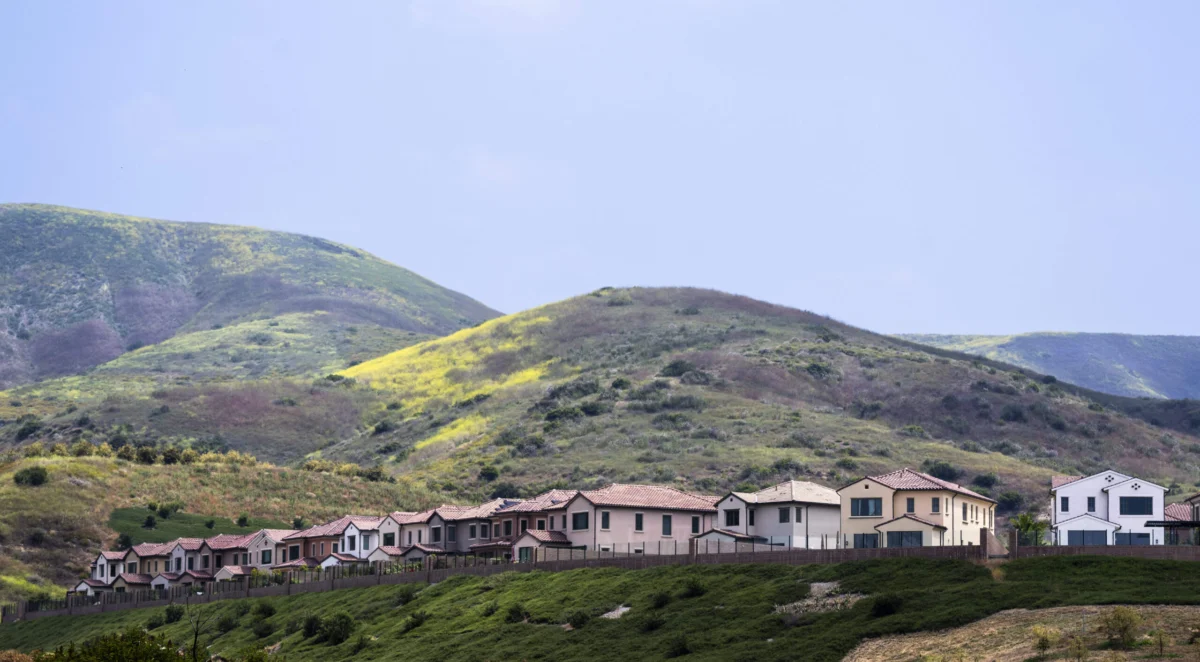
The Southern California city of Irvine serves as a prime example of this luxury market anomaly. Wild specifically pointed to Irvine, noting that "the luxury new home market continues to be driven by buyers from outside the county, particularly affluent buyers from China, many of whom are purchasing homes with cash." Irvine’s appeal is multi-faceted. It boasts a highly-rated school district, a reputation for safety and master-planned communities, proximity to major universities, and a vibrant economy driven by tech and biotech sectors. These attributes resonate strongly with affluent international families seeking high-quality education and a secure environment. The city’s newer, meticulously designed luxury homes, often part of gated communities with extensive amenities, perfectly align with the preferences of these buyers.
Homebuilders operating in Irvine have clearly recognized and capitalized on this demand. They continue to actively target foreign buyers, employing sophisticated international marketing strategies. This includes showcasing their highest-end communities through global real estate expos, digital campaigns tailored for international audiences, and even customizing model homes to appeal to specific cultural preferences. For instance, floor plans might be adapted to accommodate multi-generational living, or design aesthetics might incorporate elements favored by Asian buyers.
Among the nation’s large public builders, Toll Brothers stands out for its strong brand recognition among foreign buyers, according to Wild. "Toll Brothers often markets their luxury homes internationally and does an excellent job tailoring model homes to appeal to specific buyer groups from outside the U.S.," he explained. This strategic approach, focusing on customization and direct outreach, underscores the understanding that the international buyer market is not monolithic but rather comprises diverse segments with unique needs and expectations. Toll Brothers’ consistent focus on luxury, quality construction, and desirable locations positions them well to capture this niche market, even amidst a broader slowdown.
Deconstructing the Foreign Buyer Demographic: Diverse Motivations
The notion that international homebuyers represent a single, homogenous market is a critical misconception. As Scott Wild emphasized, trends vary substantially across different buyer groups, each responding to distinct economic and policy factors. These groups can generally be categorized into:
- Wealthy Investors: These buyers are primarily motivated by capital preservation, portfolio diversification, and potential appreciation. They view U.S. real estate, especially luxury properties, as a stable asset class and a hedge against economic or political instability in their home countries. They are typically cash buyers and less sensitive to interest rate fluctuations. For them, the U.S. market offers transparency, strong property rights, and long-term value.
- Households Seeking to Establish Residency: This group includes individuals and families aiming for long-term settlement in the U.S., often through investment-based visa programs (like EB-5) or family reunification. Their purchases are driven by lifestyle choices, access to education, and the desire for a permanent home. Their timelines for purchase might be longer, tied to visa processing, and they might be more sensitive to overall housing costs and mortgage availability.
- Highly Skilled Professionals Relocating for Work: These are individuals moving to the U.S. on employment-based visas, such as the H-1B program. They typically seek homes near major employment hubs, particularly in technology-driven markets. Their purchases are often tied to their job stability and long-term prospects in the U.S. They may rely on financing and are more directly impacted by interest rates and immigration policies.
Visa Policy Shifts and H-1B Uncertainty
The biggest drop in buyers has been observed among highly skilled workers entering the U.S. on H-1B visas and similar employment-based programs. These individuals have historically shown strong new home demand, particularly in burgeoning technology hubs across the nation. However, shifting immigration and visa policies, often characterized by increased scrutiny, longer processing times, and unpredictable changes in regulations, have created a climate of significant uncertainty.
This unpredictability directly affects their ability and willingness to make long-term financial commitments like purchasing a home. When the future of one’s residency status is unclear, investing a substantial amount of capital into real estate becomes a much riskier proposition. Moreover, economic downturns in the tech sector, which heavily relies on H-1B workers, have also contributed to job insecurity for some, further deterring homeownership. This segment of the market, while not as high-spending as the luxury investor, represents a significant volume of potential buyers in key economic regions.
Shifting Tides in Buyer Origins and Geographic Hotbeds
The composition of foreign buyers has also seen notable shifts. Canadians accounted for the largest share of foreign home purchases in the U.S. last year, representing 16% of international sales, an increase from 14% the year prior. This consistent demand from Canada is often driven by proximity, shared cultural ties, and the desire for vacation homes or retirement properties in warmer U.S. states. The relative strength of the Canadian dollar against the U.S. dollar in certain periods, alongside Canada’s own high property values, can also make U.S. real estate an attractive alternative.
Chinese buyers, who previously led in international sales by number of transactions for many years, dropped to third place, now behind Mexican buyers. This decline reflects stricter capital controls in China, geopolitical tensions, and increased economic uncertainty within China itself, which has made it more challenging for some Chinese nationals to move funds out of the country for real estate investments. Despite this drop in transaction volume, Chinese buyers continued to spend the most dollars overall. This indicates that while fewer Chinese individuals are buying, those who do are purchasing higher-value, luxury homes, particularly concentrated in California. Their focus remains on high-quality, investment-grade properties, often in areas with strong educational institutions.
Mexican buyers moved into the second spot, reflecting robust cross-border economic ties and often family connections, particularly in border states and regions popular for second homes. Buyers from India and the United Kingdom also remain significant contributors to the foreign buyer pool, consistently ranking among the top five.
Geographically, Florida continues to be the undisputed top destination for foreign buyers, a trend that has held for many years. "Florida, with its beaches and favorable winter climate, continues to be the top state to draw foreign buyers," Yun reiterated. The state’s attractive tax policies (no state income tax), diverse international communities, and relatively lower property prices compared to California or New York, combined with its appeal as a retirement and vacation destination, make it highly desirable. California, despite its higher costs, remains a strong second, primarily due to its economic opportunities, educational institutions, and luxury markets. Other states like Texas, Arizona, and New York also consistently attract international buyers, though in smaller proportions than Florida and California.
Broader Market Implications and Future Outlook
The significant pullback in foreign existing home purchases carries several implications for the U.S. housing market. While foreign buyers constitute a relatively small percentage of overall U.S. home sales (typically 1-2% of existing home transactions), their influence can be more pronounced in specific luxury segments or local markets. A decline in this demand can contribute to slightly softer price growth in some high-end markets and potentially increase inventory, though the overall market remains tight due to a persistent housing supply shortage. For real estate agents and developers specializing in international clientele, this trend necessitates a re-evaluation of marketing strategies and a deeper understanding of the evolving motivations of different buyer segments.
The resilience of the luxury new home market, particularly from affluent cash buyers, underscores the enduring appeal of U.S. real estate as a safe haven and a desirable lifestyle choice for the globally wealthy. This segment is less susceptible to the financing challenges facing many domestic and international buyers, suggesting a continued, albeit concentrated, flow of foreign capital into the highest echelons of the U.S. housing market.
Looking ahead, the trajectory of foreign home buying will likely hinge on a complex interplay of factors: global economic stability, the future path of U.S. interest rates, the strength of the U.S. dollar, and, critically, the stability and predictability of U.S. immigration and visa policies. Any relaxation of capital controls in major source countries or a more accommodating stance on immigration for skilled workers or investors could potentially reverse some of the recent declines. Conversely, continued global economic uncertainty or stricter U.S. policies could further dampen demand.
The industry will need to adapt by offering tailored services, robust international marketing, and a clear understanding of the diverse needs of foreign buyers, recognizing that this is not a singular market but a mosaic of distinct motivations and purchasing powers. The current trend serves as a reminder of the global interconnectedness of real estate markets and the multifaceted influences that shape investment flows across borders.
