

As the paradigm of the modern workforce shifts toward remote and hybrid models, an increasing number of professionals are revitalizing seasonal properties and modular homes for extended use. However, a significant technical hurdle stands in the way of the national push for residential decarbonization: the limited electrical infrastructure of older housing stock. In rural communities across the United States, particularly those established in the mid-20th century, homes often operate on electrical services as low as 30 amps. This constraint creates a complex engineering and lifestyle challenge for homeowners attempting to transition away from fossil fuels like propane and heating oil toward an all-electric existence.
The Technical Constraints of Aging Infrastructure
The central conflict in electrifying older modular homes lies in the fundamental physics of power delivery. Most contemporary American single-family homes are equipped with 100-amp or 200-amp electrical service, providing ample capacity for heavy-load appliances such as central air conditioning, electric ranges, and Level 2 electric vehicle (EV) chargers. In contrast, many modular homes built before 2010, particularly those in seasonal communities, were designed with 30-amp RV-style service.

To understand the severity of this limitation, one must look at the mathematical relationship between volts, amps, and watts. A standard 30-amp service at 120 volts provides a maximum capacity of 3,600 watts. When a homeowner attempts to run a standard refrigerator (approx. 300–800 watts), a television, and basic lighting, a significant portion of that capacity is already spoken for. The introduction of high-wattage appliances—such as a 1,500-watt space heater or a 1,200-watt microwave—can instantly push the system to its breaking point.
Exceeding these limits does more than just trip a circuit breaker. In older structures, repeated near-capacity loads can lead to heat buildup within the wiring, voltage drops that damage sensitive electronics, and the premature failure of compressors in refrigerators and cooling units. For residents committed to sustainability, the path forward requires a meticulous strategy of load management and the adoption of high-efficiency, low-draw technologies.
Connecticut’s Energy Profile and the Drive for Decarbonization
The challenge of home electrification is particularly acute in the Northeastern United States. According to the U.S. Energy Information Administration (EIA), Connecticut ranks among the states with the highest reliance on delivered fossil fuels. Over one-third of Connecticut households utilize heating oil or other petroleum products for home heating, the fourth-largest share in the nation. Furthermore, the state’s electricity prices are the third highest in the country, trailing only Hawaii and California.

This economic environment creates a dual pressure for residents: the environmental necessity to eliminate carbon-emitting fuels and the financial necessity to maximize efficiency. In seasonal communities, the reliance on propane is nearly universal. Propane is traditionally used for space heating, water heating, and cooking, but it presents significant drawbacks. Beyond the carbon footprint, indoor propane combustion releases nitrogen dioxide and particulate matter, which have been linked to respiratory issues, particularly in children.
A 2025 study by CivicWell highlighted that electrifying mobile and manufactured homes is a critical, yet often overlooked, component of the clean energy transition. These structures frequently house lower-income populations or retirees on fixed incomes, making the cost of electrical panel upgrades—which can range from $2,000 to $5,000 or more—a prohibitive barrier to entry for the "Green Revolution."
Chronology of a Retrofit: From Propane to Induction
The transition to an all-electric lifestyle in a 30-amp environment is rarely an overnight transformation. Instead, it follows a logical chronology of appliance replacement and behavioral shifts.
Phase 1: Heating and Air Quality
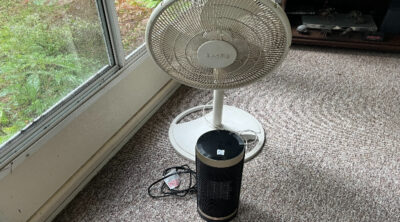
The first priority for many homeowners is the removal of unvented or aging propane heaters. These units are often the primary source of indoor air pollution. However, replacing a propane furnace with a robust electric heat pump is often impossible on a 30-amp service without a total panel upgrade. As an interim solution, homeowners are increasingly turning to high-efficiency portable electric heaters and oscillating fans. While less powerful than a central HVAC system, these units allow for "zone heating," warming only the occupied room and keeping the total wattage within the 3,600-watt ceiling.
Phase 2: The Induction Revolution
Cooking is the second major area of focus. A traditional four-burner electric stove requires a dedicated 40-amp or 50-amp circuit—more than the entire capacity of many modular homes. To bypass this, the adoption of portable induction cooktops has surged. Induction technology uses electromagnetic fields to heat cookware directly, offering up to 90% efficiency compared to the 40% efficiency of gas stoves. Because a single-burner induction plate typically draws about 1,500 watts, it can be utilized within a 30-amp system if other heavy loads are temporarily deactivated.
Phase 3: Water Heating and Load Staggering
Water heating represents one of the most significant energy draws in any home. In limited-capacity settings, the strategy shifts from "always-on" to "on-demand" management. Residents often opt to keep electric water heaters turned off, activating them only 30 to 60 minutes before use. This practice, known as load staggering, requires a disciplined communication strategy among household members to ensure that the water heater, the EV charger, and the induction stove are never operating simultaneously.

The 2026 Legislative Shift: Portable and Plug-in Solar
A significant turning point for modular home electrification in Connecticut is expected on October 1, 2026. This date marks the implementation of new state provisions regarding "portable solar" or "plug-in solar" systems.
Unlike traditional rooftop solar, which requires permanent mounting and complex grid-tie inverters, plug-in solar consists of modular panels designed to be attached to railings or fences. These systems plug directly into a standard 120V household outlet. The micro-inverters integrated into the panels synchronize with the home’s electrical frequency, allowing the solar energy to offset the home’s immediate demand from the grid.
Industry analysts suggest that for modular homes with limited service, plug-in solar provides a "buffer." By generating 400 to 800 watts of power during daylight hours, these systems can cover the "baseload" of the home (refrigerator and lights), freeing up more of the 30-amp service for larger appliances. This legislative move is seen as a vital step in democratizing solar access for renters and owners of manufactured housing.

Broader Impact and Socio-Economic Implications
The struggle to electrify 30-amp modular homes is a microcosm of the broader challenges facing the global energy transition. It highlights the "infrastructure gap" between affluent new constructions and the existing housing stock that serves millions of people.
Environmental advocates argue that state and federal incentives must be expanded beyond EV rebates and high-end heat pump subsidies. There is a growing call for "micro-electrification" grants that specifically target panel upgrades for manufactured homes and the purchase of high-efficiency portable appliances.
Furthermore, the transition has significant health implications. Data suggests that 98% of consumers who switch to induction cooking report high levels of satisfaction, citing not only the speed of cooking but also the improvement in indoor air quality. By removing propane and oil combustion from small, often poorly ventilated modular spaces, residents significantly reduce their risk of chronic respiratory ailments.

Conclusion: The Path Toward a Comprehensive Clean Energy Future
Achieving an all-electric summer residence in an aging modular home remains a feat of engineering and personal discipline. It requires a deep understanding of electrical load, a willingness to adopt incremental technology swaps, and an eye toward future legislative relief like the 2026 plug-in solar laws.
The move toward electrification in these communities is driven by a combination of environmental stewardship and a desire for modern, healthy living spaces. While the 30-amp limit remains a formidable barrier, the combination of induction technology, high-efficiency portable heating, and upcoming modular solar solutions offers a viable roadmap. As Connecticut and other states continue to update their energy policies, the lessons learned from these small-scale retrofits will be essential in ensuring that no segment of the housing market is left behind in the journey toward a carbon-neutral future.
