

The global transition toward renewable energy has moved beyond utility-scale installations and residential rooftop arrays, finding a significant and rapidly growing niche in the portable power sector. For many homeowners, the prospect of a permanent solar installation is fraught with high upfront costs, complex permitting processes, and structural limitations. For renters, such installations are often entirely prohibited. Consequently, portable solar panels have emerged as a vital technology, offering a versatile solution for home backup, off-grid living, recreational vehicle (RV) travel, and emergency preparedness.
The Evolution of Portable Solar Technology
The current landscape of portable solar power is characterized by rapid innovation in photovoltaic efficiency and material durability. Historically, portable panels were often inefficient, bulky, and prone to failure under harsh environmental conditions. However, the modern market now features high-efficiency monocrystalline silicon cells, bifacial designs that capture reflected light, and robust ingress protection (IP) ratings that ensure longevity. These advancements have transformed portable panels from niche camping gadgets into reliable components of a comprehensive energy resilience strategy.
Industry analysts note that the surge in demand is driven by two primary factors: the increasing frequency of climate-related power outages and the "van life" movement, which prioritizes mobile independence. As portable power stations—often referred to as solar generators—have become more sophisticated, the panels that charge them have had to evolve in tandem to provide faster charging times and better real-world performance.
Market Leaders and Performance Benchmarks: The Jackery Standard
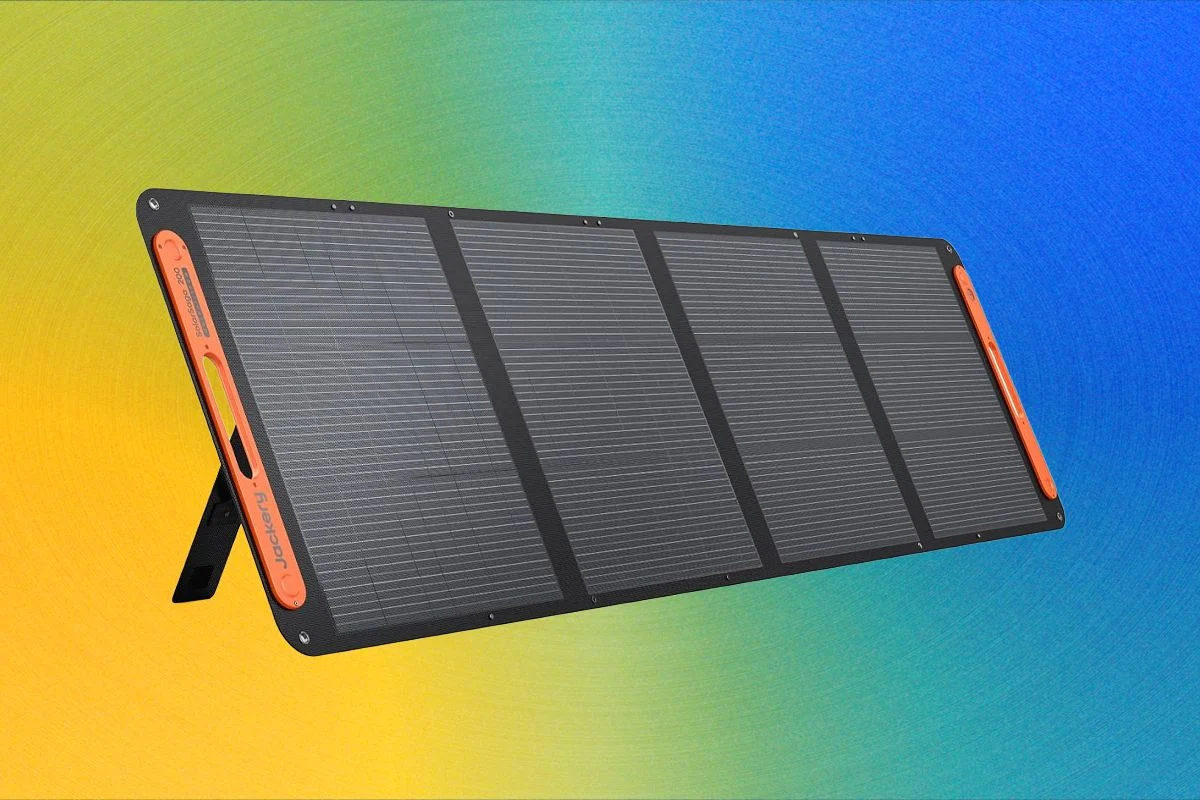
In the competitive landscape of portable solar, Jackery has established a reputation for balancing efficiency with user-centric design. Field evaluations of the Solar Saga series, specifically the 100-watt and 200-watt models, consistently demonstrate high yield even in sub-optimal conditions. The Solar Saga 200, for instance, has been observed to deliver between 140 and 170 watts under clear skies, a respectable percentage of its rated capacity given the inherent atmospheric losses in solar energy conversion.
The design philosophy of the Jackery line emphasizes rapid deployment. Utilizing magnetic pads for folding and Velcro-attached kickstands, these units bypass the mechanical complexity of metal fasteners found in other brands. Technical data indicates that the latest iterations of these panels utilize bifacial technology, reaching conversion efficiencies of up to 26.7 percent. Furthermore, an IP68 rating provides the highest level of protection against dust and prolonged immersion in water, making them suitable for long-term outdoor exposure.

However, Jackery maintains a proprietary DC8020 barrel connector for its ecosystem. While this ensures a secure and optimized connection for Jackery power stations, it necessitates adapters for users wishing to integrate these panels with third-party generators that typically utilize standard MC4 or XT60 connectors.
High-Capacity Solutions for Intensive Energy Needs
For users requiring higher energy throughput from a single footprint, manufacturers like Bluetti have pushed the boundaries of portable wattage. The Bluetti 350-watt and 500-watt panels represent the upper echelon of mobile solar power. These units are designed for users managing large-capacity power stations that support heavy appliances or extended off-grid stays.
Data from field testing shows that the 350-watt Bluetti model achieves a conversion efficiency of approximately 23.4 percent, delivering around 290 watts in peak sunlight. The 500-watt variant, while heavier and more complex to maneuver, offers a 25 percent efficiency rate and can generate nearly 490 watts under ideal conditions.
The primary trade-off for this high output is physical manageability. The 500-watt model, comprised of twelve separate folding sections, requires significant effort to stabilize, particularly in windy conditions where the large surface area can act as a sail. Despite these logistical challenges, the density of power provided by these units remains unmatched for users who need to recharge multi-kilowatt-hour batteries in a single day.
Specialized Applications: Flexible and Mountable Arrays
Beyond the standard "briefcase" folding design, the market has expanded to include flexible solar solutions. The BougeRV Arch series exemplifies this shift, offering panels that can bend up to 270 degrees. This flexibility is critical for mounting on curved surfaces such as RV roofs, van contours, or specialized tent structures.
Weighing less than nine pounds, the 200-watt BougeRV Arch panel utilizes N-type solar cells to achieve a 25 percent efficiency rating. Unlike folding panels, these are intended for semi-permanent installation using adhesives or bolts. While they lack the immediate "plug-and-play" portability of folding models, their aerodynamic profile and IP68 rating make them an ideal choice for mobile living where space and weight are at a premium.

Comparative Analysis of Emerging Competitors
The market is further diversified by established tech giants like Anker and DJI, who have leveraged their expertise in battery management and drone technology to enter the solar space.
- Anker Solix Series: The Solix PS200 offers a 23 percent conversion efficiency. While its raw performance metrics are slightly lower than those of the Jackery Solar Saga 200, Anker distinguishes itself by including universal MC4 and XT60 connectors as standard. This focus on interoperability makes Anker panels a preferred choice for users who own a variety of power station brands.
- DJI IBC Power: Primarily known for its dominance in the drone market, DJI’s entry into portable solar features 200-watt panels with high build quality and IP67 weatherproofing. However, the requirement for a separate Maximum Power Point Tracking (MPPT) adapter module to interface with some of DJI’s own power stations adds a layer of complexity for the consumer.
Technical Methodology: Understanding Efficiency and Yield
Evaluating the efficacy of portable solar panels requires an understanding of the gap between "rated wattage" and "real-world yield." Solar panels are tested under Standard Test Conditions (STC)—a laboratory environment with a cell temperature of 25°C (77°F) and an irradiance of 1,000 watts per square meter.
In actual use, several factors degrade performance:
- Angle of Incidence: Panels must be perpendicular to the sun’s rays to maximize photon absorption. Even a slight deviation can result in a 10-20 percent drop in output.
- Temperature Coefficient: Solar cells paradoxically become less efficient as they get hotter. High-quality panels are designed with materials that dissipate heat to mitigate this loss.
- Atmospheric Interference: Humidity, haze, and indirect light significantly reduce the energy reaching the cells.
To account for these variables, professional testing protocols involve recording wattage over four- and eight-hour windows across varying weather conditions. Data consistently shows that even top-tier panels generally operate at 70 to 80 percent of their rated capacity during peak hours.
Integration and Compatibility: The Ecosystem Challenge
A critical consideration for consumers is the compatibility between the solar array and the power station. The industry is currently divided between proprietary connectors and universal standards.
The use of MPPT (Maximum Power Point Tracking) controllers has become standard in high-end solar generators. This technology continuously monitors the voltage and current output of the panels to ensure that the maximum possible power is being extracted and stored. When "overpaneling"—the practice of connecting more solar wattage than a generator is rated for—users must be vigilant about the Open Circuit Voltage (OCV). Exceeding the voltage limit of a solar generator can lead to permanent hardware failure, whereas exceeding the amperage is generally managed safely by the generator’s internal controller.

Market Trajectory and Environmental Implications
The move toward portable solar is more than a consumer trend; it is a component of the broader decentralization of the energy grid. As battery costs continue to decline and solar cell efficiency approaches theoretical limits, the "micro-grid" concept is becoming accessible to the average individual.
Industry experts anticipate that the next phase of innovation will involve pervasively integrated solar materials—such as solar fabrics and more durable thin-film plastics—that could further reduce the weight of portable arrays. Furthermore, the environmental impact of these devices is significant. By providing a carbon-neutral alternative to gas-powered portable generators, portable solar panels reduce both noise pollution and greenhouse gas emissions in sensitive environments like national parks and residential neighborhoods.
In conclusion, the selection of a portable solar panel is no longer a matter of simply picking the highest wattage. It requires a nuanced assessment of weight, connector compatibility, durability, and specific use-case requirements. Whether for the "digital nomad" requiring constant connectivity or the suburban homeowner preparing for the next grid failure, the current generation of portable solar panels offers a level of reliability and efficiency that was once the sole province of fixed industrial installations.
