

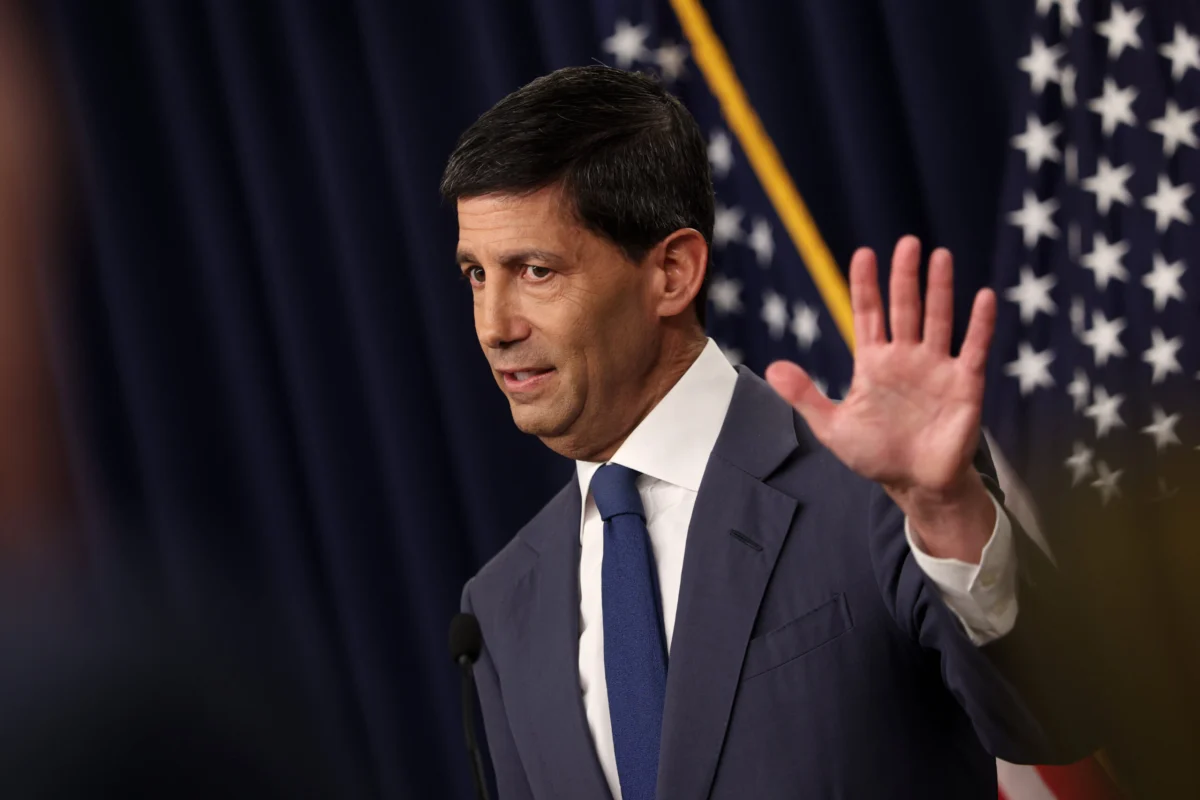
Wall Street’s prevailing sentiment following the Federal Reserve’s latest monetary policy decision is a clear indication that an interest rate hike is on the horizon, with inflation management taking center stage as the central bank’s paramount objective. Despite the Federal Open Market Committee (FOMC) opting to maintain its benchmark interest rate at its current target range during the July 29, 2026, meeting, the second under the leadership of Chairman Kevin Warsh, a palpable shift in hawkish sentiment among policymakers and Warsh’s own pronouncements on inflation have coalesced to bolster investor confidence in an impending increase.
The decision to hold rates steady, while largely anticipated by financial markets, was not unanimous. A notable development at this meeting was the divergence of opinion among three FOMC members who advocated for an immediate increase in interest rates. This marks the most significant number of dissenting votes in favor of a rate hike since September 2016, according to Ian Lygen, head of U.S. rates strategy at BMO Capital Markets. In a historical parallel, the Fed also maintained rates in November 2016 despite two dissenting votes, only to implement a unanimous 25-basis-point increase in December of that year. This historical precedent suggests that while the majority may currently be aligned with Chairman Warsh’s more measured approach, the underlying pressure for tightening policy is mounting.
"We’re reading this as a Committee with vocal hawks, but the majority is siding with Warsh," Lygen communicated to clients following the announcement. This assessment underscores the internal debate within the Fed, where a hawkish faction is clearly signaling its impatience with persistently elevated inflation.
The immediate aftermath of the decision saw financial markets recalibrating their expectations. Fed funds futures trading, a key indicator of market sentiment regarding future Fed actions, now reflects a greater than 57% probability of a quarter-point interest rate increase at the September meeting. Similarly, data from Kalshi, a prediction market, shows approximately 53% of traders anticipating a Fed hike, a marginal edge over the 43% who are betting on another period of rate stability.
Ellen Zentner, chief economic strategist for Morgan Stanley Wealth Management, offered her perspective, stating, "For now, it’s likely that market pricing for a hike has simply been pushed forward. September remains a live meeting." This suggests that while the July decision was a pause, the groundwork for future tightening has been firmly laid, and the upcoming September meeting is now a critical juncture for policy action.
Stephen Douglass, chief economist at NISA Investment Advisors, characterized the FOMC’s decision as a "hawkish hold," acknowledging the dissent from three members as a signal of the Fed’s underlying concern about inflation. However, Douglass maintained his forecast for a rate cut in March of the following year, indicating a potential divergence in the perceived trajectory of monetary policy over the medium term.
Analysts closely observing the Fed’s communications have emphasized that upcoming inflation reports will be under intense scrutiny. The persistent upward pressure from energy prices continues to pose a significant threat to the Fed’s inflation targets. Chairman Warsh himself reiterated the central bank’s unwavering commitment to bringing inflation down to its preferred annual rate of 2%, a goal that has remained elusive for an extended period.
"You’ve heard this before, but we will deliver price stability," Chairman Warsh declared during his press conference on Wednesday, underscoring the gravity of the inflation challenge. This commitment, however, comes with an implicit understanding of the necessary policy tools.
Jeffrey Gundlach, CEO of DoubleLine Capital, a prominent figure in the fixed-income market, articulated this challenge directly. "If you really want to get to 2%, I think you have to raise interest rates," Gundlach stated on CNBC’s "Closing Bell." He further elaborated that the bond market itself is sending a clear message to the Federal Reserve that decisive action on inflation is imperative.
Market Reaction and Broader Implications
The prospect of a tighter monetary policy environment, coupled with the Fed’s clear focus on inflation, has unsettled financial markets, ushering in a "risk-off" sentiment. On Wednesday, equity markets experienced significant declines. The S&P 500 tumbled 1.5%, marking its worst performance on a "Fed day" for a new chairman in recent memory, according to Bespoke Investment Group. The Dow Jones Industrial Average saw an even steeper fall, dropping over 2% and recording its largest daily decline since April 2025, when President Donald Trump’s tariff policies impacted market sentiment.
The Nasdaq Composite also suffered a substantial setback, with its Wednesday slide pushing the index more than 10% below its all-time high. This downturn extended the technology-heavy index’s losing streak to six consecutive sessions, a sequence not seen since 2024, highlighting a growing nervousness among investors regarding growth-oriented assets in a rising rate environment.
Josh Jamner, senior investment strategy analyst at ClearBridge Investments, observed, "Financial markets are still wrestling with the shift in Fed leadership." He characterized the increased price volatility under Chairman Warsh as "more of a feature than a bug," suggesting that a more data-dependent and potentially more reactive Fed under Warsh’s tenure is leading to greater market fluctuations.
The fixed income market also reflected the heightened anticipation of future rate hikes. The yield on the 30-year Treasury surged more than 10 basis points on Wednesday, reaching its highest level since July 2007. This upward movement in longer-term yields signals investor expectations of sustained inflation and a potentially longer period of higher interest rates. The benchmark 10-year Treasury yield also breached the critical 4.6% threshold. In contrast, yields on shorter-dated Treasuries saw a pullback, a dynamic often observed when the market anticipates near-term policy tightening.
This divergence in Treasury yields – rising long-term yields and retreating short-term yields – can be interpreted as the market’s assessment of the Fed’s current stance. While the Fed has paused, the increasing yields on longer-dated debt suggest that investors are pricing in not only near-term rate hikes but also a sustained period of elevated rates to combat persistent inflation.
The "bond market vigilantes," a term often used to describe investors who react to perceived fiscal or monetary policy missteps by selling bonds, are apparently signaling their demand for more aggressive action from the Federal Reserve. As Jeffrey Gundlach pointed out, "The long bond yield went up significantly after the press conference. The bond market vigilantes are saying, ‘If you really want us to believe your rhetoric, you’ve got to start acting.’" This indicates that the Fed’s commitment to its 2% inflation target will be tested by market participants who are looking for tangible policy adjustments to validate its pronouncements.
Background and Context
The Federal Reserve’s dual mandate of achieving maximum employment and price stability has been a central theme in its monetary policy deliberations for decades. In recent years, particularly following the global financial crisis of 2008 and the subsequent period of low inflation, the Fed maintained an exceptionally accommodative monetary policy, characterized by near-zero interest rates and quantitative easing. However, the economic landscape began to shift dramatically in the early 2020s with the onset of the COVID-19 pandemic, which triggered unprecedented supply chain disruptions and a surge in fiscal stimulus. This confluence of factors led to a significant acceleration in inflation, reaching multi-decade highs.
The appointment of Kevin Warsh as Federal Reserve Chairman in early 2026 marked a potential inflection point in monetary policy. Warsh, known for his more hawkish leanings during his previous tenure as a Fed governor, has consistently voiced concerns about inflation and the need for the central bank to maintain its credibility in managing price stability. His leadership has coincided with a period where the Fed has begun to pivot away from its ultra-loose stance, seeking to temper inflationary pressures without triggering a severe economic downturn.
The July 29, 2026, FOMC meeting was therefore closely watched for signals about the Fed’s future path. The decision to hold rates steady was a strategic pause, allowing policymakers to assess the impact of previous rate hikes and to gather more data on the evolving economic conditions. However, the clear dissent from three members and Chairman Warsh’s strong emphasis on inflation underscore the internal pressure to act more decisively if inflation does not abate.
Timeline of Key Events (Inferred)
- Late 2025 – Early 2026: Persistent and accelerating inflation becomes a dominant concern for the Federal Reserve and financial markets.
- Early 2026: Kevin Warsh is appointed Chairman of the Federal Reserve, signaling a potential shift towards a more hawkish monetary policy stance.
- Spring/Summer 2026: The Federal Reserve initiates a series of interest rate hikes to combat inflation, while closely monitoring economic indicators.
- July 29, 2026: The FOMC convenes for its scheduled monetary policy meeting. The committee votes to hold interest rates steady, but three members dissent, advocating for an immediate rate increase.
- Post-Meeting Commentary: Chairman Warsh reiterates the Fed’s commitment to price stability. Market participants and analysts interpret the meeting’s outcome as a strong signal of an impending rate hike.
- September 2026: The next FOMC meeting, where market participants widely expect a decision on an interest rate increase.
Analysis of Implications
The Federal Reserve’s current predicament highlights the delicate balancing act between controlling inflation and avoiding a recession. By signaling a strong inclination towards future rate hikes, the Fed is attempting to anchor inflation expectations and reassure the public that it is committed to its price stability mandate. However, aggressive tightening could potentially stifle economic growth, leading to higher unemployment and a contraction in economic activity.
The divergence within the FOMC suggests that there is no easy consensus on the appropriate pace and magnitude of monetary tightening. The "hawkish hold" observed at the July meeting reflects a committee grappling with conflicting economic forces. While inflation remains stubbornly high, concerns about a potential economic slowdown are also present.
The market’s reaction, characterized by increased volatility and a "risk-off" sentiment, indicates that investors are factoring in a more challenging economic environment. Higher interest rates can reduce corporate profitability, increase borrowing costs for businesses and consumers, and lead to a reassessment of asset valuations. The decline in equity markets and the rise in Treasury yields are tangible manifestations of these concerns.
The coming months will be critical in determining the trajectory of U.S. monetary policy and its impact on the global economy. The Federal Reserve’s ability to navigate this complex landscape will depend on its capacity to accurately assess economic data, communicate its policy intentions clearly, and maintain its credibility in the face of evolving economic challenges. The clear message from Wall Street and influential market figures like Jeffrey Gundlach is that the Fed must demonstrate its resolve through concrete action to effectively combat inflation and restore price stability. The September FOMC meeting will undoubtedly be a focal point for these unfolding dynamics.
