

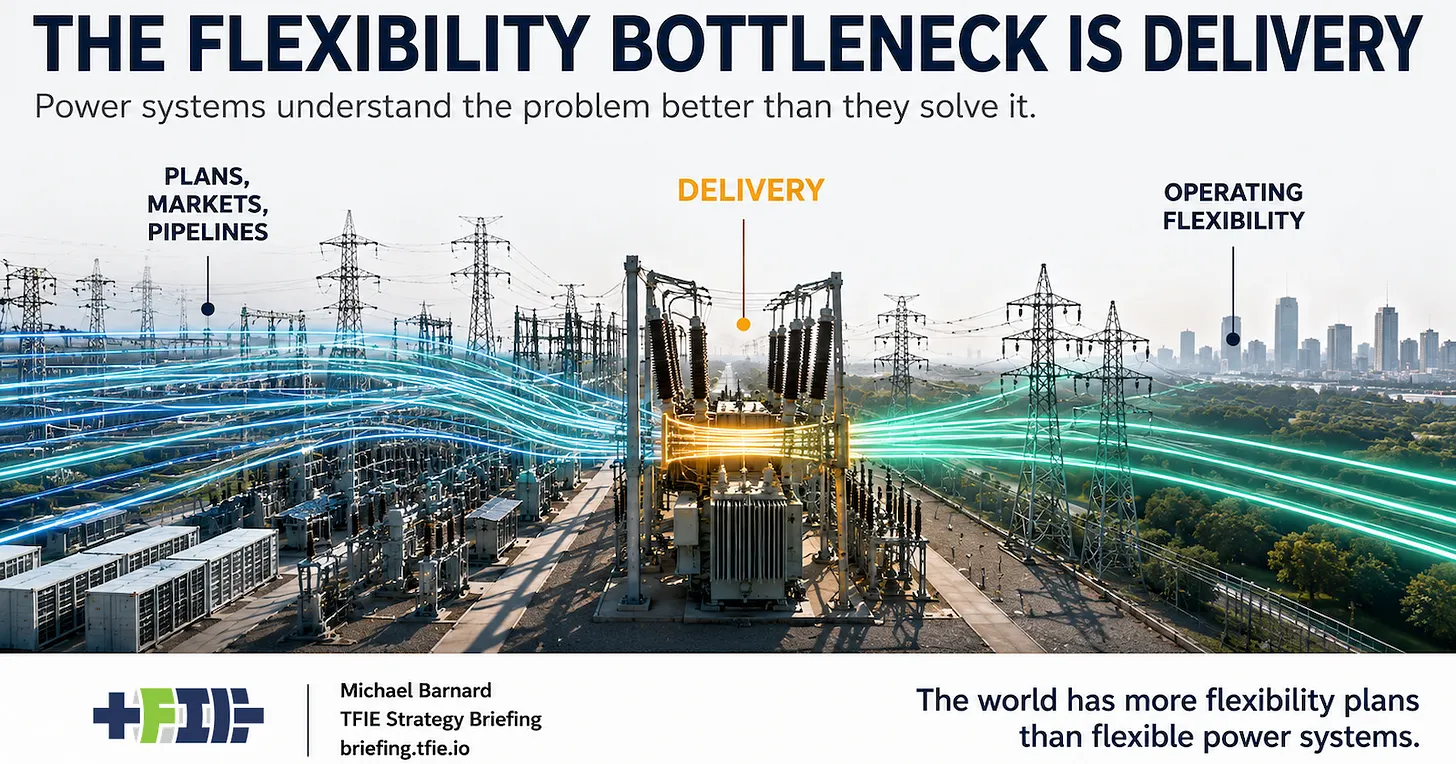
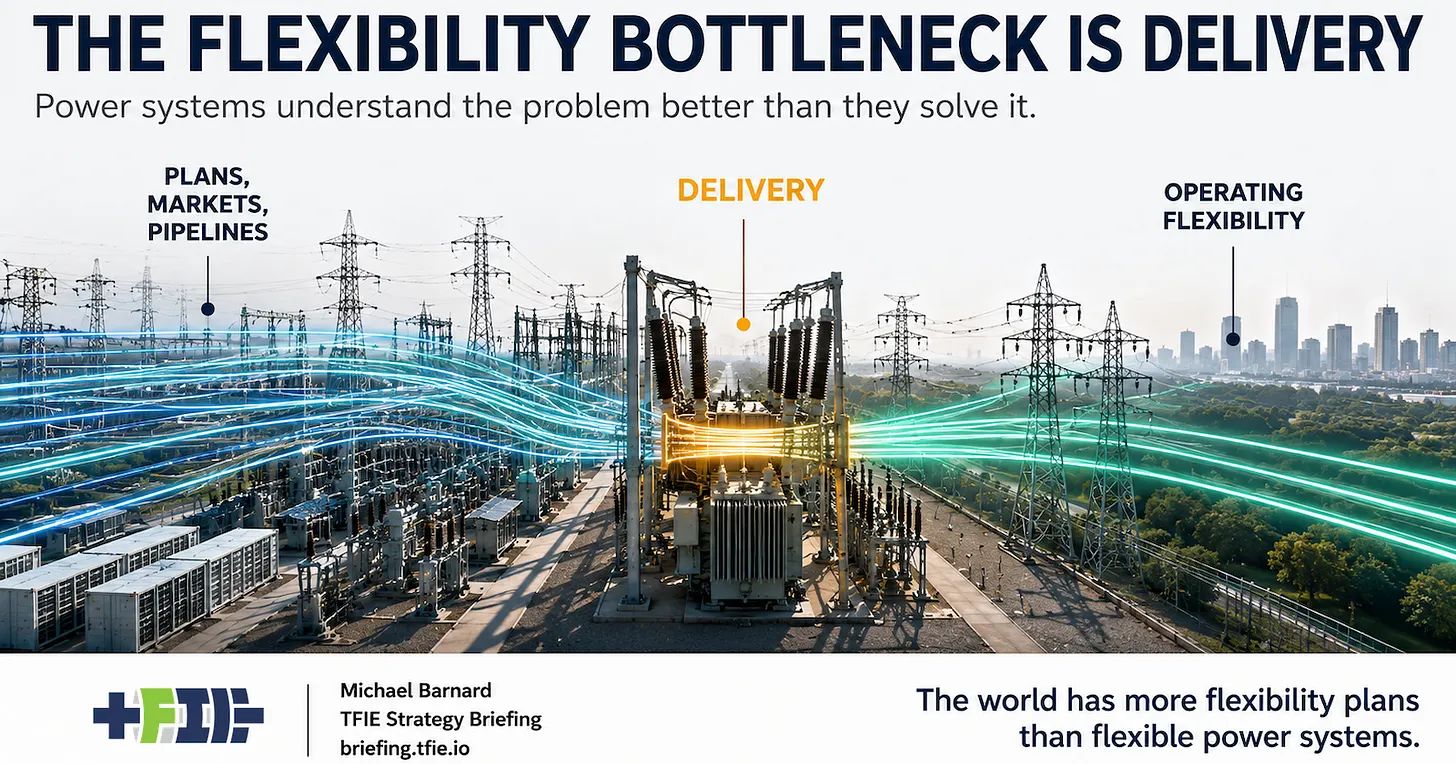
The global transition toward renewable energy has reached a critical juncture where the primary challenge is no longer the procurement of low-cost wind and solar power, but the physical delivery of flexible infrastructure to manage that power. A comprehensive analysis of 25 major electricity operating systems reveals a stark disparity between institutional planning and actual operational capability. While regulators and system operators have become increasingly adept at designing markets and identifying reliability needs, the translation of these plans into commissioned, high-performing assets remains the weakest link in the energy transition.
Across the assessed jurisdictions—which include the Australian National Electricity Market (NEM), the Electric Reliability Council of Texas (ERCOT), Brazil’s Interconnected System, and various subnational grids in China, India, and Japan—the data indicates that planning and market design are consistently more mature than the delivered portfolios needed to provide dependable flexibility. This "execution gap" suggests that the global energy sector may be overestimating its readiness for a high-renewables future by focusing on project pipelines rather than operational reality.
The Metrics of Maturity: A Structured Comparison
To quantify the state of global grid readiness, the TFIE Strategy Briefing developed a structured comparison using a purposive sample of 25 electricity operating systems. Rather than a census based on population or capacity, the study treats each operating system as a single unit to distinguish between visible flexibility activity and dependable operating capability. The systems were evaluated on a scale of 1 to 5 across several criteria.
The findings highlight a clear hierarchy of maturity. Institutional capabilities, such as reliability decomposition and locational integration, scored the highest with an average of 3.5. Market access and whole-system alternatives analysis followed closely at 3.4. However, as the focus shifted toward physical implementation and performance, the scores began to decline. Operational visibility averaged 3.2, investability 3.1, and the ability to correct system gaps sat at 3.0. The weakest criterion was delivered portfolio alignment, which averaged only 2.8.
This data suggests that while the "machinery" of flexibility—the regulations, the auctions, and the theoretical frameworks—is largely in place, the physical commission of resources that can perform specific reliability jobs is lagging. The transition from a "paper" project to a functioning grid asset is fraught with hurdles that current market designs have yet to fully resolve.
The Battery Proxy Trap: California vs. Norway
One of the most significant takeaways from the analysis is that "battery nameplate capacity" is an insufficient proxy for grid maturity. While battery energy storage systems (BESS) are the leading technology for fast frequency response and intraday shifting, they are only one component of a flexible system. Different regions require different combinations of storage, hydroelectric power, transmission, demand response, and regional trade.
California provides a cautionary example of this technology-centric focus. Between 2019 and 2024, California’s statewide battery capacity skyrocketed from roughly 500 MW to over 13,300 MW. On paper, this represents an extraordinary expansion of flexibility. However, operational data from March 2025 reveals that the state still faced significant challenges. Despite the massive battery fleet, the California Independent System Operator (CAISO) recorded 919,020 MWh of wind and solar curtailment and negative prices in over 18% of five-minute intervals. Furthermore, the system had to manage a staggering 19,959 MW three-hour net-load ramp.
In contrast, Norway demonstrates a mature flexibility architecture with almost no reliance on large-scale battery fleets. In 2024, Norway’s electricity supply was 95% renewable, with 83% derived from hydropower. By leveraging sophisticated reservoir management, robust internal networks, and deep integration with the Nordic market—particularly Sweden—Norway has achieved a level of flexibility that California is still striving for. This comparison underscores that flexibility cannot be assessed in isolation; it is a product of regional trade, resource diversity, and long-term infrastructure alignment.
The Lifecycle of a Project: From Auction to Operation
A recurring mistake in energy reporting and policy is treating project pipelines as equivalent to operating capacity. When a jurisdiction announces a multi-gigawatt battery auction or a new pumped-hydro target, it is often hailed as a milestone in grid maturity. However, the TFIE analysis argues that a project does not provide flexibility simply because it has won a contract or cleared a tender.
The path from an announced project to an operational asset is increasingly congested. Developers must navigate:
- Connection Studies: As grids become more saturated with inverter-based resources, the technical requirements for interconnecting new projects have become more complex, often leading to multi-year delays.
- Permitting and Siting: Local opposition and environmental regulations can stall even the most critical flexibility projects.
- Financing and Supply Chains: Inflationary pressures and competition for raw materials (such as lithium and transformers) have made project economics more volatile.
- Commissioning and Performance: Once built, an asset must prove it can reliably perform the specific "job" it was hired for, whether that is sub-second frequency control or multi-day energy shifting.
The gap between "announced" and "delivered" is where the reliability of the future grid will be decided. Investors and utilities are increasingly being advised to look beyond headline gigawatt-hours and focus on the durability of revenues and the physical feasibility of grid connections.
Regional Variations: China, India, and Beyond
The 25-system study also highlights why national averages can be misleading, particularly in large, decentralized nations like China and India. In these regions, subnational operating systems often exhibit vastly different levels of maturity.
In China, certain provincial grids have made rapid strides in integrating ultra-high-voltage (UHV) transmission to move wind and solar power across vast distances, while others remain hampered by rigid coal-fired generation mandates. Similarly, in India, states with high renewable penetration are pioneering demand-response programs, while others struggle with basic grid stability and distribution losses.

Brazil’s interconnected system offers another model, where a legacy of large-scale hydropower provides a natural buffer for wind and solar integration. However, as climate change alters rainfall patterns, Brazil is being forced to diversify its flexibility portfolio, moving toward a mix of gas-fired peaking plants and emerging storage technologies.
Implications for Regulators and Investors
The shift from a shortage of ideas to an execution problem has profound implications for how power systems are managed. For regulators and system operators, the focus must shift from general procurements to "job-specific" requirements. Not all flexibility is equal; the technology needed for fast frequency response is fundamentally different from the infrastructure required for multi-day adequacy or strategic reserves.
For investors, the message is one of caution and due diligence. A market that appears mature because of a high volume of auctions may actually be a high-risk environment if the underlying grid cannot physically accommodate the new capacity. Durable revenues and usable grid connections are now more valuable than the sheer size of a project pipeline.
Conclusion: The Execution Era
The findings of the TFIE Strategy Briefing signal the end of the "planning phase" of the energy transition and the beginning of the "execution era." The global power sector has successfully identified the need for flexibility and created the institutional frameworks to support it. However, the actual delivery of a balanced, reliable, and flexible portfolio of assets is lagging behind.
The next decade of the energy transition will be defined by how well systems can bridge the gap between 3.5 (planning) and 2.8 (delivery). This will require more than just more batteries or more auctions; it will require a fundamental reassessment of how we build, connect, and operate the modern grid. Grid flexibility is no longer a technology market—it is a performance requirement that demands physical alignment with the reality of a weather-dependent energy system.
As the world continues to integrate record amounts of variable renewable energy, the ability to turn policy mechanisms into useful operating portfolios will be the ultimate measure of success. The systems that thrive will be those that move beyond the "press release" stage of development and master the complex, often unglamorous work of physical grid execution.
