

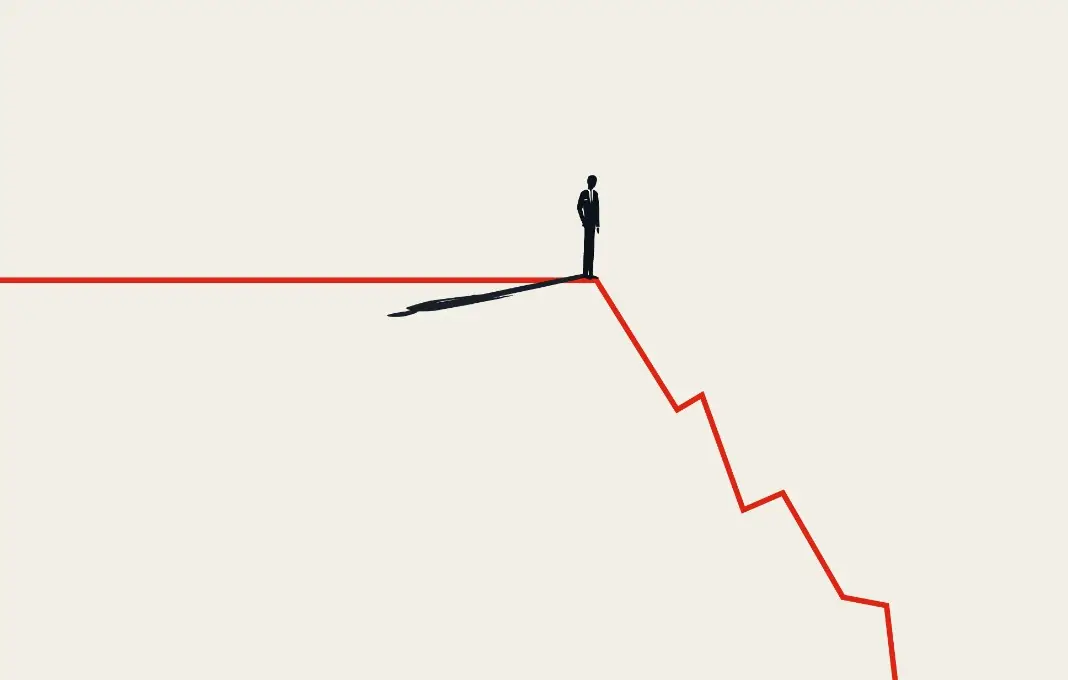
The recent disruption to global trade, exemplified by the temporary closure of the Strait of Hormuz to commercial traffic, has underscored a critical vulnerability for multinational corporations: their susceptibility to geoeconomic shocks. When the vital waterway ceased operations this past spring, shipping giant Maersk, a bellwether for the industry, swiftly suspended crossings and rerouted its Middle East services around the Cape of Good Hope. The speed of this response was not a matter of clairvoyance; no one accurately predicted the exact timing of the closure. Instead, it was the result of pre-vetted decisions and established protocols, allowing for rapid execution. Carriers that had already integrated contingency plans for such scenarios moved first, while others spent precious days assessing their exposure and potential ramifications. This stark contrast highlights a fundamental gap in corporate preparedness, transforming resilience from a risk management function into a core CEO-level imperative.
The era of isolated trade policy disruptions is over. Geoeconomic shocks now arrive in waves, impacting diverse sectors and geographies simultaneously. Tariffs, export controls, sanctions, and chokepoint closures are no longer discrete events but interconnected challenges that can ripple through global supply chains. Research into the annual filings of 73 large firms across the aerospace, pharmaceuticals, and high-tech industries reveals a sixfold increase in language pertaining to resilience and geopolitical risk between 2007 and 2025. This surge in disclosure, while acknowledging the escalating reality, has not been matched by a commensurate evolution in management discipline within most organizations.
A simple yet potent diagnostic can reveal the depth of a company’s geoeconomic resilience. CEOs are urged to ask themselves: "Can I personally name the single supplier, shipping lane, or jurisdiction whose loss would halt or severely disrupt my largest revenue line tomorrow?" If the immediate answer is not readily available, it signifies that geoeconomic resilience is currently a documented report rather than a tangible capability. Companies that maintain operational momentum amidst global volatility are not relying on foresight but on the systematic cultivation of resilience as a standing management discipline, comprising three interconnected pillars. These pillars can be integrated by leadership teams within a 90-day timeframe.
The Three Pillars of Geoeconomic Resilience
1. Simulate: Proactive Stress-Testing of Global Networks
The first discipline involves proactively stress-testing a company’s network before the global landscape forces it to do so. This requires the creation of a concise, one-page exposure map for every major trade corridor, critical production site, and key supplier country. Crucially, organizations must commit to conducting at least one rigorous geoeconomic stress test annually. These simulations should mimic plausible scenarios such as chokepoint closures, expansions of export controls, or the sudden imposition of significant tariff walls. The ultimate output of these exercises is not a predictive forecast, but rather pre-cleared decisions. The experience with the Strait of Hormuz closure illustrates this point: while the timing of the event was unpredictable, the companies that responded swiftly already knew precisely what actions they would take when such an event occurred. This preparedness, born from simulation, allows for immediate execution rather than reactive deliberation.
The economic implications of failing to prepare for such disruptions are substantial. McKinsey research indicates that supply chain disruptions can erode nearly 45 percent of a year’s profits over a decade. The 2021 global semiconductor shortage, for instance, inflicted an estimated $210 billion in revenue losses on the automotive industry alone, according to AlixPartners. In numerous instances, the potential exposure had been identified and flagged in advance; the missing element was often a clear owner responsible for driving action.
2. Shape: Cultivating Strategic Flexibility and Optionality
The second discipline, "Shape," focuses on building the inherent flexibility required to navigate future uncertainties before they materialize. This translates into establishing clear ceilings on the proportion of any critical input sourced from a single country, ensuring a qualified second source or alternative production site for each major product line, and developing at least two viable routings for every high-volume shipping lane. The CEO’s active involvement is indispensable in this domain. Without direct leadership endorsement, the pursuit of operational flexibility often loses out to the relentless pressure of optimizing unit costs in quarterly reviews. To counteract this, optionality must be designated as an explicit criterion in capital allocation decisions. A prime example is Apple’s strategic initiative to shift approximately a quarter of its iPhone assembly operations to India. This significant diversification was not a mid-level management project but a CEO-driven imperative, underscoring the necessity of top-tier leadership for implementing such transformative changes.
The strategic rationale behind this approach is rooted in risk mitigation and long-term value preservation. By diversifying suppliers, production sites, and logistics routes, companies reduce their reliance on any single point of failure. This proactive measure not only safeguards against immediate disruptions but also enhances the company’s ability to adapt to evolving geopolitical landscapes and regulatory environments. The cost of building this flexibility is often amortized over time, presenting a more favorable economic proposition than the potentially catastrophic losses incurred during an unmitigated disruption.
3. Synchronize: Bridging the Gap Between Policy and Operations
The most acutely felt operational gap often lies between a government’s policy pronouncements and a company’s ability to adjust its global operations accordingly. The third discipline, "Synchronize," addresses this critical disconnect by structurally aligning key functions. This involves integrating government affairs, legal departments, and operational teams onto a single, weekly cadence for review and decision-making. A named senior executive must be designated as the owner of this process, vested with the authority to act decisively. When a key customer is blacklisted or an export is suddenly restricted, the desired response should be swift execution of pre-defined plans, not a frantic scramble to understand the implications and formulate a strategy from scratch.
This synchronized approach ensures that a company’s operational readiness is continuously informed by and responsive to the external policy environment. By fostering close collaboration between those who monitor and engage with governments and those who manage the physical flow of goods and services, organizations can significantly shorten their reaction times. This proactive alignment minimizes the potential for cascading failures and reputational damage that can arise from slow or inadequate responses to policy shifts.
The Governance Imperative and Boardroom Oversight
The cost of neglecting these resilience-building efforts is well-documented and substantial. Boards of directors are increasingly recognizing the strategic importance of geoeconomic resilience. Consequently, organizational structures are evolving to reflect this prioritization. CrowdStrike, a cybersecurity leader, has established a chief resilience officer who reports directly to the CEO, signaling the elevated status of this function. Similarly, Allianz Commercial has integrated risk and resilience considerations at the board level, underscoring its commitment to robust oversight.
Companies that have proactively navigated geoeconomic challenges offer compelling case studies. Siemens, for instance, was able to exit the Russian market on its own timeline, a feat made possible by its prior mapping of potential exposures. Taiwan Semiconductor Manufacturing Company (TSMC), the world’s largest contract chip manufacturer, began diversifying its operations years before geopolitical events would have otherwise compelled it to do so. The consistent pattern observed across these successful enterprises is that they treat geoeconomic resilience not as a discrete project with a defined endpoint, but as an integral component of corporate governance.
A Call to Action for Modern Leadership
As companies navigate an increasingly unpredictable global landscape, the imperative for robust geoeconomic resilience has never been greater. The next trade-policy shock or chokepoint closure will invariably arrive on its own schedule. The critical question for every CEO and leadership team is whether their organization will freeze in response, merely move to adapt, or strategically advance its position.
On a typical Monday morning, a CEO should be able to pose three fundamental questions to their team and receive informed, actionable answers:
- "Can you identify the single-point-of-failure within our most critical revenue streams?"
- "What was the date of our last geoeconomic stress test, and what specific decision did it pre-clear?"
- "By name, who owns the weekly synchronization process between government policy, geopolitical risk assessment, and global operations?"
If these questions elicit clear, confident responses, the organization is likely ahead of the majority of its peers. While nearly every firm studied now discloses these risks in their public filings, few executives interviewed could pinpoint a single accountable owner for managing them. If these questions remain unanswered, the agenda for immediate action is clear. The future of corporate success in an era of heightened geoeconomic uncertainty hinges on the ability of leadership to embed resilience as a core governance principle, ensuring that companies are not merely reactive to shocks, but strategically positioned to thrive in their wake.
