

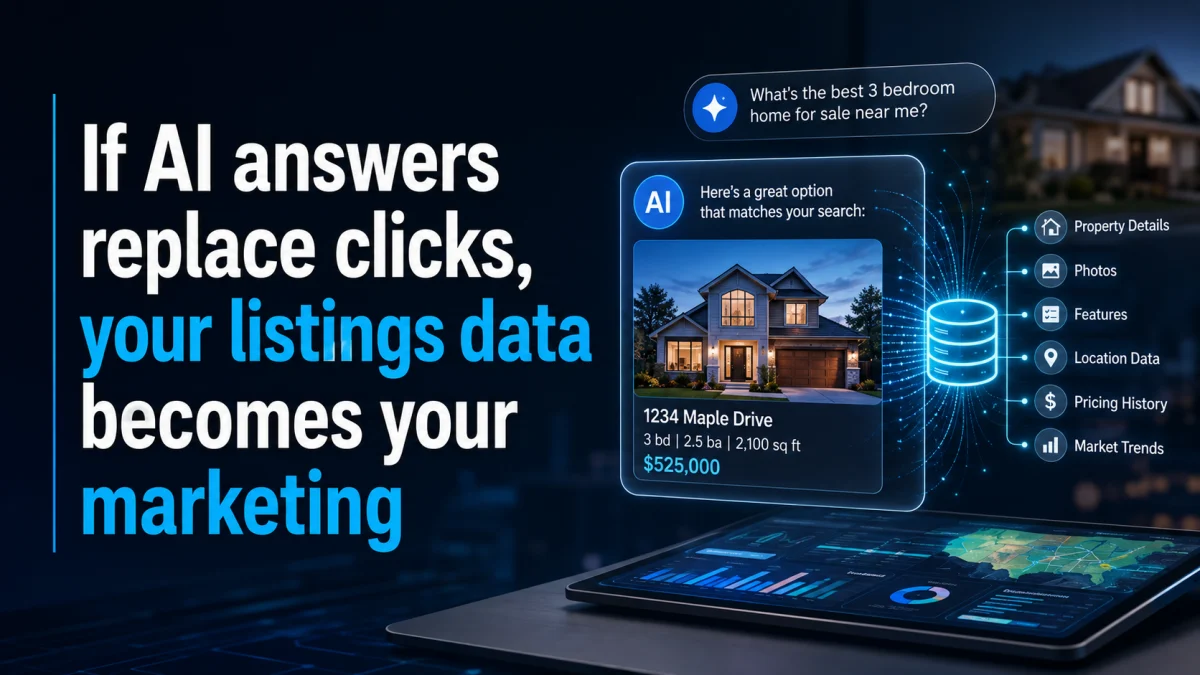
For two decades, the strategic playbook for establishing a real estate brand’s online presence was characterized by a predictable, linear progression: optimize the corporate website, secure high-volume keywords, ascend Google’s organic rankings, and ultimately capture the consumer’s click. By early 2026, however, the structural foundation of this methodology has undergone a fundamental shift. The digital landscape, once a network of interconnected links, has transitioned into an "answer-first" ecosystem where the traditional website visit is no longer the primary objective of a search query.
According to a comprehensive analysis of Similarweb data conducted by SparkToro in early 2026, 68% of Google searches in the United States now conclude without a single click to an external website. This represents a significant escalation from 2024, when zero-click searches accounted for roughly 60% of user behavior. The shift is most pronounced in environments mediated by Artificial Intelligence (AI). When a Google AI Overview is present in the search results, the zero-click rate climbs to 83%. In Google’s dedicated "AI Mode"—a feature that surpassed one billion monthly users following the 2026 I/O conference—the figure reaches a staggering 93%. As query volume in AI Mode continues to double quarter over quarter, the traditional search engine optimization (SEO) model is being superseded by a new paradigm of digital discovery.
The Evolution of Search: A Chronology of the AI Integration
The transition from traditional search to generative discovery did not occur in a vacuum. It is the culmination of a decade-long trajectory toward structured data and semantic understanding. In 2012, Google introduced the Knowledge Graph, marking the first major step away from simple keyword matching and toward understanding "entities"—the people, places, and things that make up the real estate world.
By 2023 and 2024, the integration of Large Language Models (LLMs) into search results through Search Generative Experience (SGE) pilots began to normalize the concept of receiving synthesized answers directly on the search results page. In 2025, the industry witnessed the "Mass Adoption Phase," where consumers increasingly bypassed traditional search bars in favor of conversational AI assistants like ChatGPT, Claude, and Gemini for complex tasks such as neighborhood research and mortgage comparisons.
By 2026, the "Zero-Click Crisis" reached its zenith. Marketing budgets that were once strictly allocated to backlink building and blog content have had to be redirected toward managing the "answer layer" of the internet. The goal is no longer just to be found; it is to be the specific entity cited by an AI when a user asks, "Who is the most experienced luxury agent in Miami for international buyers?"
Defining the New Mechanism: AEO and GEO
This emerging discipline is categorized by two primary terms: Answer Engine Optimization (AEO) and Generative Engine Optimization (GEO). While they share DNA with traditional SEO, the mechanisms of success are fundamentally different.
Traditional SEO focuses on page-level attributes—load speed, keyword density, and meta-descriptions—designed to entice a human to click a link. In contrast, AEO and GEO focus on the "data footprint" of a business. These disciplines optimize for how an AI system parses, validates, and synthesizes information. The objective is to ensure that a brand is not merely listed in a sea of blue links but is actively recommended within a generated response.
Industry analysts note that this is not a total abandonment of SEO. Google continues to process a significant volume of conventional queries, maintaining a search market share near 90% as of 2026. However, the marginal value of ranking for a high-volume keyword has plummeted if that keyword now triggers an AI Overview that satisfies the user’s intent without a click. For real estate marketers, the focus has shifted from "winning the click" to "winning the citation."
The Centrality of the Google Business Profile
The most critical discovery for local real estate businesses in 2026 is the source of the data that AI assistants prioritize. Research from firms such as SOCi and Local Falcon indicates that the primary data feed for AI-generated local recommendations is the Google Business Profile (GBP).
Across the leading AI platforms, the reliance on structured local data is consistent:
- Google AI Overview & AI Mode: These systems draw directly from the Google Business Profile API to populate maps, contact details, and service offerings.
- Apple Intelligence: In a bid to maintain local accuracy, Apple’s AI ecosystem frequently cross-references Google’s local data to verify the existence and reputation of service providers.
- Third-Party LLMs: Assistants like ChatGPT often rely on integrated search plugins that prioritize highly-rated, verified local listings to avoid "hallucinations" regarding a business’s location or operating hours.
Analysts have concluded that the businesses cited in AI-generated answers are almost exclusively those with complete, verified, and actively managed profiles. In this environment, the Business Profile has become a tier-one data feed, arguably more influential than a brand’s own website. AI systems prioritize "high-confidence" data; when they encounter inconsistencies—such as mismatched office hours on Yelp versus a brand’s website—the AI’s confidence in that listing drops, and the frequency of recommendation falls.
Case Study: Optimizing for the Answer Layer
To understand the practical application of AEO, consider Dorado Beach Insider, a boutique brand specializing in luxury real estate and Act 60 relocation in Puerto Rico. The brand’s target demographic consists of high-net-worth individuals who typically utilize AI assistants to navigate complex relocation queries.
A traditional SEO approach would focus on ranking for "Dorado Beach homes for sale." An AEO-first approach, however, involves a different set of tactical choices:
- Structured Data Saturation: Ensuring that every agent’s profile is marked up with Schema.org "RealEstateAgent" code, making it readable for AI crawlers.
- Attribute-Rich Profiles: Populating the Google Business Profile with hyper-specific attributes, such as "Act 60 Expert" or "Luxury Relocation Specialist," which AI systems use to filter recommendations.
- Review Sentiment Management: Actively cultivating reviews that mention specific service keywords, as LLMs use the text of reviews to understand the "vibe" and specific expertise of a brokerage.
- Directory Consistency: Using automated tools to ensure that the brokerage’s name, address, and phone number (NAP) are identical across Google, Bing, Yelp, and Foursquare, thereby maximizing the AI’s confidence score.
In this scenario, the brand wins when the AI tells the user: "For Act 60 relocation in Dorado Beach, Dorado Beach Insider is the most frequently cited expert with high client satisfaction." No click is required for the brand to achieve its goal of being the top-of-mind authority.
Industry Reactions and the Shift in KPIs
The transition to an AI-mediated search environment has sparked a variety of reactions from industry stakeholders. Marketing executives at major national brokerages have expressed concerns over the "black box" nature of AI recommendations. Unlike traditional search results, where a site’s position is clearly visible, AI citations can be fluid and personalized, making them harder to track.
"The metric for success has fundamentally changed," says one proptech marketing lead. "We used to report on monthly unique visitors to our site. Now, we are reporting on ‘Brand Citations in Generative Responses.’ If the AI mentions our brokerage as the best option in a specific zip code, that’s a win, even if the user never visits our homepage."
This shift has necessitated a change in Key Performance Indicators (KPIs). Marketing leaders are now tracking:
- AI Share of Voice: How often a brand appears in AI-generated answers compared to competitors.
- Data Integrity Scores: The percentage of directory listings that are accurate and synchronized.
- Entity Authority: A measure of how "trusted" the brand is within the Knowledge Graphs of major search engines.
Strategic Imperatives for the Real Estate Sector
As the industry moves toward the latter half of 2026, the strategic takeaways for brokerages, teams, and proptech marketers are clear.
First, measurement must evolve. Traditional KPIs like keyword rankings and website sessions capture an increasingly small portion of the consumer discovery funnel. Firms must invest in tools that monitor how AI assistants perceive and present their brand.
Second, data governance must become a core operational discipline. Maintaining accurate business data across the digital ecosystem is no longer a "set it and forget it" marketing task; it is a critical piece of infrastructure. In an era where AI systems act as the gatekeepers of information, data accuracy is the primary determinant of visibility.
Third, timing is of the essence. As with previous technological shifts—from print to web, and from desktop to mobile—early adopters of AEO and GEO are gaining a significant advantage. The cost of establishing a high-confidence data footprint today is significantly lower than the cost of attempting to displace established "trusted entities" in the future.
The "click" is no longer the ultimate prize in real estate marketing. In a landscape where the majority of searches end within the search interface itself, the brands that thrive will be those that have built a foundation of trust with the machines. By prioritizing structured data, consistent profiles, and authoritative citations, real estate professionals can ensure they remain relevant in the age of the answer engine.
