

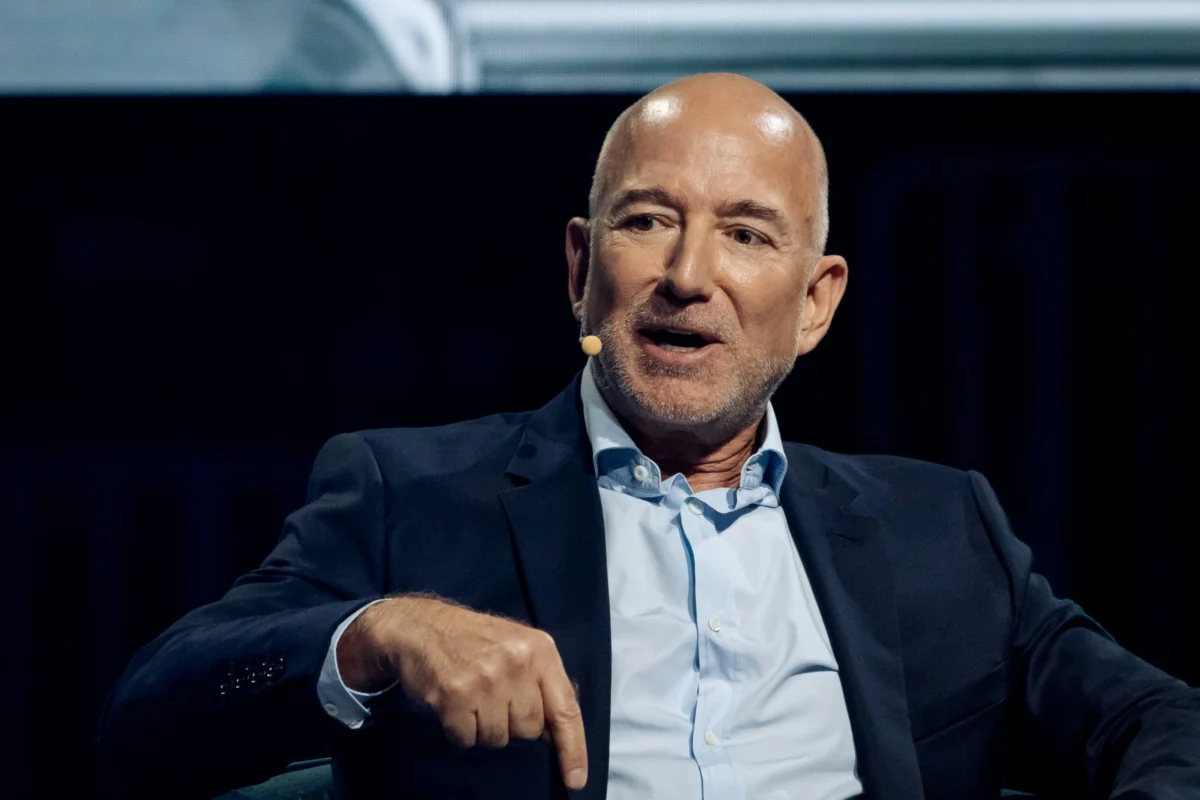
Jeff Bezos, the visionary founder of Amazon.com Inc., has filed plans to divest approximately 15 million shares of the e-commerce and cloud computing giant, a transaction valued at roughly $4.1 billion. This significant sale comes on the heels of Amazon’s stock reaching an unprecedented all-time high, propelled by stronger-than-expected earnings that saw the company’s market capitalization surge past the $3 trillion mark. The disclosure of the planned sale, executed under a Rule 10b5-1 trading plan, led to a more than 2% dip in Amazon’s share price on Tuesday, momentarily tempering the robust gains the stock has experienced throughout the year.
The filing, submitted to the Securities and Exchange Commission (SEC), detailed that the sales occurred on Monday through Morgan Stanley. This strategic move by one of the world’s wealthiest individuals, and Amazon’s largest individual shareholder, is a recurring pattern of diversification and funding for his various ventures and philanthropic initiatives. The shares involved in this latest transaction were notably acquired as founder stock in 1994, underscoring their long-term genesis within the company’s foundational structure.
Background and Context: Amazon’s Resurgent Growth and Market Milestones
Amazon’s recent performance has been nothing short of stellar, captivating investors and solidifying its position as a dominant force in both e-commerce and cloud computing. The company’s second-quarter earnings for 2026, reported last week, significantly exceeded analyst expectations, particularly driven by an accelerated growth trajectory in its Amazon Web Services (AWS) division. This robust performance has been widely attributed to Amazon’s strategic and substantial investments in artificial intelligence (AI), which are now visibly translating into heightened demand and improved operational efficiencies across its diverse business segments.
The market’s enthusiastic response to these earnings reports saw Amazon’s stock price not only regain its previous peaks but also establish a new all-time high on Monday, August 4, 2026. This surge was instrumental in pushing the company’s market valuation beyond the psychological and financial threshold of $3 trillion, a feat achieved by only a handful of global corporations. This milestone underscores Amazon’s enduring growth potential and its pivotal role in the global digital economy. The stock has outperformed the broader market considerably this year, rallying approximately 20% year-to-date, significantly outpacing the 12% gain recorded by the S&P 500 index over the same period.
The Mechanics of the Sale: Understanding Rule 10b5-1 Plans
The sale was executed under a Rule 10b5-1 trading plan, a mechanism commonly utilized by corporate insiders to sell company stock in a pre-arranged, systematic manner. This plan was formally adopted by Jeff Bezos on November 14, 2025. Rule 10b5-1 plans provide an affirmative defense against accusations of insider trading by allowing executives to establish a predetermined schedule for buying or selling shares at a time when they do not possess material non-public information. Once established, the executive cannot influence the timing or amount of the trades, thereby insulating them from allegations that they traded on privileged information.
For an individual of Bezos’s stature and influence, employing a 10b5-1 plan is a standard and prudent measure. It ensures transparency and compliance with securities laws, while also enabling a structured approach to managing significant personal wealth. The pre-scheduled nature of these sales often mitigates the negative market reaction that might otherwise accompany large insider selling, as investors understand that the decision to sell was made well in advance of any recent market-moving news. However, the sheer scale of the $4.1 billion transaction still garnered considerable attention and led to an immediate, albeit modest, market adjustment.
A Chronology of Key Events Leading to the Sale
- 1994: Jeff Bezos acquires the foundational shares of Amazon.com Inc. as part of his compensation as founder. These shares form the bulk of his original stake in the company.
- May 202X (Specific year inferred as 2025): Bezos donates 220,200 Amazon shares to various nonprofit organizations. Such donations are a regular feature of his philanthropic efforts and contribute to his broader wealth management strategy.
- November 6, 2025: Jeff Bezos attends the America Business Forum in Miami, Florida, a public engagement highlighting his continued presence in the business and innovation landscape.
- November 14, 2025: Bezos officially adopts the Rule 10b5-1 trading plan, setting the parameters for the future sale of 15 million Amazon common shares. This adoption occurs several months before the actual execution of the trades, reinforcing the pre-planned nature of the divestment.
- July 30, 2026 (Approximate): Amazon reports its second-quarter earnings for 2026, revealing stronger-than-expected financial results, particularly in its AWS segment, and attributing growth to significant AI investments.
- Monday, August 4, 2026: Propelled by the impressive Q2 earnings and sustained investor confidence, Amazon’s stock price reaches an all-time high during trading hours. On the same day, the pre-scheduled sale of approximately 15 million shares, worth about $4.1 billion, is executed through Morgan Stanley.
- Tuesday, August 5, 2026: The filing disclosing Bezos’s share sale is made public with the SEC. Following this disclosure, Amazon’s stock experiences a slight downturn, falling more than 2% in morning trading.
Supporting Data and Financial Insights
The $4.1 billion sale represents a substantial sum, yet it constitutes only a fraction of Jeff Bezos’s immense wealth, which is predominantly tied to his remaining stake in Amazon. As of recent estimates, Bezos maintains a significant holding in the company, ensuring he remains deeply invested in its long-term success. His net worth consistently ranks him among the top global billionaires, largely due to Amazon’s continued appreciation.

Amazon’s journey to a $3 trillion market capitalization is illustrative of its unparalleled growth. The company first crossed the $1 trillion mark in September 2018 and the $2 trillion threshold in July 2021. The latest milestone underscores its accelerating value creation, driven by both its foundational e-commerce strength and the burgeoning profitability of AWS. In the second quarter of 2026, AWS reportedly saw revenue growth exceeding 20% year-over-year, significantly contributing to the company’s overall operating income and profitability. This cloud computing arm remains a critical engine of Amazon’s valuation, especially with the surging demand for AI infrastructure and services. The company’s strategic allocation of resources towards AI research and development, including investments in large language models and generative AI capabilities, is now yielding tangible returns, attracting enterprise clients and bolstering its competitive edge.
Inferred Reactions and Expert Analysis
While no direct statements from Jeff Bezos or Amazon were immediately available regarding the sale, market analysts generally view such transactions by major insiders through a nuanced lens. The predominant interpretation is that Bezos’s sale is part of a long-term, pre-planned strategy for wealth diversification and liquidity, rather than a reflection of any diminished confidence in Amazon’s future prospects.
Financial experts noted that a $4.1 billion sale, while large in absolute terms, is readily absorbed by a company with a $3 trillion market capitalization and robust trading volumes. "This is a routine event for ultra-high-net-worth individuals like Mr. Bezos," commented one prominent equity analyst. "The adoption of a 10b5-1 plan nearly a year ago signals a structured approach to asset management. It’s not a reaction to recent news, but rather a methodical execution of a diversification strategy."
Some market observers suggested that a portion of the proceeds could be directed towards funding Bezos’s other significant ventures, most notably Blue Origin, his aerospace company, which requires substantial capital investments for its ambitious projects. His philanthropic endeavors, such as the Bezos Earth Fund and the Day One Fund, also represent ongoing commitments that may necessitate periodic liquidity events from his Amazon holdings. The temporary dip in Amazon’s stock price on Tuesday was largely seen as a natural, short-term reaction to a large supply of shares entering the market, rather than a fundamental re-evaluation of the company’s value proposition.
Broader Impact and Implications
The implications of Jeff Bezos’s substantial share sale extend beyond immediate market fluctuations, touching upon aspects of personal wealth management, corporate governance, and the broader economic landscape.
For Jeff Bezos: The sale provides significant liquidity, allowing him to further diversify his personal portfolio. This diversification is crucial for managing risk, especially given his vast wealth is heavily concentrated in a single public company. It also provides capital for his other ventures, notably Blue Origin, which aims to become a major player in space exploration and development. These ventures often operate at a loss for extended periods, demanding continuous investment. Furthermore, his philanthropic commitments, which include pledges totaling billions of dollars, often require liquid assets. The sale could also have significant tax implications, as capital gains on such a large transaction would contribute substantially to government revenues.
For Amazon.com Inc.: Despite the magnitude of the sale, it is unlikely to have any direct impact on Amazon’s operational strategy or leadership. Bezos stepped down as CEO in 2021, transitioning to the role of Executive Chairman. His continued, albeit reduced, stake ensures his interests remain aligned with the company’s success, but his day-to-day involvement is now less direct. The sale, being pre-planned, does not signal any change in the company’s outlook or strategic direction. Instead, it serves as a testament to the immense value created by Amazon, allowing its founder to monetize a portion of his long-held assets. The market’s ability to absorb such a large transaction with only a modest, temporary dip also speaks to the company’s robust liquidity and investor confidence.
For the Broader Market and Tech Sector: The event underscores the continuing trend of wealth generation within the technology sector, particularly for founders of highly successful companies. It highlights the importance of sophisticated financial instruments like 10b5-1 plans in facilitating responsible wealth management for corporate insiders. The market’s reaction also reflects the current environment of high valuations for tech giants, especially those perceived to be leading in the artificial intelligence race. While individual insider sales can sometimes create ripples, the overall resilience of the market and investor focus on fundamental growth drivers, such as AI and cloud computing, typically prevail.
In conclusion, Jeff Bezos’s $4.1 billion Amazon share sale is a significant financial event, yet it aligns with established patterns of wealth management for a figure of his stature. Occurring amidst Amazon’s record market capitalization and strong AI-driven growth, the transaction reflects a strategic, pre-planned divestment rather than a reactionary move. While it prompted a brief market adjustment for Amazon shares, the underlying fundamentals of the company, its innovation trajectory, and its commanding position in key global markets remain robust, continuing to drive investor interest and shape the future of commerce and technology.
