

Representatives from the Sudanese Armed Forces and the paramilitary Rapid Support Forces arrived in the Saudi coastal city of Jeddah on Saturday to commence preliminary discussions aimed at establishing a durable ceasefire. This diplomatic intervention, spearheaded by the United States and Saudi Arabia, represents the first significant attempt to mediate a resolution to the violent power struggle that has gripped Sudan since mid-April. While the international community views these "pre-negotiation talks" as a critical step toward stability, the situation on the ground remains volatile, with continued reports of heavy shelling, airstrikes, and a deepening humanitarian emergency that has already forced approximately 100,000 people to seek refuge in neighboring countries.
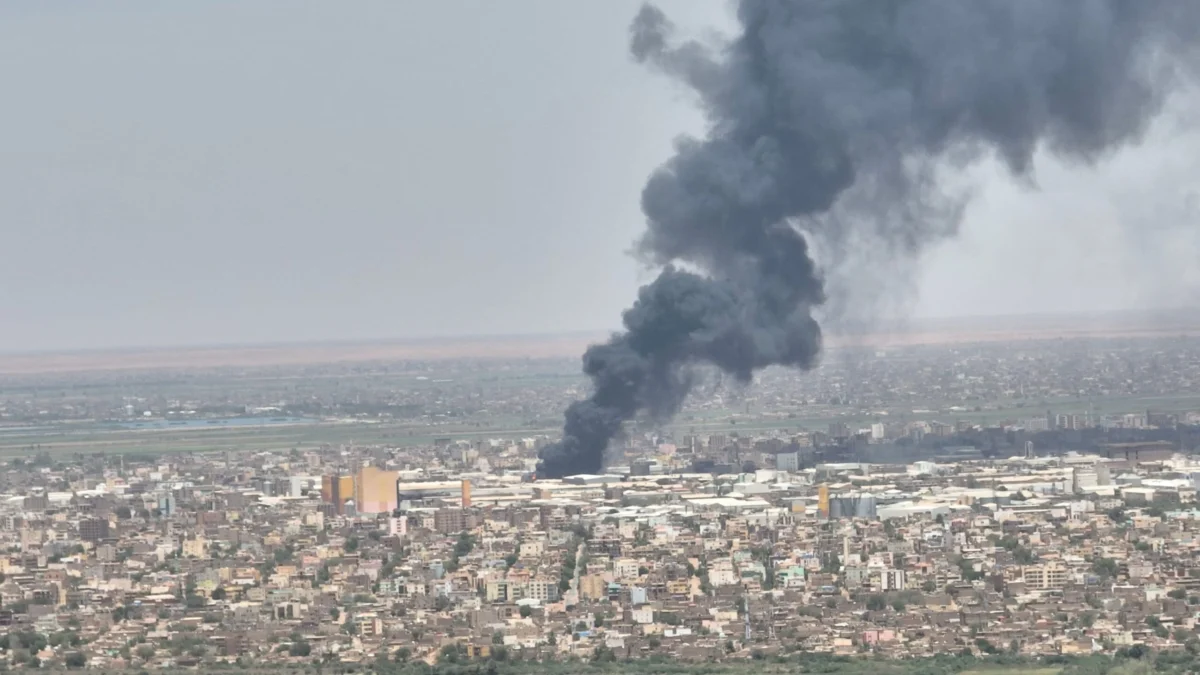
The conflict, which erupted on April 15, 2023, has fundamentally altered the landscape of Khartoum and its sister cities, Bahri and Omdurman. Drone footage and satellite imagery from early May have documented persistent plumes of thick black smoke rising over Bahri, also known as Khartoum North, where industrial areas and residential neighborhoods have become primary battlegrounds. Despite the commencement of talks in Jeddah, residents in the capital region reported overnight explosions and the hum of fighter jets, signaling that a cessation of hostilities remains a distant prospect for those trapped in the crossfire.
The Roots of the Rivalry: A Failed Transition to Civilian Rule
To understand the current crisis, it is necessary to examine the complex power dynamics that followed the 2019 ouster of long-time autocratic leader Omar al-Bashir. Bashir’s thirty-year reign ended following a popular uprising, leading to a fragile power-sharing agreement between military leaders and civilian pro-democracy groups. However, this transition was derailed in October 2021, when General Abdel Fattah al-Burhan, head of the Sudanese Armed Forces (SAF), and General Mohamed Hamdan Dagalo, better known as Hemedti, leader of the Rapid Support Forces (RSF), orchestrated a military coup.
While the two generals initially acted in concert to sideline civilian politicians, their alliance fractured over the specifics of a new, internationally backed "framework agreement" intended to restore civilian rule. The primary point of contention was the integration of the RSF into the regular army. General Burhan insisted on a rapid two-year integration timeline, whereas Hemedti proposed a ten-year window, seeking to preserve the autonomy and influence of his paramilitary force. This disagreement escalated into a full-scale armed conflict as both sides mobilized forces in Khartoum and the northern city of Merowe, eventually leading to the first shots fired on April 15.
Chronology of the Conflict: April 15 to May 6, 2023
The trajectory of the war has been marked by rapid escalation and the failure of multiple short-term ceasefires.
- April 15: Heavy fighting breaks out in Khartoum and Merowe. The RSF claims control over the presidential palace and Khartoum International Airport, while the SAF utilizes its superior air power to strike RSF positions in the city center.
- April 18–20: International pressure leads to the first 24-hour ceasefire attempts, which fail within hours. Hospitals in Khartoum begin to report critical shortages of blood, oxygen, and medical staff.
- April 22–25: A mass exodus of foreign diplomats and nationals begins. The United States, United Kingdom, France, and several Middle Eastern nations coordinate complex evacuation missions via Port Sudan and military airfields.
- April 27: The African Union and the Intergovernmental Authority on Development (IGAD) call for an immediate end to the "senseless" violence, warning of a regional spillover.
- May 1–4: Intense urban warfare centers on the "triple capital" (Khartoum, Bahri, and Omdurman). Drone footage shows significant damage to the capital’s infrastructure, including the central bank and various government ministries.
- May 5: The Sudanese army confirms it has sent a delegation to Jeddah for "technical" talks regarding a humanitarian truce.
- May 6: Official "pre-negotiation talks" begin in Jeddah under US-Saudi mediation.
The Humanitarian Catastrophe and Healthcare Collapse
The human cost of the three-week conflict has been staggering. According to data from the Sudanese Ministry of Health and the World Health Organization (WHO), hundreds of civilians have been killed, though the actual death toll is believed to be significantly higher due to the inability of medical teams to reach many conflict zones. The United Nations High Commissioner for Refugees (UNHCR) has warned that if the fighting persists, over 800,000 people could eventually flee the country.
The collapse of the healthcare system is one of the most pressing concerns. In Khartoum, approximately 70% of hospitals located near conflict zones are out of service. Those that remain open are operating under extreme duress, often without electricity or running water. The WHO reported on May 6 that while medical aid had been successfully delivered to Port Sudan, securing safe passage for these supplies to the capital remains impossible. Looting of humanitarian warehouses, including those belonging to the World Food Programme (WFP), has further hampered relief efforts, with the UN reporting the loss of thousands of tons of food intended for the country’s most vulnerable populations.
The Jeddah Initiative: Objectives and Obstacles
The talks in Jeddah represent a narrow but vital diplomatic window. Riyadh and Washington have been clear that these discussions are not intended to address the broader political future of Sudan or a permanent peace settlement. Instead, the focus is strictly on "pre-negotiation" goals:
- Effective Ceasefire: Establishing a verifiable mechanism to stop the fighting, moving beyond the verbal agreements that have been repeatedly ignored on the ground.
- Humanitarian Corridors: Ensuring the safe passage of civilians out of conflict zones and the unimpeded delivery of food and medical supplies into Khartoum and Darfur.
- Protection of Infrastructure: Securing commitments from both the SAF and RSF to stop the targeting of water plants, power stations, and hospitals.
However, the obstacles to success are formidable. General Burhan’s special envoy, Dafallah Alhaj, stated prior to the talks that the army would not sit down directly with the RSF delegation, referring to them as "rebellious" forces. On the other side, Hemedti has characterized Burhan as a "criminal" who must be brought to justice. This deep personal and institutional animosity suggests that even a limited humanitarian truce will be difficult to monitor and enforce.
Geopolitical Stakes: The Red Sea and the Sahel
The stability of Sudan is of paramount importance to the international community due to its strategic location. Sudan sits at the crossroads of the Middle East and Africa, bordering seven countries, many of which—such as Chad, South Sudan, and the Central African Republic—are already grappling with their own internal instabilities.
Saudi Arabia, in particular, views Sudan as a critical partner in Red Sea security. The kingdom has invested billions in Sudanese agriculture and infrastructure and is wary of a prolonged civil war that could lead to a vacuum of power or the rise of extremist groups on its western maritime border. Furthermore, both Burhan and Hemedti have historical ties to the Saudi-led coalition in Yemen, having provided troops for the conflict against Houthi rebels.
The United States, represented by National Security Adviser Jake Sullivan during his recent travels to the region, is focused on preventing a total state collapse that could destabilize the Sahel—a region already struggling with insurgency and coups. Western powers remain committed, at least rhetorically, to the restoration of the civilian-led democratic process that was interrupted by the 2021 coup, though the immediate priority has shifted entirely to conflict de-escalation.
Analysis of Implications: A Nation at a Breaking Point
The current situation in Sudan is more than a simple military skirmish; it is a battle for the identity and future of the state. The Sudanese Armed Forces view themselves as the sole legitimate guardians of national sovereignty, while the RSF, which grew out of the Janjaweed militias of the Darfur conflict, has evolved into a well-funded, highly mobile military force with vast business interests in gold mining and private security.
If the Jeddah talks fail to produce a meaningful ceasefire, the risk of a protracted civil war increases. Such a conflict would likely take on ethnic and tribal dimensions, particularly in the Darfur region, where reports of inter-communal violence have already resurfaced. Furthermore, the destruction of Khartoum—the economic and administrative heart of the country—could lead to a long-term economic depression, exacerbating the food insecurity that already affected a third of the population before the war began.
The "pre-negotiation" phase in Jeddah is a test of whether the international community can exert enough leverage over the two generals to prioritize humanitarian needs over military gain. While the arrival of delegations in Saudi Arabia is a positive sign, the sounds of artillery in Khartoum serve as a stark reminder that the path from the negotiating table to the streets of Sudan remains fraught with danger and uncertainty. The coming days will determine whether Jeddah becomes the starting point for peace or merely a diplomatic footnote in a deepening national tragedy.
