

The world seems largely to misunderstand why global capital is not financing the developing world’s climate transition. The real problem lies in the structure of price formation, which policymakers can best address by focusing on three key priorities.
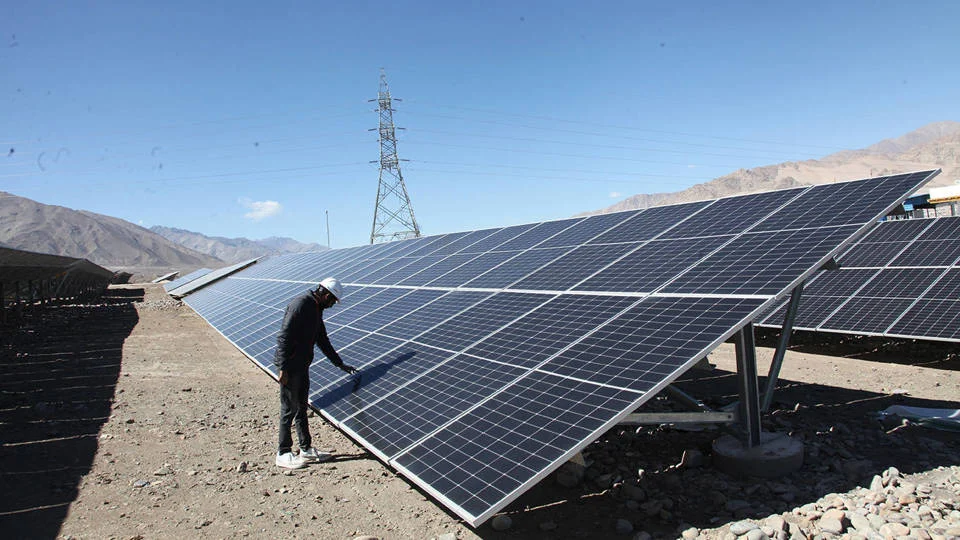
New Delhi – A significant disconnect persists between the vast reserves of global long-term savings and the burgeoning pipeline of commercially viable climate projects in the Global South. This critical chasm is not due to a lack of investable projects or a deficit of capital, but rather a structural impediment often described as a "currency wall" that hinders the flow of funds. While conventional explanations for this capital shortfall often point to issues such as inadequate project quality, weak institutional frameworks, and elevated political risks, a deeper analysis reveals that the fundamental barrier lies in the intricate mechanics of price formation within emerging markets. Solar parks in India, wind energy initiatives in South Africa, and electric-bus fleets across Latin America are prime examples of technologies that have proven their efficacy and are often procured through competitive bidding processes, attracting domestic investment. Yet, the challenge of attracting substantial international capital remains acute, stemming directly from how prices are set in these nascent markets.
The Scale of the Climate Finance Challenge
The urgency to transition towards a low-carbon economy in developing nations is underscored by staggering financial requirements. The Independent High-Level Expert Group on Climate Finance has projected that emerging market and developing economies (EMDEs), excluding China, will need to mobilize approximately $2.4 trillion annually for climate action by the year 2030. This monumental figure far exceeds the capacity of domestic savings alone, which are already allocated to a diverse range of essential priorities, including housing, industrial development, infrastructure like highways, and the burgeoning digital economy represented by data centers.
Even nations with relatively strong domestic savings rates, such as India, which consistently saves around 32% of its GDP, find their internal capital pools insufficient to meet these ambitious climate targets. This reality is mirrored in countries with smaller savings bases, including Mexico, Nigeria, and South Africa. Consequently, the expert group estimates that a substantial portion of this financing, around $1 trillion annually, must originate from external sources. This underscores the critical need for global capital markets to play a more significant role in financing the climate transition in the Global South.
The Price Formation Paradox: A Barrier to Entry
The absence of a unified global market for climate infrastructure means that prices for renewable energy projects, sustainable transport, and other green initiatives are typically determined on a project-by-project basis. This price discovery occurs through various mechanisms, including competitive auctions, regulated tariffs set by authorities, and long-term concession agreements. In EMDEs like India, the domestic capital market is sufficiently deep to establish a market price for these projects, but it lacks the sheer volume required to finance the entirety of the transition.
The core of the problem lies in the composition of the marginal investor. While domestic investors often set the benchmark price, the crucial missing investor is the global institutional capital, which operates with different risk assessments and return expectations. This mismatch creates a significant cost disadvantage for international investors.
Consider a typical solar auction in an EMDE. The winning bid, or clearing tariff, is determined by the cost of equity in the local currency – the same currency in which the project’s returns will ultimately be denominated. An international investor, whose accountability and reporting are in hard currencies like U.S. dollars or Euros, must then convert these local currency cash flows. The inherent risk of currency depreciation and volatility, or the cost of hedging against these risks, can add a substantial premium, often ranging from 5 to 6 percentage points, to the required equity return.
The Hidden Costs of Currency Risk
This "currency wedge" frequently inflates the cost of capital beyond the project’s true economic risk. Data from various markets has indicated that hedging costs have, in many instances, persistently exceeded realized currency depreciation by approximately two percentage points annually. When factoring in a typical debt-to-equity ratio of 2:1, this translates to an increase in the weighted average cost of capital by 1 to 2 percentage points. Given that financing and construction costs represent a significant portion of the lifetime expenses for renewable energy projects, this increased cost of hard-currency capital often renders it uncompetitive in auctions where prices are established by locally funded investors.
The impact on international investors who have participated despite these challenges has been stark. Gross returns of 15-18% in local currencies have often been eroded to a mere 8-9% in U.S. dollars – a figure that falls well below the hurdle rates expected by international investors. This stark disparity in returns effectively prices out a significant pool of global capital that could otherwise fuel essential climate infrastructure development.
The "Race to the Bottom" in Pricing
Once a locally funded developer secures a project through an auction, the discovered price often solidifies into a benchmark. This means that subsequent procurement processes, whether for power purchase agreements or municipal contracts for services like electric buses, are constrained by this established price ceiling. Regulatory bodies face political pressure to maintain these low prices, and aggressive bids from developers with limited capital can further depress the benchmark.
This creates a feedback loop where the aggregate project pipeline, often exceeding the domestic financial system’s capacity to supply long-duration equity and debt, is not met by a corresponding increase in investment. Instead, the adjustment occurs primarily through delays in project execution and underinvestment, rather than through price adjustments that would attract the necessary global capital. The ultimate consequence is a scenario characterized by low project prices, insufficient capital inflow, and ultimately, inadequate climate investment.
A Suboptimal Outcome with Global Ramifications
While this pricing dynamic may appear rational from a purely private, domestic perspective, it represents a globally suboptimal outcome. The overwhelming majority of projected emissions growth in the coming decades is expected to emanate from developing economies. Therefore, every gigawatt of renewable energy capacity that fails to be deployed in these regions carries significant climate costs for the entire planet.
The argument for making more expensive global capital accessible for these projects rests on the principle that the social value of a completed project should outweigh the incremental financing cost. The Global North, in this context, should view the provision of such funding not as mere aid, but as a form of risk-sharing. This approach acknowledges that investors bearing the costs associated with currency depreciation are, in essence, contributing to a global public good.
Dismantling the Currency Wall: Three Strategic Priorities
To address this critical challenge, policymakers can implement a multi-pronged strategy focused on dismantling the currency wall and facilitating the flow of global capital. Three key priorities emerge:
1. Mobilizing Long-Duration Domestic Equity
The first crucial step involves enhancing the mobilization of long-duration domestic equity within EMDEs. This requires regulatory reforms that empower institutional investors, such as pension funds and insurance companies, to allocate a significantly larger portion of their capital towards professionally managed infrastructure investment vehicles. Furthermore, the establishment of national investment funds, inspired by models like Singapore’s state-owned investment firm Temasek and its sovereign wealth fund GIC, can play a pivotal role. These entities can act as anchor investors for projects, thereby de-risking them and attracting private co-investors, both domestic and international. This strategic deployment of domestic long-term capital can create a more stable and attractive environment for foreign investment.
2. Directly Addressing Currency Risk
The second priority is to directly confront and mitigate currency risk, a strategy successfully pioneered by Brazil. The Eco Invest Brasil initiative, launched in 2024 in collaboration with the Inter-American Development Bank, exemplifies this approach. This program integrates blended finance auctions, foreign exchange liquidity lines, and robust hedging facilities. Its inaugural auction leveraged R$7 billion (approximately $1.38 billion) of public funds to catalyze an impressive R$45 billion in projected investment. Within its first year of operation, the program successfully mobilized over R$75 billion in capital, demonstrating the potent effect of structured mechanisms designed to absorb currency risk.
Other major developing economies can adapt this successful model to their unique financial systems. By partially absorbing hedging costs through such platforms, EMDEs can compress the dollar return gap by an estimated 200-300 basis points. This reduction is often sufficient to enable institutional capital to meet its required hurdle rates, thereby unlocking previously inaccessible investment flows. The success of Eco Invest Brasil highlights the potential for well-designed public-private partnerships to create a more hospitable environment for international climate finance.
3. Enhancing Local Currency Lending by Multilateral Development Banks (MDBs)
The third critical step involves MDBs significantly scaling up their lending in local currencies. Currently, MDBs overwhelmingly provide financing in U.S. dollars and Euros, effectively transferring exchange-rate risk to borrowers who are least equipped to manage it. A more effective approach would be for MDBs to issue bonds in local emerging market debt markets, thereby contributing to the deepening and development of these markets.
Furthermore, MDBs should expand platforms like TCX (The Currency Exchange Fund), which specializes in converting hard-currency funding into local-currency loans. This strategic shift would transfer currency risk to more robust and diversified balance sheets, those of the MDBs themselves, which benefit from long tenors and preferred-creditor status. By aligning the currency of lending with the currency of project revenues, MDBs can significantly reduce the financial risks faced by developing country borrowers and make climate projects more viable and attractive for all investors.
Implications for Global Climate Action
The persistent inability of global capital to effectively finance the developing world’s climate transition, even for fundamentally sound projects, is a critical bottleneck. When prices are anchored by domestically funded investors with limited capital, and currency mismatches necessitate clearing through quantity constraints rather than price adjustments, the result is a chronic underinvestment in climate solutions. This "currency wall," built incrementally through risk premiums, has significant implications not only for the developing economies themselves but for the global effort to combat climate change.
The World Bank has consistently highlighted that nearly all of the projected emissions growth in the coming decades will occur in developing nations. Consequently, the failure to build renewable energy capacity in these regions carries substantial costs for the entire planet. The strategic dismantling of this currency wall through well-designed policy interventions by governments and multilateral institutions is not merely an economic imperative; it is a necessity for achieving global climate goals.
A Triple Win Scenario
The proposed policy responses offer a pathway to a rare "triple win": a significant benefit for the Global South through accelerated climate action and sustainable development; a more diversified and profitable investment landscape for the Global North; and crucially, a more effective global response to the existential threat of climate change. By recognizing the structural nature of the problem and implementing targeted solutions, the international community can unlock the vast potential of global capital to fund the necessary climate transition in the developing world. The time for incremental adjustments is past; a bold and coordinated effort is required to build the bridges that will connect global savings with the urgent climate needs of developing nations.
