

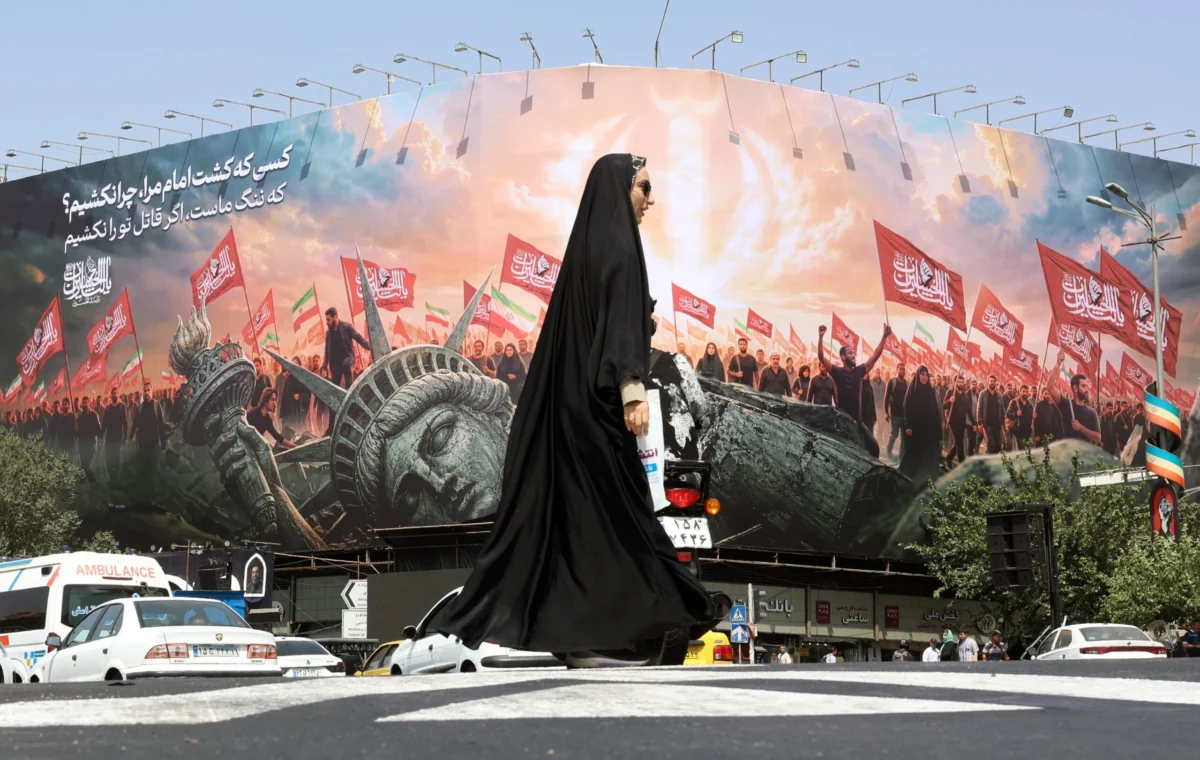
Washington D.C. – The United States President has announced that critical negotiations with Iran are currently underway, delivering a stark warning that these discussions represent Tehran’s “last chance” to secure a comprehensive deal. The pronouncement, made on August 4, 2026, underscores the heightened urgency and deep-seated complexities surrounding the long-standing nuclear standoff and broader geopolitical tensions between the two nations. This latest diplomatic push comes after years of strained relations, a significant withdrawal from the 2015 nuclear accord, and a persistent campaign of economic pressure, setting the stage for what many observers view as a pivotal moment in international diplomacy.
A Decades-Long Standoff: Roots of Mistrust
The relationship between the United States and Iran has been fraught with tension for decades, largely defined by the 1979 Islamic Revolution, the subsequent hostage crisis, and a series of geopolitical confrontations. For nearly half a century, mutual mistrust and conflicting strategic interests have characterized their interactions. The US, perceiving Iran as a state sponsor of terrorism and a destabilizing force in the Middle East, has consistently sought to curb its nuclear ambitions and regional influence. Conversely, Iran views US policy as an attempt to undermine its sovereignty and revolutionary ideals, citing a history of foreign intervention and sanctions. This entrenched animosity provides the crucial historical backdrop against which the current "last chance" negotiations are unfolding. Efforts to bridge this chasm have been sporadic and often short-lived, with diplomatic overtures frequently collapsing under the weight of historical grievances and current geopolitical realities.
The JCPOA Era: Hope and Collapse (2015-2018)
A significant, albeit temporary, breakthrough occurred in 2015 with the signing of the Joint Comprehensive Plan of Action (JCPOA), commonly known as the Iran nuclear deal. This landmark agreement, forged between Iran and the P5+1 group (China, France, Germany, Russia, the United Kingdom, and the United States), saw Iran agree to severe restrictions on its nuclear program in exchange for the lifting of international sanctions. Key provisions included limitations on uranium enrichment levels and stockpiles, a redesign of the Arak heavy water reactor, and enhanced monitoring by the International Atomic Energy Agency (IAEA). For a period, the JCPOA was hailed as a triumph of diplomacy, successfully preventing Iran from developing nuclear weapons capabilities, as certified by numerous IAEA reports.
However, this period of relative calm was dramatically disrupted in May 2018 when then-President Donald Trump withdrew the United States from the accord. Citing what he called the deal’s "terrible flaws," including its temporary "sunset clauses" that would lift restrictions over time, its failure to address Iran’s ballistic missile program, and its lack of provisions regarding Iran’s regional "malign activities," the Trump administration initiated a policy of "Maximum Pressure." This decision was met with widespread criticism from European allies who had consistently argued for the preservation of the deal, believing it to be the most effective mechanism for preventing Iranian nuclear proliferation. The withdrawal plunged US-Iran relations into a deeper crisis and set the stage for the current high-stakes environment.
The "Maximum Pressure" Campaign and Iran’s Responses (2018-202X)
Following the US withdrawal, Washington reimposed and significantly escalated sanctions targeting Iran’s vital oil exports, financial institutions, shipping, and key industrial sectors. The explicit goal was to cripple Iran’s economy and force it to negotiate a "better deal" that would address a broader range of US concerns. The impact on Iran’s economy was severe, with its oil exports plummeting from over 2.5 million barrels per day before 2018 to less than 500,000 bpd at its lowest point. The Iranian Rial depreciated sharply, inflation soared, and the populace faced significant economic hardship. According to IMF reports from the period, Iran’s GDP contracted significantly, and foreign investment dried up almost entirely.
In response to the escalating pressure, Iran began a phased reduction of its commitments under the JCPOA starting in 2019, arguing that the remaining signatories were failing to uphold their end of the bargain by not protecting Iran from US sanctions. This included increasing its uranium enrichment levels beyond the 3.67% limit, accumulating larger stockpiles of enriched uranium, and activating advanced centrifuges. By mid-2020s, IAEA reports indicated Iran was enriching uranium to 60% purity, a level far exceeding that required for civilian purposes and a significant step closer to weapons-grade levels (typically around 90%). Furthermore, Iran limited IAEA access to certain nuclear sites and monitoring equipment, raising international alarms about the transparency and verifiability of its nuclear program. This tit-for-tat escalation created a perilous trajectory, with fears growing that Iran was rapidly approaching a "breakout time" – the period it would take to produce enough weapons-grade fissile material for a nuclear weapon.
Stalled Diplomacy and Indirect Engagements (202X-2026)
Despite the rhetoric and escalations, diplomatic efforts to revive the JCPOA or negotiate a new agreement did not entirely cease. Under the subsequent US administration, there were initial overtures to re-enter the deal, contingent on Iran returning to full compliance. Several rounds of indirect talks, primarily held in Vienna with European mediators, aimed to find a pathway back to the original agreement or a modified version. However, these negotiations repeatedly stalled due to fundamental disagreements.
Iran demanded a complete and verifiable lifting of all US sanctions imposed since 2018 and guarantees that a future US administration would not unilaterally withdraw from any new agreement. The US, while expressing willingness to lift sanctions related to the nuclear program, insisted on addressing Iran’s advanced centrifuge deployment, its 60% enrichment, and demanded concessions on ballistic missiles and regional behavior. The political landscape in both countries also played a role; hardline elements in Iran remained skeptical of any deal with the US, while domestic political pressures in the US made significant concessions challenging. Furthermore, regional developments, such as Houthi attacks on Saudi oil facilities and Red Sea shipping lanes (allegedly backed by Iran), and continued proxy conflicts in Iraq and Syria, added layers of complexity and distrust, further hindering progress in the negotiations leading up to August 2026.
The Current Juncture: A Critical Warning
The US President’s declaration on August 4, 2026, that talks are underway and constitute Tehran’s "last chance," signals a critical inflection point. This assertive stance indicates a potential shift in strategy, perhaps driven by intelligence assessments of Iran’s nuclear advancements or a perceived closing window for a diplomatic resolution. The "last chance" rhetoric could be interpreted in several ways:
- An Ultimatum: A clear deadline after which the US might pursue more stringent non-diplomatic options.
- A Call for Urgency: An attempt to accelerate negotiations and push Iran towards decisive concessions.
- A Domestic Signal: Reassuring allies and domestic audiences that the administration is taking a firm stance against nuclear proliferation.
- A Reframing of the Stakes: Emphasizing that the current opportunity for a diplomatic solution may not recur.
The nature of these "underway" talks remains a subject of intense speculation. Are they direct or indirect? What are the specific parameters being discussed? Are they aiming for a full revival of the JCPOA, a new and broader deal, or an interim agreement to de-escalate immediate tensions? The lack of specific details from official channels adds to the gravity and uncertainty surrounding the President’s pronouncement.
The Stakes: Nuclear Ambitions and Regional Stability
The stakes in these "last chance" talks are extraordinarily high, encompassing both nuclear proliferation and the broader stability of the Middle East.
-
Iran’s Nuclear Trajectory: As of early 2026, reports from the IAEA and various intelligence agencies indicated Iran possessed a significant stockpile of enriched uranium, including material enriched to 60%, and was operating hundreds of advanced centrifuges. Experts estimated Iran’s "breakout time" had shrunk considerably, possibly to a matter of weeks, raising profound non-proliferation concerns. A failure of these talks could lead Iran to further accelerate its program, potentially pushing it to 90% enrichment and acquiring the technical know-how for a weapon, even if a final weaponization decision is not immediately made. This would precipitate a major international crisis and potentially trigger a regional arms race.
-
Regional Security Landscape: Beyond the nuclear program, Iran’s regional influence and activities remain a primary concern for the US and its allies. Its support for various non-state actors, its ballistic missile program, and its naval presence in critical waterways like the Strait of Hormuz (through which a significant portion of the world’s oil transits) are viewed as destabilizing. A diplomatic failure could intensify proxy conflicts in Yemen, Syria, and Iraq, increase maritime tensions in the Persian Gulf, and embolden hardliners on all sides. Regional adversaries like Israel and Saudi Arabia view Iran’s nuclear and regional ambitions as existential threats. Israel, in particular, has repeatedly stated its willingness to take unilateral action to prevent Iran from acquiring nuclear weapons, adding a military dimension to the diplomatic calculus. Saudi Arabia and other Gulf states, while wary of direct conflict, also seek assurances against Iranian hegemony and missile threats.
International Perspectives and Reactions
The international community is watching these developments with a mixture of hope and apprehension.
-
European Allies: Nations like France, Germany, and the United Kingdom, who were signatories to the original JCPOA, have consistently advocated for a diplomatic resolution. They view the JCPOA as the best available framework to contain Iran’s nuclear program and have repeatedly expressed concerns over the escalating tensions since the US withdrawal. They would likely welcome any successful negotiation that brings Iran back into compliance and rolls back its nuclear advancements, provided it is a verifiable and robust agreement. Their role as potential mediators or facilitators remains crucial.
-
Russia and China: As permanent members of the UN Security Council and signatories to the JCPOA, Russia and China hold significant sway. Both countries have maintained economic and political ties with Iran and have often been critical of US sanctions, viewing them as unilateral and counterproductive. While they generally support the principle of non-proliferation, they also emphasize the need for multilateralism and respect for international agreements. Their cooperation would be essential for any new deal to gain international legitimacy and for its enforcement mechanisms.
-
Regional Powers: Israel’s Prime Minister has historically expressed deep skepticism about any deal with Iran, particularly if it does not permanently dismantle Iran’s nuclear infrastructure and address its ballistic missile program. Any new agreement would be scrutinized intensely by Israel, which maintains that a nuclear Iran is an unacceptable threat. Saudi Arabia and other Gulf Cooperation Council (GCC) states also harbor significant concerns about Iran’s regional influence and its missile capabilities. While they might welcome a de-escalation of nuclear tensions, they would likely seek assurances that any deal does not embolden Iran’s regional proxies or leave their security vulnerable.
The Road Ahead: Potential Outcomes and Challenges
The path forward is fraught with significant challenges, and the outcome of these "last chance" talks will have profound global repercussions.
-
Successful Negotiation: A successful outcome would likely involve Iran agreeing to significantly roll back its nuclear program, including enriching uranium to lower levels, reducing its stockpile, and expanding IAEA monitoring. In return, the US would be expected to lift a substantial portion of its sanctions, providing Iran with much-needed economic relief. The nature of such a deal is critical: would it be a return to the original JCPOA, a "JCPOA-plus" that incorporates ballistic missiles and regional issues, or an entirely new framework? A comprehensive, verifiable deal would de-escalate tensions, reduce proliferation risks, and potentially open pathways for broader regional stability. However, the political will for compromises on both sides remains a major hurdle.
-
Failure of Talks: Should these negotiations fail, the consequences could be dire. Without a diplomatic off-ramp, the risk of further escalation, including military confrontation, would increase significantly. Iran could further advance its nuclear program, potentially enriching to weapons-grade levels and withdrawing entirely from international oversight. This would present the international community with a severe proliferation crisis, forcing difficult choices about enforcement and deterrence. Economically, Iran would face even harsher sanctions, potentially leading to greater internal unrest. Regionally, the failure could intensify proxy wars, increase maritime incidents, and heighten the security dilemma for states like Israel and Saudi Arabia, making the Middle East an even more volatile arena.
-
Domestic Considerations: The internal politics of both the US and Iran play a crucial role. In the US, with a presidential election cycle approaching in 2028, any deal would face intense scrutiny from Congress and political opponents. The administration would need to demonstrate that a deal effectively addresses national security concerns without appearing to make excessive concessions. In Iran, hardline factions, often aligned with the Islamic Revolutionary Guard Corps (IRGC), have historically resisted rapprochement with the West and would likely oppose any agreement perceived as compromising national sovereignty or security interests. The Supreme Leader’s ultimate approval would be paramount.
In conclusion, the US President’s declaration of "last chance" talks with Iran marks a critical juncture in a protracted and perilous standoff. With Iran’s nuclear program significantly advanced and regional tensions simmering, the success or failure of these negotiations will not only determine the future of Iran’s nuclear ambitions but also profoundly impact the security architecture of the Middle East and global non-proliferation efforts. The world watches with bated breath as diplomacy takes center stage, with the gravity of the potential outcomes underscoring the urgency of finding a sustainable and peaceful resolution.
