


The United States Army has officially signaled a pivot in its tactical vehicle procurement strategy by awarding an 18-month contract to a consortium led by American Rheinmetall for the development and delivery of uncrewed, hybrid-electric resupply vehicles. This move represents a significant departure from the Army’s historically cautious approach to vehicle electrification, which was previously hampered by concerns over battery safety in active combat zones and the logistical challenges of charging infrastructure in remote theaters. By integrating autonomous robotics with hybrid-electric drivetrains, the Department of Defense aims to modernize its "contested logistics" capabilities, ensuring that supplies can reach the forward line of troops with reduced human risk and a minimized thermal and acoustic signature.
A Strategic Shift Toward Hybrid Autonomy
The new contract leverages the expertise of several key players in the defense and automotive technology sectors. American Rheinmetall, the U.S. branch of the global defense giant Rheinmetall, serves as the lead contractor. The partnership includes California-based electric vehicle (EV) startup Harbinger Motors, which provides the electric drivetrain and chassis; Forterra, a specialist in autonomous vehicle systems; and Primordial Labs, which is responsible for the human-machine interface (HMI), including advanced voice-control features.
The objective of the program is to produce a fleet of uncrewed ground vehicles (UGVs) capable of transporting supplies to and from the front lines without human drivers. These vehicles are designed to operate in environments where traditional supply lines are under constant threat. By removing the driver from the vehicle, the Army not only protects personnel but also gains the ability to operate vehicles in higher-risk scenarios. The integration of hybrid-electric power serves a dual purpose: it provides the "silent watch" and "silent move" capabilities necessary for stealth operations while maintaining the long-range endurance provided by traditional internal combustion engines acting as range extenders.
The Rise of Harbinger Motors and the Medium-Duty EV Market
Harbinger Motors has emerged as a pivotal player in this defense initiative, despite being a relatively young company. Founded in 2021, the startup initially focused on the commercial medium-duty electric truck market, specifically Class 4 through Class 6 vehicles. This segment includes delivery vans, school buses, and emergency vehicles—a market often overlooked by larger manufacturers like Tesla, which have focused on consumer pickups (the Cybertruck) or heavy-duty long-haulers (the Semi).
By April 2025, Harbinger had already secured a $500 million order book, totaling 4,690 electric vehicles. This commercial success was bolstered by a $100 million Series B funding round co-led by the Technology Impact Fund of Capricorn and Leitmotif, with participation from Tiger Global and the Coca-Cola System Sustainability Fund. Harbinger’s business model is built around a vertically integrated, modification-ready electric chassis that allows for rapid scaling and customization. This flexibility proved attractive to the U.S. Army, which requires specialized platforms that can be adapted for various mission profiles, from flatbed cargo transport to mobile power stations.
Technical Specifications and the Role of Range Extenders
The vehicles being developed for the Army utilize Harbinger’s HC series architecture, which features a sophisticated hybrid-electric powertrain. While the vehicles can operate in a purely electric mode for stealth and efficiency, they are equipped with a range-extended version that utilizes an onboard internal combustion engine to recharge the batteries when necessary. This configuration allows for an operational range of up to 500 miles, significantly exceeding the range of most purely battery-electric tactical vehicles currently in testing.
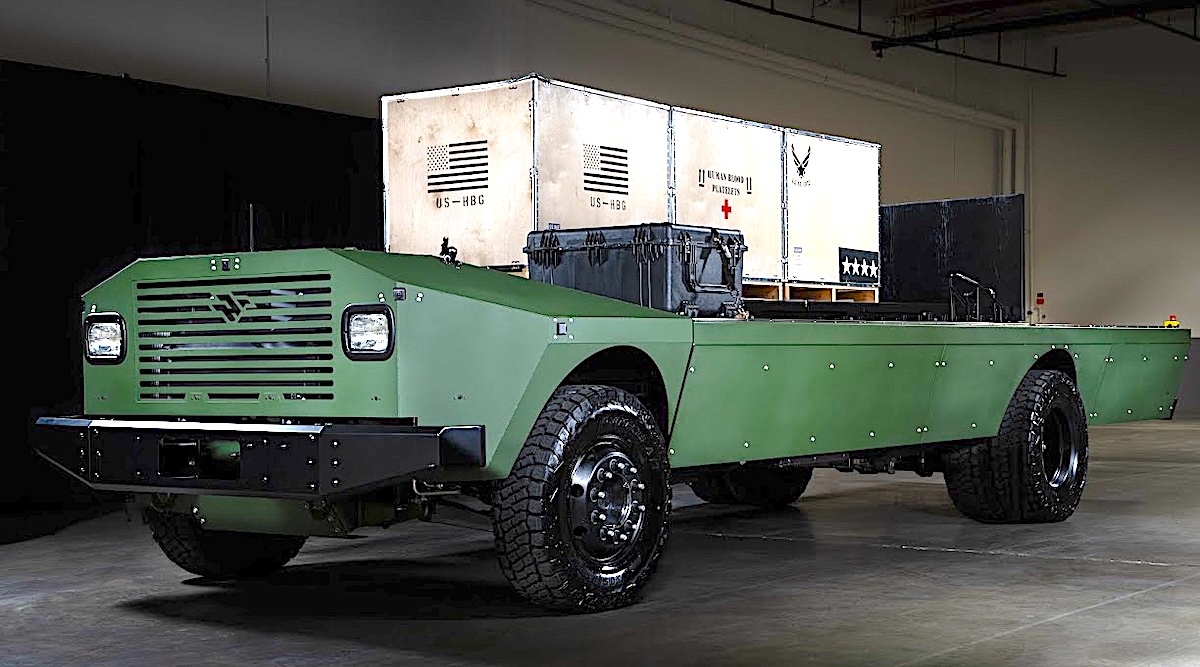
A critical feature of the HC series is its ability to function as a mobile power station. The vehicles include an optional onboard AC inverter capable of delivering up to 15 kilowatts of power. This capability allows the vehicle to export power to other military equipment, effectively replacing the need for towed diesel generators. In a combat environment, reducing the number of pieces of equipment that must be transported and maintained—such as separate generators and the fuel and tools required to support them—is a major logistical advantage.
Furthermore, the hybrid system addresses a long-standing inefficiency in military operations. According to a 2022 Department of Defense assessment, the average military vehicle spends approximately 75% of its operational time in "idle" mode. Traditional diesel engines are highly inefficient when idling, consuming large amounts of fuel to maintain cabin temperatures and power electronics. The hybrid-electric system allows for "anti-idling," where batteries power the vehicle’s systems while the engine remains off, drastically reducing fuel consumption and heat signature.
Lessons from Global Conflicts: The Ukraine Factor
The U.S. Army’s accelerated interest in uncrewed hybrid vehicles is heavily influenced by observations from recent global conflicts, most notably the war in Ukraine. The conflict has served as a laboratory for 21st-century warfare, demonstrating the effectiveness of uncrewed aerial vehicles (UAVs) and ground robots in countering larger, conventionally equipped forces.
One of the most notorious lessons from the early stages of the Russian invasion of Ukraine was the 40-mile military convoy that became stalled on the road to Kyiv. The primary cause of the failure was a breakdown in fuel logistics; without a steady supply of diesel, the massive force became a stationary target. This event underscored the vulnerability of traditional fossil-fuel-dependent logistics chains. The Army’s move toward hybrid and electric systems is a direct response to this vulnerability, seeking to diversify energy sources and reduce the "tether" to fuel tankers.
The Broader Ecosystem: Hydrogen and Microgrids
The partnership between Harbinger and American Rheinmetall is part of a larger vision for energy resilience in the military. Rheinmetall has proposed a modular, transportable "green hydrogen" microgrid system. This concept involves deploying hydrogen production units throughout theater locations, allowing troops to generate fuel for fuel-cell-powered drones and ground robots locally using renewable energy sources.
While the current contract focuses on hybrid-electric technology, the integration of modular power systems suggests a future where the Army can transition between various energy carriers—batteries, synthetic fuels, or hydrogen—depending on the availability of resources. This "energy agility" is seen as a cornerstone of future defense strategy, ensuring that operational capability is not dictated by the availability of a single fuel type.
Procurement and the "Other Transactions" Pathway
The speed at which the Harbinger-Rheinmetall partnership moved from initial collaboration to an Army contract is attributed to the "Other Transactions" (OT) authority. Reaffirmed in the 2023 "Other Transactions Guide" by the Office of the Under Secretary of Defense for Acquisition and Sustainment, this pathway is designed to bypass the often-cumbersome traditional procurement process.

The OT authority allows the Department of Defense to engage more easily with non-traditional defense contractors and startups that possess cutting-edge civilian technologies. By utilizing this pathway, the Army can integrate commercial innovations—such as Harbinger’s EV chassis or Forterra’s autonomy software—into military applications at a fraction of the time and cost required for bespoke defense programs.
Analysis of Implications
The deployment of autonomous hybrid-electric resupply vehicles represents more than just a technological upgrade; it is a fundamental shift in how the military views energy and risk. From a tactical perspective, the reduction in heat and noise signatures provided by Harbinger’s electric drive allows for resupply missions to be conducted with a level of stealth previously impossible for heavy diesel trucks.
From a logistical standpoint, the hybrid-electric model provides a "bridge" technology. While the world moves toward full electrification, the current lack of charging infrastructure in contested zones makes pure EVs impractical for most frontline roles. The range-extended hybrid model provides the benefits of electrification while maintaining the reliability of liquid fuels.
The economic impact on the U.S. EV industry is also noteworthy. As federal EV tax credits for consumers have faced volatility, the defense sector is emerging as a stable and lucrative market for EV startups. Harbinger’s ability to grow its sales in late 2025—a period when many consumer-facing EV companies saw a decline—demonstrates the strategic value of the medium-duty and defense markets.
As the 18-month contract progresses, the Army will conduct rigorous testing of these vehicles at various facilities across the United States. The success of this program could pave the way for a broader electrification of the Army’s fleet, moving beyond resupply vehicles to include armored personnel carriers and other tactical platforms. By embracing the synergy between autonomy and electrification, the U.S. military is positioning itself to maintain a technological edge in an era where energy efficiency and crew safety are paramount to mission success.
