

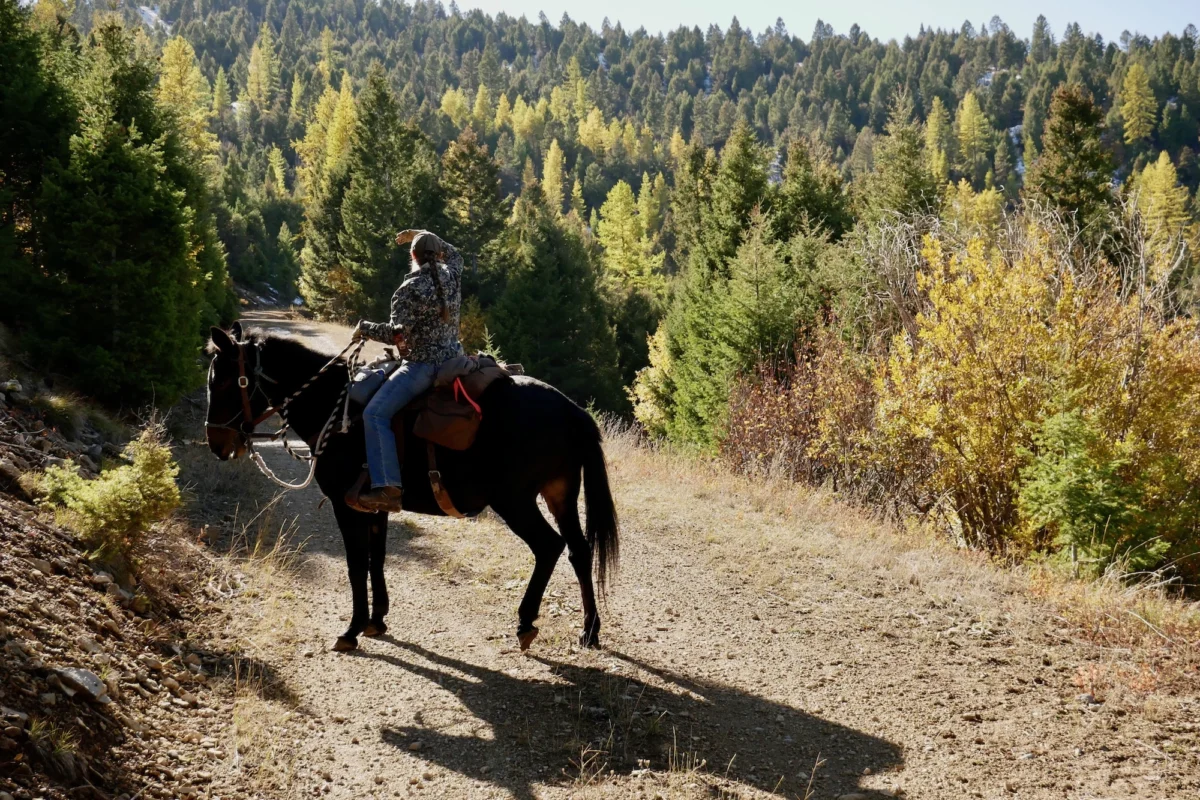
High atop a ridge in Montana’s Blackfoot Valley, Sigrid Olson leads her horses along a rugged Forest Service road, her eyes scanning the horizon for more than just the stray cattle she is tasked with protecting. As a range rider, Olson represents a modern revival of an iconic Western figure, though her mission has evolved significantly since the days of the open range. Today, her presence on the landscape is a critical component of a sophisticated effort to foster coexistence between traditional ranching and the resurgent populations of apex predators, specifically grizzly bears and gray wolves.

The reemergence of range riders in the western United States is a direct response to the successful, albeit controversial, recovery of large carnivores. For decades, these predators were largely absent from the landscape, having been eradicated through systematic hunting and trapping by the early 20th century. However, under the protection of the Endangered Species Act and state-led conservation initiatives, wolves and grizzlies have begun to reclaim their ancestral territories. This biological success story has brought with it a new set of tensions as wildlife moves back into valleys that are now heavily utilized for livestock production and human habitation. In the Blackfoot Valley, the range rider has become the primary line of defense against conflict, utilizing observation and presence rather than lethal force to maintain the peace.
The Historical Evolution of the Range Rider
To understand the significance of the modern range rider, one must look back to the 1800s, an era defined by Westward Expansion and the rise of the cattle kingdom. During this period, open-range ranching was the standard. Large herds of cattle grazed across vast swaths of unclaimed public and private land, often far from the ranch headquarters. Range riders were essential personnel, tasked with patrolling these herds, preventing theft, and ensuring cattle did not wander too far into treacherous terrain.

As the West became more settled, the invention of barbed wire and the establishment of formal property boundaries led to the decline of the traditional range rider. Cattle were increasingly confined to fenced pastures, and the need for constant human surveillance diminished. By the mid-20th century, the range rider had largely faded into the realm of folklore and Western cinema.
However, the late 20th and early 21st centuries brought a shift in the ecological landscape. The reintroduction of gray wolves to Yellowstone National Park and Central Idaho in the 1990s, combined with the steady expansion of grizzly bear populations from the Northern Continental Divide Ecosystem (NCDE), changed the calculus for Montana ranchers. The fence lines that once kept cattle in were no longer sufficient to keep predators out. This necessitated a return to a more active, human-centric form of herd management.

The Resurgence of Apex Predators in Montana
The Blackfoot Valley sits on the southern edge of the NCDE, which is home to one of the largest and most robust grizzly bear populations in the lower 48 states. According to the U.S. Fish and Wildlife Service, the grizzly population in this region has grown steadily, with current estimates exceeding 1,000 individuals. As the population reaches carrying capacity in the high-country wilderness, younger bears and breeding pairs are moving into lower-elevation valleys to find food and territory.
Similarly, gray wolves have established several packs within the Blackfoot Valley and surrounding mountains. While wolves were removed from the endangered species list in Montana in 2011, their management remains a focal point of intense public debate. For ranchers, the presence of these predators represents a tangible threat to their livelihoods. A single wolf pack or a hungry grizzly can cause thousands of dollars in livestock losses in a single season, not only through direct predation but also through the "weight loss" and "stress-induced reproductive failure" that occurs when herds are constantly harassed.

The Role and Responsibilities of a Range Rider
Sigrid Olson is one of three range riders currently operating in the Blackfoot Valley, and she is the only woman currently holding the position in this specific region. Her work is seasonal, typically spanning from May to October. This window coincides with the period when cattle are moved to high-mountain summer allotments and when bears are most active as they seek to put on weight for winter hibernation.
The job of a range rider is demanding, requiring a rare combination of skilled horsemanship, wildlife biology knowledge, and community diplomacy. Olson’s primary objective is to be a "constant human presence" on the landscape. Research has shown that predators, particularly wolves, are less likely to approach livestock when humans are nearby.

On a typical day, Olson and her horses, including her trusted mount Jake, traverse miles of difficult terrain. Her responsibilities include:
- Tracking Livestock: Locating scattered herds to ensure they are healthy and accounted for.
- Identifying Predator Activity: Looking for tracks, scat, and kill sites to determine where wolves or bears are moving.
- Health Assessments: Checking for sick or injured cattle, which are more likely to attract predators.
- Communication: Reporting daily findings back to ranchers so they can make informed decisions, such as moving cattle to a different pasture if predator activity is high.
By acting as a liaison between the wild and the domestic, Olson helps reduce the "element of surprise" that often leads to livestock depredation.

The Blackfoot Challenge: A Model of Cooperation
The success of the range rider program in Montana is largely attributed to the Blackfoot Challenge, a landowner-based nonprofit organization that has been a guiding force in the valley for over three decades. The organization’s mission is to coordinate efforts to conserve the natural resources and rural way of life in the Blackfoot River Valley.
The Blackfoot Challenge has funded and managed the range rider program for more than ten years. This initiative is part of a broader "community-led conservation" model that emphasizes collaboration over litigation. Rather than fighting federal and state agencies over predator protections, the ranchers in the Blackfoot Valley have worked with these agencies and the Blackfoot Challenge to implement non-lethal deterrents.

In addition to range riders, the Blackfoot Challenge facilitates:
- Carcass Removal Programs: Removing dead livestock from ranches quickly so they do not attract bears to calving grounds.
- Electric Fencing: Installing specialized fencing around "attractants" like calving pens and beehives.
- Turbo Flaundry: Using flags and lights to deter wolves from entering specific pastures.
The funding for these programs comes from a mix of private donations, federal grants, and contributions from the ranchers themselves. This shared-cost model ensures that everyone has "skin in the game," fostering a sense of shared responsibility for the landscape’s health.

Data and Implications of Non-Lethal Management
The impact of the range rider program is quantifiable. While livestock losses still occur, the Blackfoot Valley has seen a stabilization in conflict rates compared to regions without active range riding programs. According to data from Montana Fish, Wildlife & Parks, the consistent human presence provided by riders like Olson significantly reduces the frequency of "unconfirmed" losses—cattle that disappear without a trace, which often leads to financial ruin for small-scale operators.
Furthermore, the program provides invaluable data for wildlife biologists. Range riders are often the first to document the movement of new wolf packs or the presence of "problem" bears that have become habituated to human activity. This real-time intelligence allows for more surgical management of predator populations, potentially avoiding the need for large-scale lethal removals.

From an economic perspective, the range rider program helps preserve the viability of family-owned ranches. In the modern American West, these ranches are increasingly threatened by development and land fragmentation. By making it feasible to ranch in predator-heavy environments, programs like the Blackfoot Challenge help keep large, open landscapes intact, which in turn benefits the very wildlife that poses a threat to the cattle.
Broader Impacts and the Future of Coexistence
The story of Sigrid Olson and the Blackfoot Valley range riders is more than a local interest piece; it is a blueprint for the future of conservation in the 21st century. As apex predators continue to expand their range across the West—into Colorado, Washington, and Oregon—the lessons learned in Montana will be vital.

The "Blackfoot Model" proves that coexistence is not a passive state but an active, daily labor. It requires a departure from the "fortress conservation" mentality of the past, where humans and nature were kept in separate silos. Instead, it embraces a "working landscape" philosophy where agriculture and wild ecosystems are seen as inextricably linked.
As Olson follows muddy tracks to the bottom of the valley, eventually spotting her herd bunched safely in an enclave of trees, the value of her work is clear. To her relief, and that of the ranchers she serves, the cattle are safe. The predators are nearby, somewhere in the timber, but for today, the balance is maintained. The return of the range rider signifies a maturing of the American West—a place where the cowboy and the grizzly might finally find a way to share the same ridge.
