

The venture capital industry, long a crucible of innovation and growth, is undergoing a profound transformation. As companies increasingly opt to remain private for extended periods and the lifecycle of venture funds stretches beyond traditional boundaries, a critical need has emerged for specialized solutions addressing the complexities of mature portfolios. Into this evolving landscape steps Two Meter Capital, a pioneering firm founded by veteran investor Matt Krna, dedicated to providing what it terms "scaffolding" for the venture ecosystem. Launched formally in 2024 after several years of development, Two Meter Capital offers "GP on demand" or "harvest management" services, designed to help General Partners (GPs) manage, optimize, and generate liquidity from their longer-lived investments, thereby ensuring sustained support for the entrepreneurs within those portfolios. This strategic intervention marks a significant evolution in the operational mechanics of venture capital, promising to enhance efficiency, reduce operational burdens, and unlock value previously constrained by outdated fund structures.
The Evolving Landscape of Venture Capital: A Maturing Ecosystem
For decades, the venture capital model operated on relatively consistent principles: invest early, nurture growth, and exit through an initial public offering (IPO) or acquisition within a standard 10-year fund lifecycle, often with two one-year extensions. However, the dawn of the 21st century brought with it seismic shifts that have fundamentally altered this paradigm. Companies now remain private for significantly longer, driven by factors such as abundant private capital, reduced pressure to access public markets for funding, and the desire to defer the regulatory burdens and scrutiny associated with being a public entity.
Empirical data underscores this trend. According to PitchBook, the median time to IPO for venture-backed companies has steadily climbed, increasing from approximately six years in the early 2000s to an average of 10 to 12 years by the late 2010s, and even extending to 15 years or more for some high-profile ventures in recent years. This extended holding period creates a significant disconnect with the traditional 10+2-year fund structure. Venture funds, particularly those from older vintages (Fund VII, VIII, IX, etc.), often find themselves holding dozens, if not hundreds, of portfolio companies long after their primary investment period has concluded. These "tail-end" portfolios, while potentially still valuable, demand ongoing attention, reporting, and strategic guidance, placing a considerable strain on GPs who are simultaneously focused on raising new funds and investing in the next generation of outlier companies.
Furthermore, the venture capital industry itself has matured. What was once an apprenticeship-driven, relatively homogenous sector has blossomed into a sophisticated market characterized by increasing specialization, larger fund sizes, and a consolidation of capital into a smaller number of mega-funds. As venture capital assets under management (AUM) have swelled globally, reaching trillions of dollars, the operational complexities associated with managing diverse, long-duration portfolios have intensified. This maturation, while indicative of the industry’s success, has also exposed structural inefficiencies, particularly around the management and eventual harvesting of older assets. The need for specialized "scaffolding" to support these longer-lived investments is no longer a theoretical concern but a pressing operational and financial imperative.
Matt Krna’s Journey: A Chronicle of Venture Innovation and Strategic Foresight
Matt Krna’s establishment of Two Meter Capital is the culmination of a career deeply embedded within the venture capital industry, marked by a consistent trajectory of identifying and addressing emerging market needs. His professional odyssey began as an analyst at Canaan Partners, where he honed his early investment acumen focusing on the then-nascent hardware and semiconductor sectors. This foundational experience provided him with a ground-level understanding of technology trends and the mechanics of early-stage investing.
His career then progressed to Investor Growth Capital, where he ascended to lead the US Internet investment practice. During this tenure, Krna demonstrated a prescient ability to spot future growth areas, notably co-founding the firm’s digital health effort, a sector that has since exploded in importance and investment. This period saw him navigating the dot-com bust’s aftermath and the subsequent resurgence of internet-driven innovation, gaining invaluable experience in identifying resilient business models and guiding companies through volatile market cycles.
A pivotal move came with his recruitment to SoftBank, a global technology investment giant known for its ambitious growth-stage investments. Here, Krna was instrumental in helping to raise and deploy a significant growth-stage fund, backing now-household names like Fitbit and BigCommerce. Reflecting on this experience, Krna emphasizes the rare success of "actually doing what we said we were going to do," a testament to the strategic execution and disciplined investment approach employed by his team. This chapter provided him with deep insights into scaling companies, managing complex growth equity deals, and the unique challenges and opportunities presented by larger, more mature private enterprises.
In 2015, Krna leveraged this extensive experience to co-found Princeville Capital, a successor fund that continued his focus on growth-stage technology investments. Princeville built upon the strategies and networks established during his SoftBank tenure, further cementing his reputation as a shrewd and effective investor.
However, the global upheaval of COVID-19 in 2020 served as a catalyst for a period of introspection. Like many industry leaders, Krna entered a "hibernation mode," using the time to critically assess the future trajectory of the venture market. It was during this period of "noodling" that the foundational idea for Two Meter Capital began to crystallize. Recognizing the widening gap between traditional fund structures and the increasingly prolonged lifecycles of portfolio companies, Krna envisioned a specialized entity that could provide a crucial support layer for the maturing venture ecosystem. This vision, incubated over several years, formally manifested with Two Meter Capital’s launch in 2024, marking a new chapter dedicated not just to investing in innovation, but to optimizing the very infrastructure that supports it.
Introducing Two Meter Capital: The ‘Scaffolding’ Solution for Modern VC
Two Meter Capital’s core offering, dubbed "GP on demand" or "harvest management," represents a paradigm shift in how venture portfolios are managed, particularly those in their later stages. Matt Krna articulates a clear distinction: a venture firm’s primary competencies lie in raising capital, identifying groundbreaking companies, and continuing to back their winners. However, the operational burden associated with managing older, longer-lived portfolios often distracts from these core functions. This is where Two Meter Capital steps in.
The firm acts as specialized "scaffolding," providing the expertise and resources to manage the "rest" of the portfolio management tasks that typically fall outside a GP’s immediate focus. This includes a comprehensive suite of services:
- Active Portfolio Monitoring and Management: Regularly assessing the performance, strategic direction, and capital needs of companies within the tail portfolio.
- Strategic Decision Support: Helping GPs make informed decisions on which companies to "lean back into" (i.e., provide additional support or follow-on investment if they show renewed promise), which to "pull back from" (de-prioritize or manage for eventual exit), and which require assistance in identifying their next strategic step, such as a new CEO or a strategic pivot.
- Liquidity Generation: Proactively identifying and executing opportunities to generate liquidity from these older assets. This can involve secondary sales, facilitating strategic acquisitions, or navigating complex recapitalizations. The goal is to return capital to Limited Partners (LPs), thereby keeping the "venture flywheel" moving and allowing GPs to focus on new investments.
- Operational Relief: Significantly reducing the time and resource drain on GPs and their teams, freeing them to concentrate on core investment activities and fund-raising for subsequent funds.
This harvest management approach acknowledges that not all portfolio companies mature at the same pace or achieve hyper-growth within a standard fund window. Some may be late bloomers, while others may require a more nuanced, long-term strategy to realize their value. By offloading these responsibilities, Two Meter Capital enables traditional venture firms to optimize their resource allocation, improve their internal rate of return (IRR) by monetizing older assets more effectively, and ultimately strengthen their ability to raise future funds. The service is a testament to the industry’s increasing specialization, recognizing that portfolio management, especially in its later stages, is a distinct discipline requiring dedicated focus and expertise.
Empowering Entrepreneurs: Sustaining Support for Portfolio Companies
While the immediate beneficiaries of Two Meter Capital’s services are General Partners, the ripple effects extend profoundly to the entrepreneurs and companies within these longer-lived portfolios. In the traditional model, as a fund ages and GPs shift their focus to newer investments, companies in the "tail" can inadvertently become orphans. Their original champions, consumed by the demands of fresh capital deployment and new fund cycles, may struggle to provide the sustained attention, strategic guidance, and board-level support these companies still require.
This creates a precarious situation for founders. A company might be just hitting its stride, finally achieving key performance indicators (KPIs) after years of development, only to find its early investors less engaged or actively seeking an exit without fully exploring its potential. Conversely, a company struggling to find its footing might desperately need an active investor to help navigate strategic pivots, management changes, or new funding rounds, but finds itself without a dedicated advocate at the cap table.
Two Meter Capital explicitly addresses this critical gap. By taking on the stewardship of these older portfolio assets, Matt Krna’s team ensures that every company, regardless of its fund vintage, continues to have a dedicated champion. This means:
- Continued Strategic Guidance: Companies benefit from ongoing, active engagement from experienced investors who are focused solely on maximizing the value of these specific assets.
- Proactive Problem Solving: Whether it’s identifying opportunities for growth, addressing operational challenges, or facilitating crucial next steps, Two Meter Capital provides a focused resource.
- Access to Networks: Founders can still leverage the networks and expertise of seasoned professionals, even if their original fund has moved on.
- Liquidity Pathways: For companies that are ready for an exit, Two Meter Capital actively works to generate liquidity, providing a clearer path forward for founders, employees, and remaining investors.
In essence, Two Meter Capital prevents these companies from being left in limbo. It transforms what could become a passive, divestment-focused exercise into an active, value-creation endeavor, ensuring that the entrepreneurial spirit and potential embedded within these ventures are not prematurely extinguished due to structural limitations of the venture fund model. This sustained advocacy is invaluable, fostering a more robust and supportive ecosystem for innovation throughout a company’s entire lifecycle.
Addressing Diverse Needs: From Established Funds to Emerging Managers
Two Meter Capital’s client base primarily falls into two distinct categories, each facing unique challenges that the firm’s harvest management model is uniquely positioned to address.
The first category comprises mid-sized to large traditional venture funds. These are often well-established institutions actively investing out of their Fund 11 or 12, yet simultaneously grappling with extensive "tail portfolios" that might contain hundreds of companies across Funds 7, 8, and 9. The sheer scale of these older portfolios presents a significant operational and financial burden. Matt Krna recounts a conversation with a managing partner who revealed his firm was spending an estimated $4 to $5 million annually just on partner and associate time dedicated to board meetings, reporting, and management of these older funds. This substantial expenditure, often unallocated against new investment opportunities, represents a direct drag on profitability and a diversion of precious intellectual capital. By outsourcing the intensive management of these tail portfolios, large funds can reclaim significant partner bandwidth, reduce operational overhead, and re-focus their resources on the high-growth companies in their current funds. This allows them to maintain a lean, efficient core investment team while ensuring their legacy assets are professionally managed for optimal returns.
The second, and perhaps more distinctive, category involves emerging managers for whom a subsequent fund may not materialize. This is a particularly poignant aspect of the venture ecosystem. As Krna observes, "If you’re an entrepreneur and the company isn’t going the way you wanted, there are off-ramps. You find another CEO. You gracefully exit." However, for an emerging venture manager who might have raised a smaller, debut fund and subsequently decided that the demanding lifestyle or performance metrics of venture capital are not for them, the path forward is far less clear. "If you’re an emerging manager and you decide this wasn’t for me, there’s no off-ramp. You’re responsible for that portfolio for the next 10-plus years," Krna highlights. This scenario leaves them legally and ethically bound to manage a portfolio for a decade or more, even if they lack the resources, desire, or future capital to do so effectively.
Two Meter Capital offers a crucial "off-ramp" in such situations. By taking on approximately 90 percent of the ongoing lift associated with managing these portfolios, the firm provides a much-needed exit strategy for emerging managers. This not only offers practical relief but also carries a significant second-order effect: knowing that such a graceful exit is possible might actually encourage more talented individuals to enter the venture capital industry in the first place. The prospect of being tied to a portfolio for an indeterminate future, without the support structure of a larger institution, can be a daunting barrier to entry. By mitigating this risk, Two Meter Capital contributes to fostering a more dynamic and accessible venture ecosystem, encouraging a broader diversity of managers and investment theses.
Broader Implications for the VC Ecosystem
The emergence of firms like Two Meter Capital signals a broader maturation and specialization within the venture capital industry. This "scaffolding" approach is not merely a service; it’s an infrastructural enhancement with wide-ranging implications:
- Increased Capital Efficiency: By optimizing the management and liquidity generation of older portfolios, Two Meter Capital helps unlock dormant capital. This returned capital can then be re-deployed by LPs into new, active funds, fueling further innovation.
- Professionalization of Portfolio Management: It elevates portfolio management from an often-neglected obligation to a specialized discipline, ensuring that every asset, regardless of its age, receives expert attention.
- Enhanced LP Relations: GPs can demonstrate greater fiduciary responsibility to their LPs by actively managing and monetizing older assets, rather than letting them languish. This can improve trust and facilitate future fundraises.
- Support for Innovation Lifecycles: By ensuring companies in older funds remain championed, the model indirectly supports a longer, more resilient lifecycle for innovative companies, acknowledging that breakthroughs often require more than a standard 10-year runway.
- Market Development: Two Meter Capital’s model contributes to the development of a more robust secondary market for venture assets, providing structured pathways for liquidity that were historically ad-hoc or less efficient.
- Sustainability for Smaller Funds: It offers a lifeline to smaller and emerging managers, promoting greater stability and reducing personal risk, thereby potentially diversifying the talent pool in venture capital.
This specialization reflects a natural progression for any maturing financial industry. Just as private equity developed complex secondary markets and specialized operational partners, venture capital is now building its own dedicated infrastructure to cope with its expanded scale and complexity.
Optimism in Innovation: A Forward Look
Despite the operational challenges that led to the creation of Two Meter Capital, Matt Krna remains profoundly optimistic about the future of the venture industry. His enduring love for the sector stems from a singular, powerful force: innovation. "The entrepreneurs are coming up with so many new concepts," he states, emphasizing the relentless pace of technological advancement. Having witnessed multiple transformative waves – from the internet’s explosion to the mobile revolution – Krna now sees artificial intelligence (AI) as poised to eclipse most, if not all, previous technological shifts. "AI is going to be amazingly transformative for every aspect of society, in ways that I think 99 percent of people on the planet don’t appreciate," he asserts, underscoring the immense potential and the continued need for venture capital to fuel these breakthroughs.
This optimism is intertwined with a personal sense of purpose regarding Two Meter Capital’s unique niche. Krna views his career as a progression: "I spent the first 10 years of my career apprenticing in this industry. The next 10, building a track record as an investor." The current chapter, with Two Meter Capital, represents a different kind of contribution. "This next chapter is maybe helping to change the paradigm a little bit, in a way that continues to bring our venture industry forward, more capable of ultimately supporting entrepreneurs and building." This ambition to evolve the fundamental operating model of venture capital, to make it more robust and responsive to the realities of modern innovation, is a driving force for Krna and his team.
One Last Thing: Why "Two Meter"? The Ethos of Strategic Action
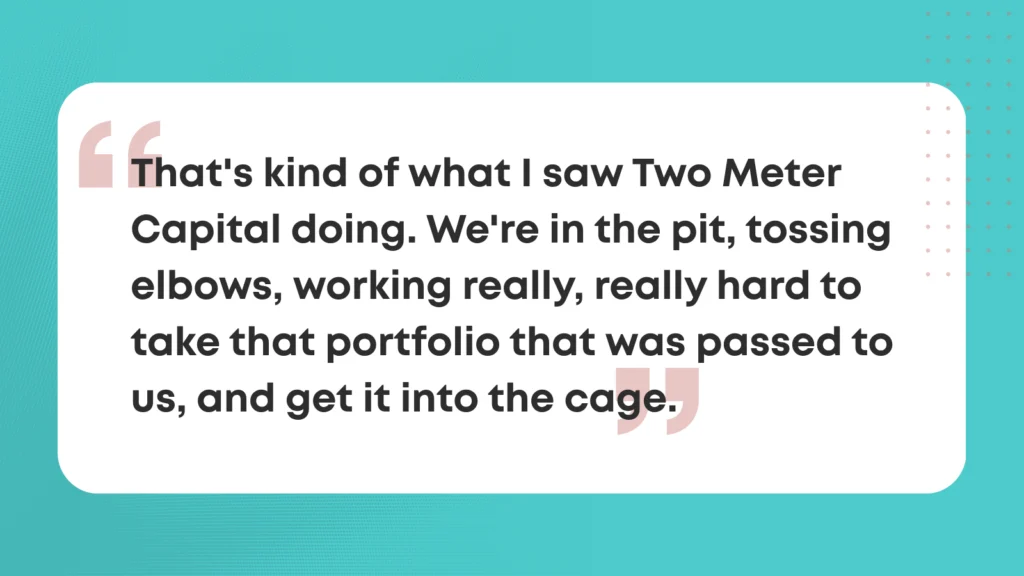
The distinctive name, Two Meter Capital, carries a deeper significance than a mere arbitrary choice. It is drawn from the sport of water polo, a game Matt Krna’s children play competitively. In water polo, the "2-meter position" is strategically located right in front of the opposing team’s goal. This is not a passive role; it is the player who is consistently in the thick of the action, fighting relentlessly for possession of the ball, muscling through formidable defenders, and ultimately, putting the ball in the cage.
This analogy perfectly encapsulates the ethos of Two Meter Capital. The firm positions itself directly at the critical juncture of liquidity and value realization within venture portfolios. It is about active, hands-on engagement, battling through complexities, and delivering tangible results – generating liquidity and ensuring the continued championship for portfolio companies. The name reflects a commitment to strategic positioning, tenacious execution, and a results-oriented approach that is essential for navigating the challenging waters of mature venture capital portfolios. It is a name that signifies not just presence, but purposeful, impactful action in a vital segment of the venture ecosystem.
