

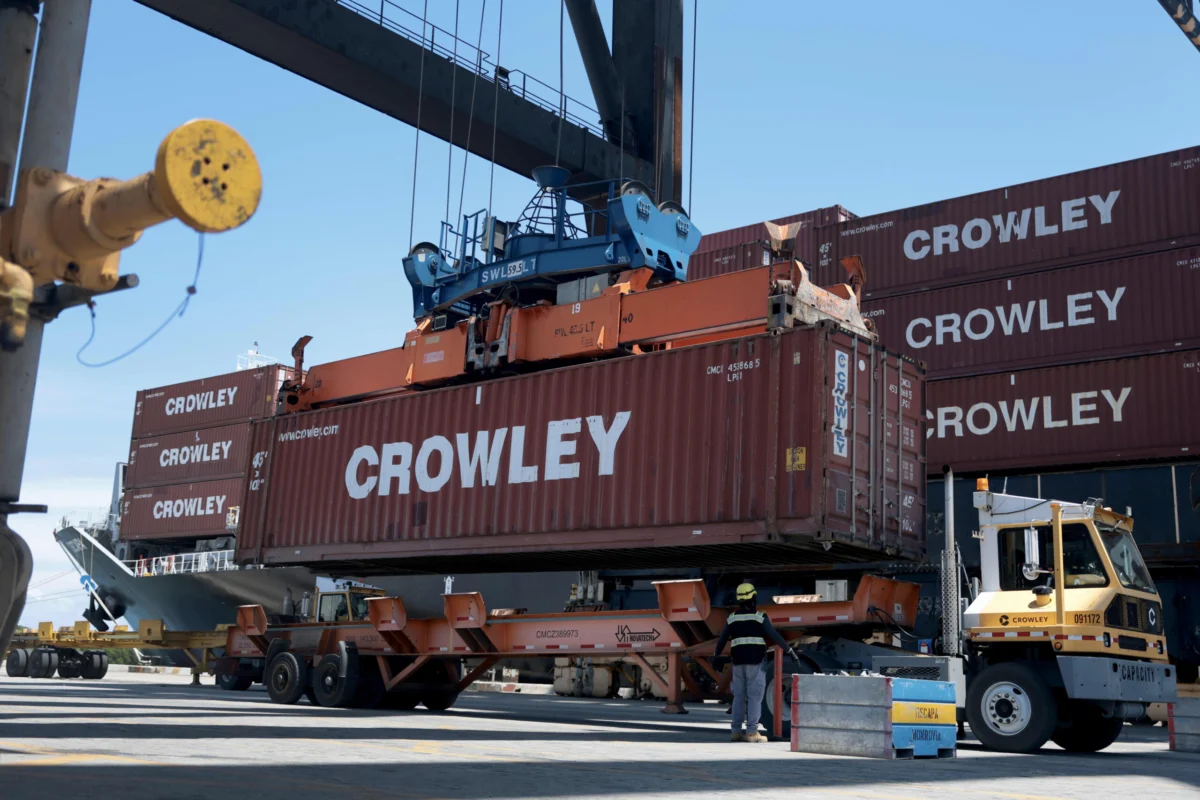
The cost of goods entering the United States experienced an unanticipated uptick in June, driven by a significant escalation in prices from China, marking the most substantial monthly increase from that nation in over 18 years, according to data released by the Bureau of Labor Statistics (BLS). This development signals a potential shift in inflationary dynamics, moving beyond solely energy-related fluctuations and indicating a broader increase in the cost of goods across various sectors.
Import Prices Defy Expectations with 0.3% Monthly Rise
Contrary to economists’ forecasts for a 0.8% decline, import prices, as measured by the BLS, climbed by 0.3% in June. This upward movement was substantial enough to offset a decrease in energy costs, pointing to robust price pressures in other categories. On an annualized basis, import prices surged by 7.1%, the most significant annual jump recorded since August 2022, underscoring the persistent and accelerating nature of imported inflation. The consensus among economists surveyed by Dow Jones had anticipated a cooling in import costs, making the actual outcome a notable deviation from expectations.
Technology Sector and Industrial Machinery Fueling the Rise
The report highlighted specific areas contributing to the unexpected price hike. The ongoing build-out of artificial intelligence (AI) infrastructure appears to be exerting upward pressure on costs, with notable price increases observed in categories such as computers, peripherals, and semiconductors. This suggests that the demand for advanced technological components, driven by the rapid expansion of AI capabilities, is beginning to translate into higher import prices.
Beyond the technology sector, the BLS identified industrial and service machinery as significant drivers of increased costs. These categories saw substantial price growth, effectively counteracting a 0.4% decrease in the prices of fuels and lubricants. This is a notable shift from the previous month, as industrial and service machinery prices had already posted a considerable 12.6% jump in May. The sustained rise in these capital goods indicates a broad-based demand and potential supply chain constraints affecting the manufacturing and service industries.
China’s Growing Influence on U.S. Import Costs
China’s role in this inflationary surge is particularly pronounced. Import prices originating from China saw a significant monthly increase of 0.9% in June, the largest such rise since January 2008. This substantial escalation could be a reflection of various factors, including potential tariff impacts or shifts in manufacturing costs within China. The 12-month increase in import prices from China stood at 1.3%, representing the largest yearly gain since the period spanning November 2021 to November 2022.
While import prices from China surged, export prices from the U.S. to China experienced a slight decline of 0.2% in June. However, on an annual basis, U.S. export prices to China rose by 7.4%, the most significant monthly increase dating back to August 2022. This divergence suggests a complex trade dynamic, where the U.S. is facing higher costs for goods imported from China, while simultaneously seeing a substantial annual increase in the cost of its exports to the Asian economic powerhouse.
Broader Inflationary Trends Beyond Energy
The BLS report broadly indicates that while a decline in oil costs provided some relief in June, inflation is demonstrating signs of broadening beyond the energy sector. Businesses are increasingly contending with a variety of rising costs across different segments of the supply chain. Export prices, as a whole, experienced a decrease of 0.6% in June, marking the first monthly drop since May 2025. However, this monthly decline was juxtaposed against a substantial annual increase of 10.2% in export prices, suggesting that while short-term export price pressures may be easing, the long-term trend remains upward.
Context: Recent Inflationary Data and Federal Reserve’s Stance
This latest report on import prices follows closely on the heels of other BLS releases that showed a decline in both consumer and wholesale prices earlier in the week. These earlier decreases were largely attributed to falling energy costs, a trend that had offered some optimism regarding moderating inflation. The softening of energy prices was partially linked to a brief period of eased geopolitical tensions between the U.S. and Iran.
However, the unexpected rise in import prices injects a new layer of complexity into the inflation narrative. Federal Reserve officials have been closely monitoring inflation trends since prices initially spiked following retaliatory actions between the U.S. and Israel against Iran, which began in late February. The central bank’s mandate includes maintaining price stability, and persistent inflation poses a significant challenge to achieving its 2% inflation target.
Fed Officials Express Caution Amidst Mixed Data
Despite the recent dip in consumer and wholesale prices, Federal Reserve officials have cautioned against interpreting these as definitive signs of inflation being fully under control. In congressional hearings held earlier in the week, Fed Chairman Kevin Warsh indicated that he did not view the softer June inflation reports as an indication that the central bank’s work was complete. His sentiment reflects a concern that underlying inflationary pressures might still be building.
Indeed, even with the monthly declines, the BLS data indicated that consumer prices remained up 3.5% from a year ago, and wholesale costs had risen by 5.5% annually. These year-over-year figures underscore the persistent inflationary environment that policymakers are contending with.
More recently, prominent Federal Reserve officials have voiced opinions suggesting the need for continued monetary policy tightening. On Thursday, Dallas Fed President Lorie Logan stated her belief that benchmark interest rates should be "modestly higher" to effectively address the ongoing inflation problem. Echoing this sentiment, Cleveland Fed President Beth Hammack, speaking on Friday, also suggested that monetary policy needs to remain tighter.
In a LinkedIn post, Hammack elaborated on the growing concerns she is hearing from the business community and consumers. She noted, "For the first time in my tenure, I’m hearing from businesses who say they think we need to take action to curb inflation, and from consumers who can’t make ends meet about a growing sense of despair." This observation highlights the tangible impact of persistent inflation on economic actors and underscores the urgency felt by policymakers to bring price stability back.
Broader Implications and Economic Outlook
The unexpected rise in import prices has several critical implications for the U.S. economy. Firstly, it suggests that the disinflationary effects seen in energy may be temporary or are being outpaced by price increases elsewhere. This could lead to a more persistent inflationary environment than previously anticipated, potentially requiring a longer period of elevated interest rates to cool demand.
Secondly, the significant contribution of China to this price increase raises questions about global supply chain dynamics and the impact of trade policies. If tariffs or other trade frictions are indeed a contributing factor, it could lead to sustained higher costs for a wide range of consumer and industrial goods. Businesses relying heavily on imports from China may face difficult decisions regarding pricing, sourcing, and investment.
Thirdly, the increase in costs for technology components and industrial machinery could have a dampening effect on business investment and economic growth. While the AI build-out is a driver of innovation, if the associated costs become prohibitive, it could slow down the adoption of new technologies and impact productivity gains.
The Federal Reserve’s response to these evolving inflationary pressures will be closely watched. The divergence between short-term price declines and persistent year-over-year increases, coupled with the unexpected surge in import costs, presents a complex decision-making landscape for the central bank. The prospect of "modestly higher" interest rates, as suggested by some Fed officials, could further impact borrowing costs for businesses and consumers, potentially slowing economic activity.
The coming months will be critical in determining whether the recent uptick in import prices is a temporary anomaly or a more entrenched trend. The interplay of global supply chain issues, geopolitical developments, and the ongoing technological revolution will continue to shape the inflation outlook and influence the Federal Reserve’s monetary policy decisions, with significant implications for the broader economic trajectory.
