

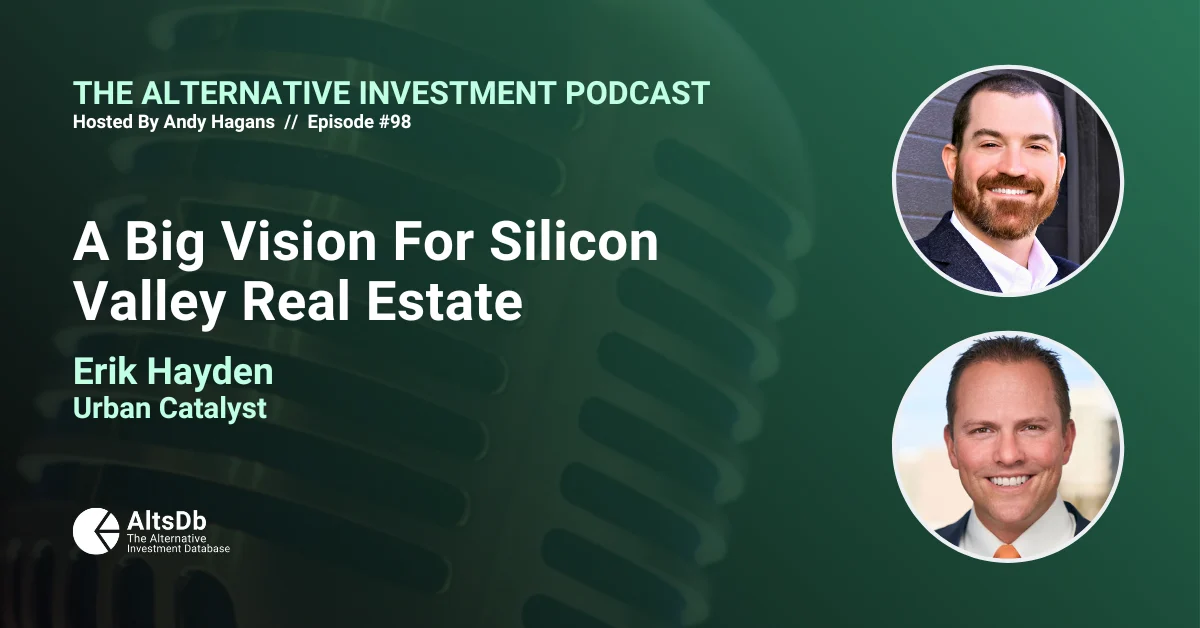
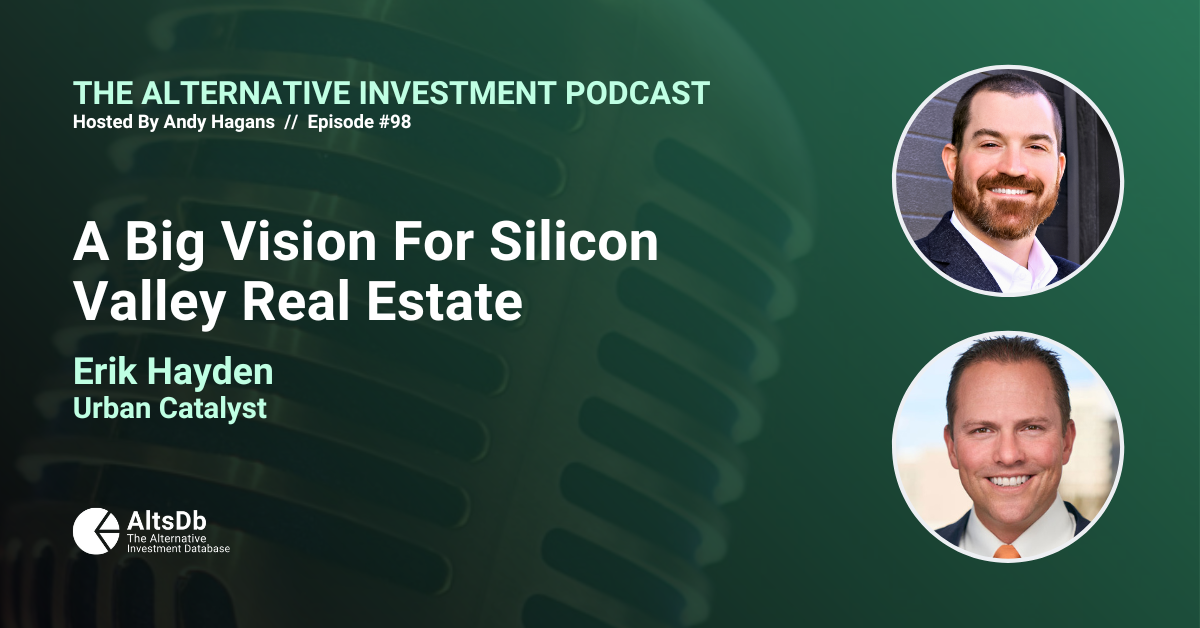
Erik Hayden, founder of Urban Catalyst and a recognized influential figure in Silicon Valley, expressed a strong conviction that the region’s real estate market is on a trajectory for sustained growth over the coming decades, challenging prevailing "doom and gloom" narratives. Hayden, whose firm has been instrumental in spearheading development projects within Opportunity Zones, recently shared his insights on the enduring economic vitality of Silicon Valley and its potential to generate long-term wealth for real estate investors.
The Enduring Power of Silicon Valley
Silicon Valley, often described as the epicenter of the global technology sector, continues to be a powerhouse of innovation and economic activity. Despite broader economic fluctuations and concerns about the future of certain industries, Hayden maintains that the fundamental drivers of growth in this region remain robust.
"If you’re thinking ‘doom and gloom’ when you think of California real estate, think again: Silicon Valley appears poised to ride a wave of growth for decades to come," Hayden stated during a recent interview on "The Alternative Investment Podcast." He emphasized that the region’s ability to attract and nurture groundbreaking technology companies, coupled with significant ongoing investment, underpins its long-term real estate potential.
Urban Catalyst’s Strategic Approach to Development
Urban Catalyst, founded by Hayden, has established itself as a prominent real estate equity fund specializing in ground-up development and rehabilitation projects. The firm’s strategic focus on San Jose, particularly its downtown core, was a deliberate choice driven by observable tech migration trends.
"When I started Urban Catalyst, I was the president of a development company doing a big project up in Oakland," Hayden explained. "I also, on the side, had my own business doing some consulting work with other development companies, and decided that I wanted to do more. Ground-up development, you know, with the type of returns that are associated with it, and really the real estate market in Silicon Valley, has always made a lot of sense to me."
Hayden identified a critical shift in the tech landscape around 2018, noting that while cities like Palo Alto, Menlo Park, and Mountain View are central to the tech universe, their physical size limits expansion. This led to a "slow migration southward from that center of Silicon Valley, towards San Jose." He observed that as cities like Sunnyvale became largely built out, San Jose emerged as the next logical hub for expansion by major tech players.
"Now, looking back five years ago, it was a good thought because now we can say that most of those companies have purchased land, opened offices, or have big plans to do a lot of expansion here in San Jose," Hayden remarked. He noted that while other developers also recognized this trend, Urban Catalyst’s established relationships with property owners allowed them to acquire key parcels before the full wave of development.
The Opportunity Zone Advantage
A significant aspect of Urban Catalyst’s strategy has been its leverage of the Opportunity Zone (OZ) program. While Hayden stressed that the decision to focus on San Jose was driven by fundamental market opportunity rather than the OZ incentive itself, the program provided a compelling added benefit for investors.
"It wasn’t the tail wagging the dog," Hayden clarified. "We wanted to be in San Jose, and San Jose was also an Opportunity Zone, and we became an Opportunity Zone fund, and it’s been working out pretty great for us."
The OZ program, enacted as part of the Tax Cuts and Jobs Act of 2017, offers tax deferral and potential forgiveness on capital gains invested in designated low-income communities. Urban Catalyst’s ability to align its development projects with these zones allowed it to attract significant investment from individuals seeking tax-advantaged real estate opportunities.
Navigating the Startup Landscape
Launching a real estate development firm, particularly in a high-cost market like California, involves substantial risk and capital. Hayden shared his approach to mitigating this risk, emphasizing the importance of a strong foundation and strategic fundraising.
"When we first started Urban Catalyst at our sponsor level, we raised around $4.5 million dollars," Hayden revealed. "That was just to start us up, get the lights on and get everything going." This initial capital, primarily sourced from friends and family who believed in Hayden’s track record, was crucial for covering essential startup costs, including legal fees for private placement memorandums, office leases, and initial land acquisition expenses.
He further elaborated on the intricacies of land acquisition, explaining that it involves more than just making an offer. "It’s understanding what the city’s gonna allow you to build, how much it costs, building out your financial models, and doing a sensitivity analysis, so that you can back into how much you can pay for it. And then doing all of the negotiation."
The Power of Brand Building Through Digital Marketing and Earned Media
Urban Catalyst’s fundraising strategy diverged from the traditional broker-dealer model prevalent in the Opportunity Zone space. Instead, the firm embraced digital marketing channels such as Google, LinkedIn, and Facebook to directly connect with investors.
"Raising money directly from investors, in our first year, we raised $50 million, and we did it through a way that a lot of folks had never tried, which, of course, is digital marketing," Hayden noted. This approach allowed Urban Catalyst to build a strong brand presence and reach a broader investor base, differentiating itself from competitors who relied heavily on registered investment advisors.
The firm’s commitment to transparency and consistent project updates has also generated significant "earned media." Hayden reported that Urban Catalyst’s projects have been featured in local and national publications over 250 times in the last five years. This consistent positive press coverage, he believes, is invaluable for brand building and investor confidence, far exceeding the impact of paid advertising.
Addressing Misconceptions About California Real Estate
A prevalent misconception about California, particularly Silicon Valley, is that it is solely characterized by "doom and gloom" due to its high cost of living and political climate. Hayden countered these perceptions with compelling economic data.
"If California was its own country, we just became the fourth-largest economy in the world. We just took over Germany," he stated, highlighting the state’s immense economic clout. He pointed to 2021 as a particularly strong year for Silicon Valley, with a record number of companies going public and unprecedented venture capital funding. For instance, the city of Menlo Park, with a population of 45,000, attracted more venture capital funding than the entire state of Texas.
While acknowledging that people do leave California, Hayden emphasized that population growth has historically been strong, driven significantly by international immigration. "People don’t take into account the amount of people from other countries that move to California, and that’s kind of the… You see all the people that live in California moving out because they can’t afford to live here, and you see the people from other countries that want to live in the United States, they want to live in California because it’s an amazing place, from the weather all the way to the economy."
San Jose: A Developing Urban Hub
Hayden provided a detailed perspective on the development landscape in San Jose, a city that has experienced substantial growth and is now ranked among the most expensive big cities globally. The median home price in San Jose has reached between $1.6 and $1.7 million.
This housing crisis, while challenging, presents opportunities. Hayden noted that the mismatch between job creation and housing development has been a persistent issue in California for decades, with six jobs created for every housing unit built over the last 30 years.
Despite state-level regulatory complexities, Hayden lauded the City of San Jose’s planning and economic development department for their proactive approach to urban development, particularly in the downtown area. "In downtown San Jose, it’s where all the infrastructure is, it’s where all the transit is. It’s, if you’re going to do high-density development, where are you gonna do it? Here is the place for them. And they know that. And they’re good at it."
Urban Catalyst’s Diverse Project Portfolio
Urban Catalyst’s Opportunity Zone Fund II encompasses a diverse portfolio of four projects in downtown San Jose:
- Echo: A high-rise development featuring approximately 400 multi-family units.
- Icon: A substantial 500,000-square-foot office building.
- Keystone Hotel: A 172-key Marriott Townplace Suites.
- Gifford Place: A senior living facility, specifically assisted living and memory care.
The inclusion of varied asset classes, including office space, reflects a strategic diversification aimed at mitigating market risks. While the office market has faced scrutiny, Hayden noted that Silicon Valley’s office market has remained relatively resilient, benefiting from the presence of major tech companies and a slower return-to-office trend compared to other regions.
The Google Factor in San Jose
A significant catalyst for development in San Jose is Google’s massive "Downtown West" project. This ambitious $19 billion, 10-year development plan encompasses 7 million square feet of office space and 6,000 residential units on 80 acres west of the 87 Freeway. This project is poised to become Google’s largest campus globally.
Urban Catalyst’s projects are strategically located to benefit from this development. "We have three projects that are literally hundreds of yards away from it. Our office is six blocks away from it, so a lot of real positive synergy with what they’re doing," Hayden stated. The proximity to this significant investment is expected to drive substantial economic activity and demand for surrounding real estate.
Expansion into Delaware Statutory Trusts (DSTs)
In a strategic expansion of its offerings, Urban Catalyst has launched its first Delaware Statutory Trust (DST) product. This move represents a diversification beyond ground-up development and Opportunity Zone funds. The DST is an industrial property located in Dallas, Texas, a market chosen for its strong economic fundamentals and demographic growth.
"Delaware Statutory Trust, I mean, it fits right in our wheelhouse. Tax-advantaged real estate. That is what we do here at Urban Catalyst," Hayden explained. He highlighted the industrial sector’s robust demand, particularly in the Dallas-Fort Worth metro area, characterized by significant population growth and a strong industrial market. The specific property features a 10-year lease with built-in 3% annual rent increases, aligning with Urban Catalyst’s strategy of focusing on income-producing properties with predictable revenue growth.
This expansion into DSTs allows Urban Catalyst to cater to a broader range of investor needs, offering a lower-risk, income-generating alternative to its ground-up development projects, while still leveraging its expertise in tax-advantaged real estate.
"We are always looking at the overall markets, and as far as which markets are great," Hayden concluded. "When it came to our Delaware Statutory Trust, you know, the first thing that we had to determine when we created this program was which asset class were we gonna target. The two most common types of DSTs, apartments and industrial." He emphasized the importance of rent growth and a clear exit strategy, which the Dallas industrial property with its net lease structure provides.
