

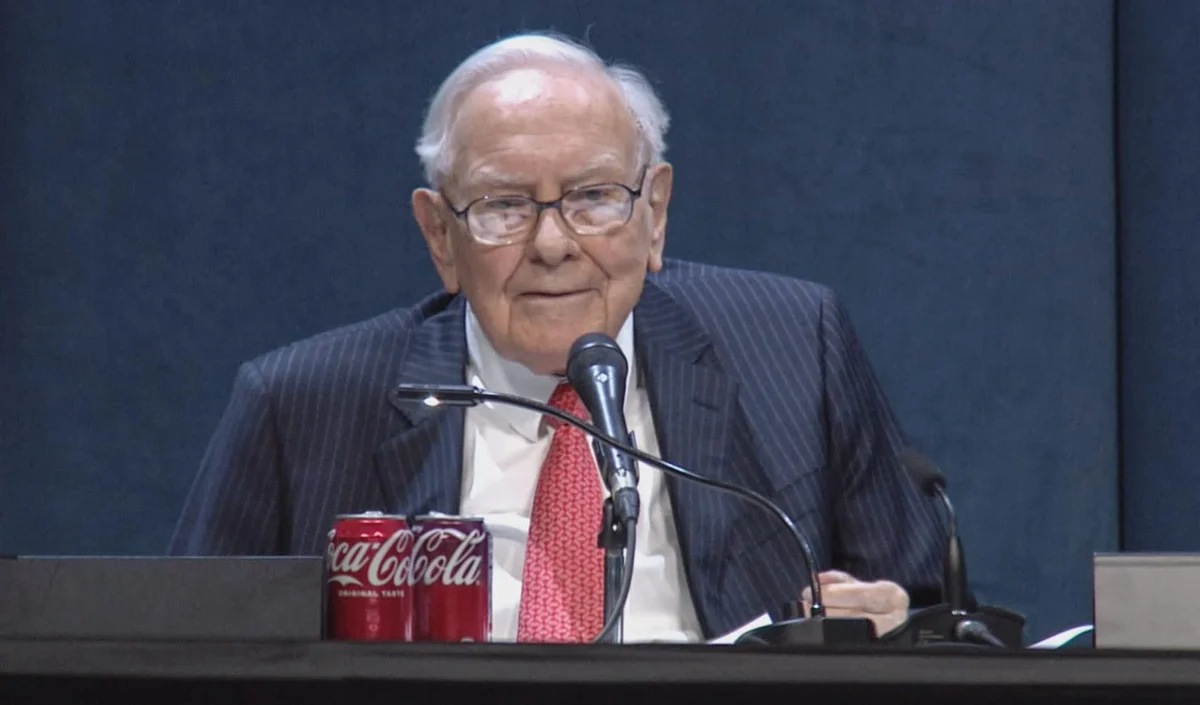
Omaha, NE – Berkshire Hathaway, the sprawling conglomerate led by legendary investor Warren Buffett, witnessed a significant rally in its Class A and Class B shares this week, reaching an eight-month high. This resurgence signals a potential closing of the gap with the broader S&P 500 benchmark, even as the company continues to navigate a period of strategic transition and maintain a formidable cash reserve. The market’s renewed confidence appears to be a confluence of robust financial performance, consistent share repurchases, and a steady hand at the helm, even as the company approaches a planned leadership change.
The Recent Surge in Detail
Berkshire Hathaway’s Class B shares, a more accessible entry point for individual investors, closed Tuesday at $512.37. This marked their highest valuation since November 28, when they had settled at $513.81. By Friday’s close, the Class B shares registered at $511.54, reflecting a modest dip but still holding strong near their recent peak. While impressive, this figure remains 5.2% below their all-time closing high of $539.80, which was achieved on May 2 of the previous year. That particular peak had a significant contextual backdrop: it occurred just one day before Warren Buffett publicly disclosed his intention to step down as CEO at the close of 2025, an announcement that had initially introduced a degree of uncertainty into the market regarding the company’s future trajectory.
Similarly, the more expensive Class A shares, which carry greater voting rights and are often held by institutional investors, concluded Tuesday at $768,010. This also represented their highest close since November 28’s $770,100. By Friday, the Class A shares closed at $766,600, standing 5.3% below their historical zenith of $809,350. The synchronous movement of both share classes underscores a broad-based positive sentiment returning to the conglomerate’s stock.
Catching Up to the Benchmark: An S&P 500 Comparison
The recent rally holds particular significance when viewed against the performance of the S&P 500. For an extended period, Berkshire Hathaway’s stock had trailed the benchmark index, a situation that often draws scrutiny from market analysts. As highlighted by a recent report in Barron’s, Berkshire’s current rally suggests it "has room to run" because the stock still lags "well behind" the S&P 500, which currently holds a 7.6 percentage point lead. However, this deficit represents a substantial improvement. Just two months prior, Berkshire was trailing the S&P 500 by a much wider margin of 17.5 percentage points. The fact that Berkshire has erased more than half of this significant gap in such a relatively short timeframe speaks volumes about the renewed investor confidence and the underlying strength perceived in its diverse portfolio.
This period of catch-up comes after a phase where growth stocks, often heavily weighted in technology, dominated market returns, pushing the S&P 500 to new highs. Berkshire, traditionally a haven for value investing, with substantial holdings in older economy sectors, had experienced a comparatively slower ascent. The recent narrowing of the performance gap could indicate a rotation back towards value stocks or an increasing recognition of Berkshire’s intrinsic worth and resilience in a potentially volatile economic landscape. While specific portfolio drivers are not explicitly detailed in the original source, it is widely understood that key holdings like Apple and Coca-Cola, often cited as significant contributors to Berkshire’s equity portfolio gains, likely played a role in this recent market appreciation.
Berkshire’s Financial Fortress: A Look at the Balance Sheet
A cornerstone of Berkshire Hathaway’s enduring strength is its meticulously managed balance sheet and substantial cash reserves. As of March 31, the company reported a staggering $397.4 billion in cash, representing a robust 6.5% increase from the $373.1 billion reported at the end of December. Even after excluding rail cash and subtracting T-Bills payable, the adjusted cash figure remained exceptionally high at $380.2 billion, up 3.0% from $369.1 billion recorded on December 31. This immense cash pile, often referred to as "dry powder," provides Berkshire with unparalleled flexibility to seize opportunities, whether through significant acquisitions, further share repurchases, or strategic investments during market downturns.
Warren Buffett has historically favored maintaining substantial liquidity, famously stating that cash is "king" when opportunities arise. This philosophy has allowed Berkshire to weather economic storms and make opportune investments when others are forced to retrench. The current cash position further reinforces the company’s financial resilience and its ability to act decisively when a "whale" of an acquisition presents itself, aligning with Buffett’s long-standing M.O.
In addition to its cash position, Berkshire Hathaway actively engages in share repurchases, a strategy that Buffett believes enhances shareholder value when the stock trades below its intrinsic worth. In the first quarter of 2026, Berkshire repurchased $234 million of its shares. While this figure might seem modest compared to the company’s vast market capitalization of over $1.1 trillion ($1,102,963,354,142 to be precise), it signifies a continued commitment to returning value to shareholders and a belief by management that the stock remains undervalued. Over the past few years, Berkshire has become a more consistent buyer of its own stock, a testament to its disciplined capital allocation strategy.
The company’s trailing twelve-month (TTM) Price-to-Earnings (P/E) ratio stands at 15.23 for BRK.B shares. This valuation metric is often considered by investors to assess a company’s relative value. Compared to the broader market, which often sees higher P/E ratios, especially for growth-oriented companies, Berkshire’s P/E of 15.23 suggests a more conservative valuation, potentially indicating further room for appreciation if earnings growth continues and market sentiment shifts towards value.
Sectoral Performance: Railroads and Insurance
Despite its overall market catch-up, Berkshire Hathaway is noted to be lagging behind competitors in two of its critical sectors: railroads and insurance. Berkshire’s railroad operations are primarily driven by BNSF Railway, one of North America’s largest freight railroad networks. The railroad industry has faced a complex set of challenges in recent years, including supply chain disruptions, fluctuating commodity prices, labor negotiations, and significant capital expenditure requirements for infrastructure maintenance and upgrades. While BNSF is a highly efficient and profitable operation, broader industry headwinds or specific competitive pressures could explain why Berkshire’s performance in this segment might not be outperforming peers. For instance, rising fuel costs or a slowdown in industrial output could impact freight volumes and profitability.

Similarly, Berkshire’s insurance operations, which include giants like GEICO, General Re, and numerous smaller entities, are fundamental to the conglomerate’s financial engine. The insurance sector, while providing a consistent "float" of policyholder premiums that Berkshire can invest, is subject to its own set of challenges. These include increasing frequency and severity of natural disasters, leading to higher claims payouts; a highly competitive landscape; and the impact of interest rate fluctuations on investment income and bond portfolios. While higher interest rates generally benefit insurers by increasing investment income on their float, intense competition and unexpected claim events can still temper overall performance relative to market leaders. Berkshire’s insurance businesses are renowned for their underwriting discipline, but even the best operators can face periods of relative underperformance in dynamic markets.
The Oracle’s Enduring Principles: A Glimpse into Buffett’s Philosophy
Beyond the financial metrics, a recent anecdote from a past Berkshire Hathaway annual meeting offers profound insight into Warren Buffett’s unwavering principles, which are deeply embedded in the company’s culture and contribute significantly to investor trust. An audience member, seeking to prevent a developer from clear-cutting trees in Cypress Gardens, a "national treasure," inquired if Buffett would consider contacting his "cousin," musician Jimmy Buffett, for assistance.
Buffett’s response was a masterclass in ethical leadership and the meticulous guarding of personal integrity. He acknowledged receiving numerous requests to leverage his relationships, noting that he is most frequently asked to contact Bill Gates. However, he firmly stated, "I don’t make requests of my friends, basically, for anything." He elaborated on the rationale behind this strict policy: if he were to accede to such requests, he would "spend the rest of [his] life doing it." More importantly, he highlighted the ethical dilemma of friendship and obligation: "I would never know what they were doing because I was asking versus what they really felt."
Buffett emphasized that this principled stance extends even to causes he deeply believes in. He recounted how, when Washington Post publisher Kay Graham was alive, everyone sought her influence for their causes, often attempting to use him as a conduit. He unequivocally refused to "use my friendship for that purpose," explaining that such favors would be granted "partially, because they feel they don’t want to say no to me."
This philosophy extends to his personal conduct as well. Buffett shared that he has "never had one of those honorary dinners where they send out…to all the suppliers to Berkshire and everything and start leaning on them and saying, ‘We’re honoring Warren.’" He views such events cynically, stating, "Well, hell, if they want to honor me, they can honor me without soliciting all my friends for money. I mean, I don’t consider that much of an honor if the reason they picked me was because I got rich friends."
This unwavering commitment to integrity, transparency, and the clear separation of personal relationships from business influence is a hallmark of Buffett’s leadership. It fosters a culture of trust and ethical conduct throughout Berkshire Hathaway, assuring investors that decisions are made based on merit and long-term value, rather than personal favors or undue influence. This principled approach has been a bedrock of Berkshire’s success and a key factor in attracting and retaining loyal shareholders.
The Succession Question and Future Outlook
The backdrop to Berkshire’s current market performance is Warren Buffett’s planned step-down as CEO at the end of 2025. This announcement, made on May 2 of the previous year, just before the stock hit its all-time high, has naturally focused investor attention on the company’s succession plan. Greg Abel, currently Vice Chairman of Non-Insurance Operations, has been publicly designated as Buffett’s successor for the CEO role. Ajit Jain will continue as Vice Chairman of Insurance Operations.
The market’s reaction to the succession plan has largely been positive, reflecting confidence in the capabilities of Abel and Jain, both long-time Berkshire executives with deep operational knowledge. The ongoing rally, even as the succession date draws closer, suggests that investors are increasingly comfortable with the transition. Buffett himself will remain Chairman, ensuring his continued wisdom and guidance, albeit in a different capacity. This phased transition is designed to maintain continuity and uphold Berkshire’s unique culture and investment philosophy.
The future outlook for Berkshire Hathaway remains robust, supported by its diverse portfolio, immense cash reserves, and a clear leadership succession plan. The company’s ability to narrow its performance gap with the S&P 500, despite lagging in specific sectors, indicates underlying strength and investor confidence in its long-term value proposition. As the market continues to evolve, Berkshire’s blend of stable businesses, opportunistic investments, and principled leadership positions it well for continued success, even as it moves into a new era of leadership.
Broader Market Implications
Berkshire Hathaway’s recent performance offers broader implications for the investment community. Its rally, characterized by a catch-up to the S&P 500, could signal a shift in market sentiment from pure growth plays towards more established, value-oriented companies. In an environment of potential economic uncertainty or higher interest rates, the stability and diversified nature of a conglomerate like Berkshire Hathaway become increasingly attractive.
Furthermore, Berkshire’s extensive footprint across various industries—from energy and manufacturing to consumer goods, finance, and insurance—makes it a unique economic barometer. The performance of its railroad and insurance segments, even if lagging, provides insights into the health and challenges within those critical sectors of the economy. Its substantial cash position also highlights the strategic advantage of liquidity in a dynamic global market, offering a blueprint for prudent financial management. The ongoing narrative of Berkshire Hathaway, therefore, continues to be a compelling study in long-term value creation and resilient corporate governance, setting a benchmark for investors and businesses alike.
