

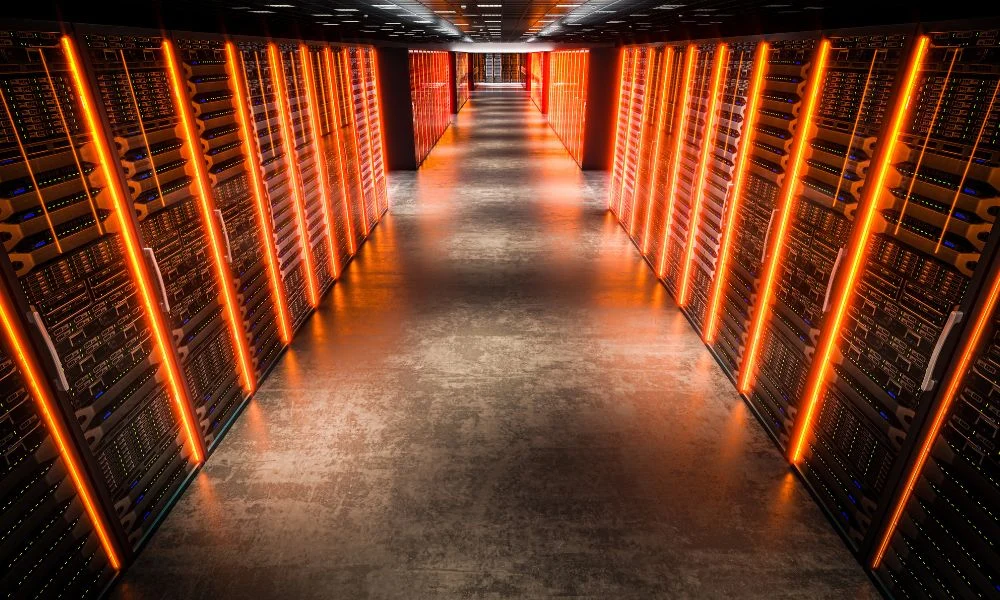
The race for artificial intelligence supremacy has reached a fever pitch, with the titans of Big Tech unleashing an unprecedented wave of investment that is reshaping financial landscapes and sparking both awe and apprehension. This colossal expenditure, projected to reach a staggering US$1.5 trillion over the next two years, is primarily directed towards building the essential infrastructure – the data centers – that will power the next generation of AI innovation. Recent earnings reports from tech giants like Amazon and Meta offer a stark illustration of this ambitious undertaking, revealing diverging financial performances directly influenced by their respective AI strategies and investments.
Divergent Fortunes Amidst AI Investment Surge
Amazon and Meta, two of the world’s most influential technology companies, have recently presented quarterly results that underscore the varied impact of their aggressive AI spending. Amazon, on one hand, has reported robust growth, with its cloud computing division, Amazon Web Services (AWS), experiencing a significant acceleration in revenue. This surge is directly tied to the increasing demand for the computing power and storage necessary for AI development and deployment. In contrast, Meta has seen its costs escalate rapidly, outpacing its revenue growth, a direct consequence of its substantial investments in AI hardware and research.
Amazon’s second-quarter performance showcased impressive financial strength. The e-commerce and cloud computing giant announced net sales of US$200.6 billion, marking a substantial 20 percent increase compared to the same period last year. Crucially, its AWS cloud unit delivered even stronger growth, with revenue climbing by 37 percent year-over-year to US$42.2 billion. This represents the fastest pace of expansion for AWS in over four years, signaling a robust demand for its cloud services, a significant portion of which is now driven by AI workloads.
While Amazon’s net income reached an impressive US$62.6 billion, or US$5.75 per diluted share, this figure was significantly bolstered by a pre-tax gain of US$53.4 billion. This substantial gain was largely derived from Amazon’s stake in Anthropic, a leading artificial intelligence research company. This investment highlights Amazon’s strategic approach to AI, not only by building its own infrastructure but also by investing in key AI developers.
However, the burgeoning costs associated with AI infrastructure are not without their financial repercussions. Amazon reported a swing in its free cash flow to an outflow of US$7.6 billion over the trailing twelve months, a notable shift from an inflow of US$18.2 billion recorded a year prior. The company explicitly attributed this change to its substantial investments in AI infrastructure. This indicates a significant capital outlay to meet the escalating demand for computing resources.
Meta, on the other hand, has navigated a more challenging financial terrain as it ramps up its AI ambitions. While the social media behemoth reported a healthy 28 percent increase in revenue to US$60.8 billion for the quarter, its total costs and expenses surged by a dramatic 55 percent, reaching US$42.03 billion. This rapid cost escalation has put pressure on its profitability, with free cash flow falling to US$784 million. Furthermore, Meta’s outlook for the third quarter provided a cautious note, with projected revenue between US$61 billion and US$64 billion, falling slightly below analysts’ expectations of approximately US$63.15 billion, according to CNBC. This suggests that the market is closely scrutinizing Meta’s ability to translate its significant AI investments into immediate financial returns.
The AI Infrastructure Arms Race
The divergence in Amazon’s and Meta’s recent financial reports is a microcosm of a broader trend sweeping through the technology sector. The sheer scale of investment in AI infrastructure is staggering. A report by The New York Times, citing FactSet estimates, indicates that Amazon, Alphabet (Google’s parent company), Meta, and Microsoft are collectively on track to spend a colossal US$1.5 trillion on data centers over the next two years. This ambitious spending spree highlights the foundational role of data centers in the current AI revolution.
The intensity of this investment was further underscored by the fact that these four tech giants spent a combined US$170 billion between April and June alone, representing a remarkable 72 percent increase from the same period last year. Melissa Otto, who leads research at S&P Global’s Visible Alpha division, aptly described the situation to The New York Times, stating, "The scale of it is nuts." This sentiment reflects the unprecedented financial commitment required to build and maintain the massive computing power necessary for advanced AI models.
Microsoft, another key player in this AI race, has also reported strong performance in its cloud business. Its Azure cloud division experienced a 43 percent growth, exceeding forecasts. Furthermore, the company announced that paid seats for its Copilot AI assistant had surpassed 30 million, a significant increase from over 20 million in April, indicating growing adoption of AI-powered productivity tools.
In stark contrast, Apple appears to be adopting a more measured approach to AI infrastructure spending. Its capital expenditure for the June quarter was US$2.46 billion, a fraction of the sums being committed by its peers. This difference in investment strategy is a focal point of the current industry narrative.
Timelines and Shifting Strategies
The current surge in AI investment is not an overnight phenomenon but rather an acceleration of trends that have been building for several years. The rapid advancements in large language models (LLMs) and generative AI capabilities, exemplified by models like OpenAI’s GPT series, have created an urgent need for more powerful and scalable computing resources.
Early Stages (Pre-2022): Tech companies were already investing in cloud infrastructure and AI research, but the focus was more on incremental improvements and specialized applications. Investments in AI hardware were significant but did not approach the current scale.
The Generative AI Boom (2022-Present): The public unveiling and widespread adoption of advanced generative AI tools triggered an immediate and exponential increase in demand for the underlying computational power. This led to a dramatic surge in the need for specialized AI chips, vast data storage, and high-speed networking, all housed within massive data centers. Companies began reallocating significant portions of their capital expenditure towards AI infrastructure.
Current Investment Wave (2023-2025): The US$1.5 trillion projected spend represents the peak of this current investment cycle, driven by the anticipated continued growth in AI adoption across various industries. Companies are not only building new data centers but also retrofitting existing ones and investing heavily in advanced cooling systems and power delivery to accommodate the energy-intensive nature of AI hardware.

Amazon’s CEO, Andy Jassy, has signaled that this investment is far from over. He informed investors on the company’s earnings call that its capital spending would reach approximately US$220 billion this year, an increase from an earlier projection of US$200 billion. Jassy also cautioned that demand for AI computing power would continue to outstrip supply, stating, "In fact, the demand we already have for 2028 is striking." This forward-looking statement underscores the long-term nature of the AI infrastructure build-out and the challenges in meeting future demand.
Apple’s CEO, Tim Cook, has defended his company’s more conservative approach. Speaking on what was reportedly his final earnings call before transitioning to Executive Chairman on September 1st, Cook highlighted the strategic advantage of running AI tasks directly on devices like iPhones and Macs. He argued that "The ability to run some percentage of requests on device is also very strategic and sort of a competitive weapon." This perspective suggests an alternative strategy focused on optimizing on-device AI processing, potentially reducing the reliance on massive, centralized cloud infrastructure for certain AI applications.
Credit Market Concerns Emerge
The sheer magnitude of borrowing required to fund this AI infrastructure boom is beginning to raise concerns among credit investors. A gauge of the risk associated with holding these companies’ debt has reached record highs, according to data reported by the Financial Times, citing LSEG data. Credit default swaps (CDS) – financial instruments used to hedge against the risk of default – tied to major technology firms including Oracle, Alphabet, Amazon, Meta, Broadcom, Nvidia, and SpaceX have all touched record levels in recent days.
The cost of insuring against default on these companies’ debt has significantly increased. For instance, Oracle’s five-year CDS traded at 215 basis points on a recent Monday, up from 144 basis points at the start of the year. This means investors are now paying US$215,000 annually to insure US$10 million of Oracle’s debt against default, indicating a perceived increase in credit risk.
Manish Kabra, head of US equity strategy at Société Générale, advised investors to closely monitor credit default swaps rather than earnings per share (EPS) for these "hyperscalers" (companies operating massive data centers). This recommendation suggests that the financial health and stability of these tech giants may increasingly be assessed through the lens of their debt obligations and the market’s perception of their creditworthiness, given the enormous capital expenditures.
Investor Reactions and Broader Implications
The market’s reaction to these diverging AI investment strategies and financial performances has been mixed, reflecting a complex investor sentiment.
Microsoft experienced a remarkable surge, climbing 15 percent on a recent Thursday, its strongest trading session since 2008. This rally added nearly US$450 billion to its market value, even as it maintained its 2026 capital spending forecast, suggesting investor confidence in its AI strategy and cloud growth.
Amazon’s shares also saw a significant boost, jumping more than 10 percent in extended trading following its positive earnings report, which showcased strong cloud growth despite increased infrastructure spending.
In contrast, Meta’s stock experienced a sharp decline, falling nearly 8 percent and extending an 11-day losing streak, resulting in a more than 20 percent drop over that period. This reaction indicates investor concern over the company’s rapidly rising costs and its impact on profitability and future guidance.
Alphabet, which reported negative free cash flow for the first time since its 2004 public listing, saw its shares drop more than 6 percent the following day. This marked a significant concern for investors, as free cash flow is a key indicator of a company’s ability to generate cash after accounting for operational and capital expenditures.
The colossal investments in AI infrastructure carry significant implications for the broader economy and the tech industry. Firstly, it signals a period of intense competition and potential consolidation as companies vie for market share in AI-driven services and hardware. Secondly, the immense capital outlays are likely to impact the profitability of these companies in the short to medium term, leading to increased scrutiny from investors and regulators.
The demand for specialized hardware, such as AI chips from companies like Nvidia, has skyrocketed, creating supply chain challenges and driving up costs. This, in turn, could lead to higher prices for AI-powered services and products for businesses and consumers.
Furthermore, the environmental impact of these massive data centers, with their high energy consumption and cooling requirements, is becoming an increasingly important consideration. Companies are facing growing pressure to adopt more sustainable practices and invest in renewable energy sources to power their AI operations.
The current "AI gold rush" is transforming the technology landscape at an unprecedented pace. While the potential benefits of AI are vast and transformative, the enormous financial commitments and the associated credit market risks suggest that this era of rapid expansion will be closely watched by investors, policymakers, and the public alike. The coming years will likely reveal which companies have best navigated this complex and capital-intensive race for artificial intelligence dominance.
