

The United States Department of the Interior has formally proposed a sweeping set of rule changes designed to significantly curtail the window for public participation regarding new oil and gas leases on federal lands. This move, which reduces the time allowed for public commentary from 90 days to just 10 days, has ignited a fierce debate over the transparency of the federal government and the future of American public lands. While much of the national discourse remains focused on high-profile legislative battles and the cyclical nature of federal elections, policy experts and environmental advocates warn that these administrative shifts represent a fundamental restructuring of how the public interacts with the executive branch.
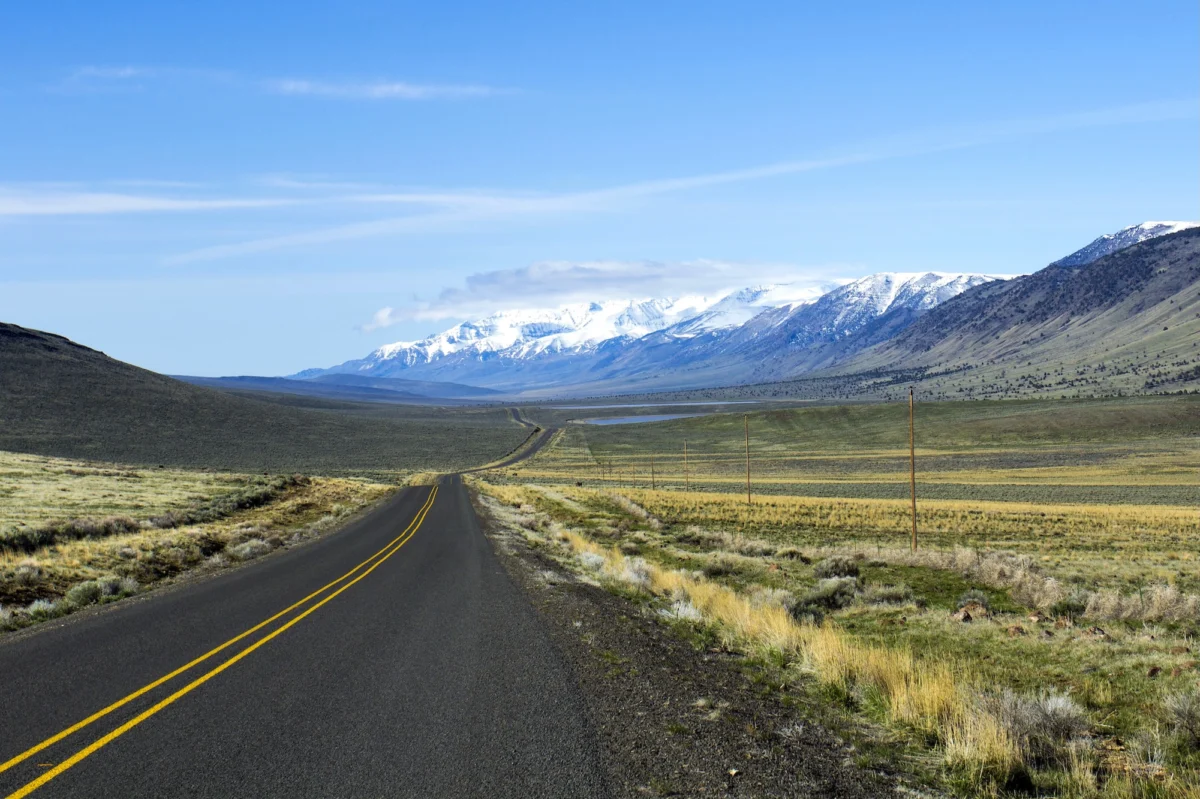
Public lands comprise roughly 28 percent of the United States, or about 640 million acres, managed primarily by four federal agencies: the Bureau of Land Management (BLM), the National Park Service, the U.S. Fish and Wildlife Service, and the U.S. Forest Service. Among these vast territories are iconic landscapes like Oregon’s Steens Mountain Wilderness, which spans over 170,000 acres of high-desert terrain. Under the proposed regulations, the ability of local communities, scientists, and non-governmental organizations to influence the industrial use of these lands would be restricted to a timeframe that many argue is insufficient for thorough environmental review.
The Legal Foundation of Public Participation
To understand the gravity of the proposed changes, one must look to the Administrative Procedure Act (APA) of 1946. The APA is the bedrock of federal administrative law, establishing the process by which federal agencies develop and issue regulations. It includes requirements for publishing notices of proposed rulemaking in the Federal Register and providing an opportunity for the public to comment on these proposals.
The "notice and comment" process is not merely a courtesy; it is a legal safeguard intended to ensure that government agencies do not act in an arbitrary or capricious manner. By requiring agencies to consider public input, the law forces officials to account for local economic impacts, scientific data, and environmental concerns that might otherwise be overlooked in the pursuit of industrial development. In many cases, these comments form the basis for legal challenges if an agency fails to provide a reasoned response to significant concerns raised by the citizenry.
The Shift from 90 Days to 10 Days
The centerpiece of the Department of the Interior’s new proposal is the drastic reduction of the protest and comment period for onshore oil and gas lease sales. For decades, a 90-day window was considered the standard for allowing stakeholders—including tribal governments, ranchers, conservationists, and local municipalities—to review complex geological and environmental impact statements.
The Interior Department, in its official communications, characterizes these revisions as a "modernization" of federal onshore oil and gas policy. The department argues that the current system is bogged down by "unnecessary administrative barriers" and "outdated procedures" that have historically slowed energy development and hampered American energy independence. By streamlining the process, the administration aims to accelerate the issuance of permits and reduce the backlog of lease applications.
However, critics argue that a 10-day window is practically impossible to meet for anyone other than well-funded industry lobbyists. Analyzing a 500-page environmental assessment, consulting with legal counsel, and drafting a technical response requires more than a week and a half. "The administration is eliminating an important part of our democratic participation," Alexa Dietrich, research director at the Union of Concerned Scientists, noted in a recent assessment. She emphasized that this change removes the voice of the people from the ongoing process of governance, relegating public influence to a single vote every four years.
A Chronology of Recent Administrative Actions
The proposed 10-day rule does not exist in a vacuum. It follows a series of recent actions aimed at rolling back Biden-era environmental protections and community input requirements.
- Late 2023 – Early 2024: The Bureau of Land Management under the previous administration had implemented more stringent requirements for community input, specifically emphasizing the "Public Lands Rule," which put conservation on equal footing with grazing and mining.
- May 2024: The National Science Foundation attempted to abruptly dismantle a key ocean observation system. Following a bipartisan outcry and intense public pressure, the agency was forced to reverse its decision, illustrating the power of public pushback.
- June 2024: The Bureau of Land Management officially moved to eliminate several Biden-era requirements for community input, including the mandatory review of scientific evidence and environmental impacts for certain land-use categories.
- June 24, 2024: The Department of the Interior published the proposed rule changes in the Federal Register, triggering a 60-day window for the public to comment on the rule change itself—a window that closes on August 24, 2024.
- July 2024: Conservation groups, including the Sierra Club and the Center for Biological Diversity, filed lawsuits against the U.S. Department of Agriculture regarding similar rules that would eliminate public comment from many projects within national forests.
Historical Impact: The Case of Keystone XL
The power of the public comment period is perhaps best illustrated by the history of the Keystone XL oil pipeline. First proposed in 2008, the project was designed to transport 830,000 barrels of crude oil per day from the Canadian oil sands to refineries on the U.S. Gulf Coast.
Throughout the 2010s, the project became a flashpoint for environmental activism. During the required federal comment periods, the State Department received over 120,000 formal submissions. This massive influx of data and public sentiment forced multiple delays and supplemental environmental reviews. While the project was eventually fast-tracked by the executive branch in 2017 and 2019, the decade of public resistance and the administrative record created by those comments ultimately contributed to its abandonment.

The success of the Keystone XL opposition demonstrated that when the public is given the time to organize and provide technical feedback, they can successfully challenge the momentum of multi-billion-dollar industrial projects. Proponents of the new 10-day rule argue that this is exactly why the system needs to be "streamlined"—to prevent what they view as "frivolous" delays.
Regional Pushback and State-Level Organizing
The reaction to the Interior Department’s proposal has been particularly sharp in Western states, where federal land ownership is most concentrated. In North Dakota, the newly formed ND Public Lands Coalition—a group including the North Dakota Wildlife Federation and the Dakota Resource Council—has launched a public awareness campaign involving billboards and town hall meetings.
Dave Brandt, a board member for the North Dakota Wildlife Federation, expressed concern that the new rules prioritize short-term corporate gains over the long-term health of the land. "Let’s do this responsibly, and not just try and make it so that a handful of people are making themselves extremely rich off the great resources of our public lands," Brandt stated.
In Colorado, Aaron Kindle of the National Wildlife Federation highlighted the practical difficulties of the 10-day window. He noted that for sporting groups and hunters, public lands are vital for recreation and conservation. Shortening the comment period, he argues, prevents these groups from analyzing how a new oil lease might affect migration corridors for elk or the water quality of trout streams.
Broader Implications for Environmental Justice
The reduction of public voice also raises significant concerns regarding environmental justice. Marginalized communities, including Indigenous tribes and rural populations, often lack the resources to maintain full-time regulatory monitoring teams. A 90-day window provides these communities the necessary time to organize, translate documents, and seek expert advice.
By shrinking this window to 10 days, the federal government effectively raises a barrier to entry that favors entities with the capital to monitor the Federal Register daily. This shift could lead to a concentration of land-use decisions in the hands of federal officials and industry representatives, potentially leading to projects being approved in areas where local opposition is high but the time to voice that opposition is too short.
Analysis of Potential Legal Challenges
Legal analysts suggest that if the 10-day rule is finalized, it will almost certainly face a barrage of litigation. The primary argument will likely be that a 10-day period is "unreasonable" under the Administrative Procedure Act. If a court finds that 10 days does not allow for "meaningful" public participation, the rule could be vacated.
Furthermore, the National Environmental Policy Act (NEPA) requires agencies to take a "hard look" at the environmental consequences of their actions. Shortening the window for public input could be seen as an attempt to bypass the "hard look" requirement, as public comments are often the primary source of information regarding local environmental conditions that federal agencies might not have in their databases.
Conclusion and Current Status
As of late July 2024, the Department of the Interior’s proposed rule change is in its own 60-day public comment phase. This irony is not lost on advocacy groups, who are currently using the very system being targeted to argue for its preservation. Organizations such as The Wilderness Society, Taxpayers for Common Sense, and Public Land Solutions are urging citizens to submit formal comments before the August 24 deadline.
The outcome of this regulatory battle will serve as a bellwether for the future of administrative law in the United States. If the 10-day rule stands, it could set a precedent for other federal agencies—from the EPA to the Department of Transportation—to similarly restrict public input on major infrastructure and industrial projects. For now, the debate remains centered on a fundamental question of American governance: whether the efficiency of industrial development should take precedence over the right of the public to be heard in the management of the nation’s vast and shared natural heritage.
