

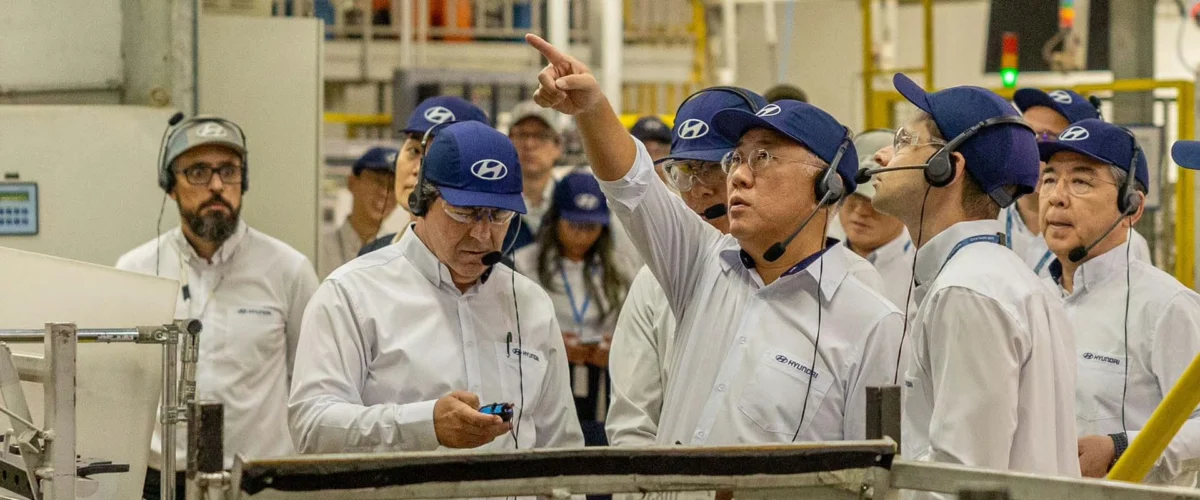
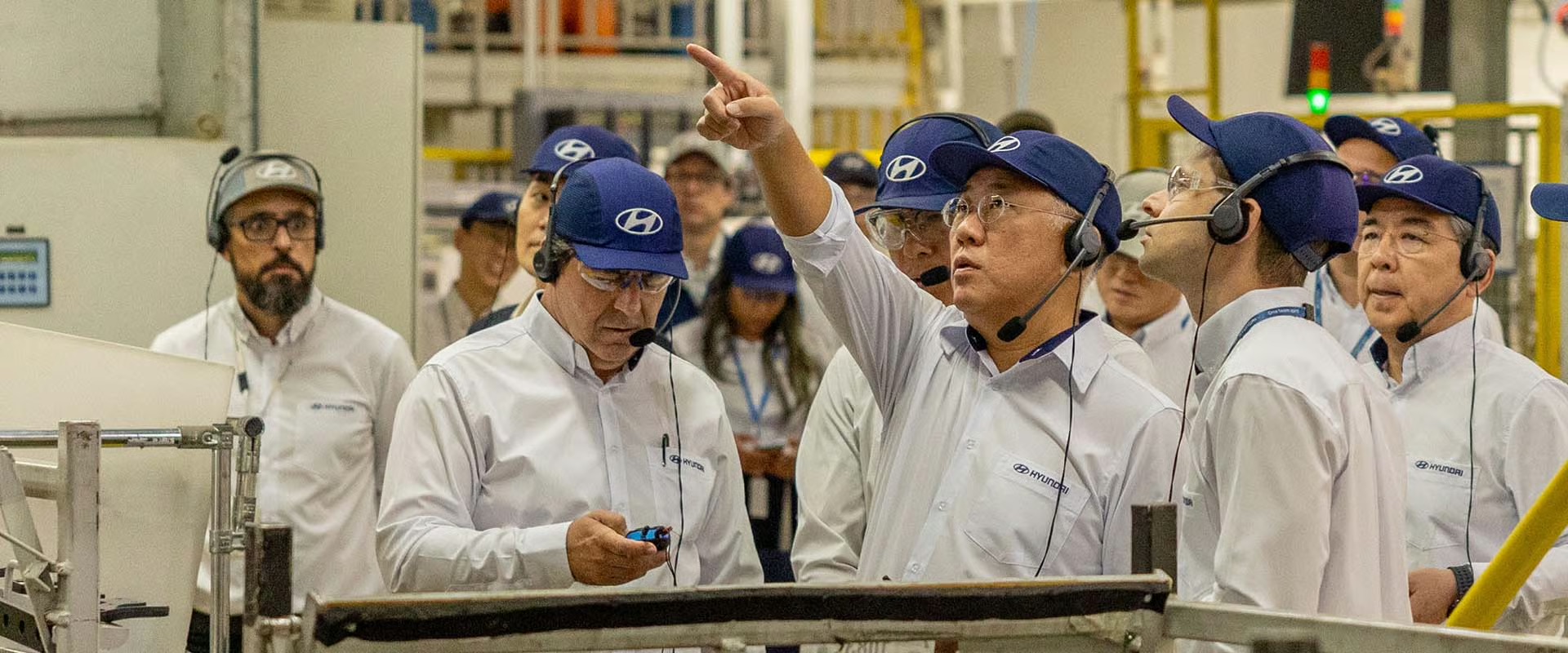
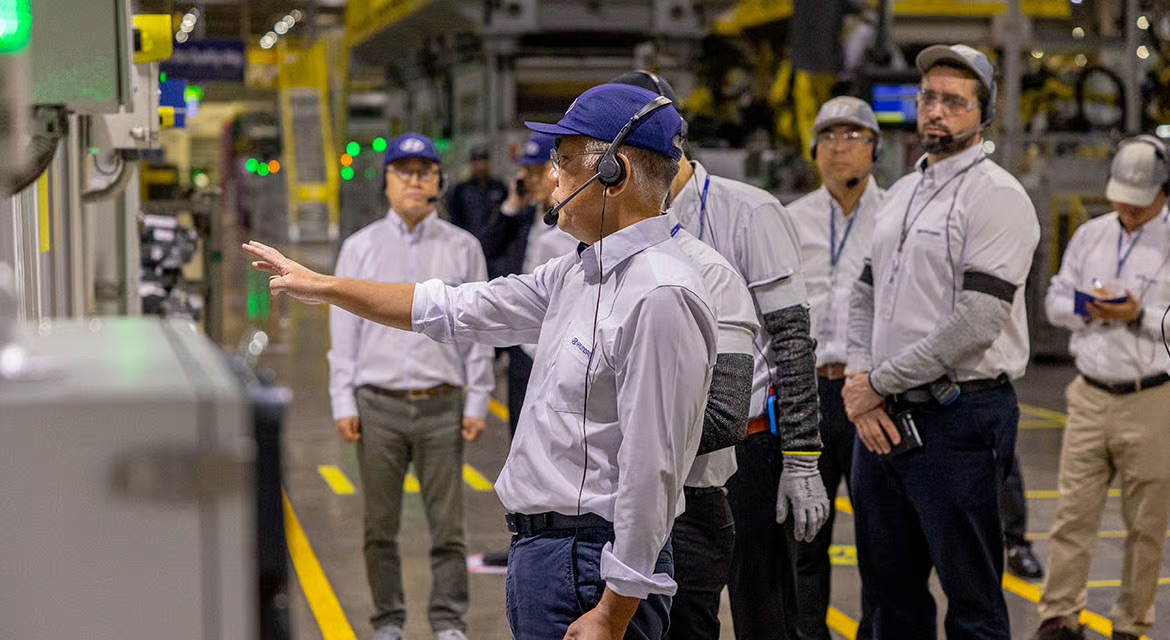
The executive chair’s recent visit to the Hyundai Motor Company manufacturing facility in Piracicaba, Brazil, marks a pivotal moment in the Group’s strategic orientation within the South American market. As the global automotive landscape undergoes a rapid transformation driven by decarbonization and digital connectivity, Euisun Chung’s presence in the region underscores Brazil’s role as a cornerstone for Hyundai’s future growth. The visit was not merely a routine inspection but a comprehensive strategic review aimed at navigating an increasingly competitive environment characterized by the rise of new market entrants and shifting regulatory frameworks.
Brazil serves as the primary hub for Hyundai Motor Group’s operations in Central and South America (CSA), housing both a sophisticated production plant and the regional headquarters. Since the Piracicaba plant commenced operations in 2012, it has become a symbol of South Korean-Brazilian industrial cooperation, maintaining a steady output of approximately 200,000 vehicles per year. The strategic importance of this facility is amplified by Brazil’s unique market structure, where high import tariffs of up to 35 percent necessitate local production to maintain price competitiveness. Furthermore, Brazil’s historical reliance on ethanol—a legacy of the 1970s Pró-Álcool program—has created a consumer base that demands Fuel-Flexible Vehicles (FFVs), a niche where Hyundai is now accelerating its technological investment.
Strategic Pillars of the Brazilian Expansion
During his visit, Executive Chair Chung outlined a tripartite strategy designed to secure Hyundai’s leadership through 2030 and beyond. This strategy focuses on the expansion of the Sport Utility Vehicle (SUV) lineup, the acceleration of electrification through localized hybrid technology, and the establishment of a comprehensive hydrogen energy ecosystem.
The first pillar involves a significant strengthening of the SUV portfolio. While the Hyundai CRETA has already established itself as a dominant force in the Brazilian compact SUV segment, the Group intends to introduce a wider array of SUV models by the end of the decade. This move responds to the global and local trend of consumers gravitating toward higher seating positions and versatile interior spaces. By diversifying its SUV offerings, Hyundai aims to capture a larger share of the premium and family vehicle markets, which often yield higher profit margins than entry-level hatchbacks.

The second pillar focuses on electrification, but with a localized twist. Recognizing that pure Battery Electric Vehicles (BEVs) face infrastructure challenges in vast territories like Brazil, Hyundai is prioritizing the development of Fuel-Flexible Vehicle-Hybrid (FFV-HEV) powertrains. These systems combine the efficiency of electric motors with the ability to run on both gasoline and ethanol, leveraging Brazil’s existing and extensive biofuel infrastructure. This "bridge technology" allows Hyundai to reduce fleet emissions immediately while the country’s charging network matures. Simultaneously, the Group is exploring the local production of small electric vehicles to cater to urban centers like São Paulo and Rio de Janeiro.
The third pillar is perhaps the most ambitious: the creation of a hydrogen and renewable energy ecosystem. Brazil is widely regarded as a potential global powerhouse for "green hydrogen" production due to its high proportion of renewable energy in the national grid, including wind, solar, and hydroelectric power. Hyundai intends to leverage its world-leading fuel cell technology to explore hydrogen-powered commercial vehicles, such as trucks and buses, as well as hydrogen-powered trams.
Chronology of Hyundai’s Growth in Brazil
The trajectory of Hyundai Motor Brazil (HMB) is a study in rapid industrial scaling and market integration. The journey began in the late 2000s when the Group identified Brazil as a key emerging market with a burgeoning middle class.
- 2010–2012: Construction of the Piracicaba plant in São Paulo State. This greenfield project represented a multi-billion dollar investment and was designed with high levels of automation.
- 2012: Official start of production. The HB20 (Hyundai Brasil 20) was launched specifically for the local market, designed to withstand Brazil’s challenging road conditions and utilize ethanol-blended fuels.
- 2017: Introduction of the CRETA SUV. This model marked Hyundai’s entry into the rapidly growing SUV segment in Brazil, quickly becoming one of the brand’s best-selling vehicles.
- 2022: Launch of the IONIQ Forest campaign, signaling a shift toward corporate social responsibility and environmental sustainability in the region.
- March 2026: The HMB plant achieved a major production milestone, rolling out its 2.5 millionth vehicle. This achievement was reached in just 13 years of operation, reflecting an average annual growth rate that outpaces many of its established competitors.
- June 2026: Launch of the i20, a strategic model aimed at the B-segment, further diversifying the local product lineup.
Market Performance and Economic Impact
The success of Hyundai’s localized strategy is reflected in its robust sales data. According to the National Federation of Automotive Vehicle Distribution (Fenabrave), Hyundai recorded first-half 2026 sales of 96,723 units. This represents a 12.1 percent increase compared to the 86,316 units sold during the same period in 2025. This performance is particularly noteworthy as it marks the company’s highest first-half volume since 2019, suggesting a strong recovery and growth trajectory in the post-pandemic era.
With a 7.1 percent market share, Hyundai currently ranks fifth among automotive brands in Brazil. The HB20 series—comprising both sedan and hatchback variants—has seen cumulative sales exceed 1.88 million units, while the CRETA has surpassed the 570,000-unit mark. These figures highlight the brand’s ability to create "market-fit" products that resonate with local consumer preferences for durability, style, and fuel flexibility.
Industry analysts suggest that Hyundai’s growth is also supported by Brazil’s "Mover" program (Sustainable Mobility and Innovation), a government initiative that provides tax incentives for companies investing in decarbonization and new vehicle technologies. By aligning its R&D efforts with these national goals, Hyundai is well-positioned to benefit from favorable regulatory conditions.
Hydrogen Energy and Academic Collaboration
A key component of Euisun Chung’s vision is the integration of hydrogen technology into the Brazilian economy. Brazil’s National Hydrogen Program (PNH2) aims to position the country as a leading global exporter of low-carbon hydrogen. Hyundai’s expertise in hydrogen fuel cells, developed through models like the NEXO and the XCIENT Fuel Cell truck, provides a significant competitive advantage.
To support this transition, Hyundai is strengthening its ties with local academic institutions. A flagship partnership with the University of São Paulo (USP) focuses on hydrogen research, exploring how to optimize fuel cell performance using ethanol-derived hydrogen. This localized R&D approach ensures that the technology is not merely imported but adapted to the specific chemical and environmental conditions of South America.
Furthermore, the Group is investigating the feasibility of green hydrogen production plants and renewable energy facilities. By controlling more of the hydrogen value chain—from production and distribution to utilization in vehicles—Hyundai aims to create a closed-loop sustainable mobility system that can serve as a blueprint for other emerging markets.
Corporate Social Responsibility and Ethical Leadership
Beyond manufacturing and sales, Hyundai has focused on building a "human-centric" brand image in Brazil. The company’s CSR initiatives are divided between environmental restoration and community health. The IONIQ Forest campaign has seen the planting of 100,000 trees across 40 hectares in Minas Gerais and São Paulo, contributing to the restoration of the Atlantic Forest, one of the world’s most biodiverse yet threatened biomes.
In the social sphere, the Sorriso Cidadão (Citizen Smile) program has provided free dental care to over 80,000 people in the Piracicaba region using mobile dental trailers. This program addresses a critical healthcare gap and has fostered deep-seated goodwill toward the Hyundai brand among local communities and law enforcement officials.
Hyundai’s internal culture has also received national recognition. In 2026, the Brazil plant was awarded the Empresa Pró-Ética (Ethical Business Excellence) certification from the Controladoria-Geral da União (CGU). This prestigious certification is awarded to companies that demonstrate the highest standards of integrity, transparency, and anti-corruption measures. Additionally, the plant has been certified as a "Great Place to Work" for nine consecutive years, a testament to its commitment to employee well-being and mental health.
Future Implications and Analysis
Executive Chair Euisun Chung’s strategic pivot in Brazil reflects a broader global shift within Hyundai Motor Group. By moving away from a traditional "fast-follower" model to a "first-mover" in sustainable technologies like hydrogen and FFV-hybrids, the Group is insulating itself against the volatility of the global transition to electric vehicles.
Brazil serves as an ideal testing ground for these technologies. If Hyundai can successfully integrate hydrogen mobility and advanced biofuels in a market as complex and large as Brazil, it will have a proven template for expansion into other markets in the Global South, including India and parts of Southeast Asia.
The emphasis on the i20 and the expansion of the SUV lineup also suggests that Hyundai is preparing for a "value-up" strategy. By offering advanced technology and premium features in segments traditionally dominated by budget vehicles, the company is attempting to shift the brand’s perception from "reliable and affordable" to "innovative and aspirational."

In conclusion, the visit by Euisun Chung signifies that Brazil is no longer just a satellite production site for Hyundai, but a core strategic pillar in the Group’s quest to become a leader in the future of mobility. Through a combination of localized engineering, aggressive sales targets, and a commitment to the hydrogen economy, Hyundai Motor Group is charting a course that seeks to harmonize industrial growth with environmental and social sustainability. As the company aims for a total sales target of 204,000 units in 2026, its success will likely depend on its ability to execute this multi-faceted strategy in an increasingly crowded and technologically demanding market.
