

The presidency of Javier Milei began with a series of theatrical flourishes that signaled a radical departure from Argentina’s protectionist past. During his 2023 campaign, the self-proclaimed anarcho-capitalist famously brandished a chainsaw to symbolize his intent to shred public spending and dismantle the regulatory state. Since his inauguration, that metaphorical chainsaw has been aimed directly at the environmental and bureaucratic barriers that have long kept Argentina’s vast mineral wealth trapped beneath the Andes Mountains. At the heart of this economic pivot is copper, a critical mineral for which global demand is expected to skyrocket as the world transitions toward renewable energy and electric vehicles.
Argentina currently stands at a crossroads, attempting to balance a desperate need for foreign currency and economic stabilization with the preservation of its fragile mountain ecosystems. For Milei, the path forward is clear: the exploitation of natural resources is the primary engine for national recovery. For global mining magnates like Rob McEwen, whose McEwen Copper Inc. holds the massive Los Azules deposit in San Juan province, Argentina represents the next great frontier in base metals. However, for environmental advocates and legal scholars, the current rush for copper represents a dismantling of hard-won protections, specifically targeting the National Glacier Protection Law, which has historically safeguarded the country’s primary water sources.
The Economic Context: From Stagnation to the RIGI Framework
Argentina’s economic history over the last decade has been defined by volatility, including triple-digit inflation, a lack of access to international credit markets, and a chronic shortage of US dollar reserves. While neighboring Chile transformed into the world’s leading copper producer, leveraging its Andean geography to anchor its economy, Argentina’s copper industry has been largely dormant. The country has not exported copper since 2018, following the closure of the Bajo de la Alumbrera mine.
To reverse this trend, the Milei administration has introduced the Incentive Regime for Large Investments (RIGI), a cornerstone of his legislative agenda. The RIGI offers unprecedented 30-year tax, customs, and exchange benefits to companies willing to invest more than $200 million in sectors like mining and energy. This framework is designed to provide the legal certainty that international investors have long found lacking in Argentina. According to government estimates, the mining sector alone could eventually generate more than $10 billion in annual exports, rivaling the country’s agricultural sector, which has traditionally been the sole pillar of the economy.
The Legislative Shift: Reforming the Glacier Protection Law
The most significant hurdle for copper mining in Argentina has been the 2010 National Glacier Protection Law (Minimum Standards for the Preservation of Glaciers and the Periglacial Environment). This groundbreaking legislation designated glaciers and "periglacial" zones—frozen grounds saturated with ice that act as water regulators—as public assets protected from industrial activity. Because many of Argentina’s largest copper deposits are located at high altitudes where these formations exist, the law effectively stalled dozens of projects.
In April 2024, the Argentine Congress voted to reform this law, a move that critics describe as a "softening" of environmental standards. The reform shifted the authority to define and protect glaciers from federal scientific bodies, such as the Institute for Snow, Ice and Environmental Sciences (IANIGLA), to the individual provinces. Under the new rules, provincial governments now determine if a periglacial area is "hydrologically relevant" before granting mining permits.
This decentralization has been welcomed by mineral-rich provinces like San Juan and Catamarca but has sparked a firestorm of legal and social opposition. Juan Pablo Milana, a professor of geological science at the Universidad Nacional de San Juan, argues that the change creates a "crisis of representation," where local political interests override long-term environmental security. The reform is currently being challenged in court by a coalition including Greenpeace, the Argentine Association of Environmental Lawyers, and the Environment and Natural Resources Foundation (FARN), who have gathered nearly one million signatures to declare the change unconstitutional.
Chronology of Argentina’s Mining and Environmental Policy
The tension between extraction and protection has developed over several decades:
- 2010: Argentina passes the National Glacier Protection Law, the first of its kind globally, establishing a federal inventory of glaciers.
- 2015–2017: Multiple cyanide spills at the Veladero gold mine, operated by Toronto-based Barrick Gold, devastate local trust in mining regulations and lead to temporary suspensions.
- 2018: Argentina’s copper exports fall to zero following the depletion of existing sites and a lack of new investment.
- 2019: The Supreme Court of Argentina upholds the constitutionality of the Glacier Protection Law, rejecting a challenge led by Barrick Gold.
- December 2023: Javier Milei is inaugurated as President, vowing to deregulate the economy.
- April 2024: The Argentine Congress approves reforms to the Glacier Protection Law and introduces the RIGI investment framework.
- Late 2024: McEwen Copper and other majors like Glencore and Lundin Mining accelerate feasibility studies for large-scale copper projects.
- 2025 (Projected): Construction is expected to begin at the Los Azules project, marking the start of a new copper era for Argentina.
Profile of a Maverick: Rob McEwen and the Los Azules Vision
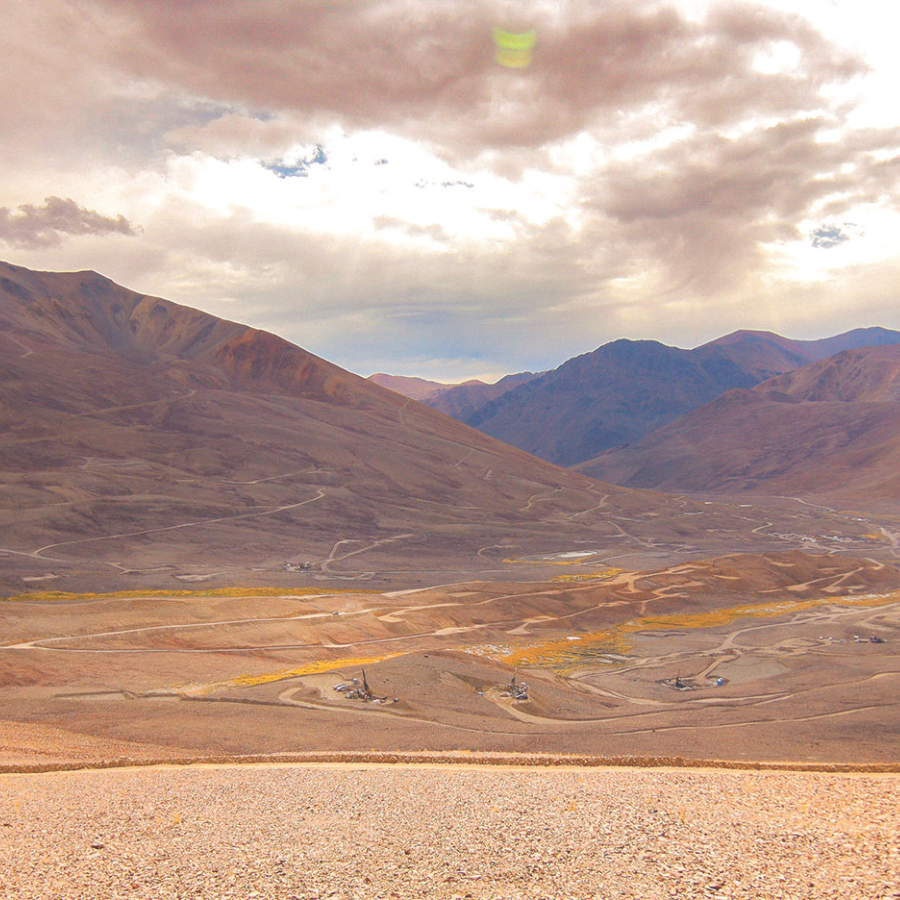
Rob McEwen, a veteran of the Canadian mining industry and founder of Goldcorp, is positioning his Los Azules project as the blueprint for a "new era" of sustainable mining. Located in a remote mountain bowl at an elevation of 3,500 meters, Los Azules is estimated to contain enough copper to produce 327 million pounds of copper cathode annually. The project boasts a projected after-tax net present value (NPV) of approximately $2.9 billion.
McEwen’s approach differs from traditional mining models in several ways. He has opted for "heap leaching" technology, which uses significantly less water and energy than the conventional milling and flotation processes used in most copper mines. This method also eliminates the need for massive tailings dams—structures that have been the site of numerous environmental disasters globally. Furthermore, McEwen has committed to powering the mine entirely with renewable energy and has hired renowned architect Jason McLennan to design aesthetically integrated housing for the 2,000-plus workers.
"How do we make a mine that will change the public’s perception of mining?" McEwen asks. His goal is to create a transparent, low-impact operation that serves as a rebuttal to the industry’s "dirty" reputation. However, even these innovations have not shielded the project from criticism. Argentine NGOs have previously challenged Los Azules for its potential impact on periglacial environments, highlighting the persistent gap between corporate sustainability claims and local environmental concerns.
Supporting Data: The Copper Demand Gap
The urgency behind Argentina’s copper rush is fueled by global market dynamics. Copper is the most efficient conductor of electricity among non-precious metals, making it indispensable for the "green" economy.
- IEA Projections: The International Energy Agency (IEA) projects that copper demand will increase by 30% by 2040 under current climate policies.
- Electric Vehicles: A typical battery electric vehicle (BEV) requires roughly 2.5 times more copper than an internal combustion engine vehicle.
- Renewable Energy: Wind and solar installations require between three and fifteen times more copper per unit of installed capacity than coal or gas power plants.
- Supply Shortfall: Analysts at Goldman Sachs and other financial institutions have warned of a "chronic" copper deficit by the late 2020s, as existing mines in Chile and Peru face declining ore grades and social unrest.
Argentina holds approximately 76 registered copper projects in various stages of development. If only the top five—Los Azules, Taca Taca, Mara, Josemaría, and El Pachón—reach production, the country could become a top-ten global producer within a decade.
Environmental and Social Reactions: A History of Harm
The skepticism of many Argentinians toward the mining boom is rooted in a history of environmental mismanagement. The legacy of Barrick Gold’s Veladero mine remains a focal point for activists. The 2016 cyanide spills in San Juan province led to criminal charges against mining executives and government officials, reinforcing the perception that regulatory oversight is easily compromised.
Leandro Gómez, of the Environment and Natural Resources Foundation, argues that the current model of the energy transition is inherently skewed against the Global South. "The interests of the Global South are not included," Gómez says, suggesting that Argentina is being asked to sacrifice its water security and alpine ecosystems to provide the raw materials for the decarbonization of wealthier nations. This sentiment is echoed by local communities in the arid western provinces, where water for agriculture is already a scarce and precious resource.
Implications and Analysis: The High-Stakes Gamble
The Milei administration’s gamble is that the economic benefits of a copper boom will eventually outweigh the political and environmental risks. By decentralizing glacier protection and offering massive tax breaks, the government has successfully re-engaged global capital. However, the legal challenges mounted by environmental groups suggest that the path to production will be far from smooth.
The primary risk for investors is "legal instability." If a future administration reverses Milei’s reforms or if the Supreme Court strikes down the changes to the Glacier Law, projects like Los Azules could face sudden halts. Furthermore, the reliance on provincial oversight creates a patchwork of regulations that may lead to inconsistent environmental standards across the country.
Geopolitically, the development of Argentine copper is seen as a strategic win for Western supply chains, which are currently heavily reliant on Chinese processing and Chilean production. McEwen’s assertion that "the world has woken up" to the need for minerals reflects a broader shift toward "friend-shoring" critical mineral supplies.
As construction at Los Azules is slated to begin in 2025, Argentina is entering a definitive chapter in its industrial history. Whether the country can successfully transform its mineral wealth into long-term prosperity without destroying its vital water reserves remains the central question of the Milei era. For now, the "chainsaw" approach has opened the door to billions in investment, but the environmental and social costs are only beginning to be tallied.
