

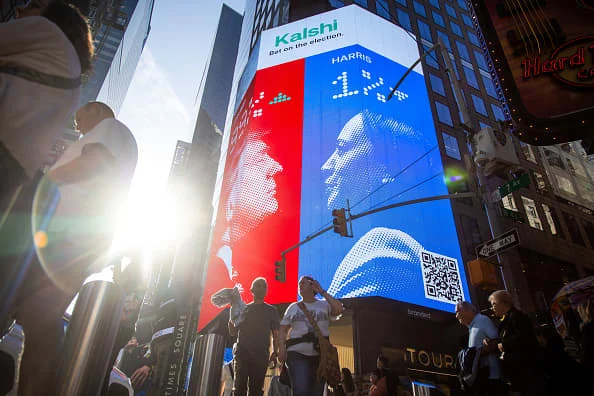
Prediction market platform Kalshi has officially unveiled its "Midterms Hub," a comprehensive new resource designed to provide political enthusiasts and data analysts with an unparalleled view into the anticipated outcomes of the upcoming 2026 U.S. midterm elections. This innovative hub aggregates real-time trading data from Kalshi’s regulated event contracts, allowing users to observe how market participants are pricing the probabilities of various electoral scenarios across the nation, specifically for individual U.S. Senate and House of Representatives races. The launch marks a significant step in Kalshi’s strategy to expand its footprint in the political forecasting landscape, offering a unique blend of market-driven insights alongside traditional political intelligence.
The Mechanics of Electoral Prediction Through Event Contracts
At its core, Kalshi operates as a federally regulated exchange for event contracts, a distinct financial instrument approved by the Commodity Futures Trading Commission (CFTC). Unlike traditional derivatives or securities, event contracts allow users to trade on the outcome of specific future events, ranging from economic indicators to weather patterns and, increasingly, political elections. When traders buy or sell contracts tied to, for instance, a particular candidate winning a Senate seat, the prevailing market price of that contract reflects the collective wisdom of the crowd regarding the probability of that event occurring. A contract priced at 70 cents, for example, implies a 70% perceived chance of the associated outcome. This mechanism provides a dynamic, real-time probability assessment that is continuously updated by the flow of capital and information from thousands of participants.
Kalshi’s unique position as a CFTC-regulated entity distinguishes it from many other, often unregulated, prediction platforms. This regulatory oversight ensures market integrity, transparency, and a degree of consumer protection, lending greater credibility to the data generated on its platform. The approval from the CFTC allows Kalshi to offer a wide array of event contracts to a broad retail and institutional audience, establishing a legitimate framework for financial participation in forecasting non-financial outcomes. This regulatory clarity has been crucial for Kalshi’s ability to attract significant trading volume and position itself as a serious player in the data and insights space.
A Deeper Dive into the Midterms Hub Features
The newly launched Midterms Hub is designed to be a one-stop portal for election tracking, catering to both active traders and, notably, a substantial segment of users who primarily seek data and analysis without engaging in trading. Kalshi reports that approximately three-quarters of all visitors to its platform are "observers" who browse current odds and market movements rather than executing trades. Recognizing this demand for informational utility, the hub meticulously integrates several key data streams:
- Real-time Market Odds and Probabilities: Central to the hub is an interactive map of the United States, allowing users to click on any state or congressional district to view the latest market-implied probabilities for specific Senate and House races. These odds are derived directly from the prices of event contracts traded on Kalshi’s exchange, offering a granular, continuously updated view of how market participants believe each contest will unfold.
- Comparative Polling Averages: To provide a holistic perspective, the hub features aggregated polling averages for key races. This allows users to directly compare the market’s assessment of probabilities against the findings of statistical surveys of voters. This comparison is particularly valuable, as prediction markets and traditional polls each have their strengths and weaknesses, and their convergence or divergence can offer deeper insights into the electoral landscape. For instance, a market price might significantly differ from polling averages if traders believe polls are undercounting a particular demographic or missing a late-breaking development.
- Federal Election Commission (FEC) Fundraising Reports: Financial resources are a critical component of any political campaign. The Midterms Hub incorporates the latest campaign finance data from the FEC for individual candidates. This allows observers to track fundraising prowess, spending patterns, and the overall financial health of campaigns, which often correlate with perceived viability and electoral success. A candidate with robust fundraising, for example, typically has greater capacity for advertising and voter outreach, factors often reflected in both polling and prediction market odds.
- Curated News and Analysis: To contextualize the raw data, the hub also provides a curated feed of news and analytical content from various reputable outlets. This feature ensures that users have access to expert commentary, political developments, and strategic insights that might influence market sentiment and election outcomes. This synthesis of financial, statistical, and journalistic information aims to provide a comprehensive understanding of the electoral cycle.
Kalshi’s Strategic Expansion in Political Markets
The launch of the Midterms Hub is not an isolated event but rather the latest development in Kalshi’s deliberate strategy to establish itself as a dominant force in political prediction and analysis. This strategic push underscores the company’s belief in the unique predictive power of market mechanisms.
Tarek Mansour, co-founder and CEO of Kalshi, a former trader at Citadel and analyst at Goldman Sachs, has been a vocal proponent of prediction markets’ ability to cut through the noise of political discourse. In a statement accompanying the hub’s launch, Mansour emphasized, "Prediction markets have a unique perspective. They cut through polarization and show you what the wisdom of the crowds actually believes, backed by real money, not rhetoric. That kind of clarity is rare right now, and that’s what people are getting with the Midterms Hub." This philosophy highlights a core tenet of prediction markets: that financial incentives encourage participants to act on accurate information, leading to more objective probability assessments than opinion polls or punditry alone.
Earlier in May 2026, Kalshi further solidified its political offerings with the introduction of the "American Power Index." Positioned as an "S&P 500" for politics, this index is designed to track the overall political standing of the major parties by aggregating sentiment across a broad range of political event contracts. It provides a high-level, real-time indicator of which party is gaining or losing ground, serving as a macro barometer of the political climate. The American Power Index, alongside the granular insights of the Midterms Hub, forms a robust suite of tools for monitoring and understanding the dynamic world of U.S. politics through a market lens. Kalshi, founded with the vision of creating a new asset class based on "events," received its CFTC designation as a Designated Contract Market (DCM) in 2020, paving the way for its regulated offerings. Since then, it has steadily expanded its categories, with political markets gaining significant traction, particularly around major election cycles.
Prediction Markets vs. Traditional Polling: A Comparative Analysis
The emergence of sophisticated prediction market platforms like Kalshi has reignited discussions about the relative merits of market-based forecasting versus traditional public opinion polling. Both methods aim to predict future outcomes, but they employ fundamentally different mechanisms.
Traditional polling relies on statistical sampling, surveying a representative subset of the population and extrapolating their views to the broader electorate. Its strengths lie in its ability to capture specific demographic sentiments and identify key issues. However, polls are susceptible to various biases, including sampling error, non-response bias, social desirability bias (respondents giving socially acceptable answers), and challenges in accurately modeling voter turnout. The 2016 U.S. presidential election, where many polls underestimated Donald Trump’s support, served as a stark reminder of these limitations.

Prediction markets, conversely, derive their power from the "wisdom of crowds." Participants put their money where their beliefs are, incentivizing them to seek out and act on the most accurate information available. Proponents argue that this financial incentive makes prediction markets less susceptible to the biases that plague polls. Historically, prediction markets, particularly academic ones like the Iowa Electronic Markets (IEM), have demonstrated a strong track record of accuracy, often outperforming polls in presidential elections. For example, the IEM accurately predicted the winner of every U.S. presidential election from 1988 to 2004, and generally performed well in 2008, 2012, and 2020. However, they are not infallible. They can sometimes be influenced by low liquidity in niche markets, "herd mentality," or a sudden influx of capital from a few large players.
Experts like Dr. Anya Sharma, a professor of computational social science at the University of Chicago, often highlight the complementary nature of these two approaches. "While polls capture snapshots of public opinion and identify demographic leanings, prediction markets provide a continuously updated aggregate probability based on financial commitment," Dr. Sharma noted. "Their convergence often signals high confidence in an outcome, while divergence can indicate an area where one method might be capturing something the other is missing, prompting deeper investigation. For example, if market odds for a candidate are significantly higher than their polling numbers, it might suggest that traders anticipate a stronger-than-polled turnout or a late swing not yet captured by surveys."
The 2026 Midterms: High Stakes and Market Engagement
The 2026 midterm elections are widely anticipated to be a high-stakes affair, with control of both the U.S. House of Representatives and the Senate hanging in the balance. Historically, midterms often serve as a referendum on the sitting president’s party, frequently resulting in shifts in congressional power. The outcomes of these elections will profoundly impact legislative priorities, the balance of power in Washington, and the trajectory of the nation for the latter half of the presidential term.
Given this heightened political environment, observers are predicting a significant spike in prediction market volume, echoing the intense activity seen during the 2024 presidential election cycle. Already, more than $30 million has been traded on Kalshi’s contracts tied to which party will ultimately control the House and the Senate in 2026. This substantial early volume underscores the considerable interest among market participants in forecasting these pivotal races. The liquidity and volume in these markets are crucial; higher trading volumes generally lead to more efficient markets and more reliable probability estimates, as more information is incorporated into the prices. This early engagement suggests that traders are actively seeking to capitalize on their insights into the evolving political landscape, further enriching the data available through the Midterms Hub.
Regulatory Landscape and Market Integrity
The regulatory framework provided by the CFTC is fundamental to Kalshi’s operation and the perceived reliability of its data. As a Designated Contract Market (DCM), Kalshi adheres to stringent requirements designed to ensure fair and orderly trading, prevent market manipulation, and protect market participants. This oversight includes rules regarding contract design, position limits, real-time market surveillance, and clear settlement procedures.
The regulatory environment for prediction markets remains a dynamic space. While the CFTC has approved certain event contract exchanges like Kalshi, broader expansion of such markets continues to be a subject of debate among policymakers and regulators. Concerns often revolve around the potential for gambling, the integrity of markets if not properly overseen, and the ethical implications of financializing certain social or political outcomes. However, proponents argue that well-regulated prediction markets offer valuable information, particularly in areas where traditional data sources are less effective. The success and increasing public acceptance of platforms like Kalshi could potentially pave the way for further regulatory clarity and expansion of event contract offerings in the future. The CFTC’s ongoing commitment to supervising these markets is vital for fostering trust and ensuring their continued utility as credible information sources.
Broader Implications for Political Discourse and Engagement
The introduction of Kalshi’s Midterms Hub carries significant broader implications for how political discourse is shaped, how campaigns are run, and how the public engages with electoral processes.
For media outlets, the hub provides a new, data-rich source for election coverage. Journalists can integrate market-implied probabilities into their reporting, offering a novel perspective that complements traditional polling and expert analysis. This could lead to more nuanced and data-driven narratives, moving beyond anecdotal evidence or partisan spin.
Political campaigns and strategists may also find the hub to be an invaluable tool. By monitoring market odds, they can gain real-time insights into how the collective market views their chances, potentially identifying races where perception differs from internal polling or where a surge in competitor support is being priced in. This could inform resource allocation, message refinement, and strategic adjustments in the critical weeks leading up to Election Day.
For the general public, the Midterms Hub offers an accessible and engaging way to track the elections. By presenting complex political dynamics through an intuitive interface that compares market probabilities with polls and fundraising, Kalshi democratizes access to sophisticated political analysis. This could foster greater political literacy and encourage more informed civic engagement, allowing individuals to see the interplay of various factors that influence electoral outcomes. The transparency provided by a regulated market, where outcomes are tied to real money, also offers a refreshing contrast to the often opaque and partisan world of political punditry.
In an era of increasing information overload and partisan division, the clarity offered by market-based predictions, as championed by Kalshi, presents an intriguing alternative and supplement to traditional methods of political forecasting. As the 2026 midterm elections draw closer, the Midterms Hub is poised to become a key reference point for anyone seeking a data-backed, objective perspective on the unfolding political drama, contributing to an evolving landscape of political analysis and public engagement.
