

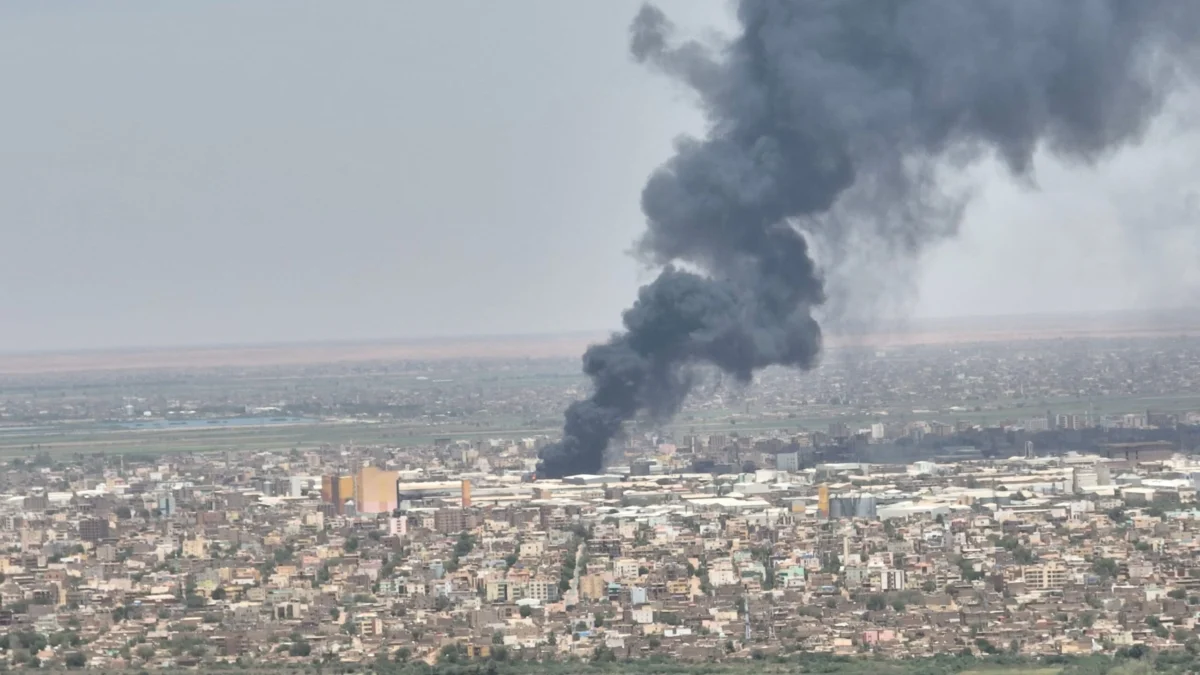
In a pivotal diplomatic effort to arrest Sudan’s descent into a full-scale civil war, representatives from the Sudanese Armed Forces (SAF) and the paramilitary Rapid Support Forces (RSF) have converged on the Saudi Arabian port city of Jeddah. This U.S.-Saudi brokered initiative represents the first significant attempt at direct engagement between the warring parties since hostilities erupted on April 15, 2023. While international mediators have framed these as "pre-negotiation talks" aimed primarily at securing a sustainable humanitarian truce, the high-stakes meeting occurs against a backdrop of relentless urban warfare in Khartoum and a burgeoning humanitarian catastrophe that has already displaced hundreds of thousands of civilians.
The conflict, which pits General Abdel Fattah al-Burhan’s regular army against Mohamed Hamdan Dagalo’s RSF, has transformed the densely populated capital of Khartoum and its sister cities, Omdurman and Bahri, into volatile battlezones. As the delegations arrived in Jeddah, residents in Khartoum reported continued airstrikes, heavy artillery fire, and localized skirmishes, underscoring the profound disconnect between the diplomatic maneuvering abroad and the grim reality on the ground.
The Genesis of the Crisis: A Fractured Transition
To understand the gravity of the Jeddah talks, one must look back at the fragile political architecture that collapsed in mid-April. Sudan’s path toward democracy has been fraught since the 2019 popular uprising that ended the thirty-year autocracy of Omar al-Bashir. Following Bashir’s ouster, a power-sharing agreement between military and civilian leaders was established, intended to lead to democratic elections. However, this transition was derailed in October 2021 when General Burhan and his then-deputy, Hemedti, orchestrated a military coup, dissolving the civilian-led sovereign council.
The current violence is the culmination of months of mounting tension over a proposed transition back to civilian rule. The primary sticking point was the integration of the RSF into the regular Sudanese army. The SAF pushed for a rapid two-year integration timeline, seeking to consolidate military command under a single hierarchy. Conversely, Hemedti advocated for a ten-year window, fearing that a swift merger would dilute his power base and leave him vulnerable to his rivals within the military establishment.
This internal power struggle eventually bypassed the political arena and moved to the streets. On April 15, Khartoum was awakened by explosions as the RSF and SAF clashed over strategic assets, including the international airport, the presidential palace, and state broadcasting headquarters. What was initially characterized as a localized skirmish rapidly expanded into a nationwide conflict, drawing in various tribal and regional interests and threatening to destabilize the entire Horn of Africa.
The Jeddah Initiative: Objectives and Expectations
The talks in Jeddah, jointly facilitated by the United States and the Kingdom of Saudi Arabia, are focused on a narrow but critical set of objectives. Rather than seeking a comprehensive political settlement—which mediators acknowledge is unlikely at this stage—the immediate goal is to establish a "declaration of principles" regarding humanitarian access.
The U.S. State Department and the Saudi Ministry of Foreign Affairs have urged both sides to "actively engage" and "reach a ceasefire and end the conflict." However, the rhetoric from the combatants remains defiant. Special envoy Dafallah Alhaj, representing the SAF, emphasized that the army’s presence in Jeddah does not equate to a recognition of the RSF’s legitimacy, referring to the paramilitary group as "rebellious." On the other side, the RSF has maintained that its participation is contingent on the army’s cessation of airstrikes in residential areas.
The "pre-negotiation" label is significant. It suggests that the parties are not yet ready to discuss the long-term political future of Sudan, including the thorny issues of security sector reform and the return to civilian rule. Instead, the focus remains on:
- Establishing a monitored and verifiable ceasefire to replace the numerous "truce" agreements that have been violated within hours of their announcement.
- Creating "humanitarian corridors" to allow for the safe passage of food, water, and medical supplies to trapped civilians.
- Facilitating the evacuation of injured persons and the restoration of essential services like electricity and water.
A Timeline of Escalation: April 15 to May 6
The timeline of the conflict illustrates a rapid deterioration of security and a widening gap between diplomatic efforts and military maneuvers:
- April 15: Heavy fighting breaks out in Khartoum and Merowe. Both sides claim control over key military bases and the airport.
- April 18: The first internationally brokered 24-hour ceasefire fails almost immediately. Hospitals in Khartoum report they are running out of supplies.
- April 21: Fighting intensifies during the Eid al-Fitr holiday. The RSF takes up positions in residential neighborhoods, while the SAF utilizes its superior air power to conduct strikes in urban areas.
- April 25: A 72-hour ceasefire brokered by the U.S. allows for a massive evacuation of foreign diplomats and citizens. Thousands of Sudanese begin fleeing toward the Egyptian border and Port Sudan.
- May 1: Drone footage reveals massive plumes of black smoke over Bahri. The UN warns that Sudan is at a "breaking point."
- May 5: The SAF confirms it has sent a delegation to Jeddah for talks.
- May 6: Official commencement of the Jeddah talks as airstrikes continue to rock Khartoum.
The Humanitarian Toll and Infrastructure Collapse
The human cost of the three-week conflict is staggering. According to conservative estimates by the Sudanese Ministry of Health and the World Health Organization (WHO), the death toll has exceeded 600, with thousands more wounded. However, local medical committees suggest the actual numbers are significantly higher, as many bodies remain uncollected in the streets due to the intensity of the fighting.
The healthcare system in Khartoum has effectively collapsed. Approximately 70% of hospitals in conflict-affected areas are out of service. Those that remain functional are operating with skeletal staffs, facing acute shortages of oxygen, blood bags, and trauma kits. The WHO recently managed to deliver medical aid to Port Sudan, but bureaucratic hurdles and the lack of security guarantees have prevented these supplies from reaching the epicenters of the violence.
Beyond the immediate casualties, the conflict has triggered a mass exodus. The UN High Commissioner for Refugees (UNHCR) reports that over 100,000 people have fled to neighboring countries, including Chad, Egypt, and South Sudan. An additional 330,000 people are estimated to be internally displaced. The disruption of supply chains has led to a 100% to 200% increase in the price of basic commodities like bread and fuel, pushing millions toward the brink of famine.
Geopolitical Implications and Regional Interests
The outcome of the Jeddah talks has profound implications for the region. Sudan occupies a strategic position at the crossroads of the Middle East and Africa, bordering seven countries and possessing a significant coastline along the Red Sea—a vital artery for global trade.
Saudi Arabia’s role as a mediator is driven by its desire for Red Sea security and its long-standing ties to both Burhan and Hemedti. Both leaders previously provided troops to the Saudi-led coalition fighting in Yemen. Riyadh views a stable Sudan as essential for its "Vision 2030" economic projects along the coast.
The United States, meanwhile, is seeking to prevent Sudan from becoming a vacuum for extremist groups or a playground for foreign mercenaries. There are persistent concerns regarding the presence of the Russian Wagner Group, which has historically maintained ties with Hemedti’s RSF through gold mining operations in Darfur and northern Sudan.
Other regional players are also watching closely. Egypt, which shares a border and vital Nile water interests with Sudan, has historically supported the regular army as a guarantor of stability. Conversely, some Gulf states have maintained complex relationships with Hemedti, given his control over vast economic resources.
Analysis: The Challenges of a Zero-Sum Conflict
The primary obstacle to peace in Sudan is the "zero-sum" nature of the struggle between Burhan and Hemedti. For the army, the RSF is an existential threat to the state’s monopoly on force. For Hemedti, the RSF is his only shield against a military establishment that views him as a "Janjaweed" upstart from the periphery.
Military analysts suggest that neither side has been able to achieve a decisive victory. The SAF has the advantage of air power and heavy weaponry but struggles with urban counter-insurgency. The RSF, composed of highly mobile and battle-hardened light infantry, has successfully embedded itself within residential areas, using civilians as human shields and making it difficult for the SAF to dislodge them without causing mass casualties.
The Jeddah talks are a test of whether international pressure can outweigh the domestic ambitions of the two generals. If the talks fail to produce even a basic humanitarian truce, the conflict risks evolving from a centralized power struggle into a fragmented civil war, potentially drawing in ethnic militias in Darfur and the Blue Nile region, which would make any future peace process infinitely more complex.
As the delegations sit across from one another in the Red Sea city, the international community remains cautiously optimistic but deeply wary. The "pre-negotiation" phase is a delicate first step, but for the millions of Sudanese citizens trapped in the crossfire, the time for diplomatic maneuvering is rapidly running out. The success or failure of the Jeddah initiative will likely determine whether Sudan can be pulled back from the abyss or if it will join the ranks of the region’s long-term failed states.
