

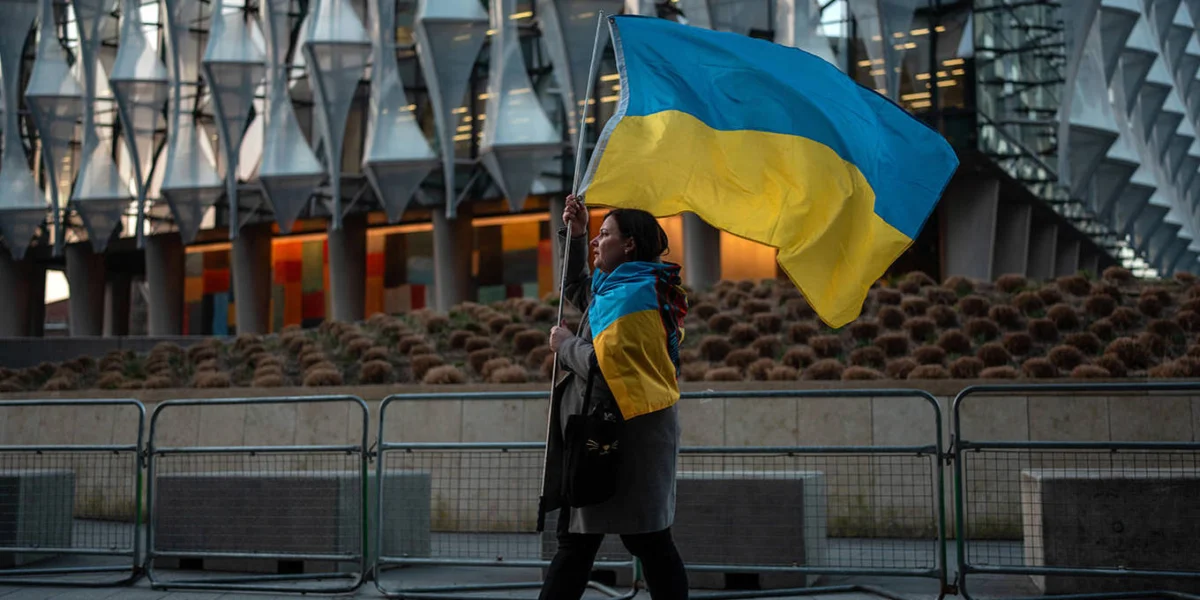
The changing face of the battle for Ukraine has taken much of the world by surprise, both in terms of the horrific scale of casualties that Russia is enduring—nearly 40,000 last month, according to Ukrainian officials—and the dynamism and sheer chutzpah that has characterized Ukraine’s war effort. For the world’s democracies, the most important lesson to draw from Ukrainians’ doggedness and brilliant innovations and improvisations may be that we should not be so surprised.
The Unfolding Narrative of Ukrainian Resistance
Since the full-scale invasion commenced on February 24, 2022, the conflict in Ukraine has defied initial expectations and demonstrated a remarkable capacity for adaptation and resilience from Kyiv. What was widely anticipated by many in the international community as a swift Russian victory has instead evolved into a protracted and attritional war, marked by unexpected Ukrainian successes and significant Russian setbacks. The ongoing struggle is not merely a territorial dispute; it represents a fundamental challenge to the post-World War II international order and a stark test of democratic resolve against authoritarian aggression.
The initial phase of the invasion saw Russian forces attempt a multi-pronged assault, aiming to capture Kyiv rapidly and depose the Ukrainian government. However, fierce Ukrainian resistance, bolstered by civilian mobilization and strategic defense, thwarted these ambitions. Cities like Kyiv, Chernihiv, and Sumy became symbols of unwavering defiance. By April 2022, Russian forces had withdrawn from these northern regions, refocusing their efforts on the Donbas and southern Ukraine.
Key Factors Fueling Ukrainian Resilience
Several interconnected factors have contributed to Ukraine’s ability to withstand and counter the Russian onslaught:
1. Unwavering National Unity and Morale: The invasion galvanized the Ukrainian population, fostering an unprecedented level of national unity. This solidarity has translated into broad public support for the war effort, from frontline soldiers to civilians contributing to logistics and intelligence gathering. The shared experience of defending their homeland has created a potent psychological advantage for Ukraine.
2. Innovative and Agile Warfare: Ukrainian forces have consistently demonstrated remarkable ingenuity in their use of available resources and adoption of new technologies. This includes:
- Drone Warfare: Ukraine has become a global leader in the creative and widespread deployment of drones for reconnaissance, artillery spotting, and even direct attack. Modified commercial drones, coupled with purpose-built military systems, have provided crucial battlefield intelligence and delivered precision strikes, often at a fraction of the cost of traditional Western military hardware.
- Asymmetric Tactics: Employing ambushes, hit-and-run operations, and exploiting Russian logistical vulnerabilities have been central to Ukraine’s strategy, particularly in the early stages and in occupied territories.
- Adaptable Command and Control: The Ukrainian military has shown a capacity to adapt its command structures and operational tempo to counter Russian movements, often leveraging decentralized decision-making for greater agility.
3. Western Military and Financial Support: The sustained provision of advanced weaponry, intelligence sharing, and financial aid from a coalition of over 50 countries has been indispensable. This support has enabled Ukraine to replenish its depleted Soviet-era arsenals, acquire more sophisticated Western systems, and maintain the economic stability necessary to fund its war effort.
4. Russian Strategic Miscalculations: Russia’s initial assumptions about the speed of its advance, the expected collapse of Ukrainian resistance, and the international community’s response proved to be fundamentally flawed. The underestimation of Ukrainian resolve, coupled with significant logistical challenges, intelligence failures, and poorly executed operational plans, contributed to the early setbacks that allowed Ukraine to regroup and counterattack.
A Timeline of Shifting Tides
The conflict has seen distinct phases, each with its own set of challenges and strategic developments:
- February-April 2022: Initial Russian invasion, rapid advances in the south and east, but fierce resistance in the north leading to the withdrawal of Russian forces from Kyiv and surrounding regions. The siege of Mariupol concludes with the surrender of Ukrainian defenders from the Azovstal steel plant.
- May-August 2022: Russia focuses its offensive on the Donbas, achieving incremental gains through heavy artillery bombardments. Ukraine launches counteroffensives in the Kharkiv region, reclaiming significant territory.
- September-November 2022: A highly successful Ukrainian counteroffensive in the Kharkiv region recaptures thousands of square kilometers of territory. Ukraine also initiates operations in the south, leading to the liberation of Kherson city. Russia mobilishes additional troops and begins targeted missile strikes on Ukrainian energy infrastructure.
- December 2022-April 2023: A period of intense fighting, particularly around Bakhmut, characterized by grinding attritional warfare. Ukraine continues to receive advanced Western military aid, including main battle tanks.
- May-August 2023: Ukraine launches its highly anticipated summer counteroffensive, focusing on the southern Zaporizhzhia and eastern Donetsk fronts. Progress is slower than anticipated due to extensive Russian minefields and fortified defensive lines.
- September 2023-Early 2024: Fighting remains intense, with both sides engaged in positional battles. Ukraine continues to adapt its tactics, focusing on drone warfare and precision strikes against Russian logistics and command centers. Russia intensifies its attacks on Ukrainian infrastructure.
- Mid-2024: Reports emerge of significant Russian casualties and increasing anxiety within Moscow regarding the protracted nature of the conflict and its economic toll. Ukrainian officials report substantial losses for Russian forces, indicating a shift in the momentum of attritional warfare.
Supporting Data and Casualty Estimates
Quantifying casualties in an active conflict is inherently challenging, with figures often differing significantly between belligerents and independent sources. However, available data paints a grim picture:
- Russian Casualties: Ukrainian officials reported nearly 40,000 Russian casualties in the month of July alone in 2026. Over the course of the entire conflict, cumulative estimates from various Western intelligence agencies and think tanks place Russian military losses (killed and severely wounded) in the range of 300,000 to 500,000 personnel. This includes not only regular army units but also Wagner Group fighters and other affiliated forces.
- Ukrainian Casualties: While Ukraine does not regularly release its own casualty figures, independent assessments suggest that Ukrainian losses are also substantial, though generally considered lower than Russian losses in proportional terms. Estimates vary widely, but figures in the tens of thousands killed and hundreds of thousands wounded are frequently cited.
- Equipment Losses: Both sides have suffered extensive materiel losses. Russia has lost thousands of tanks, armored vehicles, artillery pieces, and aircraft. Ukraine has also incurred significant losses, particularly in the early stages of the war, but has been able to replenish and modernize its equipment with Western aid.
Official Responses and International Reactions
The international community has largely condemned Russia’s actions and provided substantial support to Ukraine.
- United States: The U.S. has been the largest single provider of military and financial assistance to Ukraine, pledging billions of dollars in weapons, training, and economic aid.
- European Union: The EU has implemented extensive sanctions against Russia and provided significant financial, humanitarian, and military support to Ukraine. Member states like Germany, the UK, and France have also contributed substantial military packages.
- NATO: While NATO as an alliance has not directly intervened militarily, its member states have collectively bolstered their defenses and provided crucial support to Ukraine. NATO’s continued expansion, with the recent accession of Finland and Sweden, reflects a broader geopolitical realignment in response to Russian aggression.
- Russia: Moscow has consistently denied the scale of its losses and framed the conflict as a "special military operation" to "denazify" Ukraine and protect Russian-speaking populations. It has also accused Western nations of engaging in a proxy war against Russia.
- United Nations: The UN has played a role in humanitarian aid delivery and has repeatedly called for a peaceful resolution to the conflict, though its Security Council veto power has limited its ability to take decisive action against Russia.
Broader Impact and Implications
The conflict in Ukraine has far-reaching implications for global security, international law, and democratic governance:
- Reshaping Geopolitics: The war has solidified a new geopolitical landscape, characterized by renewed tensions between Russia and the West. It has also spurred increased defense spending among many nations and reinforced the importance of alliances like NATO.
- Challenge to International Law: Russia’s invasion represents a clear violation of Ukraine’s sovereignty and territorial integrity, challenging fundamental principles of international law. The ongoing efforts to hold Russia accountable for war crimes are a critical aspect of this challenge.
- The Future of Energy and Food Security: The conflict has significantly disrupted global energy markets and exacerbated food insecurity, particularly in developing nations reliant on grain exports from Ukraine and Russia. This has led to efforts to diversify energy sources and secure global supply chains.
- The Resilience of Democracies: Ukraine’s determined resistance has become a powerful symbol for democratic values. The ability of a smaller nation to withstand the aggression of a larger authoritarian power offers a crucial lesson for democracies worldwide, underscoring the importance of preparedness, innovation, and unwavering commitment to self-determination. The narrative of Ukrainian innovation and improvisation in the face of overwhelming odds serves as a potent reminder that resilience and ingenuity can be formidable forces, even against seemingly insurmountable challenges. The world is watching, and the lessons learned from Ukraine’s struggle will undoubtedly shape the international order for decades to come.
