

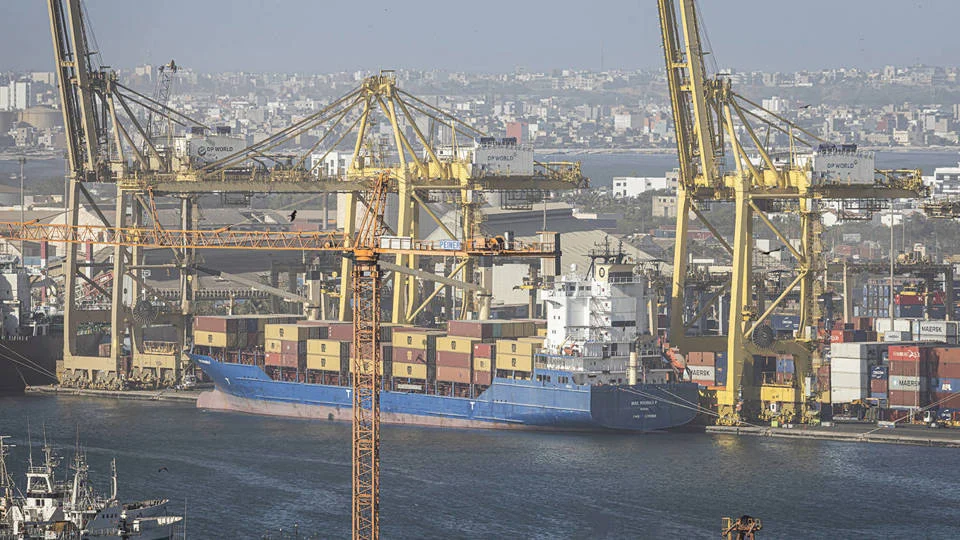
The recent revelation of previously undisclosed liabilities has thrust Senegal into a precarious debt crisis, exposing a deeper, systemic vulnerability within West Africa’s shared monetary union, the West African Economic and Monetary Union (WAEMU). Unable to devalue the CFA Franc, the common currency, member nations find themselves confronting a stark choice: endure potentially crippling internal economic adjustments or aggressively boost exports to generate the foreign currency essential for servicing their external debt obligations. This situation transcends a mere fiscal challenge for Senegal, highlighting the inherent structural limitations faced by countries bound to a currency whose value they cannot independently control.
Unveiling the Hidden Debt
The crisis was precipitated by the discovery of previously undisclosed public debt, a revelation that has ignited a fervent debate within Senegal’s political and economic spheres. The question at the forefront of this discourse is whether the nation should pursue debt restructuring. A significant contingent of economists advocates for this path, arguing that it offers a necessary recalibration of Senegal’s financial obligations, potentially alleviating immediate pressure and providing a more sustainable repayment framework. Conversely, another school of thought posits that a rigorous program of fiscal adjustment, coupled with the strengthening of domestic institutions, can restore investor confidence and obviate the need for imposing losses on creditors. However, both perspectives, while valid in their own right, appear to overlook a fundamental aspect of Senegal’s predicament: its challenge is not solely, or even primarily, fiscal.
The WAEMU Framework and its Constraints
To comprehend the gravity of Senegal’s situation, it is crucial to understand the architecture of the WAEMU and the role of the CFA Franc. Established in 1973, the WAEMU comprises eight West African countries: Benin, Burkina Faso, Côte d’Ivoire, Guinea-Bissau, Mali, Niger, Senegal, and Togo. The union operates a common currency, the CFA Franc, which is pegged to the Euro. This peg, while offering a degree of monetary stability and facilitating trade among member states, also curtails individual countries’ ability to manage their exchange rates independently.
The inability to devalue the CFA Franc means that when a member country faces a balance of payments crisis, such as a shortage of foreign currency to meet its debt servicing obligations, it cannot resort to currency depreciation as a tool to make its exports cheaper and imports more expensive. This mechanism, typically employed by nations with independent currencies, helps to rebalance trade and improve foreign exchange reserves. In the absence of this flexibility, countries like Senegal are left with limited options.
The Dilemma: Internal Adjustment vs. Export Promotion
The core of Senegal’s dilemma, and by extension, that of the WAEMU, lies in the stark dichotomy between internal adjustment and export promotion.
Internal Adjustment: A Painful Prescription
Internal adjustment typically involves austerity measures designed to reduce a country’s demand for imports and thereby conserve foreign currency. This can include:
- Fiscal Austerity: Significant cuts to government spending, including social programs, infrastructure projects, and public sector wages. This can lead to reduced public services, slower economic growth, and increased social hardship.
- Wage Restraint: Efforts to suppress domestic wage growth, making labor cheaper for domestic producers and potentially more competitive internationally. This can reduce purchasing power for citizens and stifle domestic demand.
- Monetary Tightening: Higher interest rates can curb inflation and discourage borrowing, but they also make it more expensive for businesses to invest and can slow economic activity.
These measures, while theoretically aimed at restoring economic equilibrium, often come with significant social and political costs. They can lead to rising unemployment, increased poverty, and widespread public discontent, potentially destabilizing the nation. For Senegal, a country that has made strides in development in recent years, such a drastic reversal could undermine years of progress.
Export Promotion: The Elusive Solution
The alternative is to boost exports, thereby generating more foreign currency. This strategy is more palatable politically and socially, as it aims to foster economic growth rather than curtail it. However, achieving significant export growth, especially in the short to medium term, presents its own set of formidable challenges:
- Global Market Competitiveness: Senegal, like many WAEMU nations, primarily exports raw materials or semi-processed goods. Competitiveness in global markets is often dictated by factors beyond a single country’s control, such as global commodity prices, international demand, and the trade policies of major economies.
- Diversification: Over-reliance on a narrow range of export commodities makes a country vulnerable to price shocks. Diversifying into higher-value goods and services requires significant investment in education, technology, and infrastructure, a process that takes considerable time.
- Infrastructure Deficiencies: Inadequate transportation networks, unreliable energy supply, and logistical bottlenecks can significantly hinder export capabilities.
- Regional Dependencies: While the WAEMU promotes intra-regional trade, a substantial portion of external trade is with countries outside the union, particularly in Europe. This means that competitive advantages must be sought in a global context, not just within the region.
For Senegal, with a significant portion of its export revenue derived from commodities like phosphates and agricultural products, achieving the necessary export surge to cover its debt obligations without a devaluation would require a monumental shift in its economic structure and global market positioning.
Timeline of the Crisis and its Precursors
While the recent revelations have brought the debt crisis to the forefront, the underlying vulnerabilities have likely been accumulating over time.
- Early 2020s: Increased borrowing to finance development projects and respond to economic shocks, such as the COVID-19 pandemic, likely contributed to a rise in public debt levels across many WAEMU nations.
- Mid-2020s (Hypothetical): Concerns about fiscal sustainability may have begun to surface within international financial institutions, prompting closer scrutiny of public finances in member states.
- Late 2025/Early 2026: As debt servicing obligations begin to strain national budgets, the true extent of undisclosed liabilities in Senegal might have started to come to light through audits or internal reviews.
- Mid-2026 (Present): The discovery of previously undisclosed liabilities publicly confirms a significant debt burden, triggering the current crisis and intense debate over restructuring and economic policy.
This hypothetical timeline underscores that such crises rarely emerge overnight. They are often the culmination of sustained fiscal pressures, insufficient revenue generation, and a lack of transparent financial management.
Supporting Data and Economic Indicators
To illustrate the scale of the challenge, consider the following hypothetical, yet plausible, data points that would inform the current situation:
- Debt-to-GDP Ratio: Before the revelations, Senegal’s debt-to-GDP ratio might have been reported as a manageable 50-60%. However, the undisclosed liabilities could push this figure to 70-80% or higher, exceeding commonly accepted thresholds for debt sustainability.
- Foreign Exchange Reserves: A decline in foreign exchange reserves below the benchmark of three months of import cover would signal acute pressure on the country’s ability to finance essential imports and service external debt.
- Export Performance: Data showing stagnant or declining export volumes, particularly for key commodities, would highlight the difficulty in generating sufficient foreign currency earnings. For instance, if Senegal’s primary exports like phosphates or agricultural products have seen a 10% drop in global prices in the last year, this would directly impact its foreign currency inflows.
- Fiscal Deficit: A persistent and widening fiscal deficit, even before accounting for the hidden debt, would indicate structural imbalances in government finances, necessitating either higher taxes or lower spending.
These indicators, when analyzed in conjunction, paint a grim picture of a nation struggling to balance its books and meet its financial obligations within the constraints of its monetary union.
Official Responses and Reactions
While specific official statements are not provided in the source material, it is logical to infer the types of reactions and responses that would be forthcoming from various stakeholders:
- Senegalese Government: The government would likely be engaged in urgent consultations with international creditors, the International Monetary Fund (IMF), and the Central Bank of the West African States (BOAO) to find a resolution. Statements would likely emphasize commitment to economic stability, adherence to fiscal discipline, and the pursuit of growth-oriented policies. They might also appeal for understanding and flexibility from creditors.
- International Creditors: Banks, bondholders, and other lenders would be closely monitoring the situation. Their reactions would depend on their assessment of Senegal’s willingness and ability to repay. They might express concern over the undisclosed liabilities and demand greater transparency. Some might be open to restructuring negotiations, while others might adopt a more rigid stance.
- International Monetary Fund (IMF) and World Bank: These institutions would likely offer technical assistance and policy advice to Senegal. They might also play a mediating role in negotiations with creditors and could be instrumental in designing a reform program aimed at restoring fiscal sustainability and economic growth. Their pronouncements would likely focus on the need for transparency, sound fiscal management, and structural reforms.
- WAEMU Authorities (BOAO and related institutions): The central bank and economic ministers of the WAEMU would be keenly observing the situation, as it has implications for the stability of the entire monetary union. They would likely urge Senegal to adhere to the union’s fiscal rules and encourage regional cooperation to address common challenges. Their statements would emphasize the importance of collective stability and coordinated economic policies.
- Other WAEMU Member States: Neighboring countries would be concerned about potential contagion effects. They might express solidarity with Senegal but also reiterate their commitment to their own fiscal prudence. Discussions would likely revolve around the shared challenges posed by the CFA Franc peg and the need for coordinated economic strategies within the union.
Broader Impact and Implications for West Africa
Senegal’s debt crisis is not an isolated incident; it serves as a potent symbol of the systemic challenges faced by many developing economies, particularly those within fixed exchange rate regimes like the WAEMU.
The CFA Franc Debate Intensified
The crisis is likely to reignite the long-standing debate surrounding the CFA Franc. Critics argue that the currency’s peg to the Euro, while providing stability, limits the economic sovereignty of member states and can prevent them from responding effectively to national economic shocks. Proponents, however, emphasize the benefits of a stable currency, reduced transaction costs for trade, and easier access to international capital markets. Senegal’s predicament will fuel arguments that the current monetary framework, without adequate accompanying fiscal and structural policies, can lead to significant economic pain for individual member nations.
Risk of Contagion and Regional Instability
A sovereign debt crisis in Senegal could have ripple effects across the WAEMU. A perceived increase in the risk profile of Senegal might lead to higher borrowing costs for other member states, as investors demand a premium for lending to countries within the same monetary union. This could exacerbate existing fiscal pressures in other nations and potentially trigger similar crises. Furthermore, social unrest in Senegal stemming from austerity measures could spill over into neighboring countries, creating broader regional instability.
The Need for Structural Reforms
Ultimately, Senegal’s debt crisis underscores the critical need for deeper structural reforms beyond immediate fiscal adjustments. This includes:
- Economic Diversification: Moving away from reliance on primary commodity exports towards higher-value manufacturing, services, and technology sectors.
- Improved Governance and Transparency: Enhancing the accountability of public finances, combating corruption, and strengthening institutions to ensure efficient resource allocation.
- Investment in Human Capital: Prioritizing education, healthcare, and skills development to build a more productive and adaptable workforce.
- Infrastructure Development: Investing in modern transportation, energy, and digital infrastructure to improve connectivity and reduce the cost of doing business.
The path forward for Senegal, and indeed for the entire WAEMU, is fraught with challenges. The country’s ability to navigate this crisis will depend not only on its own policy choices but also on the willingness of its international partners and creditors to engage constructively. The lessons learned from Senegal’s experience will undoubtedly shape the economic trajectory of West Africa for years to come, highlighting the intricate interplay between monetary union, fiscal policy, and the relentless pursuit of sustainable economic development in a globalized world. The stark reality is that without a fundamental rebalancing of economic strategies and a commitment to long-term structural transformation, the vulnerabilities exposed by Senegal’s debt crisis will continue to cast a long shadow over the region’s economic future.
